Latest Articles

Earth's Core Reversed Direction — Why Scientists Are Stumped
Seismic and geomagnetic observations suggest Earth's molten outer core has abruptly shifted its rotational sense relative to the mantle, an unexpected event that raises fundamental questions about planetary dynamics. Scientists are racing to understand the mechanisms, test models, and assess possible impacts on the magnetic field and surface systems.

Global Warming Is Accelerating: New Science, Risks, and Responses
New analyses show a measurable increase in the pace of global warming, with faster temperature rise, intensifying extremes, and compounding feedbacks. This article explains the evidence, drivers, near-term impacts, and practical steps for policy makers, communities, and individuals.

AI Finds Tiny Formula That Topples 87-Year-Old Math Conjecture
A new AI system, Claude Fable 5, uncovered a deceptively small algebraic identity that undermines a central conjecture that stood for 87 years, forcing mathematicians to reexamine assumptions about proof methods, collaboration, and the role of machine discovery in pure mathematics.

Why Perfectly Fair Elections Are Impossible: The Math Behind Voting
A clear, in-depth exploration of the mathematical proofs showing no voting system can satisfy every fairness criterion, what that means for democracies, and practical ways to design better — if imperfect — elections.

Webb Telescope Finds Hidden Giant Planet in Famous Star System
NASA’s James Webb Space Telescope has revealed a previously unseen giant exoplanet tucked inside a well-known stellar system, altering what astronomers thought they knew about the system’s architecture and planet formation. The discovery, made with Webb’s infrared instruments, offers new evidence about how massive planets form and migrate and opens paths for detailed atmospheric study.
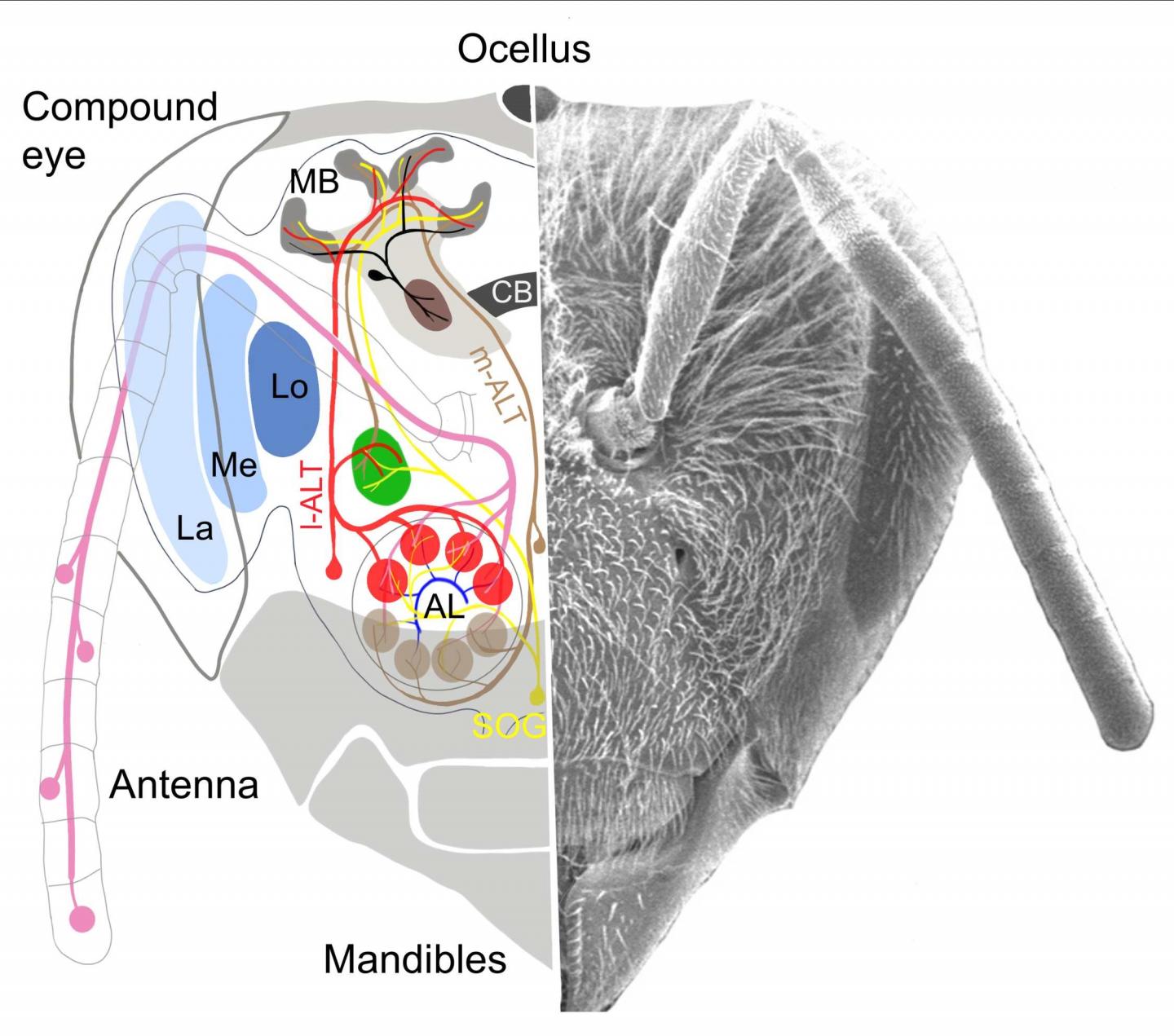
Hidden Brain Switch Assigns Roles in Honeybee Colonies
Researchers have identified a neural mechanism that appears to flip bees between nursing and foraging roles, revealing how a tiny brain coordinates complex social labor. The finding reframes our understanding of insect social organization and opens possibilities for conservation, agriculture, and biomimetic design.