Bumblebees Solve Classic Intelligence Test — Surprising Results
The room went quiet the moment the bumblebee took hold of the thin filament with both legs, gave a practiced tug and — as if solving a small mechanical riddle — drew a sugary reward within reach. For the researchers watching the little drama unfold, it was one of those scientific moments that rearranges assumptions: an animal with a brain the size of a poppy seed had just completed a task long considered a benchmark for higher-level problem solving.
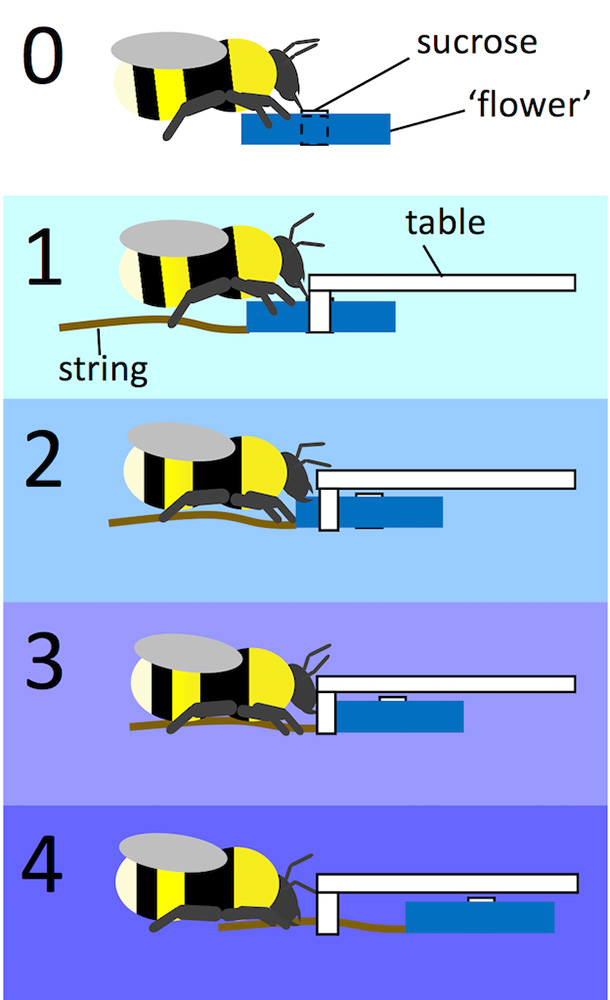
Bumblebee pulling string experiment
That scene has been replayed in different labs over recent years as entomologists and cognitive scientists adapted time-honored tests to insects. The outcome has been consistent enough to force a rethink: bumblebees can solve problems that require more than simple associative learning. Their success on this classic intelligence test — a modified string-pulling or tool manipulation task — raises questions about what intelligence looks like when neural hardware is tiny and life strategies are built for flight and pollination, not for sitting at a lab bench.
A Simple Task, Deep Questions
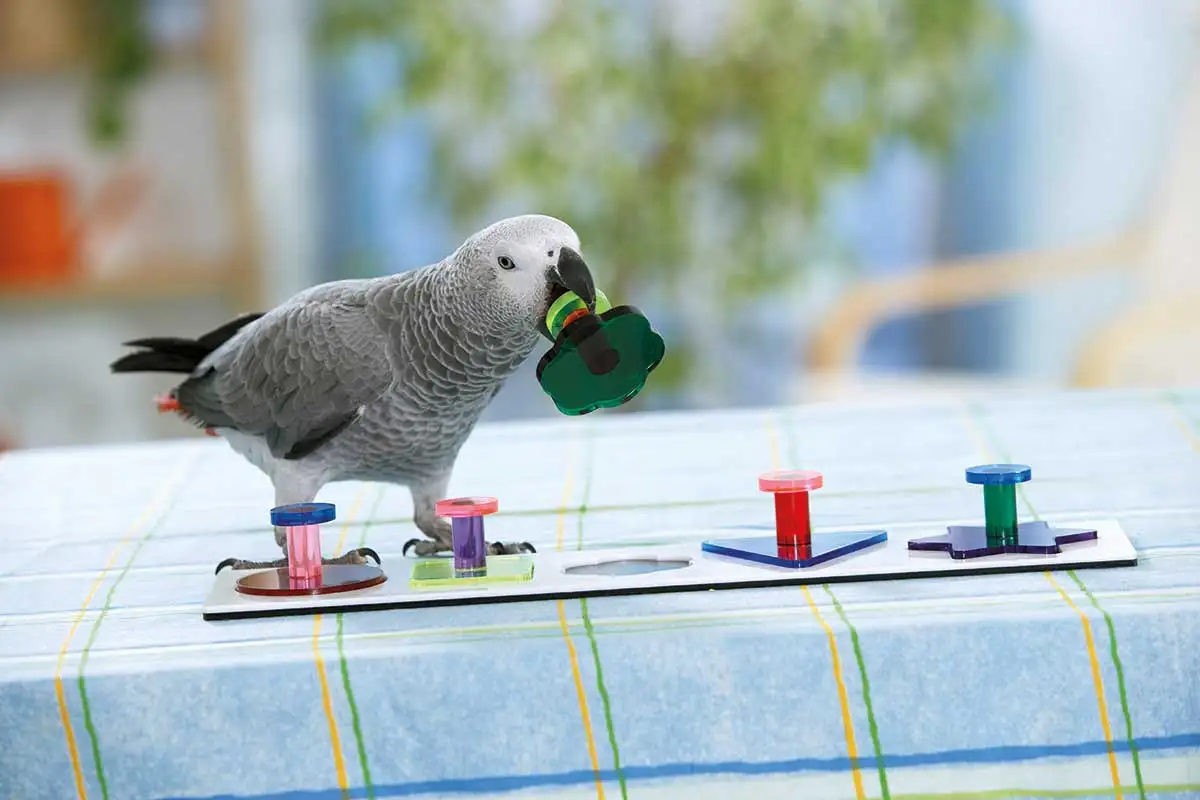
Classic animal cognition tests were designed to probe problem-solving, insight and flexible behavior. For decades, experiments using string-pulling, means-end reasoning or water displacement have been reserved for birds, primates and occasionally dogs. These tasks measure whether an animal can understand cause-and-effect relationships well enough to manipulate objects to achieve a goal rather than simply follow a learned cue.
Animal intelligence test apparatus
When researchers adapted one such task for bumblebees, the modifications had to respect the size, mobility and sensory world of a flying insect. Instead of thick ropes and wooden platforms, scientists offered thin threads attached to a small platform carrying a droplet of sucrose. The insect could not reach the reward directly but could pull the thread to bring it closer. That small change preserved the problem's logic while making it physically tractable for a bee.
How the Experiment Works
Insect cognition lab setup
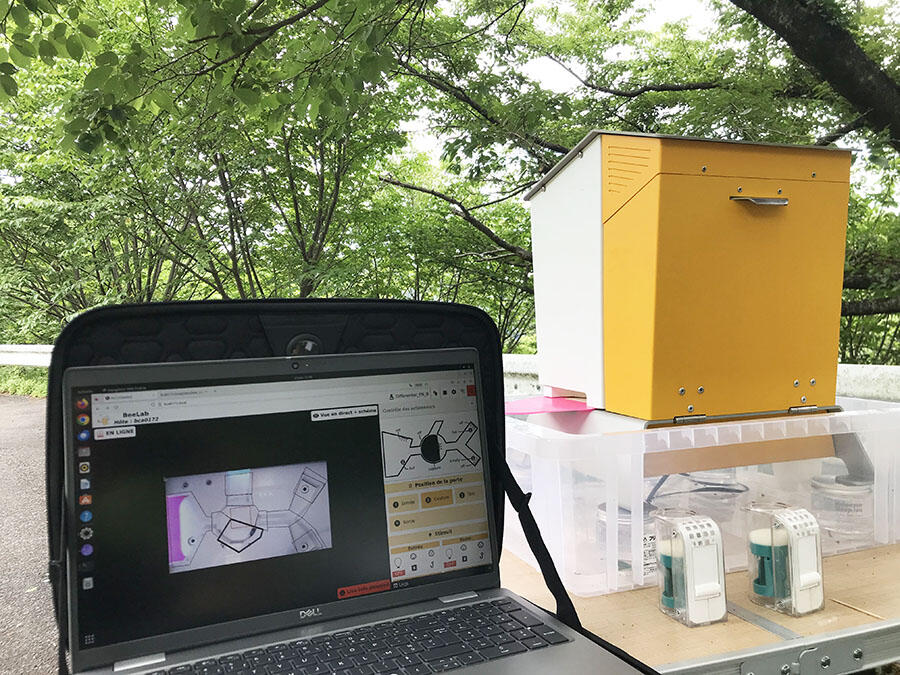
At first glance, the setup is elegantly modest. A transparent arena isolates a single bee. A reward platform sits just out of reach, connected to a lightweight filament. Cameras record behavior from multiple angles. The test proceeds in stages: initial exposure, free exploration, and then the timed problem-solving trials. A typical sequence looks like this:
- Habituation: The bee explores the arena and learns the general location of food rewards placed openly.
- Pre-training: The filament is presented tucked under the platform, so the bee experiences the platform and the thread as parts of the same object without yet needing to pull.
- Test trials: Only the filament and out-of-reach platform are present. The bee must interact with the filament and pull to access the nectar.
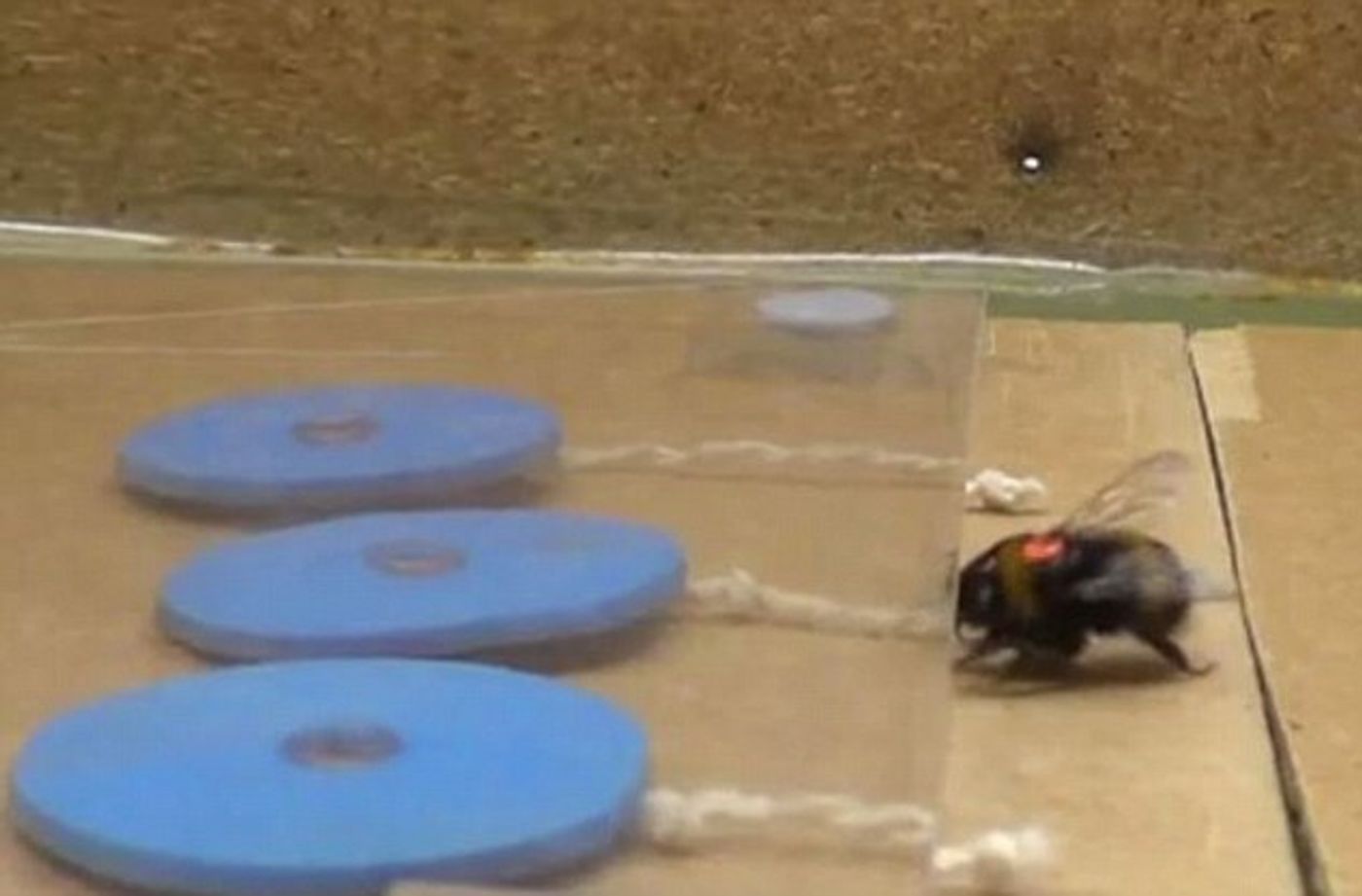
Bee string pulling task
Researchers score a range of behaviors: the latency to first contact, the number of pulls, whether pulling is repeated, and whether the bee uses its legs, mandibles or body rotation to manipulate the filament. Over repeated trials, many bees improve, reducing the time to success and demonstrating behavioral flexibility.
What matters is not the size of the brain but the strategies those nervous systems discover to solve a problem.
What the Bees Did — and Why It Matters
Observers recorded several notable patterns. Some bumblebees solved the task on their first encounter after minimal exploration, suggesting a capacity for insight or rapid problem assessment. Others solved it after a few failed attempts, indicating trial-and-error learning and memory consolidation. A subset used a series of small tugs and body rotations, an apparently deliberate sequence of movements that looked like a motor program shaped by feedback.
Why is this startling for many scientists? Partly because bees exhibit these behaviors despite possessing a nervous system with orders of magnitude fewer neurons than that of a crow or a monkey. Their brains are compact, yet they host complex architectures — dense networks in mushroom bodies and sensorimotor circuits — that appear well-suited to solving specific ecological problems. The lab task hijacks those capabilities in a way that reveals unexpected generalization and flexibility.
Mechanisms: How Tiny Brains Do Big Thinking

Bee brain mushroom bodies
Several neural and behavioral strategies can explain the bees' success without appealing to human-like reasoning. These include:
- Active exploration: Bees use systematic motor routines to sample the environment, gathering sensory feedback that refines their actions.
- Associative chaining: Simple associations link a sequence of actions to a reward, producing complex-looking behavior from basic rules.
- Combinatorial neural circuits: Compact but highly recurrent networks can produce pattern completion and flexible responses.
Importantly, these mechanisms are not mutually exclusive. A bee might begin with exploration, form associations, and then, through neural pattern matching, arrive at a consistent pulling technique that transfers across contexts. The result is apparent problem-solving without requiring the full suite of abstract cognition we attribute to large-brained animals.
Comparative Perspective: Where Bees Fit on the Intelligence Spectrum
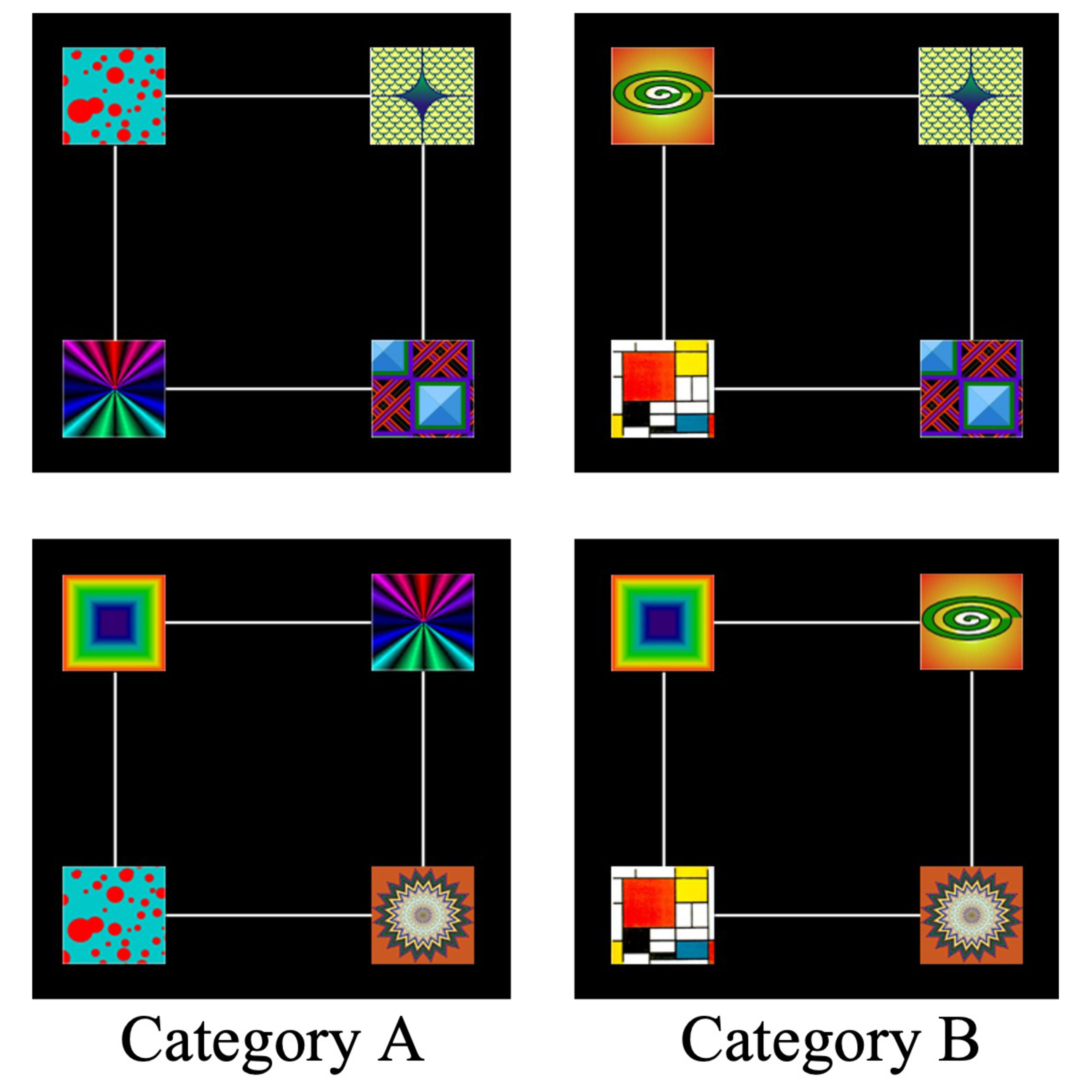
Comparative cognition experiments
Comparative cognition has often been framed as a ladder in which brain size maps to behavioral complexity. Experiments like this suggest a different metaphor: a toolkit. Different species evolve cognitive toolkits optimized for their ecological niches. For corvids and primates, tool use and social learning dominate. For bees, rapid visual processing, spatial memory and precise motor control are paramount. When a task taps into those strengths, bees can perform at levels comparable to animals with much larger brains.
That does not mean bees are little primates in miniature; rather, it shows that intelligence is multifaceted and that convergent solutions can arise under evolutionary pressure. The bumblebee's victory in a string-pull test highlights functional equivalence rather than structural similarity.
Implications Beyond the Lab
Pollinator behavioral research
The significance of these findings extends into several domains.
- Neurobiology: Reveals how compact neural architectures enable flexible behavior, prompting new models of efficient information processing.
- Robotics and AI: Inspiration for micro-robotics and lightweight control systems that must act under severe size and power constraints.
- Ecology and conservation: Reinforces the behavioral sophistication of pollinators, strengthening arguments for their protection amid habitat loss and pesticides.
- Philosophy of mind: Challenges assumptions about the relationship between brain size and consciousness or awareness.
A small brain does not equal simple behavior — it reflects a different set of priorities honed by evolution.
Caveats and Healthy Skepticism
No single experiment overturns an entire field. Critics rightly point out limits: lab tasks are artificial, and success on one problem does not imply general intelligence. There are also methodological considerations — sample sizes, individual variation, and the risk of over-interpreting anthropomorphic descriptions like "insight."
Researchers address these caveats by replicating studies, varying contexts, and testing transferability. For instance, if a bee trained on one filament-and-platform arrangement generalizes the pulling motion to different rewards or orientations, that strengthens the claim of flexible problem solving. Evidence to date suggests a mix: bees sometimes generalize, but success often depends on how closely a new problem maps onto the species' evolved skills.
Broader Context: What This Says About Intelligence
One productive way to think about these findings is to separate competence from mechanism. Bees demonstrate competence — the ability to produce adaptive behavior — that can map to different underlying mechanisms than those in mammals. When we remove human-centric expectations, it becomes easier to appreciate intelligent behavior expressed through specialized pathways.
Evolution favors solutions that work, not those that resemble human thinking. From that angle, the bumblebee's success is both unsurprising and deeply informative: it is the logical outcome of millions of years of selection for learning, memory and sensorimotor control in a demanding aerial environment.
What Scientists Want to Know Next
The results open many follow-up questions. Leading priorities include:
- Mapping the neural activity during problem solving to identify circuits involved in planning versus reactive control.
- Testing whether social information (watching another bee pull) accelerates learning and whether cultural transmission occurs.
- Measuring limits: Which variants of problem difficulty do bees fail, and why?
- Exploring individual differences — are some bees "innovators" while others are conservative?
Answering these questions will require interdisciplinary work — combining behavior, electrophysiology, computational modeling and field studies that connect lab tasks to ecological relevance.
- Reveals hidden cognitive abilities.
- Suggests efficient neural architectures for AI.
- Strengthens conservation messaging.
- Risk of over-generalization from lab tasks.
- Potential anthropomorphism in interpretations.
- Need for replication across species and contexts.
Conclusion
The image of a bumblebee pulling a thread for a drop of sugar is deceptively simple. Behind that tug lies a tapestry of sensory processing, motor coordination and learned strategy. These experiments do not crown insects with human-like intelligence; rather, they invite us to expand our definition of cognition to include many evolutionary solutions to the problem of living.
For scientists, the work underscores the value of cross-species experimentation and the danger of equating brain volume with behavioral worth. For the public, it offers a new appreciation of the small creatures that pollinate our crops and color our meadows. And for engineers, it presents blueprints for doing more with less — a lesson from nature written in a few milligrams of neural tissue.
- Bumblebees have solved adapted classic cognition tasks, showing flexible problem-solving despite tiny brains.
- Success likely arises from specialized neural circuits, active exploration and associative chaining, not necessarily human-like insight.
- Findings have implications for neurobiology, robotics, conservation and our broader understanding of intelligence.
Researchers stress replication and ecological tests, but the message is clear: intelligence comes in many forms.