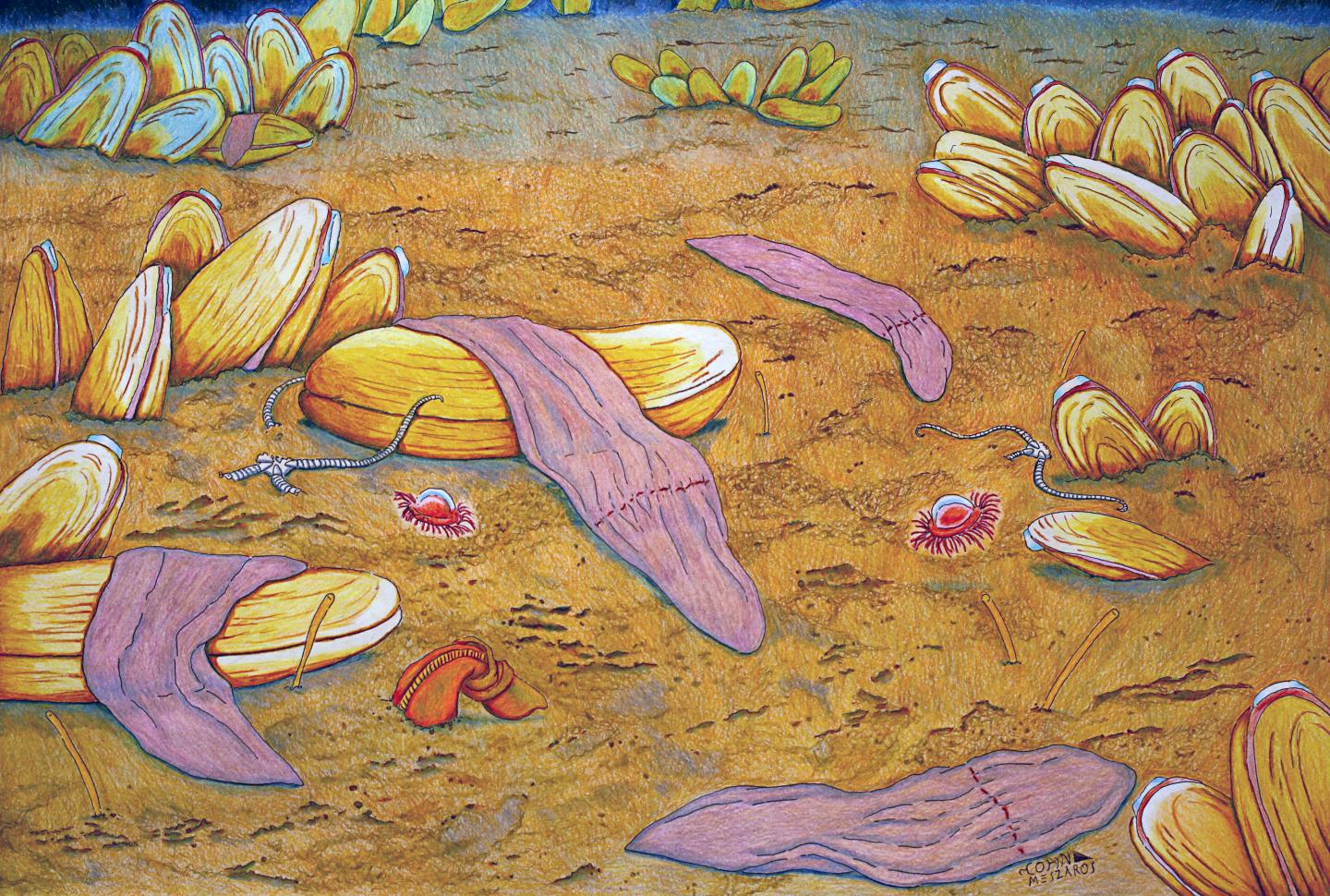
Xenoturbella: The Brainless Deep-Sea Enigma
On the black, cold floor of the deep ocean lives a creature that breaks most of our expectations about what an animal must be. Xenoturbella is a small, flat, unsegmented worm-like animal with no brain, no centralized organs, and a deceptively simple appearance that has baffled and delighted biologists for decades. In a field that often prizes complexity as evidence of evolutionary advancement, Xenoturbella offers a radical counterpoint: simplicity can be ancient, informative, and full of surprises.
The strange simplicity of Xenoturbella forces a rethink of how bodies and nervous systems first evolved.
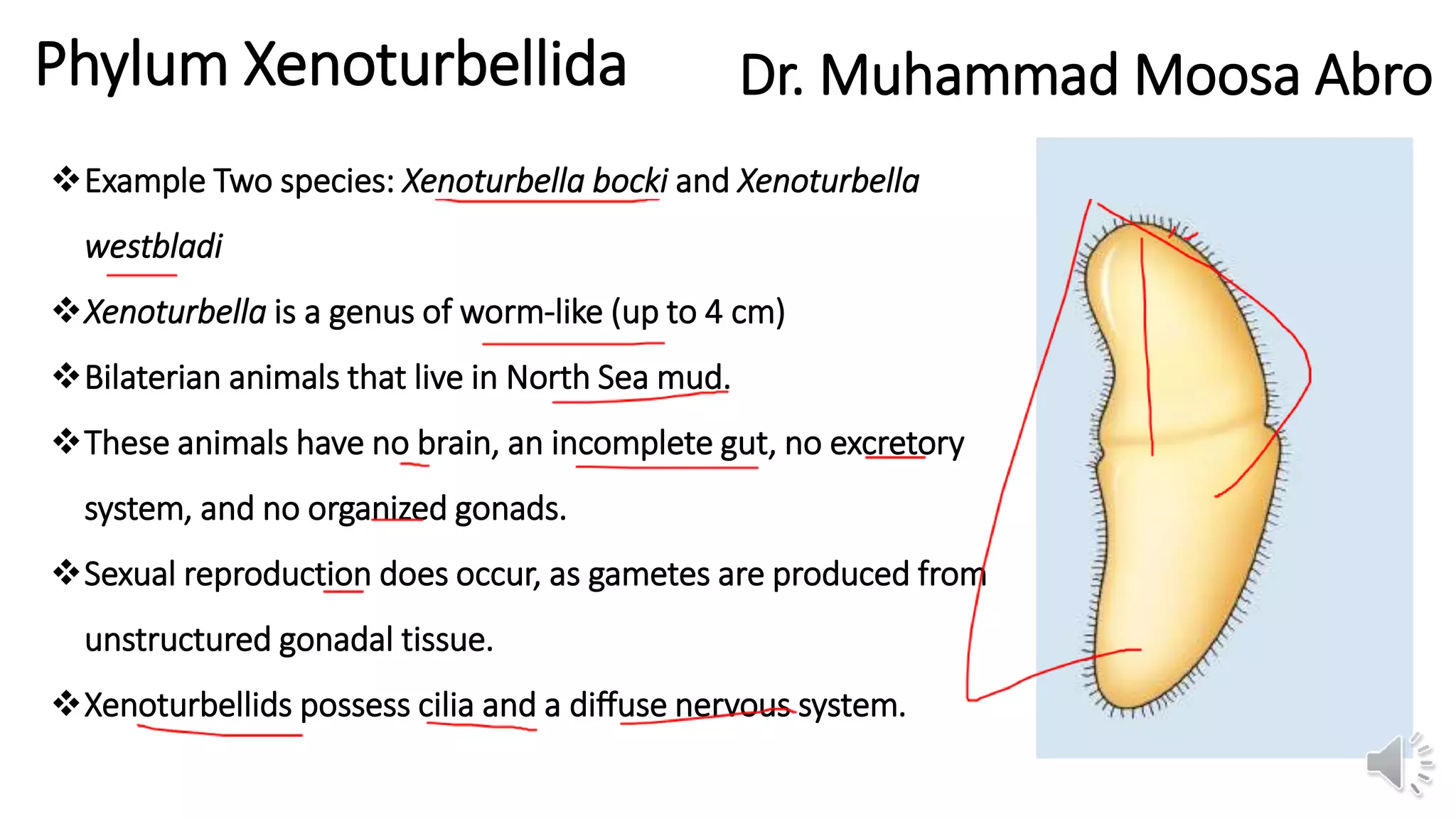
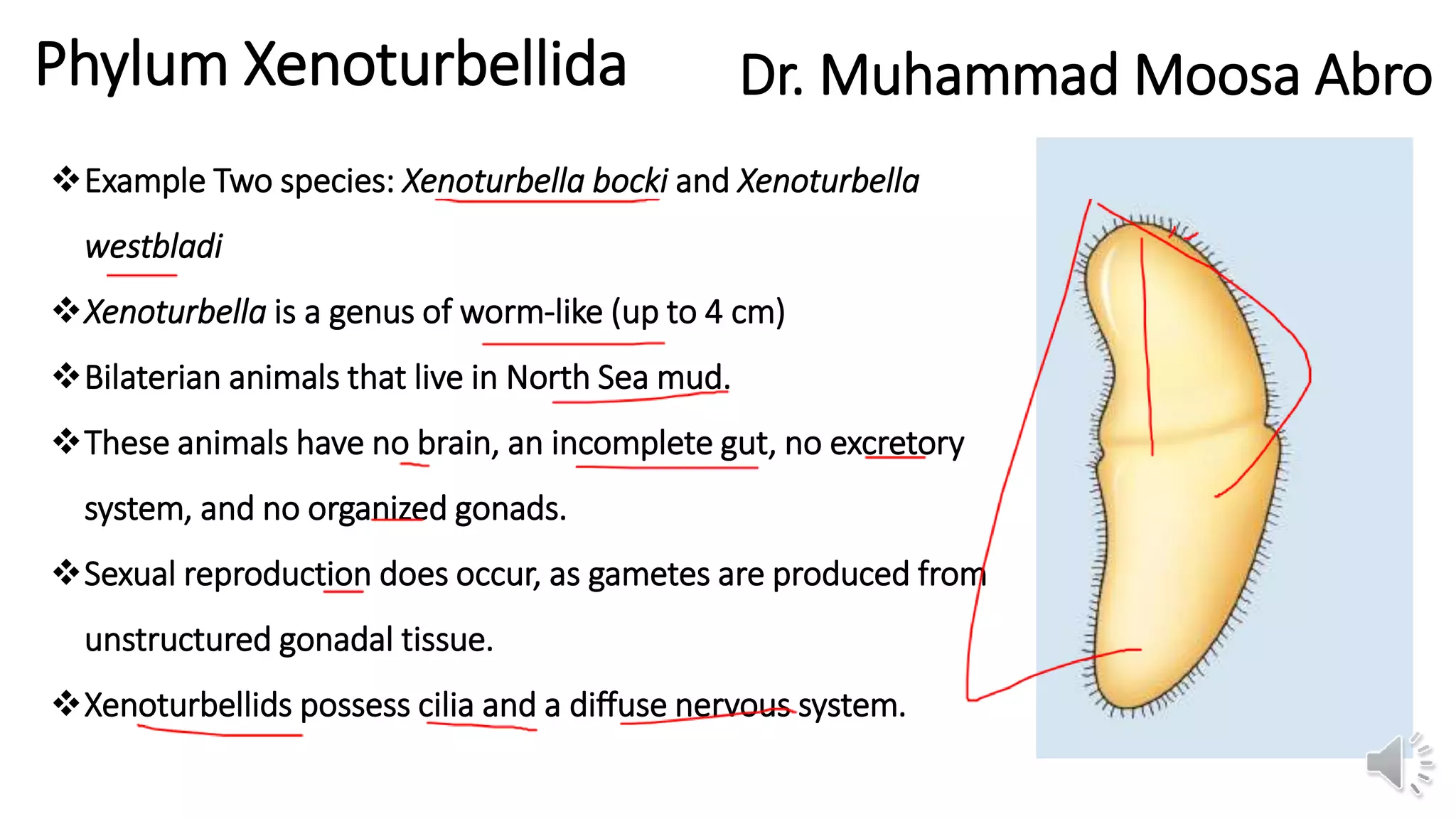
Xenoturbella brainless marine animal anatomy
WHAT IS XENOTURBELLA?
A minimalist marine animal
Xenoturbella is a genus of marine invertebrates first described in the 20th century after specimens were dredged from the sea floor. Individuals are typically a few centimeters long, flattened, and leaf-shaped. They are soft-bodied and lack many features we associate with more familiar animals: there is no clear head region, no eyes, no brain, and no through-gut lined with organs such as a stomach or a complex intestine. Yet within that apparent simplicity lies a body plan that carries important evolutionary clues.
An identity crisis in taxonomy
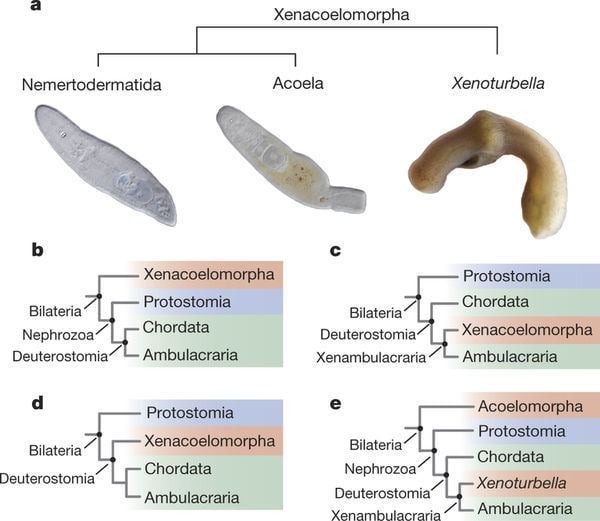
The taxonomic history of Xenoturbella reads like a detective novel. Early naturalists struggled to place it within established groups. Over time, morphological studies, embryology, and molecular sequencing shifted its classification repeatedly, at times associating it with flatworms, at other times placing it near deuterostomes — the group that includes vertebrates like us. Today, Xenoturbella is usually discussed alongside a clade called Xenacoelomorpha, which hints at a more basal position in animal evolution. That uncertain placement is part of what makes the animal so scientifically intriguing: it may represent a lineage that split early from other complex animals, preserving features of deep evolutionary history.
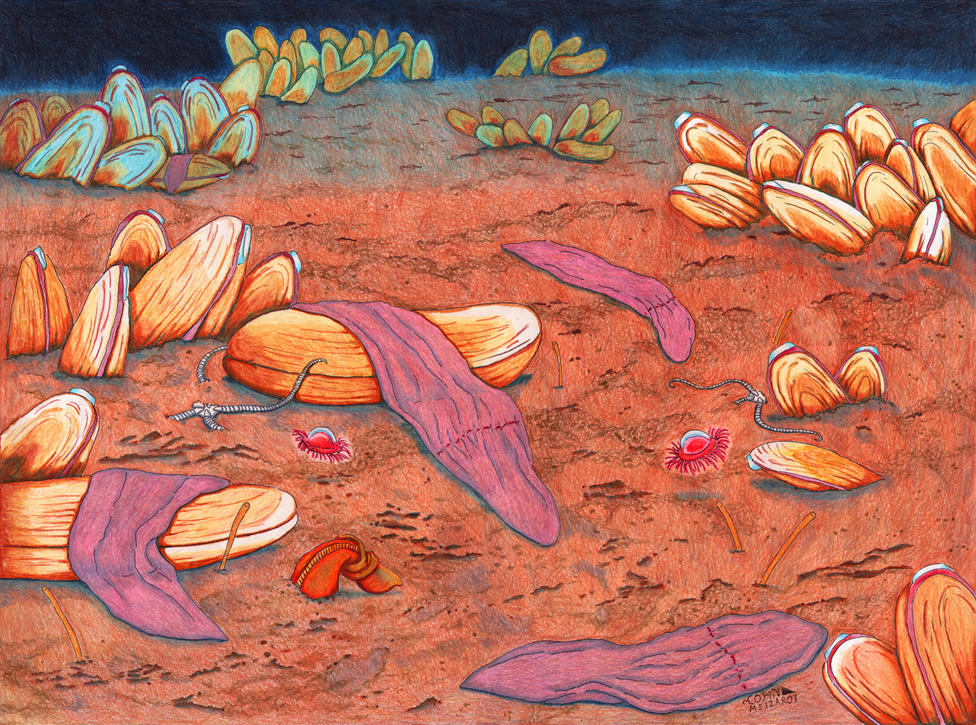
Xenoturbella deep sea habitat illustration
ANATOMY: SIMPLE BUT SURPRISING
External form and movement
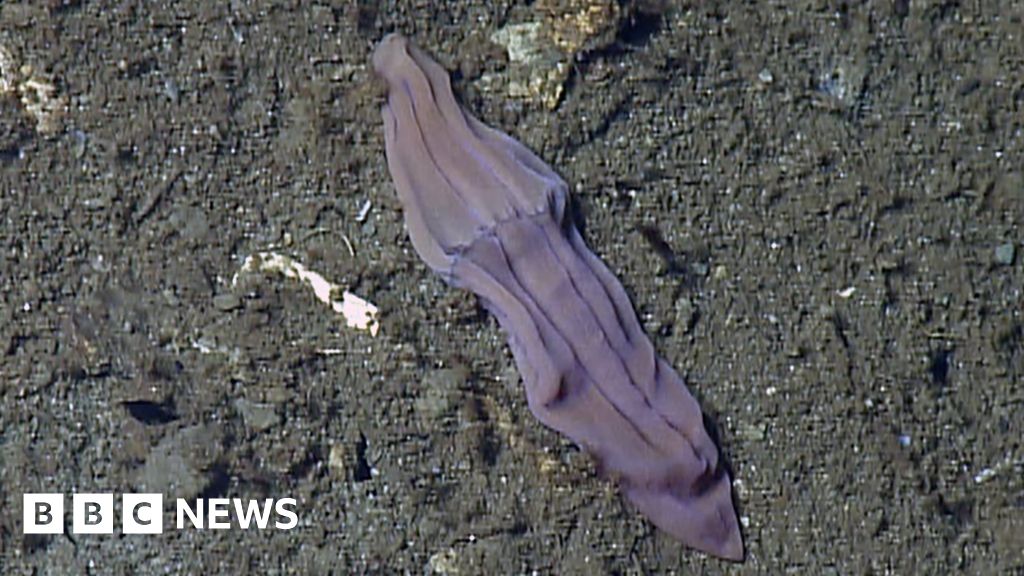
At first glance Xenoturbella looks like a soft, gelatinous ribbon that glides over sediment. Its body is dorsoventrally flattened, and movement is accomplished by ciliary beating and subtle body contractions rather than muscles specialized for rapid locomotion. The outer surface is ciliated and secretes mucus, which helps with both movement and feeding.
Internal layout
Openings and internal spaces in Xenoturbella are limited. Rather than a complex digestive tract with clearly separated organs, it has a simple sac-like gut or digestive cavity. Cells for digestion line this cavity and absorb nutrients directly. There is no centralized brain; instead, a diffuse network of nerve cells coordinates movement and sensory responses. Some species display bilateral symmetry, a trait shared by many major animal groups and one that informs studies of ancestral bilaterian organization.
Artist's impression: a flattened Xenoturbella gliding over deep-sea sediment.
ECOLOGY: WHERE XENOTURBELLA LIVES AND HOW IT FEEDS
Habitat and distribution
Xenoturbella species have been collected from disparate marine environments, from temperate continental shelves to abyssal plains. They tend to live on or just above the seabed, often in soft sediments. Because many live in deep, cold, and dark realms, specimens are usually known from dredging, submersibles, or remote-operated vehicle surveys rather than casual observation.
Xenoturbella feeding behavior on seabed
Feeding strategy
Feeding is one of the most intriguing aspects of Xenoturbella biology. They appear to feed on small invertebrates, eggs, or organic detritus, ingesting food through a ventral mouth opening into a simple digestive cavity. Some species have been associated with bivalve remains, and early confusion about their identity arose because parasites or gut contents sometimes muddled morphological interpretations. Their mode of digestion — extracellular digestion in a sac-like cavity followed by absorption — is in line with a simple, energy-efficient lifestyle adapted to food-scarce environments.
EVOLUTIONARY SIGNIFICANCE
Why a brainless animal matters
One reason Xenoturbella fascinates evolutionary biologists is its lack of a centralized brain. Understanding whether that simplicity is primitive — meaning it resembles the ancestral state of a large group of animals — or secondarily reduced through evolutionary loss has major implications for reconstructing the early steps in animal evolution. If Xenoturbella and its relatives branched off before complex brains evolved, their body plan could mirror ancestral conditions and help locate key innovations in the tree of life.
Xenoturbella evolutionary significance diagram
Molecular insights and phylogeny
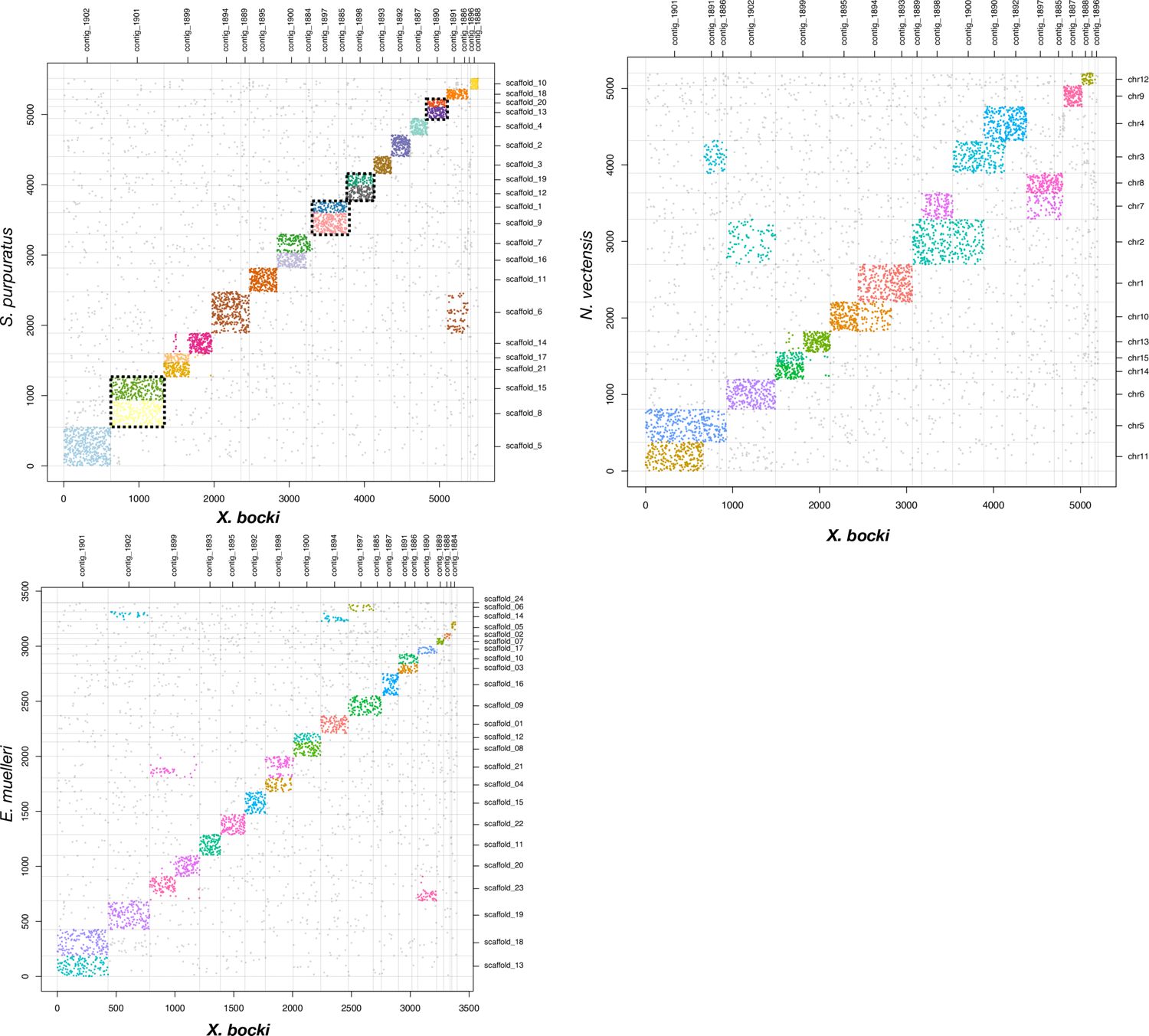
The revolution in molecular biology transformed Xenoturbella research. Sequencing of nuclear and mitochondrial genes revealed that simple anatomy alone cannot reliably assign evolutionary relationships. Genetic data placed Xenoturbella in surprising positions, and analyses continue to nuance its relationship to acoels and other basal bilaterians. Rather than being a curiosity on the periphery, Xenoturbella is now a focal point for debates about the origin of bilaterality, the evolution of body cavities, and the emergence of organ systems like the nervous system.
Implications for the Cambrian puzzle
Fossil records from the Cambrian explosion show a wide variety of body plans, many of which lack clear modern analogues. Xenoturbella offers a living window into possible ancestral morphologies that might bridge gaps between fossil forms and present-day animals. Studying its development and genetics helps paleobiologists make more informed hypotheses about early animal diversification and the sequence of innovations that produced complex body plans.
HOW SCIENTISTS STUDY XENOTURBELLA
Field collection and deep-sea methods
Because many Xenoturbella species live deep underwater, collecting live specimens requires advanced gear: dredges, box corers, and remotely operated vehicles. These tools allow scientists to retrieve intact animals and sediment samples for laboratory examination. Each specimen is rare and valuable, so careful preservation and documentation are essential to ensure morphological and molecular analyses remain robust.
Xenoturbella deep sea collection methods
Laboratory approaches
In the lab, researchers use microscopy, histology, and increasingly, genomic and transcriptomic sequencing to decode the organism's biology. Developmental studies that document embryology and larval stages are particularly informative because they reveal how tissues and body axes form. Comparative gene expression — seeing which genes turn on in which part of the embryo — helps align Xenoturbella with other animal groups and infer ancestral developmental programs.
COMPARISONS: XENOTURBELLA AND OTHER SIMPLE ANIMALS
Xenoturbella vs Acoels
Acoels are another group of small, simple worms once thought to be primitive flatworms. Like Xenoturbella, acoels lack a conventional gut and central nervous system. Comparative studies highlight similarities and differences that inform whether simplicity shared by these groups reflects common ancestry or convergent adaptations to similar niches.
Xenoturbella vs Acoels comparison
Xenoturbella vs Ctenophores and Porifera
Ctenophores (comb jellies) and Porifera (sponges) are frequently invoked in debates about the earliest animal branches. Each group exhibits forms of simplicity or unusual body plans. Xenoturbella differs in key developmental and structural ways, and comparing these groups illuminates multiple evolutionary pathways that led to complexity in animal life.
| Feature | Xenoturbella | Acoels |
|---|---|---|
| Central brain | No | No |
| Gut type | Sac-like cavity | No through-gut |
| Symmetry | Bilateral | Bilateral |
WHY XENOTURBELLA MATTERS BEYOND ACADEMIA
Biodiversity and conservation
Every species, no matter how tiny or simple, is a thread in the tapestry of marine biodiversity. Xenoturbella's presence in deep-sea ecosystems contributes to the function of benthic communities and the cycling of organic matter. Protecting deep-sea habitats from trawling, mining, and pollution preserves the living laboratories that hold species like Xenoturbella and the undiscovered diversity around them.
Philosophical and educational value
There is also a broader value to studying such organisms: they challenge human intuitions about what an animal must be. That challenge is a powerful educational tool, prompting students and the public to see evolution not as a ladder heading toward us but as a branching tree with many viable strategies for life.
OPEN QUESTIONS AND FUTURE DIRECTIONS
Unresolved phylogenetic position
Despite advances in sequencing, some uncertainty remains about where exactly Xenoturbella sits on the animal tree. New genomes, better sampling of related groups, and improved models of molecular evolution are likely to refine its placement further. Each incremental genetic data point can shift interpretations, so the story remains active.
Developmental mysteries
Detailed study of Xenoturbella embryology and gene expression can reveal which developmental programs are ancestral and which are derived. Key questions include how body axes are determined, how the nervous system develops in the absence of a brain, and whether molecular pathways resembling those in more complex animals are present and how they function.
CONCLUSION
Xenoturbella is small in size but big in scientific impact. It is a reminder that evolutionary biology thrives on exceptions to expectations. Its minimalist body plan invites us to revisit foundational questions: how did complex animals arise, what did the earliest bilaterians look like, and how diverse were early animal experiments in body design? For researchers and curious readers alike, Xenoturbella is more than a zoological oddity; it is a living clue to our deep biological past.
- Xenoturbella is a tiny, brainless marine animal with a simple sac-like gut and a diffuse nervous system.
- Its uncertain phylogenetic position makes it crucial for understanding early animal evolution and the origin of bilaterality.
- Studying Xenoturbella requires specialized deep-sea collection and modern molecular tools.
- Protecting deep-sea habitats preserves organisms that illuminate evolutionary history.
Further curiosity
Whether you are a student, an amateur naturalist, or a seasoned scientist, Xenoturbella rewards curiosity. The next specimen brought to a lab, the next embryological series imaged, or the next genome assembled could change how we think about the first steps of complex life on Earth. In that sense, the unassuming Xenoturbella remains one of biology's most tantalizing puzzles.