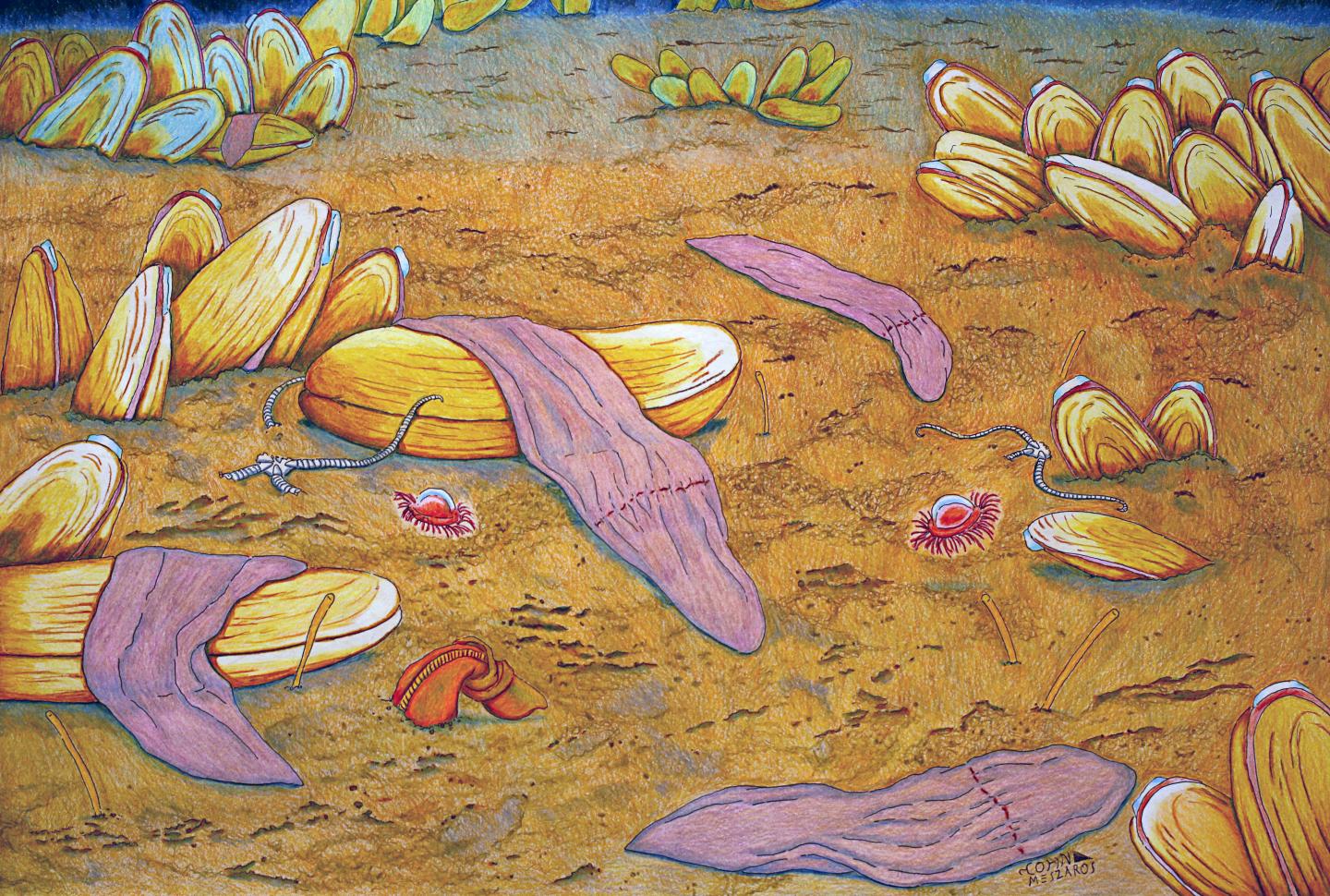
Xenoturbella Explained: The Brainless Deep-Sea Animal
Imagine an animal so simple that it lacks a brain, a centralized nervous system, and many of the organs you would expect in even the smallest worm. Xenoturbella — a slender, flattened creature that lives on or just above deep-sea sediments — looks unremarkable at first glance. Yet for biologists it is a vexing and revealing organism: a living experiment in what an animal can be, and a probe into the earliest chapters of animal evolution.
The surprising simplicity of Xenoturbella turns assumptions about complexity upside down.
Why Xenoturbella Matters
Xenoturbella occupies a peculiar place in modern biology. Its body plan is minimalist: a soft, ciliated exterior, a simple internal cavity for digestion, and scattered nerve cells rather than a brain. That simplicity raises two big questions. First, is Xenoturbella primitive — preserving features of the earliest bilaterian ancestors — or is it secondarily simplified, having lost complexity over evolutionary time? Second, what can this organism teach us about the emergence of body plans, organs, and nervous systems in animals?
Discovery and Scientific History
First Encounters
Scientists first encountered Xenoturbella while examining bottom-dwelling sea life recovered from trawls and dredges. Its delicate body often arrived damaged, which hindered study. Early anatomists struggled to place the creature in the animal family tree because traditional morphological clues — internal organs, segmented body parts, distinct heads — were absent.
A Molecular Turn and a Puzzle
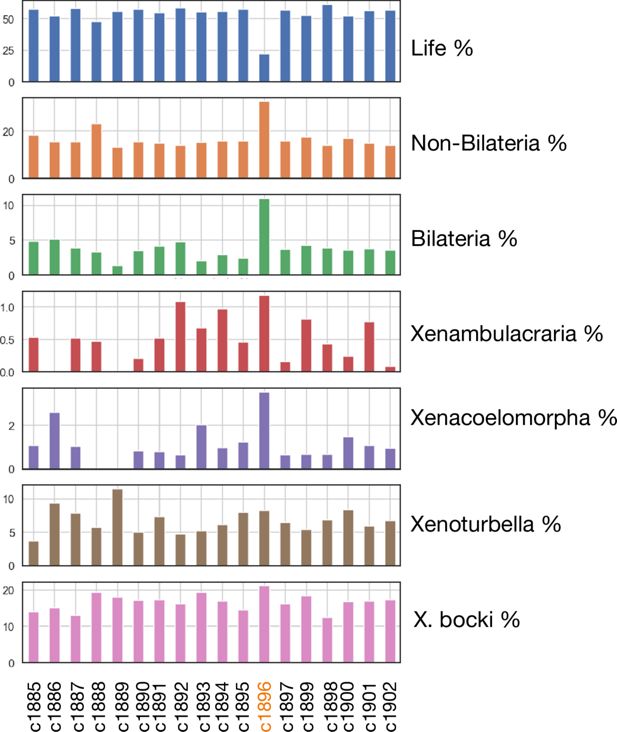
Molecular techniques revolutionized how researchers approached Xenoturbella. DNA extracted from specimens suggested surprising relationships, but initial analyses were confounded by contamination from prey items — especially bivalve DNA found in the gut — which led to false signals. Over time, improved sampling, sequencing, and contamination controls clarified that Xenoturbella belongs to a small and unusual group of flat, simple animals now often placed in Xenacoelomorpha, a lineage that has forced scientists to re-evaluate long-held ideas about animal evolution.
Anatomy: What Does (and Doesn’t) Exist
Body Plan and Surface
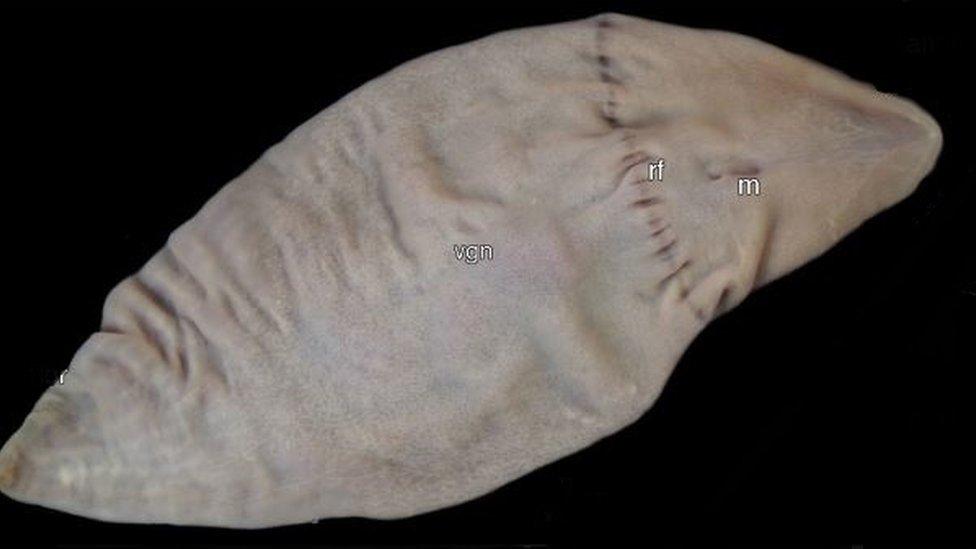
Xenoturbella's external appearance is deceptively plain: a smooth, ribbonlike body, usually paddle-shaped, covered with cilia that help it glide over sediment. There is no distinct head with sensory appendages like you would find in a typical worm or mollusk. Instead, sensory cells are distributed across the epidermis, and a diffuse nerve net, made of scattered neurons, provides simple coordination.
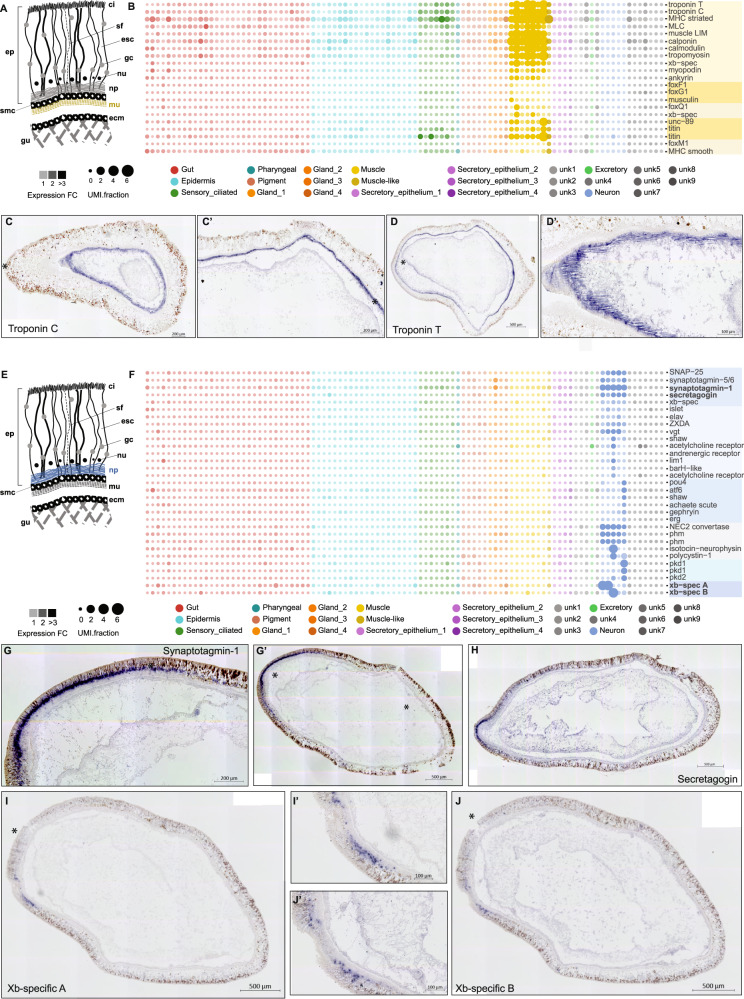
Xenoturbella nerve net
Internal Organization
Internally, the creature is equally simple. It has a central digestive cavity — more like a sac than a tube — and lacks complex organs such as kidneys, hearts, or an advanced gut with specialized regions. There is no true coelom (body cavity) as seen in many other bilaterians. This absence of clearly differentiated organs is central to arguments about whether Xenoturbella represents an ancestral body plan or a derived simplification.
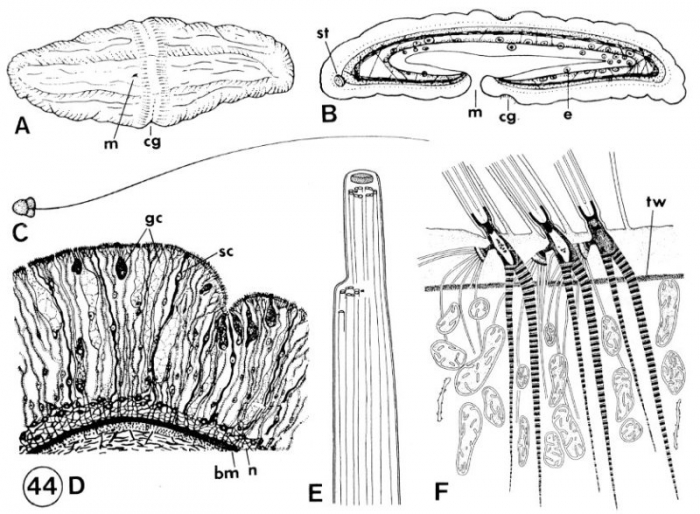
Xenoturbella digestive cavity
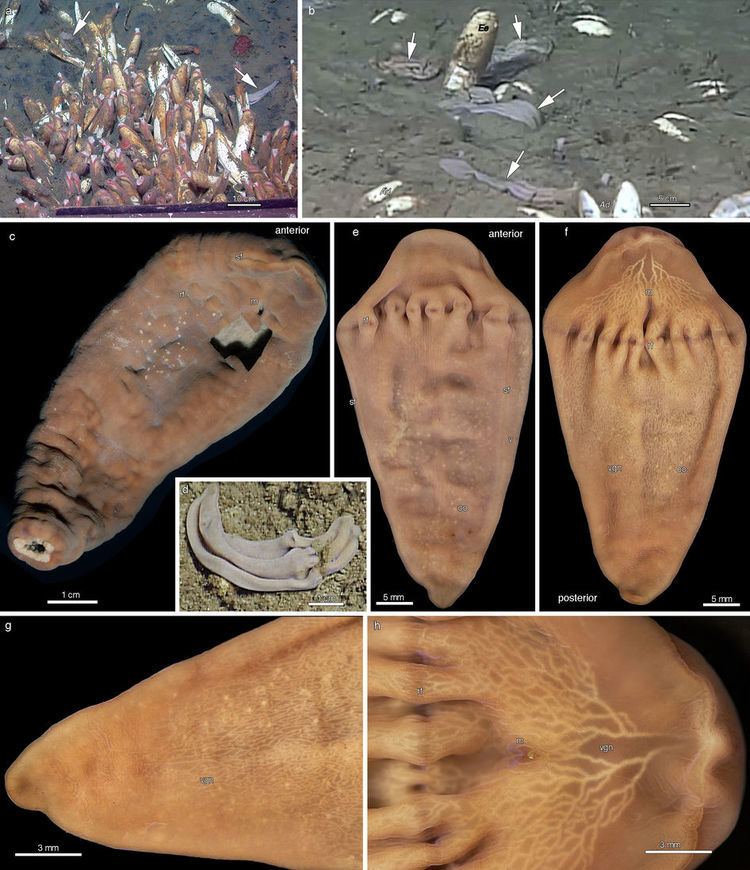
Xenoturbella simple body plan
Feeding, Reproduction, and Life Cycle
Diet and Foraging
Direct observations and stomach content analyses show that some Xenoturbella species ingest eggs and tissues of bivalves and other invertebrates. Their feeding strategy appears to be opportunistic: they glide across the seabed, encountering food particles or prey and drawing material into the digestive cavity. Because many specimens are collected after trawling, capturing undisturbed feeding behavior in the wild remains challenging.
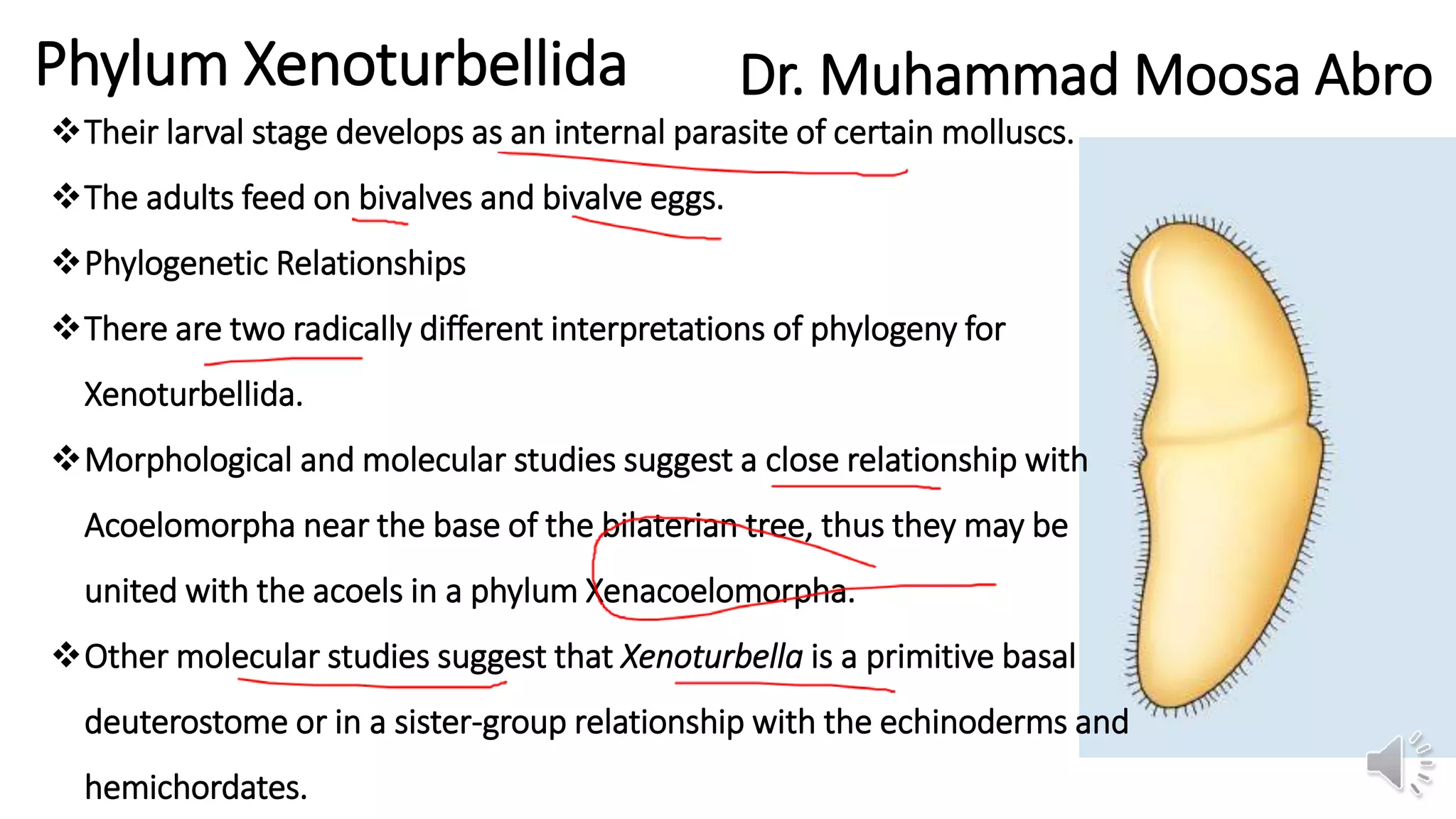
Xenoturbella bivalve association
Reproduction and Development
Reproductive biology in Xenoturbella is still being fleshed out. Many species appear to reproduce via external fertilization: individuals release gametes into the water column where fertilization occurs. Larval stages are poorly known for most species, and whether larval forms are simple or more complex has direct bearing on whether the adult simplicity is ancestral. Workers continue to search for and observe larvae to fill this crucial gap.
Where They Live: Habitat and Distribution
Xenoturbella species occur primarily in marine environments, from shallow shelves to deep-sea habitats on continental slopes and abyssal plains. Their distribution is patchy; some species are regional or limited to particular depths. The deep sea — with its cold, stable conditions and scant food — seems to suit organisms with low metabolic demands and simple physiologies.
Xenoturbella deep-sea habitat
Evolutionary Significance: A Window into Early Animals
The position of Xenoturbella in the animal tree of life matters because it informs hypotheses about the last common ancestor of most animals (the last bilaterian ancestor). Two competing interpretations dominate modern discussion. One view holds that Xenoturbella and its relatives are basal bilaterians, meaning their simple body plan preserves features of an early ancestor. The other proposes that Xenoturbella is secondarily simplified — descended from more complex ancestors and having lost organs over time.
Resolving these hypotheses affects how we reconstruct the sequence of evolutionary innovations: the origin of a through-gut, centralized nervous systems, true body cavities, and organ systems. If Xenoturbella is primitive, simplicity came first and complexity was gradually built; if derived, then complexity may be more ancient than previously thought, and multiple lineages simplified in specialized niches.
Xenoturbella evolutionary significance
How Scientists Study Xenoturbella
Field Work and Collection
Because many species live deep underwater, research relies on careful sampling: grabs, corers, and remotely operated vehicles (ROVs) that can observe and collect fragile animals without destroying them. These methods are expensive and logistically challenging, so each specimen is valuable. Researchers now prioritize gentle handling and immediate preservation for DNA work and microscopy.
Lab Techniques and Molecular Tools
Modern molecular methods — including whole-genome and transcriptome sequencing — have been pivotal. These techniques allow scientists to compare gene sets, developmental pathways, and regulatory networks with other animals. Histology, electron microscopy, and micro-CT scanning provide high-resolution images of tissues and cell types, helping to detect hidden structures that earlier dissections might have missed.
Challenges and Open Questions
Despite advances, key questions remain. How many undiscovered species exist in the deep sea? Do known species have cryptic developmental stages? Is the organism's simplicity ancestral or derived? Resolving these will require more specimens, live observations, and comparative developmental studies — particularly watching embryos and larvae, which are difficult to obtain.
- Model for early animal evolution: helps test hypotheses about ancestral body plans.
- Low-complexity study system: simpler anatomy makes some comparisons clearer.
- Hard to collect: deep-sea habitats and fragile bodies complicate research.
- Limited material: few specimens mean slow progress on developmental studies.
A Table to Clarify: How Xenoturbella Compares
| Feature | Xenoturbella | Typical Bilaterian |
|---|---|---|
| Centralized Brain | No | Often yes |
| Organ Systems | Minimal (digestive sac) | Complex (heart, kidney, etc.) |
| Body Cavity | No true coelom | Often present (coelom) |
| Habitat | Marine, often deep sea | Marine, freshwater, terrestrial |
Why Xenoturbella Still Captivates Scientists and the Public
Part of xenoturbellid appeal is philosophical: it forces an examination of what we mean by complexity and progress in evolution. The organism also acts as a reminder that the deep sea holds biological surprises that can overturn textbook narratives. For students of evolution, Xenoturbella is a living counterexample to linear ideas of 'more is better.' Simplicity can be a successful strategy, not a lesser one.
Conservation and Future Directions
As deep-sea exploration expands — driven by scientific curiosity and commercial interest in resources — understanding baseline biodiversity becomes urgent. Xenoturbella and similar fragile species are vulnerable to trawling, mining, and changing ocean chemistry. Protecting the habitats where these animals live preserves not only individual taxa but also the evolutionary experiments they represent.
Conclusion: What Xenoturbella Teaches Us
Xenoturbella is not merely a curiosity; it is a focal point for conversations about how complex life evolved. Whether it is an echo of the earliest bilaterians or a case of dramatic simplification, the organism teaches humility: the tree of life contains branches that do not conform to our expectations. Continued study — combining patient field collection with modern molecular and imaging tools — promises to clarify the role of simplicity in the history of animals.
- Xenoturbella is a simple, marine animal notable for lacking a brain and many organs.
- Its evolutionary position is debated, and resolving it informs models of early animal evolution.
- Studying Xenoturbella requires careful deep-sea collection and contamination-aware molecular work.
- Preserving deep-sea habitats is essential to protect rare, scientifically valuable species.
Further Curiosity
For readers interested in diving deeper: watch for reports of live observations, developmental studies describing embryos and larvae, and new genomic comparisons that could finally settle whether Xenoturbella's simplicity is ancestral or derived. In the end, this humble animal underscores a broader truth of biology: sometimes the smallest, plainest organisms carry the biggest lessons.