Windows 12: Modular, AI-First, Subscription-Based OS
The tech world is abuzz with reports that Microsoft’s next-generation operating system — tentatively called Windows 12 in popular coverage — will represent a deliberate break from the monolithic Windows of old. Early descriptions portray it as a modular, AI-focused platform delivered primarily through a subscription model. Whether those reports are fully accurate or colored by rumor, the concepts at their center are worth parsing: modularity, pervasive AI, and subscription-based delivery each promise to reshape how we buy, use, and manage PCs. This feature takes a deep dive into what a Windows reimagined around those pillars could mean for users, IT administrators, developers, and the industry at large.
Windows 12 AI features
A Fresh Starting Point: Why Modularity Matters
For decades, Windows evolved by layering features atop an enormous compatibility foundation. That depth delivered unmatched application support, but it also produced complexity: system bloat, update fragility, and long upgrade cycles. A truly modular Windows would let Microsoft, OEMs, and end users assemble only the components they need — a lean kernel and runtime, plus optional modules for legacy compatibility, AI services, media stacks, enterprise management, or specialized device features.
Modularity promises several concrete benefits. First, smaller base images can boot faster and use less storage, making Windows more competitive on thin laptops and tablets. Second, separating components into modules simplifies testing and patching: security fixes could be targeted to a module without requiring system-wide restarts or risking regressions elsewhere. Third, modularity allows multiple delivery channels — on-device, cloud-hosted, or hybrid — so Microsoft can offer tailored experiences for low-power devices and high-end workstations alike.
How Modularity Could Work Architecturally
A modular Windows would likely center on a compact, secure kernel and a modular runtime that exposes well-defined APIs. Modules could be implemented as signed packages delivered through a central store and updated independently. An isolation boundary between modules would reduce cross-module dependencies, limiting the blast radius of bugs and making it easier for Microsoft to iterate quickly on features like the file system, Window Manager, or networking stack.
From a user perspective, this might look like an initial setup that asks what you want: a minimal productivity image, a gamer-focused image with high-performance drivers and DirectX stacks, or an enterprise image with management agents and legacy compat layers preinstalled. Advanced users and IT departments could create and snapshot custom manifests to deploy at scale.
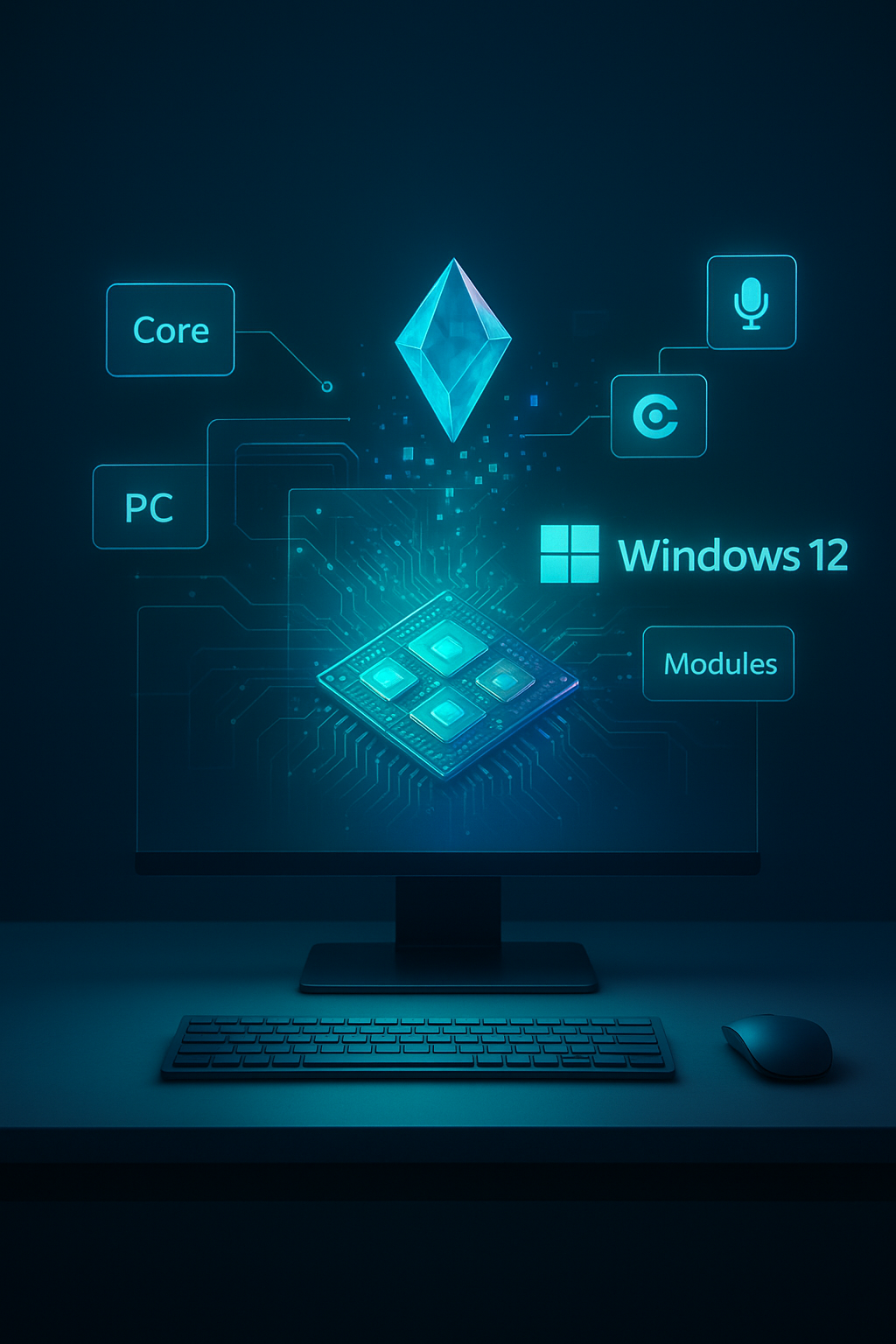
Windows 12 modularity benefits
A modular OS lets Microsoft iterate faster while giving users and enterprises control over what runs on their devices.
AI at the Core: What 'AI-Focused' Actually Means
Reports emphasize AI throughout the stack — not just as a single assistant buried in the taskbar. An AI-first Windows would combine cloud-based large models and on-device inference for latency-sensitive features. Expect features such as contextual code and document assistance, universal search enhanced by semantic understanding, system-level transcription and translation, intelligent power management, and predictive maintenance that flags failing hardware or misbehaving drivers before they cause downtime.
Crucially, embedding AI at the OS level differs from shipping an app with AI features. When the OS understands context — which app you’re using, what file is active, the system’s performance state — it can provide proactive assistance in ways apps can’t. An AI-driven Windows could summarize a long document on demand, surface relevant emails and files when you open a meeting invite, or automatically create accessible captions for any media playing on the system.
Windows 12 subscription model
Privacy and Trust: The Tradeoffs of Pervasive AI
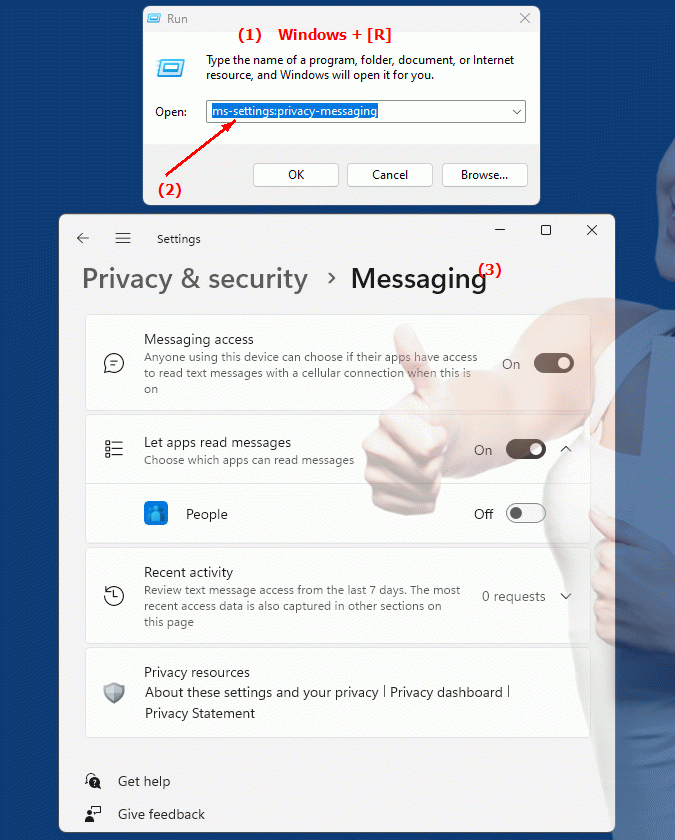
AI features that access personal documents, email, and system telemetry raise legitimate privacy concerns. Any serious shift toward OS-level AI must be accompanied by clear control surfaces: per-feature toggles, transparent data flows, local-only processing options, and enterprise policies that define what data is shared with cloud services. Subscription delivery complicates this further because ongoing services often require data to be uploaded, logged, or analyzed to improve models.
Windows 12 privacy concerns
Subscription Delivery: From One-Time License to Service
Moving Windows to a subscription model would mark a philosophical shift. Instead of a one-time license or perpetual OEM activation, subscription pricing could bundle the OS, AI services, security updates, and cloud features under a recurring fee. Microsoft already experiments with subscription bundling in other products, and a subscription Windows would allow for more continuous feature rollout and tighter integration with cloud identity and services.
For consumers, subscription tiers might range from a basic Windows with essential security updates to premium tiers that include advanced AI copilots, cloud-backed settings and profiles, and priority support. For enterprises, subscriptions could include endpoint management, compliance reporting, advanced threat detection, and custom modular manifests for image deployment.
- Predictable revenue for vendors and continuous feature delivery.
- Faster security updates and targeted patches through modular components.
- Cloud-enabled features bundled consistently across devices.
- Potential pushback over recurring costs and loss of ownership.
- Complexity for offline or air-gapped environments.
- Privacy concerns tied to cloud-based AI and telemetry.
Compatibility: Supporting Legacy While Moving Forward
One perennial worry is compatibility. Windows’ broad success hinges on running legacy Win32 applications. A modular Windows could offer a compatibility module that either runs legacy binaries in a specialized runtime or redirects them to cloud-hosted containers when local execution is impractical. This approach keeps the core lightweight while preserving the compatibility that enterprises rely on.
For developers, modularization creates opportunities to repackage capabilities as isolated services. It also encourages apps to adopt modern APIs for better performance and security. Over time, Microsoft could incentivize developers to move away from fragile legacy patterns by offering better distribution, telemetry, and monetization tools in the modular store.
Windows 12 compatibility modules
What This Means for Enterprises
Enterprises value predictability. A subscription Windows with modular images and centralized manifests could simplify lifecycle management by standardizing feature sets and security posture across fleets. IT can define which modules are required, which AI services are allowed, and how updates are staged. However, subscription licensing may increase operating expenses and complicate budgeting, particularly for large organizations used to capital expense models.
Adoption will hinge on clear migration tools: automated compatibility assessments, containerization for legacy apps, robust rollback mechanisms, and comprehensive documentation. Microsoft would need to offer generous pilot programs and clear SLAs to get large customers comfortable with a new delivery model.
Developers and the App Ecosystem
Developers stand to benefit from a more modular runtime with clearer APIs, smaller surface area, and better isolation. A refreshed app distribution model could bring a unified store that supports multiple packaging formats and allows developers to ship large model-backed experiences. At the same time, Microsoft must avoid fragmenting the developer story: multiple APIs for the same capabilities would be a regresssion that fuels developer frustration.
Hardware, Performance, and On-Device AI
To make on-device AI practical, Windows must leverage heterogeneous acceleration: integrated GPUs, NPUs, and dedicated AI silicon in SoCs. For older hardware, cloud fallbacks can deliver features at the cost of latency and privacy. This hybrid model allows Microsoft to offer the same baseline experience across a wide range of devices, while premium experiences surface on modern silicon with dedicated AI engines.
Performance and power management also benefit from modularity. A smaller core system consumes less RAM and storage and offers improved battery life on mobile devices. For high-performance users, optional modules can be loaded to maximize throughput for gaming, content creation, or data science workloads.
Windows 12 security improvements
Security: Smaller Attack Surface, New Considerations
Modularity can shrink the attack surface by removing unnecessary services from devices. Independent update channels for modules mean vulnerabilities can be patched faster and with fewer regressions. Yet, an AI-integrated OS introduces new threat vectors: model poisoning, data exfiltration through AI telemetry, and adversarial inputs that trick system-level AI components.
Security strategies must include signed modules, strong attestation of hardware, rigorous model validation, and transparent update logs. Enterprises will demand auditing tools and the ability to disable cloud dependencies for compliance reasons.
Market Dynamics and Competitors
How the market responds will depend on pricing and perceived value. A subscription Windows could push more users toward rival platforms or cloud-native alternatives if costs grow too high. Conversely, well-executed AI features — genuinely helpful copilots, cross-device continuity, and enterprise-grade tooling — could increase stickiness and justify subscription fees.
Competitors — both in the PC space and in cloud — will watch closely. Apple’s integrated hardware-software model, ChromeOS’s simplicity, and cloud desktop offerings all present alternatives that force Microsoft to demonstrate clear improvements in productivity, management, and security.
Scenarios: Who Benefits, Who Loses
- Consumers: Benefit from on-device AI assistants and continuously updated features, but risk recurring costs and privacy tradeoffs.
- Enterprises: Gain predictable lifecycle management and modular security, but may face higher OpEx and migration complexity.
- Developers: Get clearer APIs and distribution channels, but must adapt to modular packaging and potentially new monetization models.
Conclusion: A Cautious, Calculated Transition
The picture painted by reports of a modular, AI-focused, subscription Windows is plausible and consistent with broader industry trends: software increasingly becomes a service, AI augments workflows, and modularity brings agility. The details will matter — pricing, privacy guardrails, compatibility strategies, and migration tools will determine whether such a Windows is welcomed or resisted.
For users and organizations, the sensible approach is to watch for pilot programs, evaluate the control surfaces Microsoft exposes, and test migration paths in controlled environments. For developers and OEMs, now is the time to prototype modular deployments and explore how AI capabilities can be embedded responsibly into applications.
If executed well, a modular, AI-first Windows could modernize the PC platform — but execution, not ambition, will decide the outcome.
- Modularity can reduce bloat, speed updates, and improve reliability by isolating components.
- AI integrated at the OS level enables contextual assistance but raises privacy and security questions.
- Subscription delivery offers continuous innovation but shifts costs to recurring OpEx.
- Compatibility and migration tooling will determine enterprise adoption.
- Hardware with AI acceleration will unlock the best experiences; cloud fallbacks will support older devices.
- Faster iteration and targeted patches.
- Customizable images for different user needs.
- Tighter integration of AI features across the system.
- Subscription fatigue and potential cost barriers.
- Privacy concerns around cloud-based AI services.
- Risk of fragmentation during transition.
Final Thought
Windows stands at a crossroads familiar to mature platforms: retain legacy strengths and risk stagnation, or rearchitect for the future and risk alienating part of its user base. A modular, AI-first, subscription Windows could strike a pragmatic balance — if the platform provides transparency, choice, and robust migration paths. Until Microsoft clarifies its roadmap, the conversation about Windows’ future will continue to mix hope, skepticism, and careful planning.