Windows 12: What the Leaks Say and What They Might Mean
Leaks — real, half-true, and opportunistic — have been circulating about a successor to Windows 11 for months. Between purported internal roadmaps, blurry screenshots, and industry chatter, a picture has begun to form: Microsoft is planning a major follow-up that will lean heavily on artificial intelligence, experiment with subscription-based options, and push new hardware requirements to accelerate advanced features. Whether every claim proves accurate, or merely nudges Microsoft’s public roadmap, this article pulls together the most plausible threads and explains what each would mean for everyday users, power users, IT departments, and the PC ecosystem.
What the Leaks Claim
The leaked information falls into three buckets: timing (when Windows 12 might arrive), business model (subscription vs. one-time license), and technical direction (AI-first features and hardware hooks). Taken together, these claims portray a strategic shift rather than an incremental update: Windows positioned as an AI-native platform, more closely tied to cloud services, and monetized in more flexible — and controversial — ways.
If true, Windows 12 won't just be a polish on Windows 11: it could reset expectations about how an OS earns revenue and how deeply AI is embedded at the desktop level.
Release Date — Rumor vs. Reality
Among leaks the most repeated assertion is a tentative release window rather than a calendar date. The pattern mirrors Microsoft’s recent cadence: large engineering cycles, public Insider previews, and staged rollouts. In practical terms, expect an official preview channel, controlled feature trials, and a consumer release that follows several months after enterprise availability. Microsoft’s past behavior suggests the company will favor a cautious, staged deployment to avoid fragmentation and compatibility chaos.
Leaked timelines are typically optimistic. Roadmaps seen in other firms often show internal target quarters that slip because of driver compatibility, OEM readiness, and security hardening. That means any talk of a specific month should be read as a likely target, not a hard promise. For readers planning purchases, the practical advice is simple: do not buy new hardware solely on promise of exclusive Windows 12 features until Microsoft confirms requirements.
Windows 12 release date rumors
Subscription Model: New Monetization for Windows
One of the most polarizing claims concerns the money side: Microsoft is exploring subscription tiers for Windows. That doesn’t necessarily mean the complete abandonment of perpetual licenses, but rather the introduction of optional packages that bundle AI services, cloud backups, premium security, or productivity bundles into a recurring fee.
Windows 12 subscription model
What these subscription tiers might include
- AI Assistants and Copilot-Plus: advanced on-device and cloud-powered assistance beyond what’s included for free.
- Cloud Continuity: device-to-cloud profile syncing, seamless restoration, and larger profile storage.
- Enhanced Security Suite: proactive patching, advanced threat detection, and identity protection for a subscription fee.
- Pro Tools: developer or power-user features such as virtual machine credits, advanced virtualization, or developer sandboxes.
For enterprise customers, Microsoft already offers subscription licensing (M365, Windows Enterprise subscriptions). Extending subscription models into consumer Windows is a natural extension of that strategy and allows Microsoft to monetize continuous feature delivery — especially AI models that require ongoing compute and cloud resources.
Caution Subscriptions reward continuous R&D but create tension: users who prefer perpetual ownership may feel pressured or penalized when key features require a monthly fee.
AI Features: From Assistance to System-Level Intelligence
AI is the headline. The leaks consistently describe a deeper, system-level AI layer that powers features across the OS rather than a single app. Think of AI as a contextual fabric that augments search, productivity, accessibility, system optimization, and security.
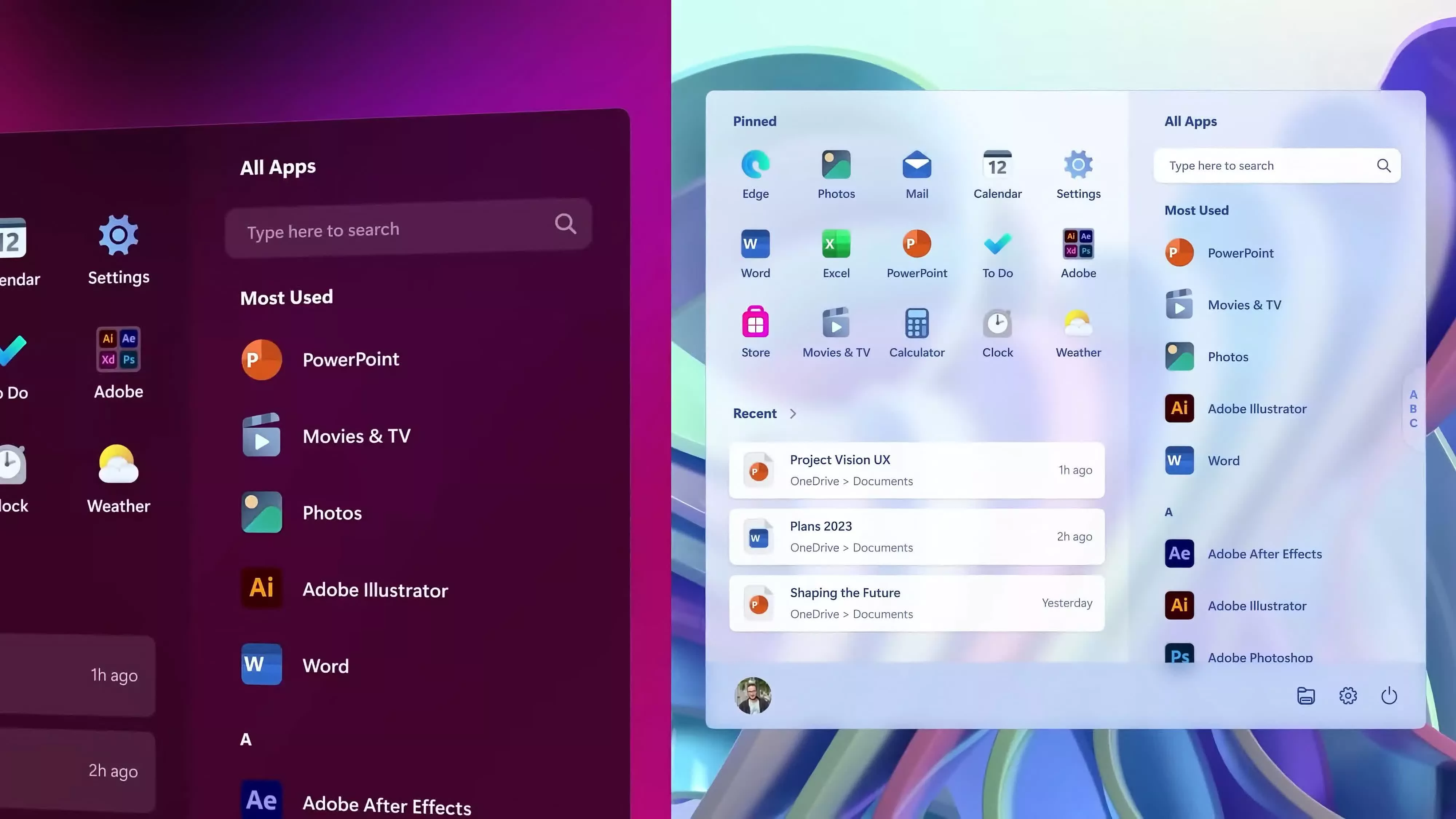
Windows 12 AI assistant Copilot
Likely AI-driven capabilities
- System Copilot: a contextual assistant that understands open windows, tasks, and user workflows to suggest actions, create automation, or summarize content.
- Adaptive Performance: AI-driven resource allocation that learns which apps matter most and dynamically reallocates CPU, GPU, and NPU resources for responsiveness and battery life.
- Generative Productivity: built-in options in text editors, mail, and meetings to draft content, summarize conversations, and transform notes into slide decks.
- Visual and Voice Tools: image editing, background removal, voice-to-text, and real-time translation powered by on-device and cloud models.
- Smart Security: anomaly detection in user behavior and network traffic that helps block emerging threats with fewer false positives.
Crucially, these features depend on a hybrid approach: lightweight models on-device for privacy and responsiveness, and larger cloud models for heavier generative tasks. That hybrid strategy allows for offline functionality while enabling richer experiences when connectivity and subscriptions permit it.
Hardware Tie-Ins: Why New Chips Matter
The leaks also emphasize hardware acceleration: NPUs (neural processing units), more capable GPUs, and firmware-level hooks for secure AI workloads. Microsoft has incentive to push new hardware standards because high-quality, low-latency AI features are difficult to deliver on older silicon without draining batteries or relying entirely on cloud compute.
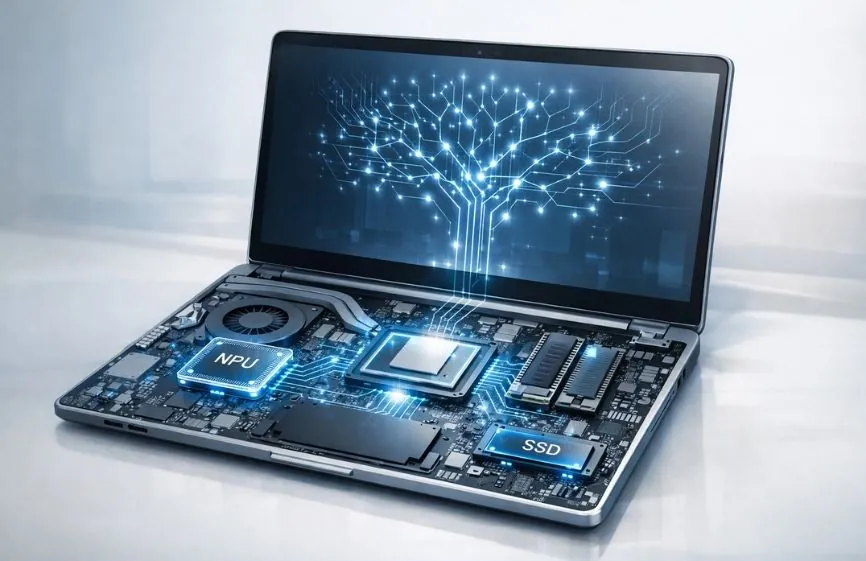
Windows 12 NPU hardware support
Did You Know? Modern AI features run best when a system combines CPU, GPU, and a dedicated NPU, which reduces latency and preserves battery life for on-device inference.
Compatibility and Upgrade Path
One of the most common user questions is blunt: will my PC run Windows 12? The pragmatic answer: it depends on which features you want. Microsoft can support legacy compatibility for core desktop applications — the Windows ecosystem's strength — but advanced AI experiences and new security primitives will likely require modern hardware.
Expected tiers of compatibility
- Baseline Experience: Older PCs will likely run a basic Windows 12 build with traditional desktop features and updates, similar to how Windows 11 supports a range of machines.
- Enhanced Experience: Mid-generation machines with capable CPUs and GPUs will unlock some AI features, improved multitasking, and better battery profiles.
- AI-Native Experience: New devices with NPUs and modern security chips will enable the full suite of on-device AI, advanced encryption, and premium features that might be gated behind subscriptions.
Microsoft has incentives to avoid a hard cutoff that would anger customers, but differentiation by feature availability is an established tactic. Expect Microsoft to provide tools that indicate which features are available on a device, along with clear messaging during the upgrade process.
Enterprise Considerations and Licensing
From the perspective of IT administrators, Windows 12 will be evaluated on manageability, security, and total cost of ownership. Leaks suggest Microsoft will continue to support enterprise licensing models, but add new subscription add-ons for AI guardrails, advanced incident detection, and integration with Azure Sentinel and Defender stacks.
Important For businesses, the real cost question isn't the per-seat price but whether AI features reduce help-desk calls, speed employee workflows, or enable automation that offsets subscription fees.
Privacy and Security: The Trade-offs of More Intelligence
Any AI-first OS raises privacy questions. Local models protect some data, but cloud features may send telemetry or content to servers for processing. The leaks indicate Microsoft will emphasize user control and transparency, yet the system-level nature of AI increases the number of data flows to manage.
Windows 12 security features
Key privacy considerations include data residency, model retraining with user data, telemetry opt-outs, and the granularity of controls over what the assistant can access. Consumers and enterprises will need to weigh convenience against exposure and demand strong consent mechanisms and auditability.
Performance, Battery, and Thermal Design
Embedding AI in the OS changes the engineering trade-offs. Constant background inference, adaptive UI rendering, and richer multimedia features all demand more thoughtful power management. Vendors and Microsoft will likely work on power-aware AI inference, scheduling heavy tasks for connected, charged states, and offering user controls to limit background model activity.
What This Means for App Developers
Developers will have new APIs and expectations: system-level prompts, context hooks, and potential monetization pathways that integrate with subscription tiers. The platform could enable apps to request AI capabilities from the OS rather than building their own models, reducing duplication but increasing dependency on platform services.
Potential downsides for developers
- Platform Lock-in: reliance on OS-provided AI services might reduce cross-platform portability of advanced features.
- Monetization Pressure: app developers might be asked to share revenue or require users to hold specific subscriptions to access premium AI services.
Pro Tip Start testing apps against the latest SDKs in preview channels and design features to degrade gracefully when specific AI capabilities are unavailable on a device.
How Consumers Should Prepare
Practical steps for everyday users: maintain good backups, delay mission-critical upgrades until the public release and compatibility tables are published, and read the privacy controls carefully before enabling cloud AI features.
For those considering new hardware purchases in the next six to twelve months, prioritize devices with solid CPU/GPU performance, modern security modules, and, if you care about on-device AI, NPU support. But avoid buying solely on the promise of exclusive features until Microsoft confirms the final requirements and feature gating.
Business Buyers and IT Teams
IT teams should plan pilot programs, identify apps that could benefit from AI automation, and perform cost-benefit analyses that include subscription fees, reduced support overhead, and productivity gains. Early pilots should focus on measurable outcomes: incident resolution time, employee time saved, or task automation success rates.
Risks and Considerations
Leaked plans often evolve. Hardware partners may negotiate feature lists, regulatory scrutiny can alter how data flows are handled, and competitive pressures could cause Microsoft to change pricing. Keep expectations flexible and watch for official announcements from Microsoft before making irreversible procurement decisions.
The coming OS cycle is as much about business model experimentation as it is about new features — and that will shape user experience as much as engineering decisions.
Final Thoughts and Takeaways
Windows 12, as described by leaks, represents a directional shift: deeper AI integration, more hardware-dependent premium experiences, and experimentation with subscriptions. That combination is powerful — it can make PCs dramatically more helpful — but it also introduces friction: licensing decisions, privacy trade-offs, and new hardware expectations.
- Windows 12 appears to prioritize AI at the OS level, blending on-device and cloud models.
- Subscription tiers may offer premium AI, security, and productivity features while baseline functionality remains available for older hardware.
- Hardware with NPUs and modern GPUs will unlock the best experiences; compatibility tiers will likely be used to differentiate feature access.
- Enterprises should evaluate pilot projects and consider total cost, not just per-seat prices.
- Privacy controls and transparent telemetry policies will be critical to user trust.
How to Watch the Story Evolve
Monitor official Microsoft channels and Insider previews for concrete technical requirements and the final feature list. Meanwhile, treat leaks as signals of intent rather than hard commitments. Companies often iterate on early concepts, and community feedback can shape final implementations — particularly when privacy or accessibility concerns are raised during previews.
A Parting Note
The next major Windows release could be one of the most consequential in a decade if AI features deliver genuine, measurable productivity gains without compromising privacy or forcing expensive hardware upgrades. For now, the responsible posture is curiosity with caution: test early, protect important data, and wait for Microsoft’s confirmations before making major changes.
Editor’s note: This article synthesizes leak reports, platform logic, and likely engineering trade-offs to help readers understand possibilities and prepare. Treat speculative details as provisional until official confirmation.