Why Two Is the New One: Dual Systems Driving Modern Tech
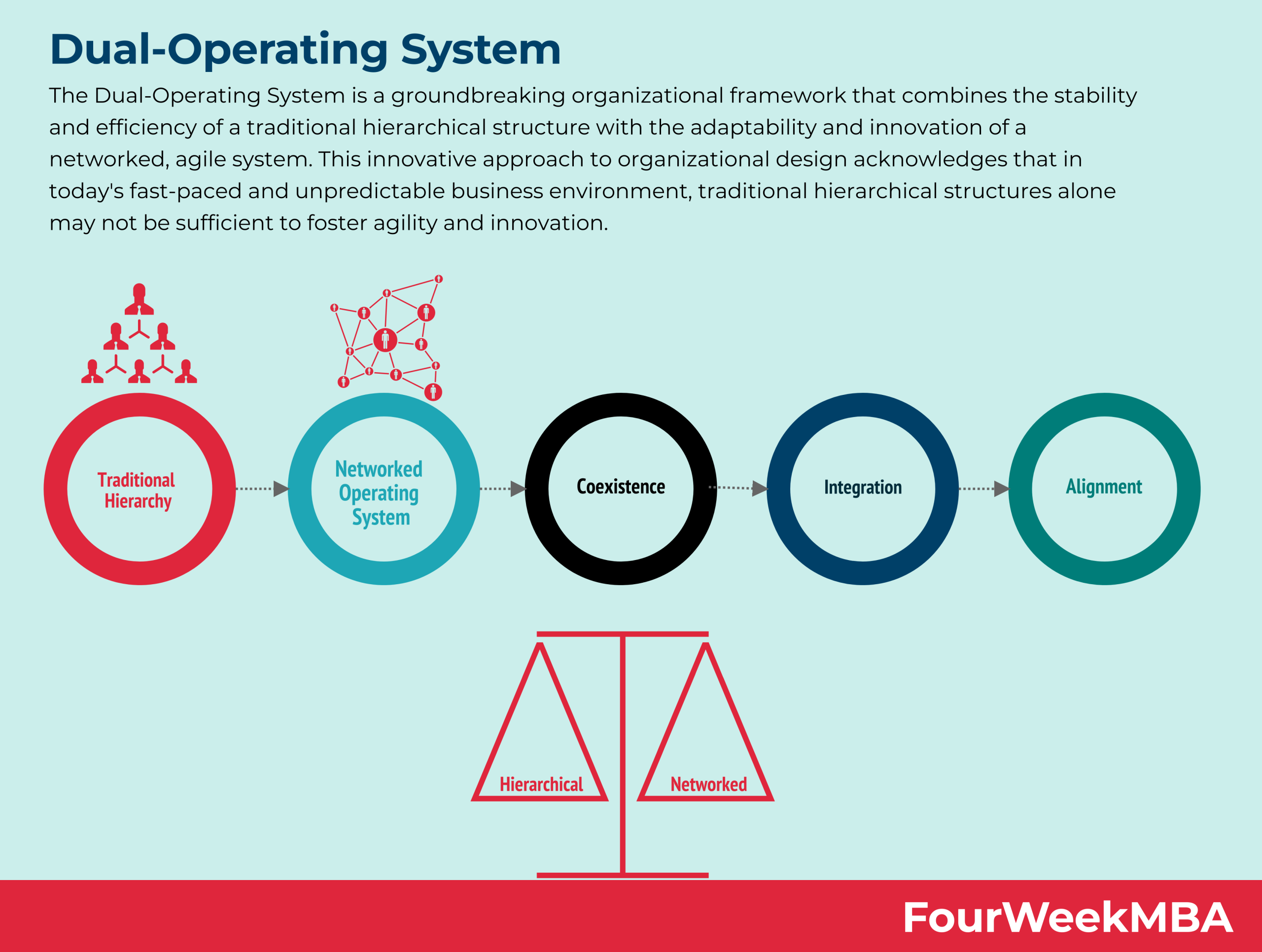
The technology world has a new shorthand for strength: two. Not in the sense of duplication for safety alone, but as an architectural and design philosophy where two complementary elements — whether processors, services, or actors — work together to deliver performance, resilience, and better user outcomes. From mobile chips that mix high-power and high-efficiency cores to cloud strategies that pair public and private resources, dual systems are everywhere. This feature unpacks why pairing beats singularity in many modern tech problems, what patterns make dual approaches successful, and how engineers and product leaders can adopt them thoughtfully.
THE TWO PRINCIPLE: WHY PAIRING WORKS
At its core, the Two Principle is simple: combine components with different strengths so the whole system inherits the best of both. Rather than insisting a single part be optimal at everything, designers create systems where elements compensate for each other’s weaknesses and amplify strengths. This leads to three recurring benefits.
Balance of trade-offs
No component is perfect. High performance usually means higher power consumption; extreme security often reduces usability; fast time-to-market can compromise robustness. Pairing allows each component to own a distinct axis of optimization. One part can focus on raw speed, the other on efficiency or safety, and a control layer orchestrates their cooperation.
Graceful degradation and resilience
Redundancy is an old strategy for reliability, but pairing can be smarter than identical copies. Complementary pairs enable graceful degradation: if the high-performance element fails, an efficient backup can keep service alive at reduced capacity. Conversely, when demand surges, the high-performance partner can kick in to preserve user experience.
Improved user experience
Users rarely need absolute maximum performance all the time. By dynamically switching between two modes—one optimized for responsiveness, the other for longevity or privacy—products can deliver a smoother, longer-lasting experience without asking users to choose between extremes.
The smartest systems rarely do everything; they orchestrate the right specialist at the right moment.
HARDWARE: THE RISE OF ASYMMETRIC PROCESSING
One of the clearest demonstrations of the Two Principle is in modern chip design. Mobile and embedded processors embraced asymmetry with names like "big.LITTLE" and heterogeneous multicore. Instead of identical cores, chips combine high-performance cores for demanding tasks and small, energy-efficient cores for background work.
Why heterogeneous cores matter
Smartphones must balance battery life, thermal limits, and snappy interfaces. Heterogeneous designs let the scheduler move tasks to the most appropriate core. Simple background syncs and low-priority threads go to efficient cores; the UI, gaming, or camera pipeline land on big cores when needed. The result is a device that feels fast without draining the battery prematurely.
Modern mobile CPUs often use two classes of cores to balance performance and energy use.
Beyond CPUs: GPU + NPU pairings
Graphics processing units and neural processing units are another kind of pair. GPUs excel at parallel floating-point work, NPUs are tuned for the sparse, quantized operations of machine learning. Putting them together lets devices run advanced vision and inference locally while reserving the GPU for rendering—improving speed and privacy.
Pairing specialized hardware units reduces wasted energy and unlocks capabilities that a single generic core couldn't deliver efficiently.
SOFTWARE PATTERNS: REDUNDANCY, COMPLEMENTARITY, COORDINATION
In software, the Two Principle appears in redundancy models that are smarter than hot-standby replicas. Complementary services—one optimized for consistency and another for availability, for example—let architects navigate the CAP trade-offs with nuance.
Hybrid data stores
Many modern back ends use a fast, eventually consistent cache combined with a strongly consistent store. The cache provides low-latency reads; the consistent store guarantees correctness. The coupling requires sophisticated invalidation and reconciliation logic, but the payoff is both speed and integrity.
Microservices and paired responsibilities
Microservice design often benefits from pairing services by responsibility: a transactional core service paired with an asynchronous projection or analytics service. The core focuses on correctness, while the paired service focuses on scalability and user-facing queries.
CASE STUDIES: REAL-WORLD PAIRS
Smartphones: big.LITTLE and beyond
Mobile vendors were early adopters of dual-system thinking. A smartphone isn't a single-purpose machine; its workloads vary dramatically. The scheduler’s job is to match tasks to cores, shifting the balance between efficiency and latency dozens or hundreds of times per hour. The result is longer battery life and a consistently responsive UI.
Cloud: hybrid public-private deployments
Organizations increasingly adopt hybrid cloud models that pair public cloud elasticity with private cloud control. Sensitive workloads and predictable baselines live in private environments; bursting workloads or experimental workloads run in the public cloud. This pairing delivers cost control, compliance, and the ability to scale when demand spikes.
Hybrid cloud pairs give organizations flexibility without a forced trade-off between control and scale.
Human + AI: collaborative workflows
AI is not always a replacement; it is often a paired collaborator. In content creation, AI drafts while humans edit. In customer support, bots handle routine queries and escalate complex issues to humans. This human+AI pairing increases throughput and accuracy while preserving judgment and context.
IMPLEMENTATION CHALLENGES
The Two Principle is powerful, but not a panacea. Pairing introduces complexity: coordination, switching overhead, and potential inconsistency. Good design minimizes those downsides.
Coordination and orchestration
Unless pairs are tightly orchestrated, the system can thrash: components fighting for work or duplicating effort. Robust control logic and clear policies for handoff, ownership, and reconciliation are essential. Observability is also critical—without metrics and traces you can't know which side is doing what and whether the pair is delivering the intended benefits.
Switching costs and latency
Switching between partners has a cost. Moving a task from an efficient core to a high-performance core, or failing over to a backup service, often entails context transfer, cache warming, or state synchronization. Designers must weigh the cost of switching against the benefits and build strategies—like predictive migration and warm standbys—to reduce latency.
Consistency and correctness
When systems intentionally accept different consistency models across paired components, they must provide a user-facing contract that explains what guarantees exist. Invisible, surprising inconsistencies erode trust. Patterns like explicit eventual-consistency indicators, idempotent operations, and versioning help maintain correctness.
SECURITY AND RESILIENCE
Pairing can strengthen security and resilience, but it can also introduce new attack surfaces if not carefully managed. The interface between paired elements is a common vector for failure.
Defense in depth through separation
Complementary systems can isolate sensitive operations in a hardened partner while allowing more experimental or third-party integrations in a less trusted companion. This separation reduces risk and localizes breaches.
Hardening communication channels
Secure, authenticated channels and strict contract enforcement are essential. Pairing often increases the number of interactions, so encryption, mutual authentication, and fine-grained authorization must scale with the architecture.
DESIGN GUIDELINES: WHEN AND HOW TO PAIR
Start with the trade-offs
Identify the axes where the system needs help: latency, throughput, power, privacy, or cost. If two complementary approaches map cleanly onto those axes, pairing is promising. If not, the added complexity may not justify the benefits.
Define ownership, contracts, and signals
Every successful pair has a contract: who owns state, which side is authoritative, how conflicts are resolved, and what telemetry indicates health. Make these explicit in documentation and tests.
Design for observability and graceful handoff
Instrument both partners and the control layer. Use circuit breakers, backpressure, and controlled failover so that handoffs are predictable. Design warm standby paths and state sharing mechanisms to keep switching costs low.
FUTURE OUTLOOK: FROM DUALS TO ECOSYSTEMS
While this essay highlights "two" as a practical design pattern, the broader trend is toward heterogeneous ecosystems: many specialized components paired and orchestrated to deliver complex behavior. The Two Principle is often the first step—pair a CPU and an NPU, then extend to a GPU, FPGA, and cloud accelerator. The ability to coordinate many specialized entities will define the next decade of computing.
The future won't be about finding a single universal solution; it will be about composing the right specialists into resilient, efficient ecosystems.
CONCLUSION
Designers who embrace pairing gain a pragmatic tool for solving competing priorities. Two complementary elements can deliver speed without waste, availability without brittle redundancy, and automation without losing human oversight. But pairing demands clear contracts, strong observability, and careful engineering of handoffs. When those are in place, the payoff is systems that feel both fast and reliable—precisely what modern users expect.
- Pairing balances trade-offs: one element for performance, another for efficiency or safety.
- Heterogeneous hardware and hybrid cloud are practical examples delivering better UX and resilience.
- Clear contracts, observability, and warm handoff mechanisms are essential to avoid coordination failures.
- Human+AI partnerships amplify strengths while preserving judgment and context.
Final thought
Thinking in twos doesn't limit creativity; it expands the design vocabulary. By composing complementary parts, engineers create systems that are more adaptable, efficient, and humane. That is why, in modern technology, two often becomes the new one.