Why the U.S. Still Lacks Paid Parental Leave — A Global Surprise
The question in the draft—"What law in your country would surprise foreigners because it’s legal almost everywhere else?"—turns out to be a useful reverse-engineering exercise. Travelers and expatriates often list the same astonishments: the absence of universal healthcare, the ubiquity of guns, and the surprisingly weak social safety net in the world's richest democracy. But one policy gap consistently ranks near the top of lists and headlines: the lack of a federal law guaranteeing paid parental leave. In many countries, paid leave for new parents is treated as a basic labor right; in the United States, by contrast, that protection is not guaranteed at the national level. That gap still surprises visitors from Europe, Australia, Canada, Japan and beyond—and it matters for families, employers, and the economy in ways that are easy to underestimate.
A Short History: How the United States Got Here
The modern architecture of U.S. employment leave policy dates to the Family and Medical Leave Act (FMLA) of 1993. That law guarantees eligible workers up to 12 workweeks of unpaid leave for certain family and medical reasons, including the birth or adoption of a child. The FMLA was a landmark because it recognized caregiving as a workplace issue and protected jobs from being lost when workers needed time away. It stopped short of demanding income replacement, however; employers or state programs have been left to fill that gap. Over the following decades, a patchwork of employer policies and state-level programs emerged, but no federal statute mandated paid time off for most new parents.
Family Medical Leave Act
The U.S. Exception on the Global Map
Looked at from abroad, the U.S. exception is striking. Most high-income countries provide some period of paid leave for mothers and often for fathers too. Leave policies vary—length, payment rate, and eligibility differ widely—but the baseline is common: paid time off to care for a newborn or newly adopted child. That expectation shapes workplace norms, gender roles, and public discourse in many nations. For foreigners who come from systems where paid parental leave is the norm, the American approach—where workers must rely on employer generosity, short-term disability policies, or unpaid leave—is often bewildering.
paid parental leave map
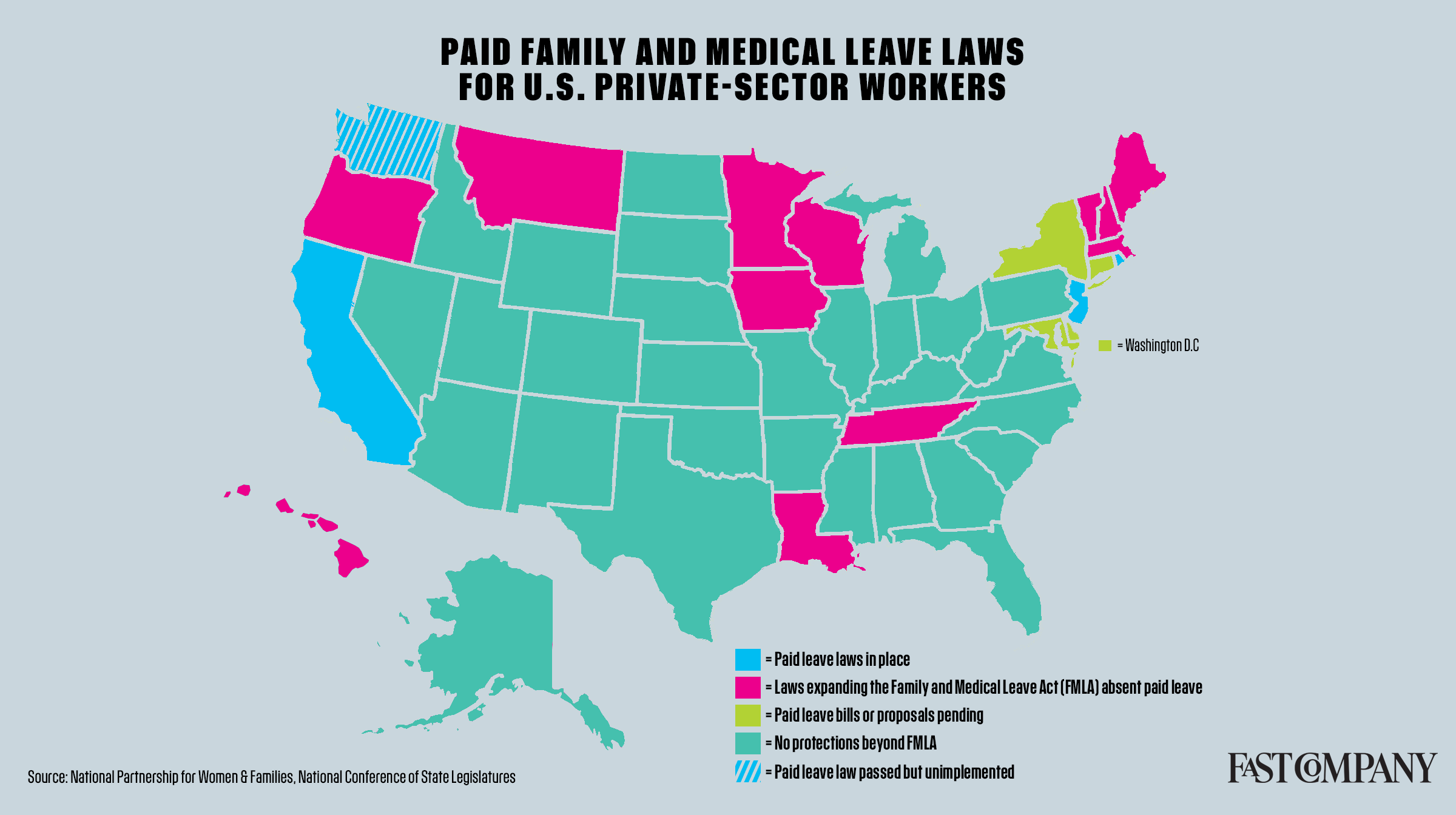
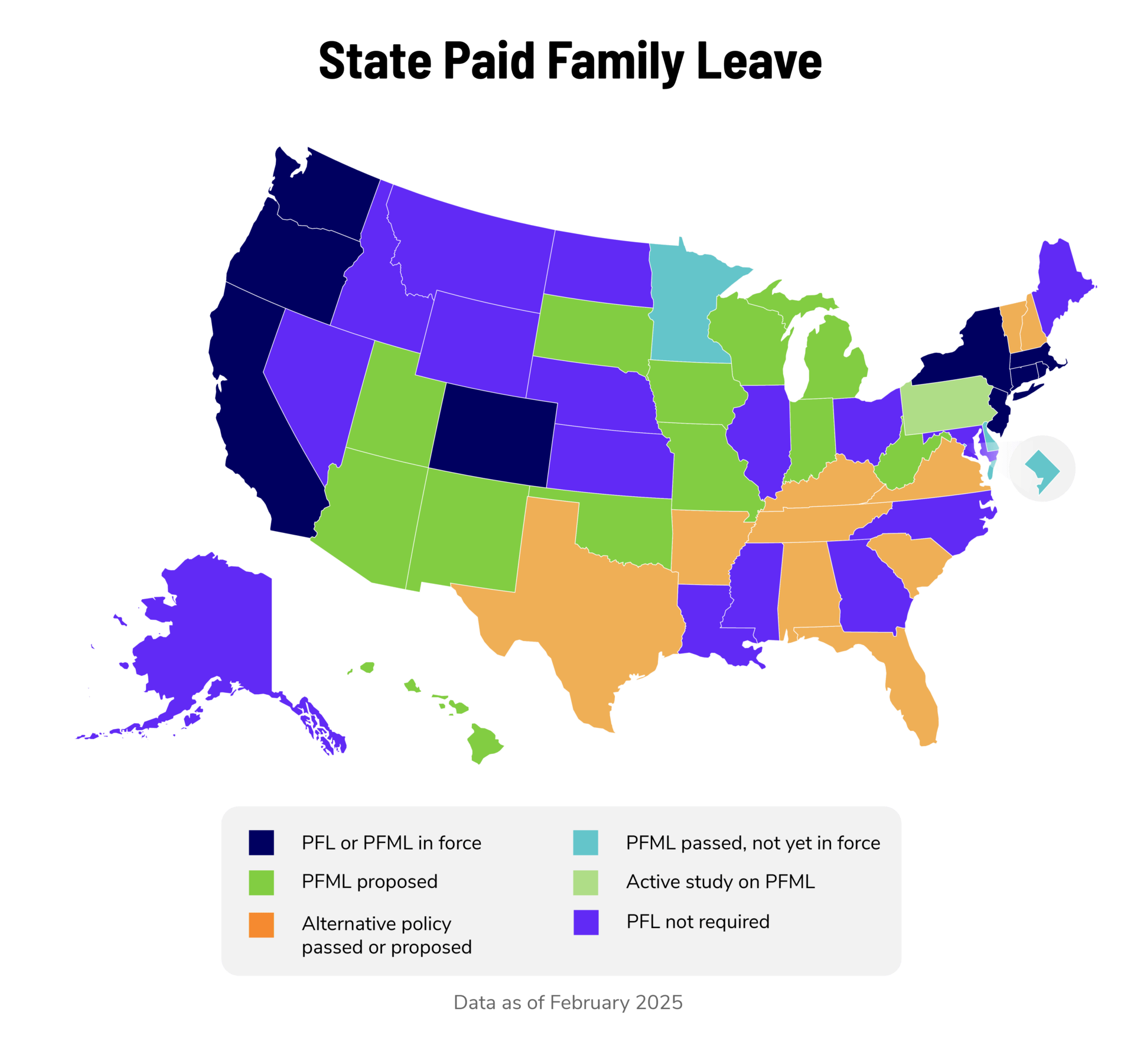
In the U.S., parental leave is a patchwork: state programs, employer benefits, short-term disability—but no nationwide paid guarantee.
What the Patchwork Looks Like
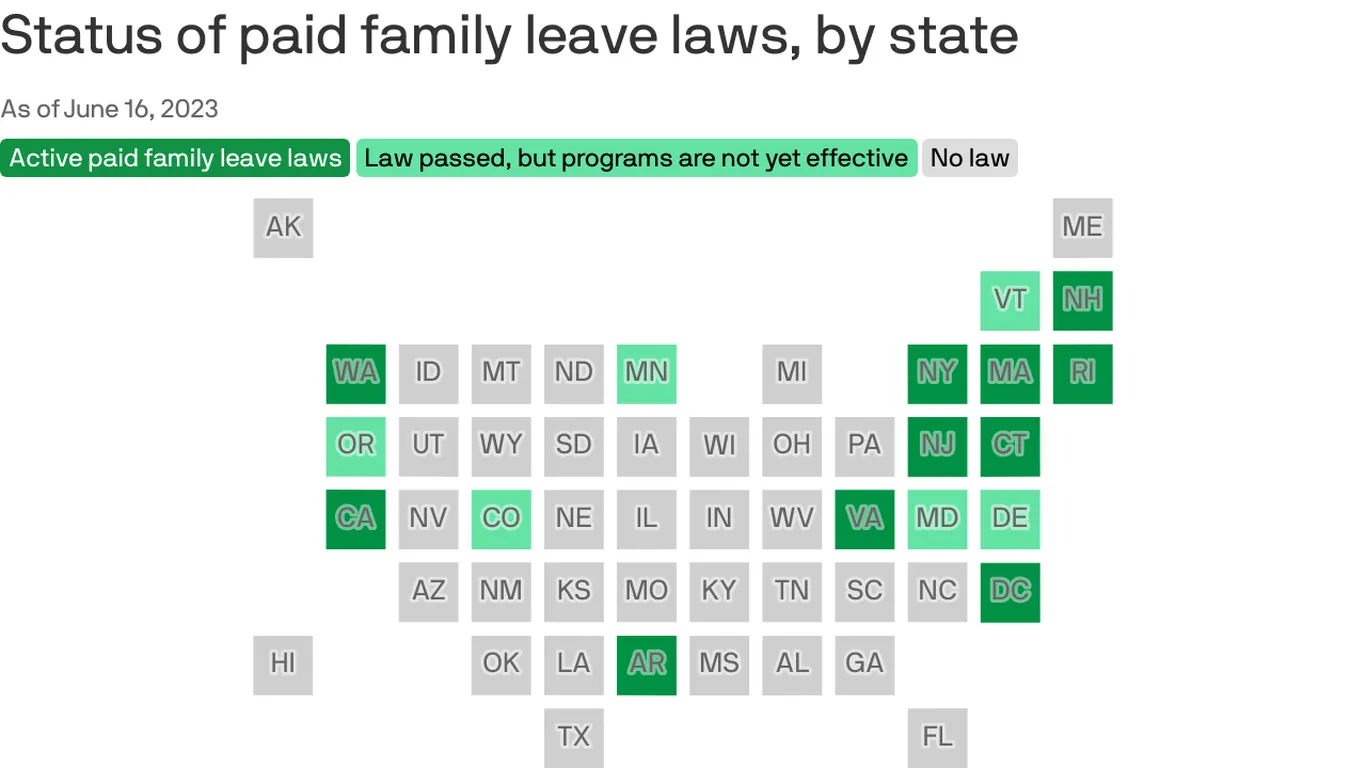
Because there is no single federal paid-leave law, American families experience a mosaic of protections and options:
- Employer policies: Many large employers offer paid parental leave as part of benefits packages. Tech, finance, and public-sector employers are among the most generous. But coverage is uneven and frequently tied to tenure and job category.
- Short-term disability: In some states and situations, pregnant workers can use short-term disability insurance to receive partial wage replacement in the weeks before and after childbirth, but this is not designed to cover fathers or non-medical caregiving needs.
- State programs: Over the last decade several states have enacted paid family leave programs that provide partial wage replacement—California, New York, New Jersey, Rhode Island and others. These are designed as social insurance programs, typically funded by payroll contributions and offering time off for bonding with a new child or caring for a seriously ill family member.
- Unpaid FMLA leave: Eligible workers can take job-protected leave without pay for up to 12 weeks, but many part-time employees, new hires, and employees at small firms do not qualify.
US parental leave patchwork
Why It Surprises Foreigners
Foreigners are often surprised for three central reasons. First, the U.S. is an outlier among wealthy nations on the question of mandated paid leave; visitors expect parity with other social protections. Second, the idea that a worker could lose income or even their job after welcoming a child—when most industrialized societies treat the event as a public responsibility—feels counterintuitive. Third, the practical ripple effects matter daily: new parents may return to work sooner, rely on older children or relatives for care, or make trade-offs that influence family planning.
Consequences for Families and Society
Policy choices about paid leave are not merely compassionate gestures; they shape public health, economic equality, and gender norms. Research and long-term observation from countries with generous leave policies point to several consistent outcomes:
- Health and bonding: Paid time off facilitates breastfeeding, better maternal mental health, and stronger parent-child bonds in the earliest months—factors linked to long-term developmental outcomes.
- Gender equality: When leave is available to both parents and when incentives exist for fathers to take leave, the distribution of child care becomes more balanced. That influences women's labor force participation and career trajectories.
- Economic security: Paid leave reduces income volatility for households during the transition to parenthood and can reduce reliance on social safety net programs.
- Fertility choices: Family-friendly policies are one among several factors that affect decisions about when and whether to have children.
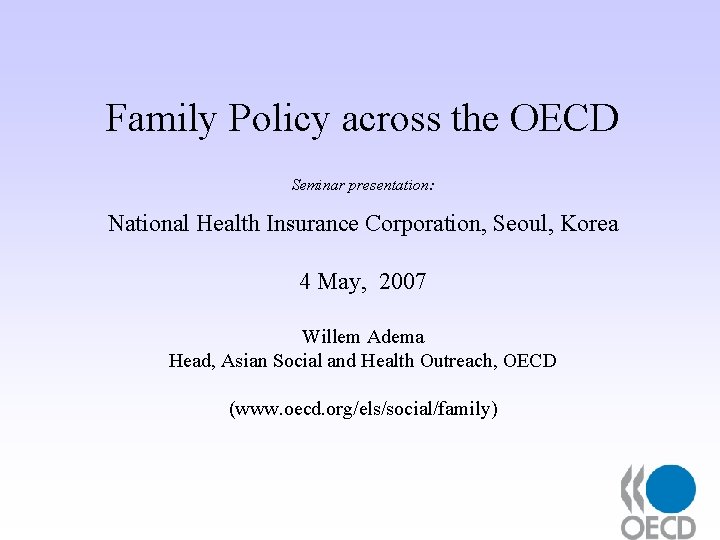
OECD family policy
The Employer Perspective: Costs, Benefits, and Misconceptions
Opponents of federal paid leave often frame it as an expensive mandate that would burden small business. That concern is legitimate in scale but incomplete in scope. Employers that offer paid leave frequently report benefits that offset costs: improved retention, reduced turnover, stronger recruitment, and higher employee engagement. For small firms, policy design can include phased implementation, tax credits, or social insurance funding to spread the cost across employers and workers.
Politics, Values, and the Roadblocks to National Policy
Why hasn't the U.S. adopted a federal paid parental leave program when many comparable nations have? The answer is complicated and political. Three factors stand out:
- Ideology and the role of government: A strong current of American political thought prizes limited government and employer control over benefits, making universal mandates politically fraught.
- Fragmented labor markets: The diversity of employer sizes and sectors makes one-size-fits-all policy difficult to write without unintended consequences.
- Fiscal politics: Debates over funding—whether through payroll taxes, general revenues, or employer mandates—have stalled consensus.
Policy Design Choices That Matter
If policymakers wanted to move from a patchwork to a national standard, several design choices would shape outcomes:
- Duration: How many weeks of paid leave are provided? Short programs may limit benefits; long programs can be costly and affect labor supply.
- Wage replacement rate: Full pay is expensive; many countries and state programs offer partial wage replacement to balance access and affordability.
- Eligibility: Tying benefits to work history can exclude precarious workers; broad eligibility increases coverage but raises cost.
- Funding model: Employer-only mandates create concentrated costs; social insurance spreads costs through payroll contributions by employers, employees, or both.
- Gender neutrality: Policies that allocate leave to fathers explicitly—or offer non-transferable portions for each parent—encourage paternal involvement.
A thoughtfully designed national program can reduce inequality and support families while managing fiscal impact—if policymakers agree on the trade-offs.
What the States Have Done and What That Tells Us
State-level initiatives in the U.S. have become laboratories of policy innovation. Programs that provide partial wage replacement for family and medical leave have shown that administrative systems can be built—often via payroll contributions or trust funds—and that workers do use the benefits. Those state experiments also illustrate trade-offs: uptake rates vary by income and job type; small businesses sometimes voice greater concern, and the benefit levels must be set to balance adequacy and sustainability.
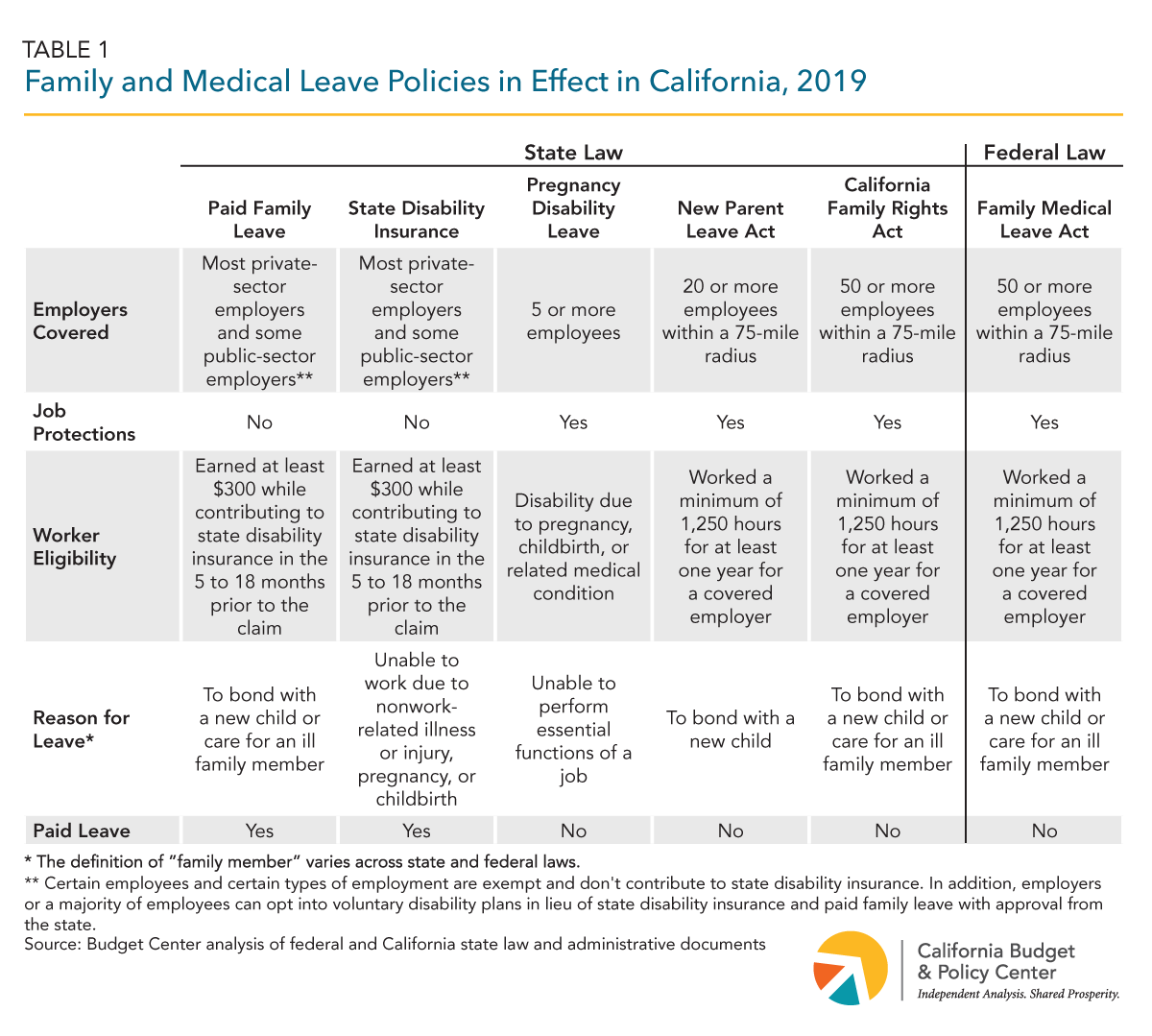
California PFL
International Comparisons: Lessons and Cautions
Comparing the U.S. to other nations is instructive but must be done carefully. Leave programs interact with childcare availability, parental employment norms, and broader social policies. For example, Scandinavia combines paid parental leave with high-quality public childcare and active labor market policies—creating a package that supports both family life and sustained employment. Other countries pair moderate paid leave with strong childcare subsidies. The lesson is not that one policy solves everything, but that paid leave works best as part of a coherent family policy framework.
New York paid family leave
Arguments for and Against—A Fair Accounting
Supporters of national paid leave emphasize human dignity, public health, and long-term economic gains from better early-childhood outcomes. Critics focus on costs, the potential for reduced hiring of women of childbearing age, and the administrative complexity of a new entitlement. Empirical evidence suggests that well-designed programs can mitigate or avoid the negative employment effects while delivering measurable benefits for families and children.
- Improved child and maternal health.
- Higher retention and reduced turnover.
- Greater gender equity when fathers take leave.
- Fiscal cost and funding debates.
- Administrative complexity and employer adjustment.
- Potential concentrated impact on small businesses if poorly designed.
What This Means for People Visiting from Countries with Guaranteed Leave
Foreigners accustomed to paid parental leave often notice behaviors in American workplaces that seem strange: early return-to-work, informal childcare arrangements, and an expectation that extended family will fill gaps. They may be surprised to learn how much of leave access in the U.S. depends on employer benevolence or where a family lives. For expatriates deciding whether to settle in the U.S., or for visitors comparing cultures, the difference in parental policies is a concrete signal of broader social priorities.
Conclusion: A Gap That Is Noticeable—and Fixable
The absence of a federal paid parental leave law in the United States is one of the clearest policy differences that surprises people who come from countries with guaranteed leave. The gap isn't simply a curiosity; it has measurable effects on health, gender equality, and economic security. State experiments and employer-led programs show that paid leave can be implemented in diverse contexts. The core challenge is political: building consensus about the values and trade-offs that will guide a national program. If that consensus emerges, the path—from concept to implementation—already has many precedents to draw on.
- The U.S. lacks a federal paid parental leave guarantee, relying on FMLA unpaid leave, employer benefits, and state programs.
- Paid leave is widespread in other wealthy countries and is associated with health, economic, and gender-equality benefits.
- Policy design—duration, pay rate, funding, and eligibility—determines both costs and outcomes.
- State programs demonstrate feasibility; national action requires political agreement on trade-offs.
Families, employers, and policymakers continue to debate a policy whose absence shocks many visitors—and shapes American life in quiet but consequential ways.