Why Scarcity Spurs Innovation: Jensen Huang on Choosing the Best
When a CEO of one of the world's most influential chipmakers says "everything is scarce," it reads less like a complaint and more like a manifesto. Jensen Huang's view—that constraint forces discipline and demands you choose the best—offers a clarifying lens for anyone building products, teams, or strategies in technology's fastest-moving arenas. Scarcity, far from being merely a limitation, becomes a clarifying force: it trims waste, concentrates attention, and elevates quality. This article unpacks that argument and shows how the logic applies beyond Nvidia, to startups, enterprises, designers, policy makers, and engineers wrestling with the same reality.

Jensen Huang portrait
THE PARADOX OF ABUNDANCE AND THE RISE OF CONSTRAINT
We live in a culture that prizes abundance—unlimited compute, infinite storage, boundless capital. Yet the real engines of progress are subject to limits: manufacturing capacity, energy, talent, time, and raw materials. In semiconductor manufacturing, for example, fab cycles, capital intensity, and specialized lithography equipment create natural ceilings. In artificial intelligence, computing budgets, data labeling capacity, and power consumption are all constrained. Huang's remark reframes scarcity not as scarcity of imagination but as the finite scaffolding within which imagination must operate.

Nvidia GPU manufacturing
Why constraint is useful
Constraints do three vital things. First, they create selection pressure: when resources are limited, only the most impactful ideas survive. Second, they force prioritization: teams must define what matters and what does not. Third, they accelerate learning: smaller, focused experiments yield clearer feedback than sprawling efforts diluted across many targets. Those are the same forces that turned lean startups into a playbook and that guide engineering tradeoffs in system design.
In a world of constraint, you have no choice but to choose the best.
HOW COMPANIES TURN SCARCITY INTO STRATEGY
The art of strategic scarcity is turning limits into differentiators. Companies like Nvidia have not simply accepted shortages; they've designed around them. That means optimizing for the most valuable workloads, investing in software that multiplies hardware value, and prioritizing customers whose needs create the largest flywheels. There are practical steps leaders use to convert scarcity into advantage:
- Prioritize ruthlessly. Identify the one or two outcomes that matter most and allocate the scarce resource—be it chips, engineering cycles, or funding—accordingly.
- Design for leverage. Build software, tooling, and ecosystems that amplify each unit of hardware or capital.
- Protect core capabilities. Maintain manufacturing or supply relationships that secure access to key inputs when demand spikes.
These are not theoretical prescriptions; they are everyday operational choices—product roadmaps, hiring plans, and partnership deals—that determine which companies survive and which thrive when resources tighten.
Case in point: product focus over feature bloat
When scarcity is real, product teams learn to choose depth over breadth. Rather than shipping ten mediocre features, teams concentrate on perfecting two that drive adoption. That philosophy shows up in many successful hardware and software launches: a tightly scoped product with excellent core experiences often outperforms a bloated release that tries to be everything to everyone.
ENGINEERING DISCIPLINE: THE TECHNICAL SIDE OF CHOOSING THE BEST
At a technical level, scarcity forces engineers to be efficient and creative. Constraints in chip design, for example, might stem from thermal budgets, die area, or power envelopes. Those limits lead to breakthroughs in architecture: specialized accelerators, mixed-precision math, and co-designed software stacks that wring more performance from every transistor.

semiconductor fabrication plant
Optimization techniques born of scarcity
Several engineering patterns arise when scarcity is a design assumption:
- Specialization: Purpose-built hardware or software that performs a narrow set of tasks exceptionally well.
- Approximation: Algorithms that trade exactness for efficiency—common in large-scale AI systems where approximate answers are acceptable for speed and cost.
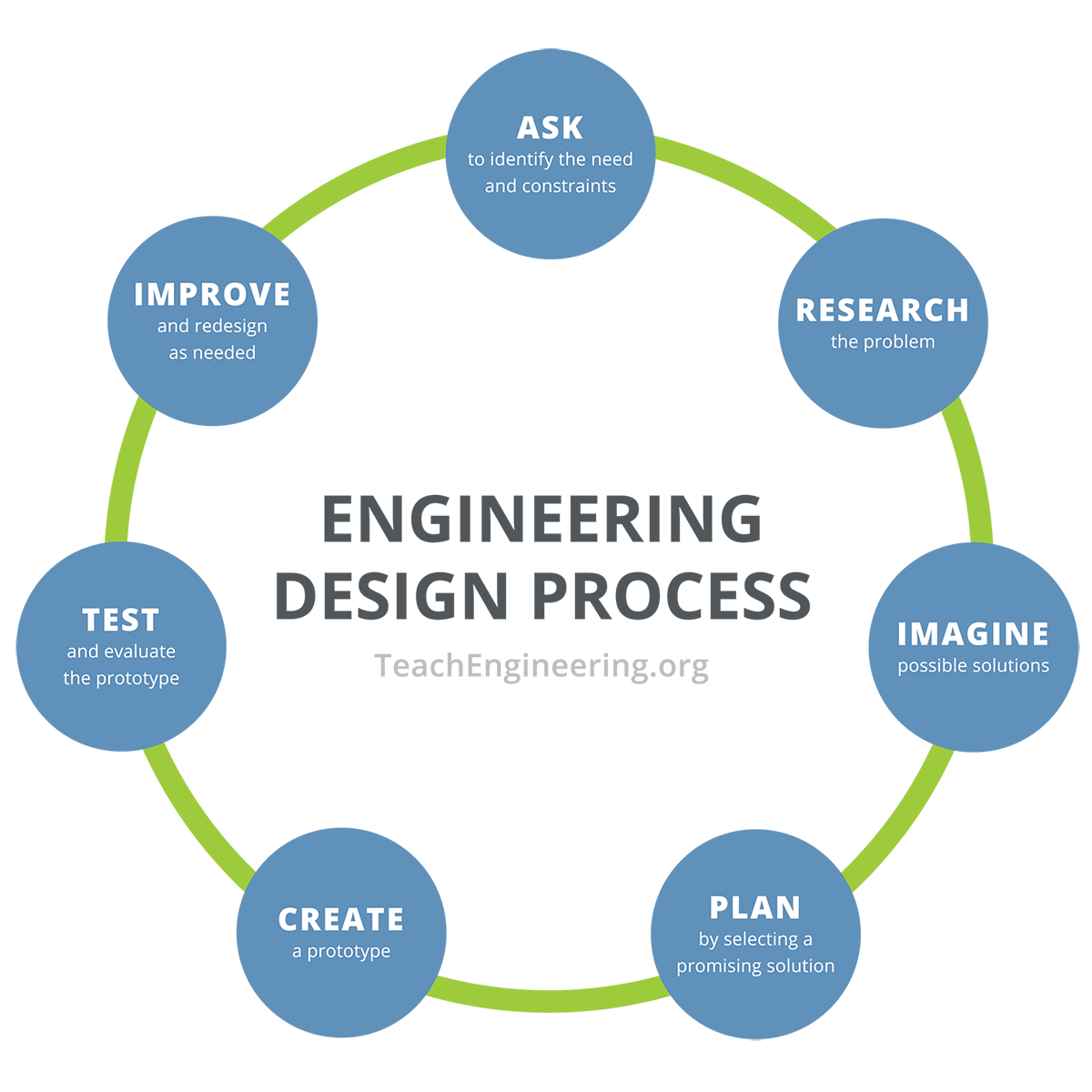
- Co-design: Simultaneous design of hardware and software so each compensates for the other's limits.

AI chip architecture diagram
These patterns are enduring because they create practical advantages: lower total cost of ownership, better user experiences for core use cases, and improved scalability under constrained supply.
MARKET DYNAMICS: SCARCITY, PRICING, AND COMPETITION
Scarcity reshapes markets. Prices rise, of course, but so do incentives for substitution and innovation. High prices for scarce components invite alternative materials, new suppliers, and software workarounds that reduce dependence on the scarce item. Firms that anticipate scarcity can capture disproportionate value by locking in supply or by creating standards that others adopt.
engineering co-design concept
The winner's playbook
Companies that win in constrained environments tend to follow a predictable playbook:
- Secure upstream control. Vertical integration or long-term procurement can dampen the volatility of scarce inputs.
- Build ecosystems. Platforms that bind developers and customers create demand-side stickiness even when supply is tight.
- Invest in differentiation. Focus on capabilities that are costly for rivals to replicate under the same constraints.
These strategies are not foolproof—but they convert scarcity into a moat rather than a handicap.
ETHICAL AND SOCIAL IMPLICATIONS
Scarcity is not socially neutral. Resource limits can exacerbate inequality, favoring well-capitalized firms and wealthy regions. Leaders who celebrate scarcity must also acknowledge obligations: to distribute access thoughtfully, to minimize environmental harm, and to design products that serve diverse populations, not just the top of the market.
Balancing excellence and fairness
Choosing the best does not have to mean excluding everyone else. Policies and product choices can mitigate harms:
- Tiered offerings: Create versions that serve different budgets while preserving high-end performance.
- Open tools: Share standards and tooling so smaller players can participate in ecosystems.
- Sustainable design: Optimize for energy efficiency and repairability to reduce environmental externalities.
This is where corporate responsibility intersects with strategy: smart firms design for both performance and inclusion.
LEADERSHIP LESSONS: DECISION-MAKING UNDER CONSTRAINT
Huang's aphorism about scarcity encapsulates a leadership challenge: how to make high-stakes decisions when tradeoffs are unavoidable. The skills that matter most are clarity, candid prioritization, and a bias toward irreversible bets that align with core strengths.
product roadmap tradeoff example
A framework for leaders
Leaders can apply a simple framework when resources are limited:
- Define outcome metrics: Translate vague goals into measurable outcomes to guide resource allocation.
- Map dependencies: Identify the scarce inputs that constrain outcomes and target them directly.
- Stage investments: Use small, high-information experiments that reduce uncertainty before scaling.
These practices reduce the noise of competing priorities and create a disciplined path to allocating scarce resources where they matter most.
PRACTICAL TOOLS FOR TEAMS
Beyond frameworks, there are concrete tactics teams can use immediately to convert scarcity into advantage:
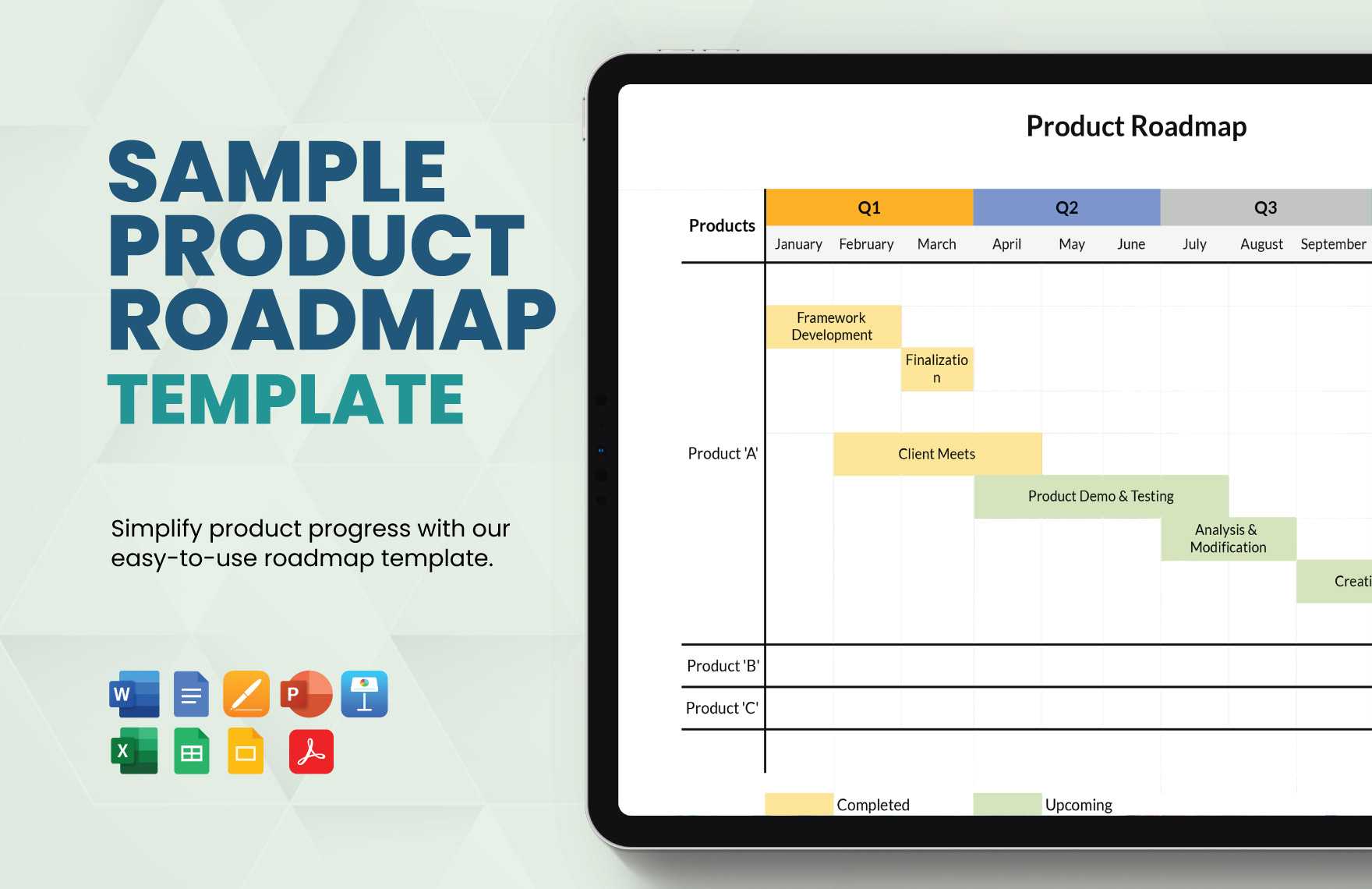
- Product roadmapping with tradeoff cards: Document the cost, impact, and risk of each roadmap item so choices become explicit.
- Resource shadow pricing: Assign a notional price to scarce resources (e.g., compute hours, specialist time) to surface hidden costs.
- Postmortems and learning cycles: Run quick feedback loops to learn what scarce allocations actually produced.
These tools turn scarcity from an abstract problem into a manageable process.
WHAT THIS MEANS FOR THE FUTURE OF TECH
The era ahead will be defined by new scarcities: increasingly constrained energy budgets, geopolitically influenced supply chains, and specialized human expertise. Firms that learn to make disciplined choices will outpace those that attempt to buy growth indiscriminately. In AI specifically, scarcity will favor architectures and companies that deliver the highest value per watt, per dollar, and per development hour.
Opportunities in constrained environments
Constraints breed markets for efficiency: startups that offer better compilation, pruning, model distillation, or hardware-aware software will thrive. So will companies that embrace composability—designing systems where precious components can be reallocated quickly to new problems.
CONCLUSION: CHOOSE THE BEST
Jensen Huang's celebration of scarcity is less a claim about scarcity's presence and more a strategic credo: constraints focus attention and force choices that reveal what truly matters. For leaders, engineers, and designers, the invitation is clear—treat scarcity as a tool. Use it to sharpen product focus, to design systems that extract more value from every input, and to create organizational habits that favor decisive action over diffuse effort.
- Scarcity is a clarifying force: it forces prioritization and higher-quality decisions.
- Technical and strategic choices born of constraint often create lasting advantages.
- Ethical deployment of scarce resources requires attention to access and sustainability.
- Leaders should adopt concrete tools—tradeoff cards, shadow pricing, staged experiments—to make scarcity manageable.
In a constrained world, the discipline to choose the best becomes a competitive advantage.