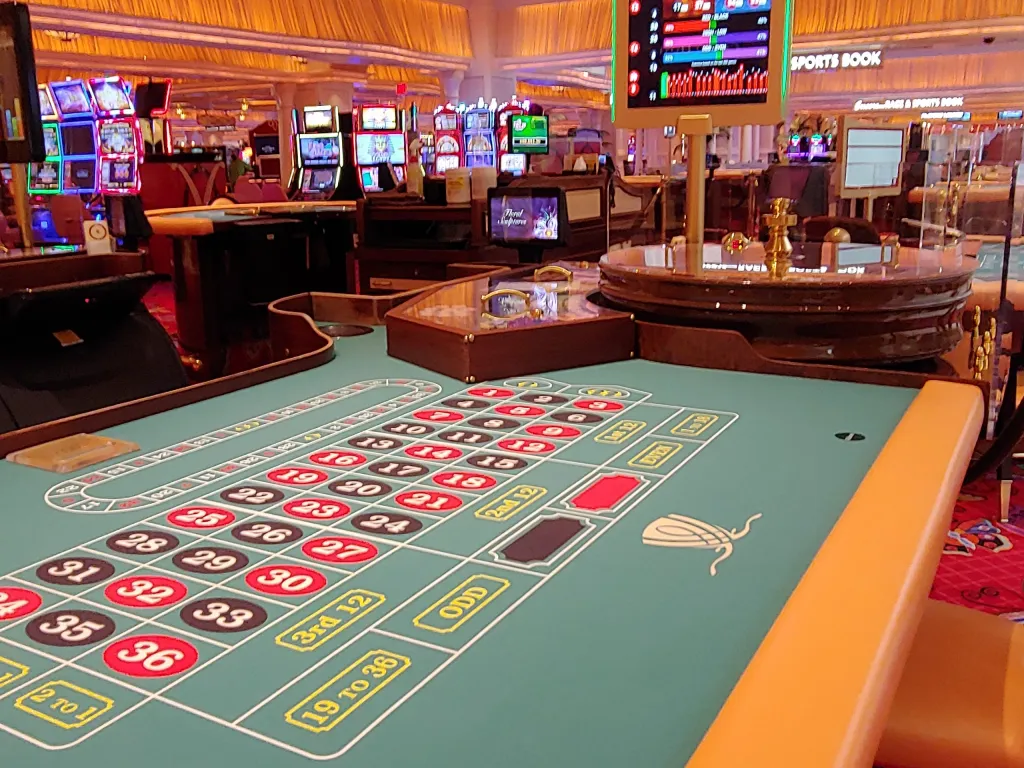
Why Las Vegas Roulette Payouts Always Favor the House
Walk into any Las Vegas casino and the roulette wheel is both an invitation and a challenge: the clack of the ball, the glassy cylinder of glass, the crowd leaning in as the chips stack on reds and blacks. It's theatrical, fast, and intoxicating. Beneath the spectacle, however, there's a blunt piece of arithmetic: every payout on a standard Las Vegas roulette table is set lower than the mathematically fair payout. That deliberate gap is how casinos guarantee profit over time. This article explains why the payouts are less than fair, shows the math for American and European wheels, unpacks common misconceptions, and gives practical takeaways for anyone who wants to play wisely.
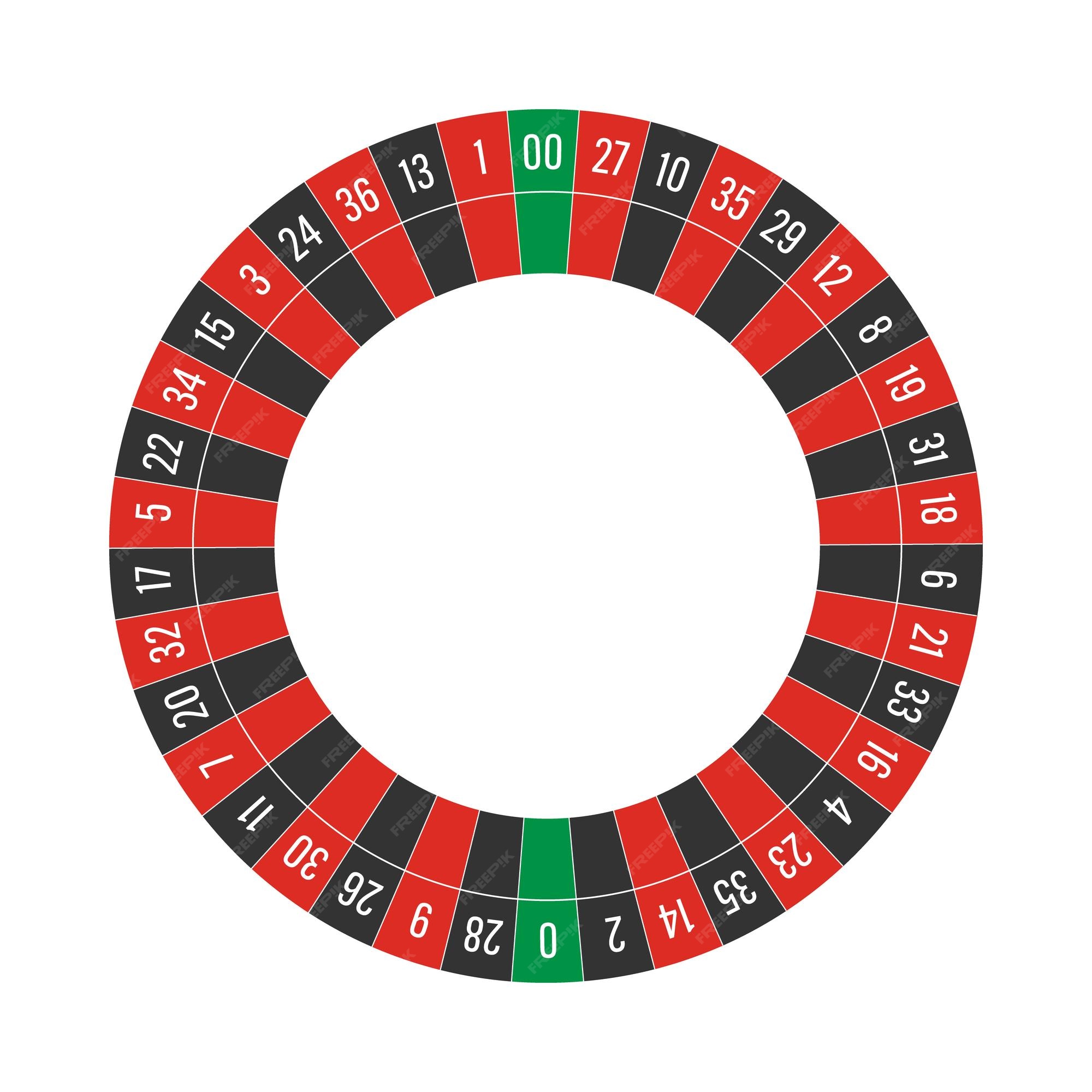
American roulette wheel
How Casinos Turn Probability Into Profit
Casinos are businesses. Their job is not to offer perfect odds for players; it's to offer games that attract bettors while producing predictable profits. For games like roulette, slot machines, and blackjack, that predictability comes from the house edge: a small, fixed percentage of each wager that the casino expects to keep over the long run. That edge is created when the payout to winners is set below the mathematical expectation implied by the actual probability of winning.
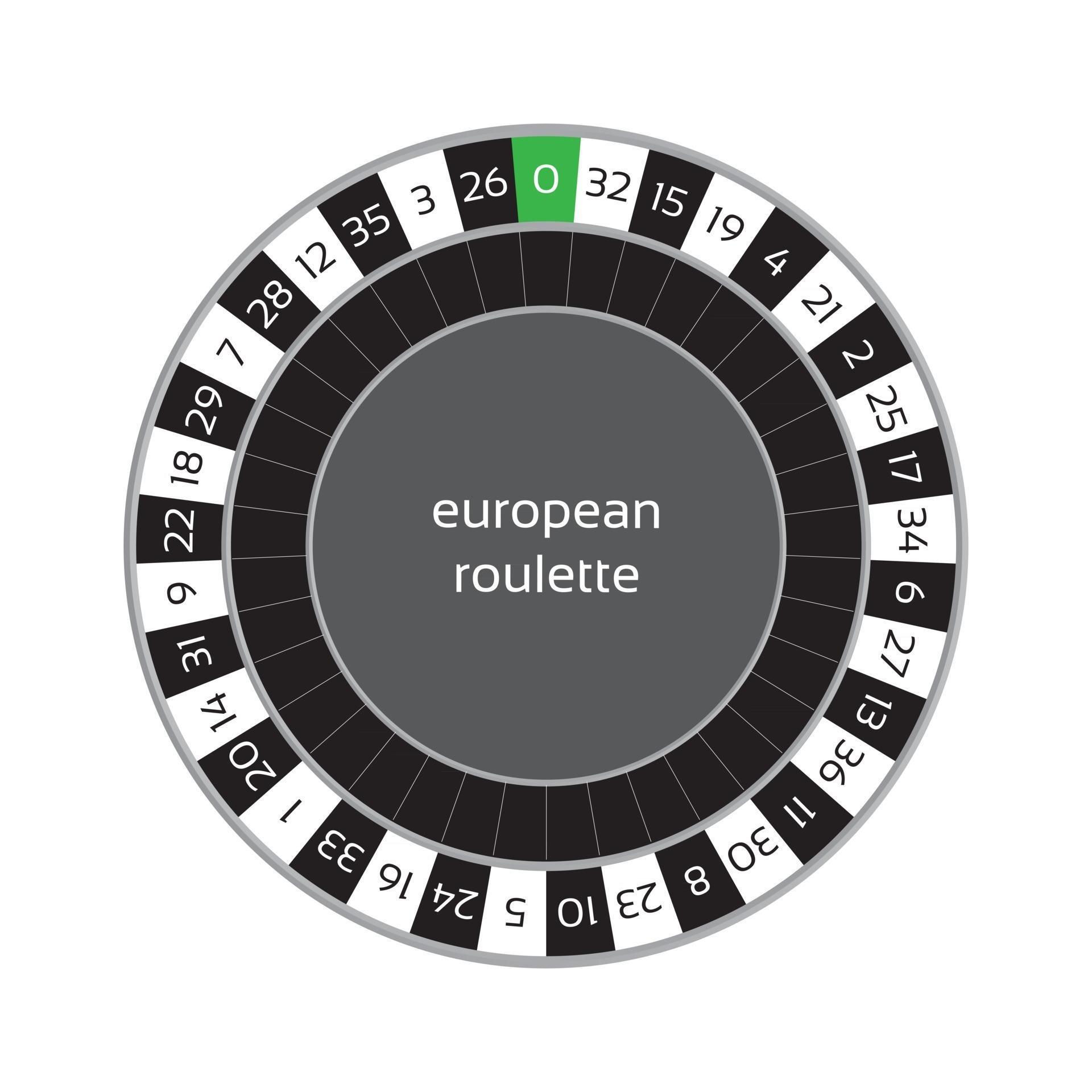
European roulette wheel
What “Mathematically Fair” Means
A mathematically fair payout is one where the payout ratio equals the reciprocal of the probability of winning, minus one, so that the expected value of every bet is exactly zero. In plain terms, if an event has a 1 in N chance of happening, a fair payout for a winning bet would give you N−1 units for each unit wagered (plus getting your original unit back). That way, the long-term average gain or loss would be zero.
Formulaically: Fair payout = (1 / Probability) − 1. Casinos deliberately pay less than that fair payout, and the difference, averaged across all outcomes, is the house edge.
American vs European Wheels: Numbers That Matter
There are two common roulette wheel formats you'll encounter: European (single zero) and American (double zero). A European wheel has 37 pockets (numbers 1–36 plus a single 0). An American wheel has 38 pockets (numbers 1–36 plus 0 and 00). That extra 00 pocket materially increases the house edge.
Straight (Single-Number) Bet Example
Consider a straight bet—placing one chip on a single number. On an American wheel the chance of that number coming up is 1/38. A mathematically fair payout would be 37 to 1: if you bet $1 and won, you'd receive your $1 stake back plus $37 for a total of $38. But casinos pay 35 to 1.
Why does that matter? Let's compute expected value (EV) for a $1 straight bet on an American wheel with a 35:1 payout.
Win outcome: probability = 1/38, net gain = +$35. Lose outcome: probability = 37/38, net change = −$1. So EV = (1/38 * +35) + (37/38 * −1) = (35/38) − (37/38) = −2/38 = −0.0526315… or −5.26315% of the bet. That negative expectation is the house edge: the casino expects to keep about 5.26 cents of every dollar wagered on straight bets in the long run.
On a European wheel the math is similar but slightly kinder to the player because there are only 37 pockets. With a 35:1 payout the EV becomes (1/37 * +35) + (36/37 * −1) = (35 − 36)/37 = −1/37 = −0.027027… or −2.7027%.
Even-Money Bets and the Green Numbers
One common misconception is that even-money bets like red/black or odd/even are fair because roughly half the wheel is red and half black. But the presence of the green zero (and double-zero in American roulette) breaks that symmetry. For a single-zero wheel, there are 18 red, 18 black, and 1 green. An even-money bet wins with probability 18/37 on a European wheel or 18/38 on an American wheel, but the payout is 1:1. The casino's retention comes from those green pockets: they make even-money bets slightly unfavorable.
Why Casinos Pay 35:1 Instead of 36:1 or 37:1
Why 35:1 specifically? There are historical and competitive reasons. Early roulette rules and commercial pressures standardized payouts. Paying 35:1 on a straight bet rather than the fair 36:1 or 37:1 creates a reliable margin while keeping the payout large enough to attract gamblers who enjoy the size of a straight win. The choice balances marketing—big headline numbers on payout tables—with the economics of steady profitability.
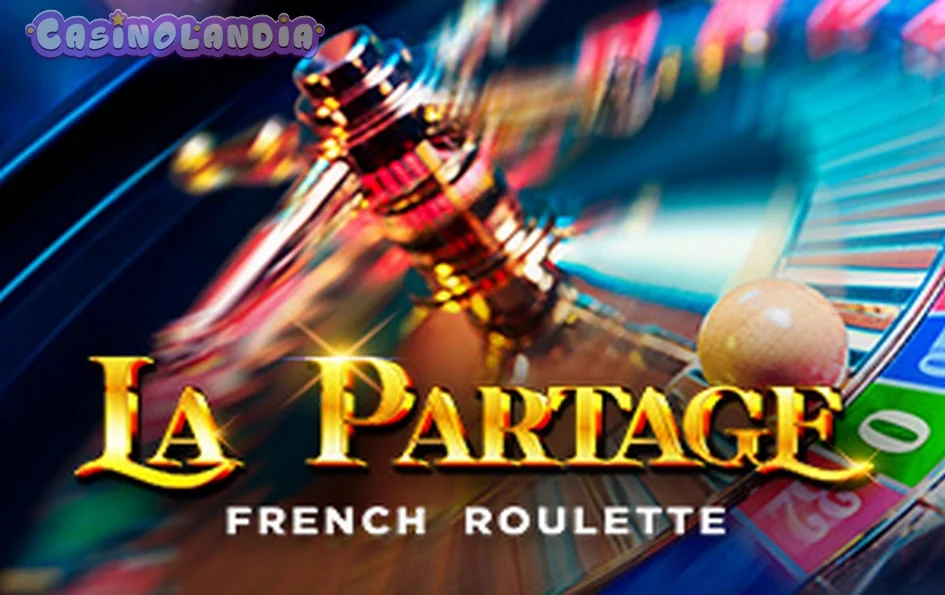
La partage rule
House Edge Across Common Bets
Different bets have different probabilities and therefore different fair payouts. Casinos apply the same principle—pay less than fair odds—across the board. That means the house edge is usually the same for most bet types on a given wheel (for standard American or European rules). For example, straight bets, split bets, and corner bets have different payout ratios, but the underlying arithmetic where the casino pays slightly less than fair produces similar edges. On the American wheel that edge is generally 5.26%; on the European wheel it's 2.70% for many standard bets.

en prison rule
A Short Math Walkthrough
Think of roulette as a tiny lottery repeated many times. If you make a large number of identical bets, the law of large numbers tells you your average return will approach the expected value. For a bet with EV = −0.0526315 per $1, if you place 1,000 identical $1 bets, your expected cumulative loss is about $52.63. That is how casinos convert an infinitesimal edge into steady revenue when thousands of players place thousands of bets per hour.
Casinos aren't trying to make you lose on a single spin; they're making sure the long-run math makes them winners.
Common Rules That Change the Math
Not all roulette tables are identical. Some European-style tables offer the “la partage” or “en prison” rules for even-money bets. With la partage, when the ball lands on zero you lose only half your even-money bet instead of the full amount. With en prison, your bet is held (“in prison”) for the next spin: if it wins then you recover your stake; if it loses you lose it. These rules effectively cut the house edge on even-money bets in half, to about 1.35% on single-zero wheels.
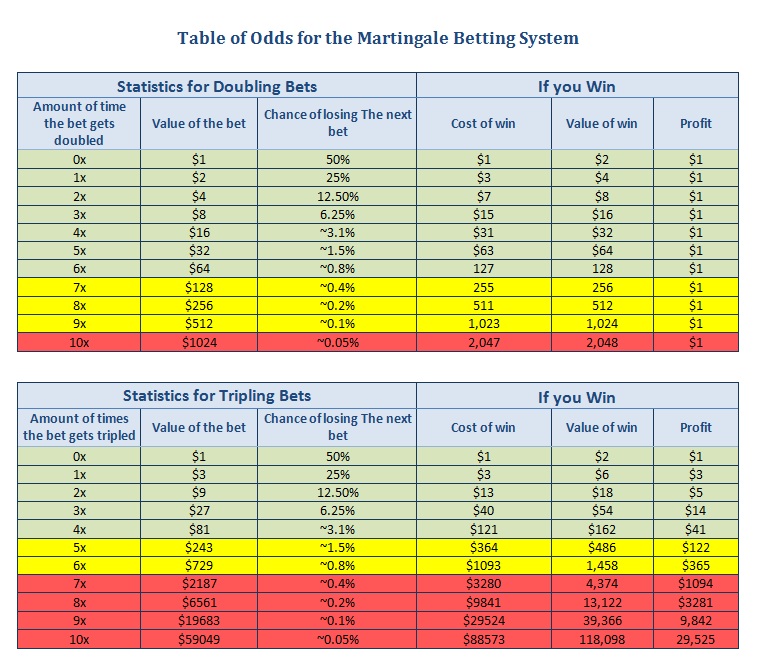
Martingale betting system
Misconceptions and Myths
Several persistent myths circulate among players. Two worth addressing: the idea that a sequence of blacks makes red “due,” and the belief that betting systems like Martingale can overcome the house edge. The first is the gambler's fallacy: each spin is independent; past outcomes do not change the probability on the next spin. The second ignores two practical limits: bankroll constraints and table limits. Martingale can alter short-run variance but cannot change the expected value—the house edge still applies, and a sufficiently long losing streak will wipe out gains or force you to stop because of table maximums.
Why Small Edges Matter
A few percent might sound trivial, but in volume it's everything. Casinos operate thousands of spins per hour across dozens of tables. A 2.7% edge multiplied by total wagers quickly becomes millions in annual profit. That small, consistent edge also lets casinos offer big payouts for rare wins, like 35:1 on a straight, while still guaranteeing profit.
house edge calculation
Practical Advice for Players
- Know the wheel: prefer single-zero (European) wheels where available; the house edge is lower.
- Look for table rules: la partage and en prison reduce the edge on even-money bets.
- Manage bankroll: accept that roulette is negative-expectation entertainment—set a limit and treat losses as the cost of that entertainment.
- Avoid believing in 'due' outcomes: each spin is independent; don't let patterns fool you.
- Bet size and volatility: larger bets increase variance but not the expected loss percentage; smaller, controlled bets keep sessions longer.
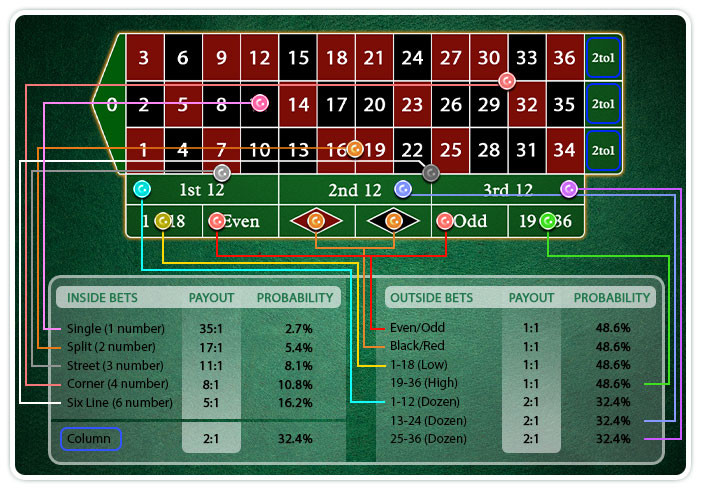
roulette payout table
Regulation and Fairness
Gaming regulators require that roulette wheels be balanced and random to protect players and the integrity of the industry. Casinos cannot legally change payout tables mid-game or introduce secret rules. The structural advantage—payouts below mathematically fair odds—is not a glitch; it is the designed economics of the game and is fully transparent in table payout labels. Responsible gambling rules and disclosures vary by jurisdiction, but the essential math of the wheel is public and consistent.
Common Questions Players Ask
How much does the extra 00 cost you? The difference between a single-zero and a double-zero wheel increases the edge from ~2.70% to ~5.26%. Is there a winning strategy? Not in the sense of altering expected value—only in risk management and choosing rules and wheels that minimize losses. Can you get lucky? Absolutely. Short-term variance can be enormous, and players win big prize pots all the time—but the house edge makes those wins statistically unsustainable for consistent profit.
A Short Worked Example: $5 Bets, 100 Spins
Say you bet $5 on a straight number on an American wheel and repeat that same bet 100 times independently (not a recommended real-life strategy, but useful for illustration). Expected loss per $5 bet is 5.263% × $5 = about $0.26315. Over 100 spins your expected cumulative loss is about $26.32. You might win a handful of spins, covering some or all losses in the short term, but the average result across many such sequences will converge on the expected loss.

red black roulette bet
Why Casinos Still Market Big Payouts
Marketing uses big numbers to create excitement: 35:1 sounds dramatic. Casinos balance that drama against a tiny, reliable erosion of player expectation. Big payouts bring in customers and encourage play; the smaller-than-fair payout ensures the game remains profitable in aggregate. Think of it as a theatrical bargain: the player pays for the spectacle and the chance of a life-changing hit, and the casino pays the occasional big winner while collecting a sliver from every bet.
Ethics and Responsible Gaming
Casinos must balance profit with responsible gaming practices. Because the house edge guarantees long-term losses, players should never view roulette as an investment or income strategy. Responsible gambling policies—self-exclusion, betting limits, and clear disclosures—help players stay safe. Knowing the math empowers players to make better decisions about how much to wager and when to walk away.
Final Thoughts
Roulette in Las Vegas is designed to be thrilling and to pay out tempting sums for rare outcomes. Those payouts are always set below the mathematically fair level so casinos achieve a predictable house edge. Understanding the arithmetic behind those payouts doesn't remove the fun, but it does change how you should approach the wheel: with awareness, limits, and the expectation that the long-run math favors the house.
- Casinos pay less than mathematically fair payouts; the difference is the house edge.
- American (double-zero) roulette has a ~5.26% edge; European (single-zero) roulette about ~2.70%.
- Rules like la partage and en prison can reduce the edge on even-money bets.
- Betting systems do not change expected value—they only change variance.
- Treat roulette as entertainment: manage bankroll and play responsibly.
Roulette math explained: understanding odds, payouts, and the house edge helps you make smarter choices at the table.