
Why Capybaras Often Survive Crocodile Attacks
The image is cinematic: a low-slung crocodile sliding silently beneath glassy water toward the edge of a river where a group of capybaras graze. Yet in many wetlands across South America, adult capybaras—large, social, semi-aquatic rodents—emerge from water edges with their lives intact far more often than a casual observer might predict. The surprise isn't that crocodilians occasionally take capybaras; it's that, given how close both animals live and feed, outright predation on healthy adults is relatively uncommon. Understanding why requires looking beyond a single chase to anatomy, behavior, group dynamics, habitat complexity, and the economics of a predator’s choices.
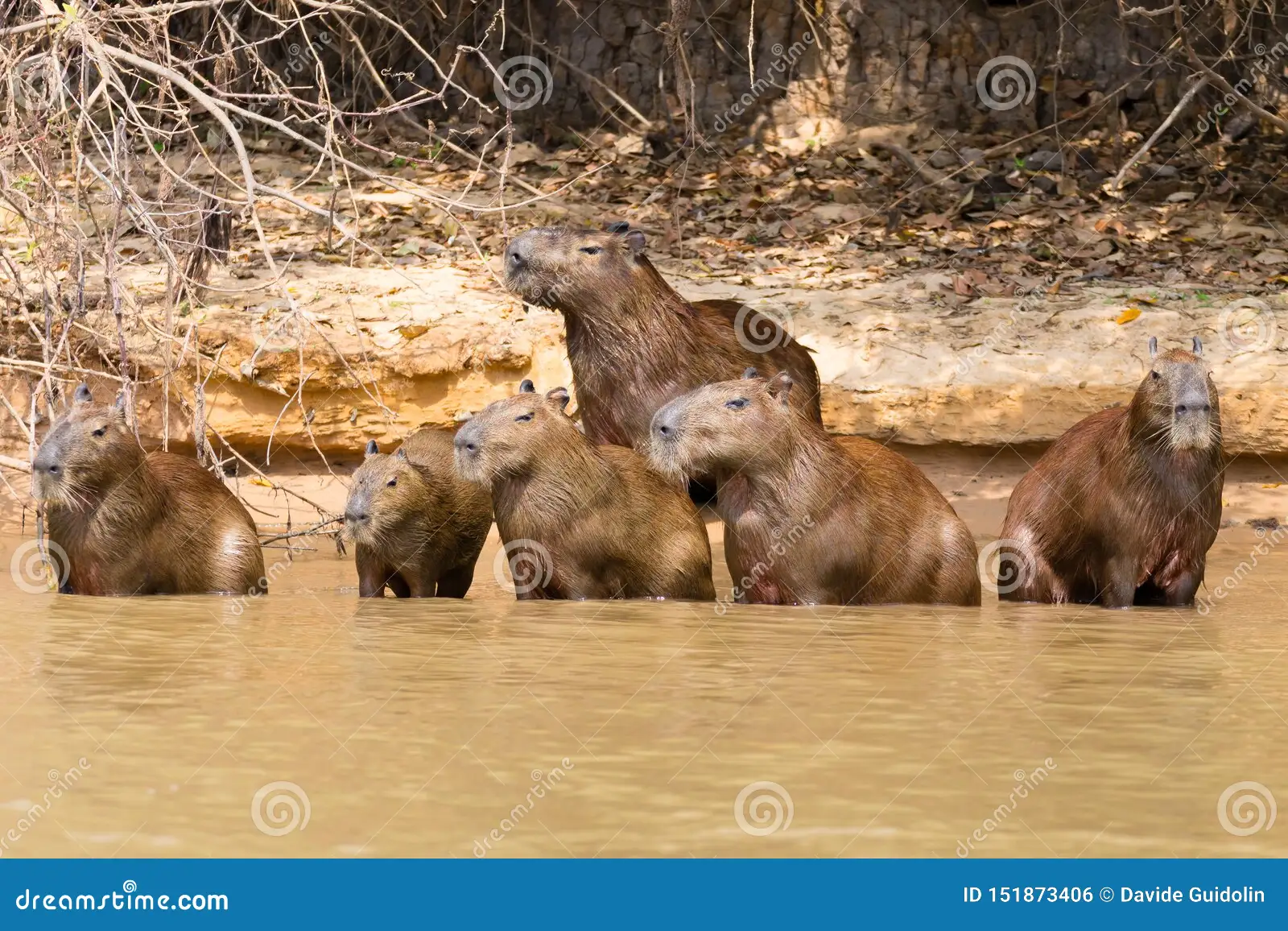
capybara herd Pantanal wetlands
THE PUZZLE: WHY IT'S NOT A SIMPLE MATTER OF SIZE
At first blush, a large crocodile and a heavy-bodied, slow-moving rodent should be a predictable predator-prey pair. Capybaras weigh from roughly 35 to 66 kilograms on average depending on population and season; many crocodilians in the same habitats—especially caimans—fall within sizes capable of killing such prey. But predation is not just about raw potential; it's a risk-benefit calculation for the predator and a suite of evolved responses for the prey. Crocodiles hunt by stealth and ambush in water; capybaras live at the water’s edge and have evolved precisely to take advantage of water as refuge. The interplay of those strategies determines outcomes.
Capybaras survive crocodiles less because of luck and more because ecosystems, bodies, and behavior line up against an ambush.
CAPYBARA BIOLOGY: BUILT FOR AQUATIC ESCAPE
Size and body composition
Capybaras are the world’s largest rodents, but their bulk is largely muscle and dense frame rather than oversized fat that would make them easy to drag. That mass gives them momentum and makes a single-crocodile grab less likely to immediately incapacitate an adult. Their muzzle shape and strong bite-back capability make them difficult to hold in a single clamp-and-drown attempt.
Sensory adaptations and breathing
Capybaras are highly adapted to an amphibious life. Their eyes, ears, and nostrils sit high on the skull, enabling them to watch and listen while most of the body remains submerged. They can remain underwater for several minutes—long enough to escape a surface-focused ambush or to disappear under murky water where detection is harder. That ability, combined with rapid bursts of swimming speed, reduces the time they spend vulnerable at an exposed shoreline.

capybara aquatic escape behavior
CROCODILIAN HUNTING STRATEGIES: AMBUSH, ENERGY, AND CHOICE
Ambush tactics in murky water
Crocodiles and caimans are classic ambush predators. They rely on remaining still and striking in the last instant. Their best opportunities occur when prey is isolated, distracted, or at the waterline in shallow, clear conditions. A group of alert capybaras—many heads, many eyes—reduces those opportunities.
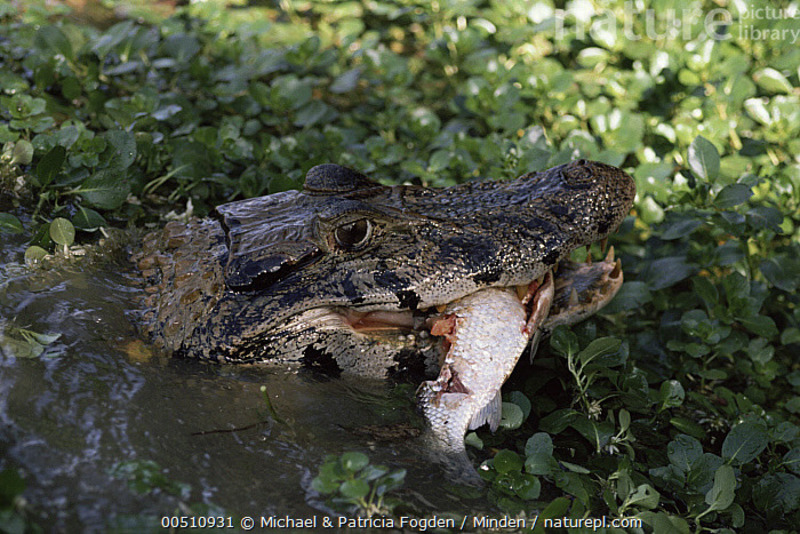
caiman ambush hunting river
Energy budgets and prey selection
Predators choose prey that maximize energy return for effort and risk. A crocodile might avoid taking a full-grown capybara because of the complexity of submerging and handling a large, struggling mammal—especially if the crocodile risks injury or expends energy that might not be recovered if the prey is lost. Smaller, easier prey (fish, birds, small mammals) are often the more efficient option. Jaguars and anacondas, which employ different ambush and killing strategies, are sometimes more effective at taking adult capybaras.
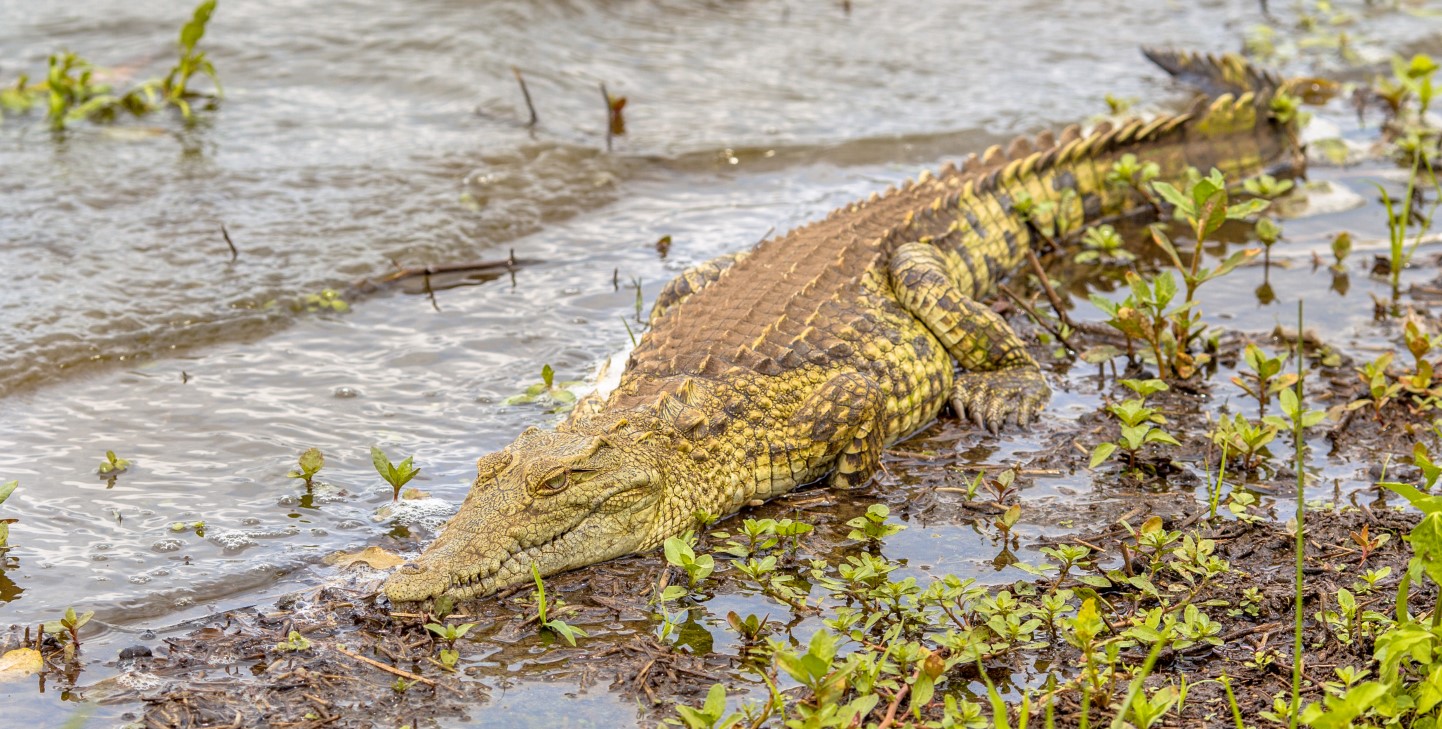
crocodile river habitat South America
BEHAVIORAL ECOLOGY: GROUPS, VIGILANCE, AND HABITAT
Group living reduces risk
Capybaras live in social groups that can range from small family units to aggregated herds of dozens or more, especially during dry seasons when water is scarce. Group life brings several anti-predator dividends:
- Many eyes: More individuals scanning the horizon makes stealthy approaches harder for ambush predators.
- Alarm systems: Capybaras use vocalizations—barks, whistles, clicks—to alert others to danger, triggering rapid retreat into water.
- Dilution effect: A predator that does attack may only catch one individual from a larger group, reducing per-capita risk.
Water as both home and refuge
Water is not merely a hunting ground for crocodilians; it is the capybara’s escape route. When threatened, capybaras often enter water in a single coordinated surge, slipping beneath the surface and using submerged vegetation and muddy bottoms to obscure movements. Crocodiles, efficient in open-water ambushes, are less adept at pursuing quickly through tangled aquatic plants or in shallow, densely vegetated margins.
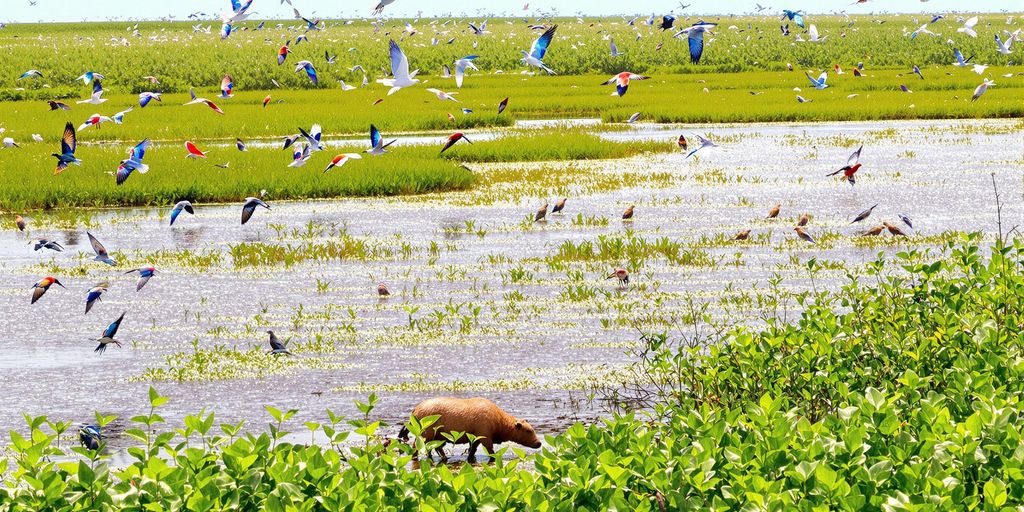
wetland ecosystem South America
TACTICS CAPYBARAS USE DURING AN ATTACK
Coordinated flight and splitting
When a crocodile strikes, capybaras may employ sudden, coordinated movement that confuses the predator. Groups can split and swim in different directions, making it difficult for a single crocodile to target and maintain a hold on one individual. Quick submergence and the animal’s ability to fold into the vegetation buys precious seconds.
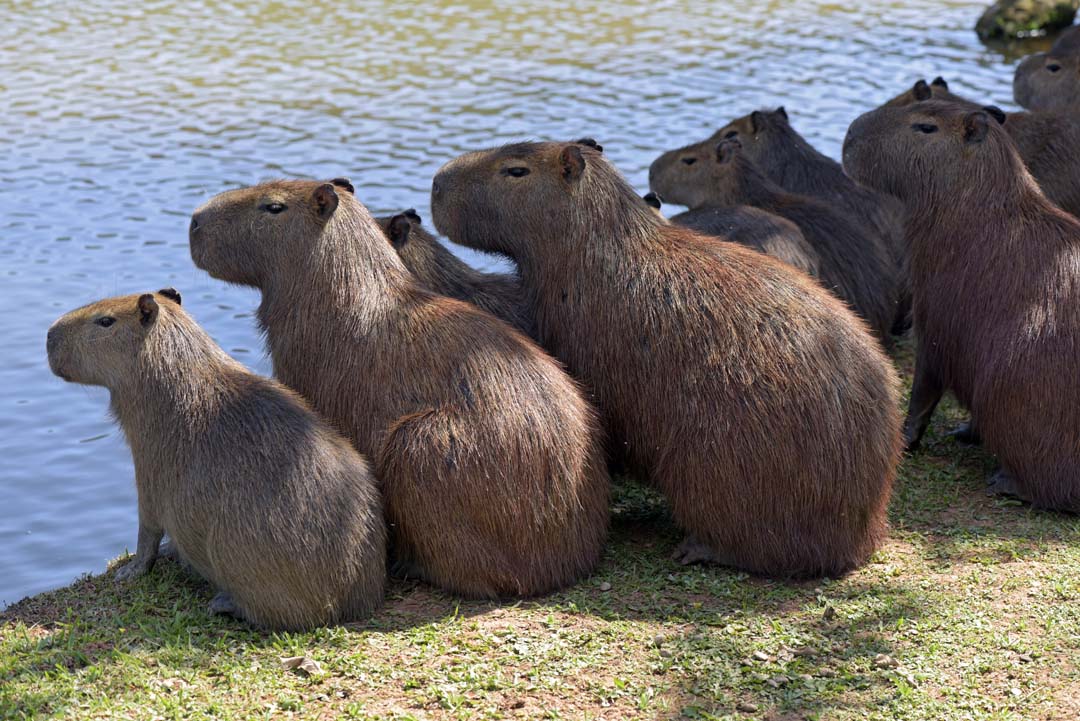
capybara group water vigilance
Counterattacks and deterrents
While capybaras are not aggressive predators themselves, they can bite and stomp. A strong adult can inflict painful wounds that deter a predator considering whether to persist with a difficult kill. Predators avoid unnecessary injury; a bump in the nose or a broken jaw could be a game-losing event for a crocodile.
WHO GETS EATEN AND WHEN: AGE, HEALTH, AND OPPORTUNITY
Young, sick, or isolated individuals are vulnerable
Most successful crocodilian attacks on capybaras involve juveniles, sick individuals, or animals separated from the group. Juveniles are lighter, less experienced at escape, and more likely to be left at the waterline while adults forage. During drought when groups concentrate around shrinking water bodies, the density of both predators and prey can increase predation events—but again, it is often the weaker individuals who fall prey.
Seasonal and habitat variation
Predation rates vary by location. In open, low-vegetation banks where a crocodile has clear sightlines, the odds of a successful ambush rise. Conversely, in flooded forests, reed beds, or heavily vegetated marsh edges, capybaras can exploit complex structure to avoid detection and escape. Seasonal shifts in water levels, prey abundance, and group behavior all influence the balance.
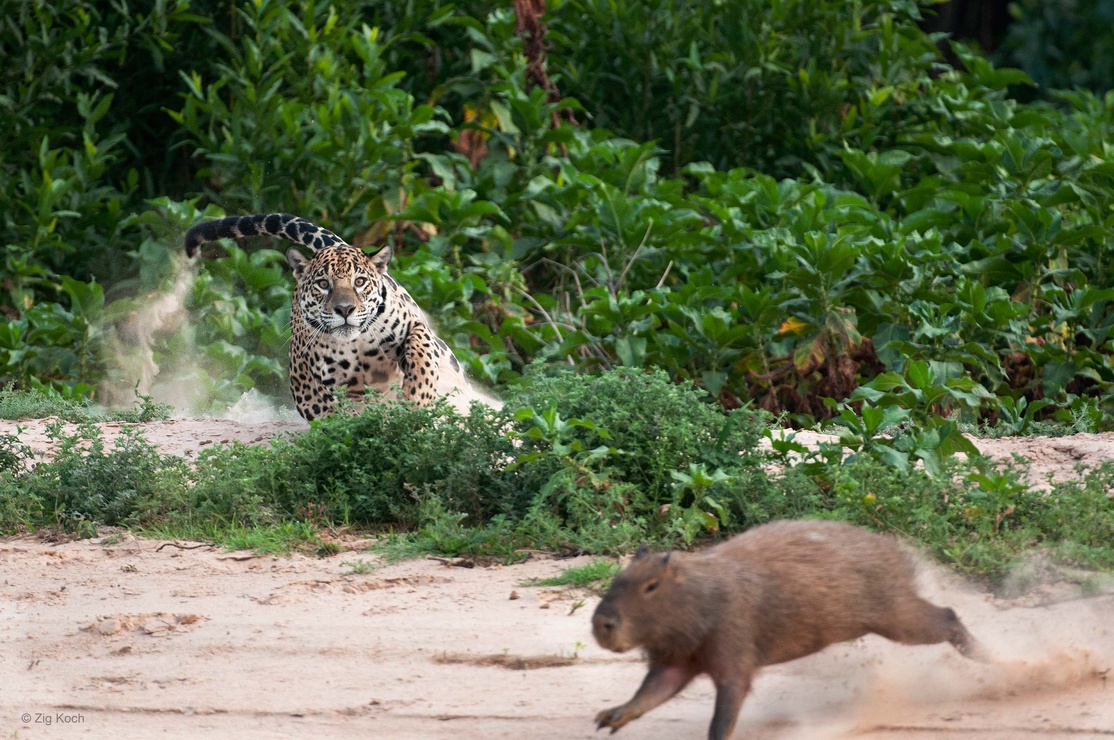
jaguar hunting capybara
EVIDENCE FROM FIELD OBSERVATIONS
Naturalists and researchers have recorded both failed and successful attacks. Photographs and eyewitness accounts often show the energy of the struggle and the way group behavior changes in real time: a single alarm call, a ripple of motion, and the entire group vanishes beneath the surface. Quantitative studies of predator-prey interactions in wetlands—though uneven across regions—generally align with the view that large, social prey use a mixture of defensive morphology and behavior to reduce per-capita risk.
IMPLICATIONS FOR ECOSYSTEMS AND CONSERVATION
Trophic balance and predator flexibility
The presence of capybaras influences predator diets and behavior. Crocodilians may shift toward easier prey types when capybaras are scarce or when adult capybaras are difficult to dispatch. Conversely, in regions where jaguars or anacondas are present, capybaras face different pressures. These dynamics underline the flexibility of predators and the context-dependence of food webs.
Human impacts and what they change
Human activities—habitat alteration, hunting, and watercourse modification—change the landscape of risk. When wetlands are fragmented, capybara group sizes may shrink and escape routes become limited; crocodilian populations may either decline due to habitat loss or concentrate in remaining waterholes, raising local predation pressure. Protecting intact floodplain habitats preserves the natural balance that allows capybaras to use water as refuge and maintain healthy group structures.
WHAT THIS TEACHES US ABOUT PREDATOR-PREY THEORY
At a conceptual level, the capybara–crocodile relationship is a textbook example of how prey traits (size, social behavior, habitat use) and predator traits (ambush strategy, risk tolerance, prey choice) interact. It reminds us that predation is probabilistic and context-dependent; success depends less on absolute abilities and more on match-ups. A predator adapted for sudden, solitary ambushes will be less efficient against prey that disperse risk through numbers, use complex habitats, and possess specialized escape adaptations.
CONCLUSION: BALANCE, NOT IMMUNITY
Capybaras are not immune to crocodile predation; they are simply armored by a suite of biological and behavioral strategies that lower individual risk. Large body size, aquatic escape capability, social vigilance, and habitat complexity collaborate to make adult capybaras challenging targets. Predators demonstrate their own selective behavior, often choosing easier or more profitable prey, or switching tactics entirely when the cost of pursuit is too high.
The survival of capybaras against crocodilian predation is a story of strategy as much as strength.
Key takeaways
- Capybara adaptations—size, aquatic escape, and sensory placement—reduce vulnerability at the waterline.
- Group living and alarm signals dramatically lower per-capita predation risk.
- Crocodilians often prefer easier prey or juveniles; predators weigh risk and energy return.
- Habitat structure and human impacts shape local predation dynamics.
Final thought
Watching a capybara herd slip beneath the surface at a single alarm note is to witness a suite of evolved strategies play out in real time. It is not a guarantee of safety, but it is a powerful example of how life in watery landscapes is negotiated not with brute force alone but with information, cooperation, and the clever use of environment.
A capybara herd uses water, cooperation, and alertness to reduce the chances of a fatal ambush.