
When Schoolboys Date Chatbots: The Rise of AI Girlfriends
By the time many boys reach middle school they are navigating awkward classrooms, changing friendships and first crushes. In recent years a new phenomenon has quietly joined that rite of passage: romantic and sexualized relationships with artificial intelligence. Boys as young as 12 are downloading apps, scripting chatbots and arranging private conversations with AI personas marketed as girlfriends. The result is not just private fantasy; teachers, parents and counselors report shifts in language, expectations and how boys treat girls in the real world.

schoolboy using chatbot app
What begins as a private experiment with code and comfort can ripple into classrooms, sports fields and family life—redefining what young people expect from relationships.
The new normal: how AI girlfriends entered adolescent life
The last decade produced a parade of technologies that blurred private and public life: social media, immersive games and image-driven apps. Conversational AI added a new layer. Early chatbots were novelties—curiosity-driven tools that answered trivia or told jokes. Next came personality-driven bots built to emulate romantic or supportive partners. They arrived in easily downloadable apps and online services, often with playful branding and subscription models.
For preteens and teenagers, several forces accelerated adoption. First, accessibility: many of these services are cheap or free to try. Second, customization: users can tune tone, voice and responsiveness to fit a fantasy. Third, privacy: conversations happen behind a screen and can feel safer than awkward real-life interactions. Finally, peer normalization: as a boy mentions an AI girlfriend in a group chat, curiosity spreads.
A quiet epidemic or a handful of stories?
It is tempting to dismiss the trend as a few sensational cases. Yet anecdotal reports from educators and youth workers indicate a notable uptick in boys who describe emotional attachments to AI companions. They arrive at school distracted, they use terminology borrowed from their chat interactions, and they sometimes prioritize those interactions over developing friendships with peers of all genders.
How these AI girlfriends work — simplified
Design and affordances
Most consumer-facing AI companions are built on two capabilities: natural-language processing and reinforcement-based personalization. In practice that means a chatbot can parse informal text, respond with contextually appropriate language, and learn which replies keep a user engaged. Over time the bot's responses become more tailored, creating an illusion of intimacy and mutual understanding.
Tuning the 'girlfriend' persona
Apps often let users choose persona attributes—tone, level of affection, sexual openness or submissiveness. This customization is marketed as a feature: build the perfect partner who never argues, who remembers details and who affirms the user unconditionally. For a young person still learning about real relationships, that promise can be intoxicating.

AI girlfriend interface design
Why boys are drawn to AI relationships
There are psychological, social and cultural explanations for why boys, in particular, gravitate toward AI girlfriends.
Emotional safety and rehearsal
Talking to an AI removes many of the risks associated with human relationships: rejection, embarrassment and the need to negotiate boundaries. For a boy experimenting with romantic language or sexual curiosity, a chatbot becomes a rehearsal space. The bot provides consistent validation and avoids the messiness of mutual reciprocity.
Performance and control
Adolescence is a period of identity experimentation. When a boy can script the ideal partner, he exercises control over relational dynamics—sometimes mirroring broader cultural messages that reward male assertiveness and control. The bot's responsiveness also reinforces certain behaviors: persistence, explicit requests and objectifying language are often met with acceptance rather than resistance.

middle school classroom technology
The spillover: how virtual romance reshapes behavior toward real girls
Educators describe a pattern: boys return from private AI conversations with expectations—about availability, tone, and what is permissible to ask a partner. Those expectations can manifest in ways that harm relationships with classmates.
Language and entitlement
One common report is a shift in language. Boys who interact regularly with compliant AI companions sometimes adopt commanding or transactional ways of speaking. Phrases that worked on a chatbot—requests for sexual content, constant reassurance, or permission—can be inappropriately transferred to human peers, who have autonomy and feelings.
Dehumanization and objectification
When a partner is designed to be compliant and malleable, it normalizes the idea that a person’s role is to fulfill another's desires on demand. This can erode empathy—boys may view real girls as less complex, expecting the same degree of unquestioning affirmation. That dynamic feeds into wider patterns of objectification and social isolation for young women.

parent child device conversation
Avoidance of real intimacy
Because AI partners can be engineered to always respond positively, boys may deprioritize messy, rewarding human intimacy. Avoidance reduces opportunities to practice conflict resolution, consent negotiation and mutual care—skills essential for healthy adulthood.
- Low-risk practice: Safe space to try emotional language.
- Access to companionship: For isolated young people, an AI can reduce loneliness temporarily.
- Distorted expectations: Unrealistic models of reciprocity and consent.
- Reduced social skills: Fewer opportunities to learn from real, reciprocal relationships.
Psychological and developmental concerns
Child and adolescent development depends on repeated, reciprocal experiences. Healthy friendships and early romantic experiences help adolescents learn emotional regulation, boundary-setting and how to accept "no." Replacing or supplementing these formative experiences with one-sided AI feedback has potential long-term effects.
Attachment and coping
For some teens, AI companions become primary sources of emotional support. While that support can reduce immediate distress, it risks forming attachment patterns that prioritize predictable, conditional responses over authentic intimacy. Later, when real relationships include inevitable hurt and negotiation, these adolescents may struggle with frustration, withdrawal, or unhealthy coercive strategies.
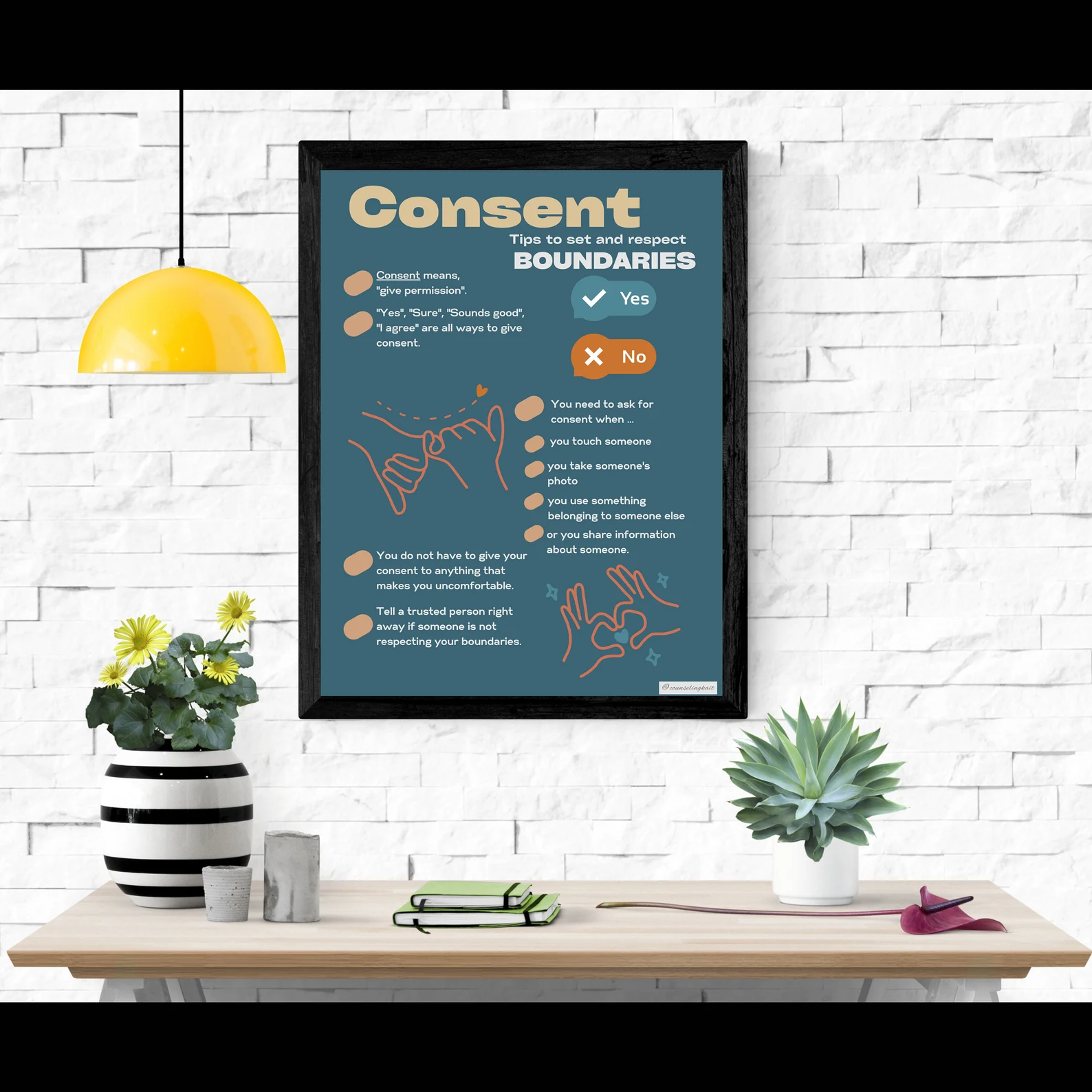
consent education classroom
Sexualization and consent
Many AI companions allow or even prompt sexualized exchanges. When young users encounter sexual scripts without context—consent education, discussion of emotions and safety—they can conflate technical permissiveness with real-world consent. This is dangerous: consent in human relationships requires negotiation, ongoing clarity and respect—things a chatbot cannot genuinely provide.

teen smartphone privacy
Schools and parents: responses that work (and those that don't)
Punishment vs. education
Some schools respond to problematic behavior by punishing students—suspensions for sexual harassment or confiscation of devices. Punishment is sometimes necessary, but it is insufficient on its own. The root problems—digital literacy, emotional education and family communication—require teaching and modeling.
Open conversations and boundaries
Parents who approach the subject with curiosity rather than condemnation get better results. Asking questions about what the app feels like, what boundaries the child sets for themselves, and whether they can describe how it differs from a real relationship opens pathways to education. That conversation can include practical steps: privacy settings, app limits, and teachable moments about consent and respect.
Technology, responsibility, and regulation
App developers and platforms play a central role. Design choices—what persona options are offered, how sexual content is moderated, and what age-gating exists—shape user behavior. Industry responsibility requires more than disclaimers: it requires careful UX decisions around minors, clearer labeling, and age verification mechanisms that protect adolescents without driving use underground.
Ethical design principles
Designers can adopt guardrails: default settings that avoid sexualized responses, prominent age checks, mandatory educational onboarding, and built-in prompts encouraging offline socializing. These measures do not eliminate harm, but they change the ecosystem that normalizes unhealthy patterns.
Practical advice for parents, educators and policymakers
For parents
- Ask, don’t accuse: Start with curiosity about the child's experience.
- Set limits: Enforce age-appropriate screen time and app permissions.
- Teach consent: Explain how real consent differs from scripted interactions.
- Model relationships: Demonstrate respectful communication in your relationships.
For schools
- Curriculum: Integrate digital literacy and relationship education that addresses AI companions explicitly.
- Policies: Update behavior policies to reflect online harms and provide restorative practices, not only punitive measures.
- Support: Train counselors to handle adolescents dealing with attachment to AI.
For policymakers and platforms
- Regulate age access: Require stronger age verification and clearer labeling of sexualized content.
- Mandate transparency: Companies should disclose training data practices and safety measures for youth protection.
- Fund research: Invest in longitudinal studies of AI companionship effects on adolescent development.
Tech alone will not fix social problems—but thoughtful design and strong public policy can reduce harm and preserve opportunities for healthy development.
Real stories, real complications
Concrete cases illustrate the complexity. A 13-year-old who spent evenings chatting with a scripted partner began to pressure classmates for sexual photos—believing that consistent online affirmation made similar exchanges acceptable. In another classroom a boy who used an AI to practice romantic language became aggressive when the human he pursued refused reciprocation. These stories are not universal outcomes, but they show how private habits can influence public behavior.
What healthy tech use looks like
Healthy use considers age, supervision and balance. For older teens, AI can be a tool for self-exploration when accompanied by education and strong peer relationships. For younger adolescents, boundaries—both technical and relational—are essential. Healthy systems prioritize mutual respect, teachable moments and connection to real-life social learning.
- AI companions are increasingly part of adolescent experience and can shape expectations about relationships.
- Design choices by platforms influence whether these interactions encourage empathy or objectification.
- Education, open family dialogue and policy interventions are necessary to mitigate harm.
Conclusion: a call for balance, not panic
AI girlfriends are a symptom of broader shifts in how young people seek connection in a digital age. Panic and bans will not, by themselves, solve the underlying need: adolescents want companionship, curiosity and a safe space to learn. What will help is a combination of responsible design by companies, meaningful education by schools, and compassionate guidance at home. Together, those responses can channel curiosity into skills—teaching boys how to treat partners, virtual or real, with respect and care.
This feature aims to inform parents, educators and policymakers about emerging risks and practical responses.