
Watching My Father's Dementia Through His Art: A Timeline
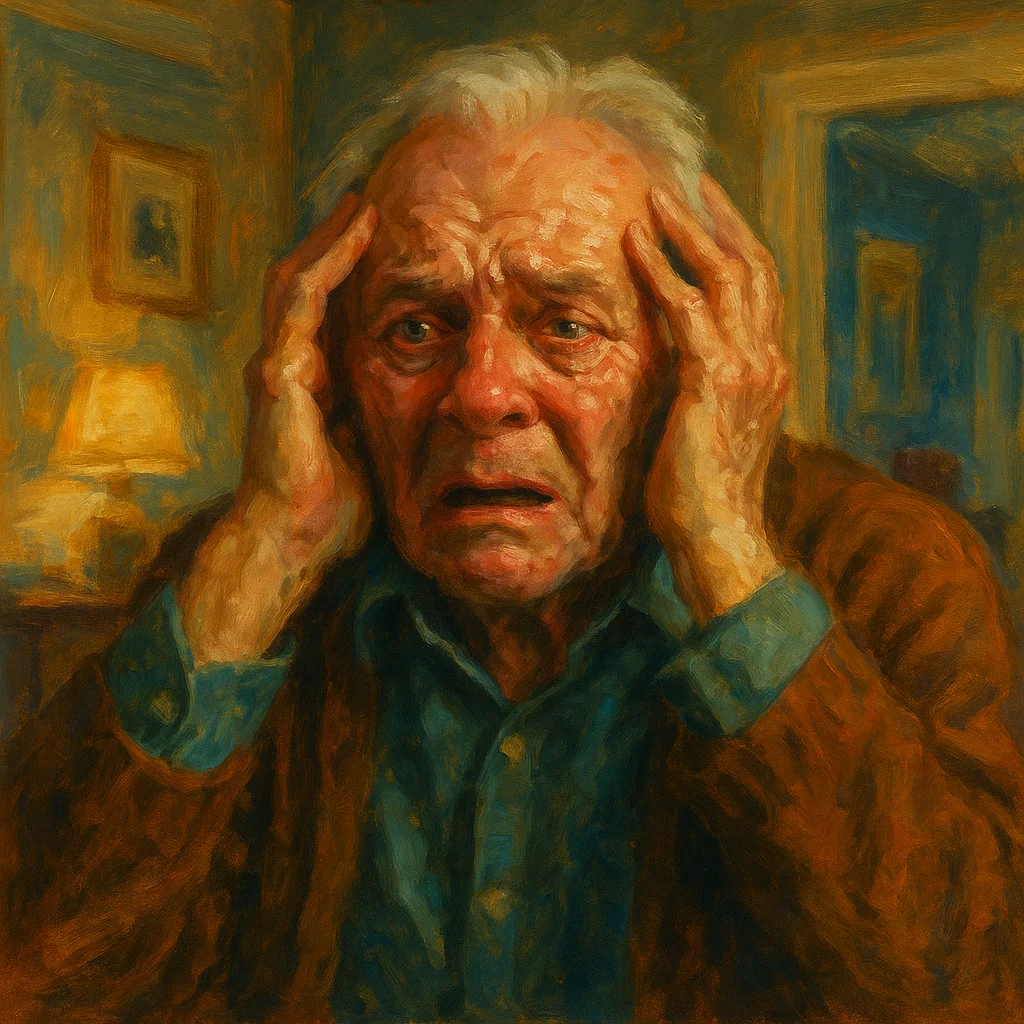
The first time I realized something was changing, it wasn't the words that failed him or the names he couldn't pull from his pocket of memory. It was a small, almost innocent canvas that sat on the kitchen table: a loose study of a pear rendered in wide, uncertain strokes. My father had painted pears his whole life—precise, crystalline slices of light balanced on a still-life plane. That pear looked like a stranger. Over the next seven years, his canvases became a record, in color and line, of a mind dissolving and, in strange counterpoint, of a spirit insisting on making.
When language shrank, his brush grew louder; the paintings became the place where he still spoke.
father dementia painting changes
THE BEGINNING: A SMALL SHIFT
In the early months, changes were subtle. He missed an appointment, repeated a story twice at dinner, misplaced a tool. His art was the first place those slips surfaced in a way I could see. Paintings that used to be exercises in compositional restraint loosened. Lines that had been confident and economical multiplied into tentative echoes. The subject matter did not change immediately—still landscapes, still portraits of the dog, still the same quiet interiors—but the execution did.
The pear that wasn't a pear
That study of a pear is a useful example. Where my father once cut the form with subtle planes of light and shadow, the pear's shape became an outline filled in with uneven washes and scumbled edges. Perspective flattened; negative space crowded around the subject. These were not the mistakes of a lazy afternoon. They were the first fingerprints of cognitive change: problems with spatial reasoning, sequencing, and the sustained attention that painting requires.
YEAR TWO–FOUR: REPETITION AND REDUCTION
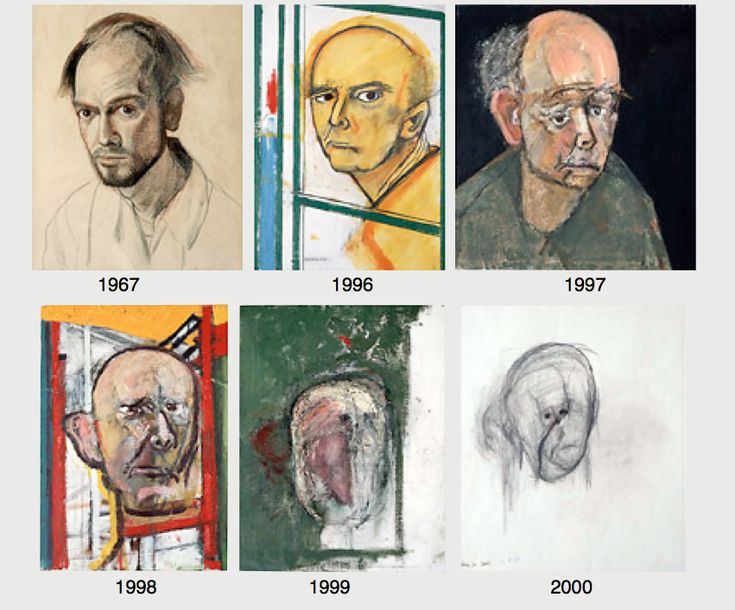
Between years two and four a pattern emerged across dozens of canvases: repetition. He painted the same scene multiple times with only marginal variation. A seaside cottage reappeared in blue, then blue again, then a simplified version reduced to a few rectangles and a horizon. A portrait of his sister shifted from likeness to suggestion—eyes became marked slashes, hair became a wash of color. What used to be an investigation into form became an insistence on the familiar.
Why repetition?
Repetition is not lazy; it is often functional. In the brain affected by dementia, repetition can be comforting, a way to anchor a dwindling sense of self. Repetition in art can also reflect working memory constraints—unable to hold new information for long, the artist returns to what is known. In my father's case, the repetition preserved a ritual: mixing the same blues, returning to a certain brush, committing to a time and process that still made sense to him.
MIDSERIES: SYMBOLS, ICONS, AND EMOTION
As the disease progressed, his paintings became less about accurate depiction and more about emotional truth. Houses became icons—little boxes with exaggerated roofs. Faces dissolved into discs with emphatic features: an oversized mouth, a single heavy eye, a pair of hands that repeated like a chorus. Color shifted, too. Where he had favored muted, atmospheric palettes, he began using bolder, more saturated hues in unexpected combinations: a violet sky, an orange tree, a face the color of pearled metal.
art therapy dementia caregiver
What the colors told me
Color is a powerful indicator of mood and cognitive state. In my father's work, sudden shifts to hot or discordant colors often accompanied agitation or confusion in daily life. Conversely, softer, harmonized palettes often followed days of quiet companionship or good sleep. Reading these shifts taught me a new form of translation—how to pair a canvas with a conversation, a medication change, or a visit by a grandchild.
visual changes dementia paintings
LATE STAGE: GESTURE, VOID, AND THE RETURN TO THE ESSENTIAL
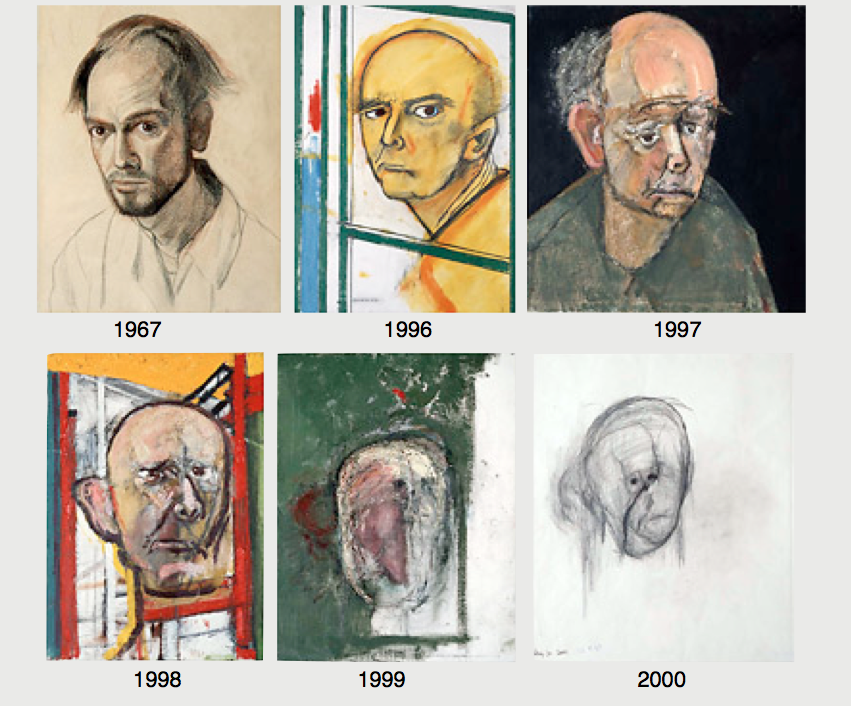
In the late stage of his illness, representational elements fell away altogether. Canvases became fields of gesture and void. Long, gestural marks—scrapes, smeared swaths, aggressive splatters—appeared alongside untouched areas of canvas. At times there were rudimentary shapes arranged like hieroglyphs. At others, a single color dominated and consumed the surface. These works were less 'pictures' and more records of presence: the weight of a hand, the rhythm of breath, the residue of motion.
I stopped looking for meaning in the subject and began to look for meaning in the act.
The paradox of deterioration and expressiveness
It is a paradox that as certain cognitive faculties decline—memory retrieval, naming, logical sequence—other modes of expression can become intensified. The late paintings felt raw and immediate, sometimes more communicative than the earlier, technically proficient works. They conveyed urgency, longing, and occasionally an eerie serenity. For us, they were not a sign of loss only; they were evidence of another kind of life continuing inside his head.
dementia progression art examples
HOW I DOCUMENTED THE TIMELINE
Because the art became a record, I decided to document it with care. I photographed every new piece, dated each capture, and wrote a short note about the day it was made—who visited, whether he had eaten well, medication changes, mood, and any notable incidents. The archive became invaluable. When I looked back months later, patterns emerged that I had not seen in the moment: a cluster of agitated brushworks after a hospital stay, a quiet, blue series after we hired a familiar caregiver.
A simple protocol
I developed a simple protocol that other family members could follow: photograph on neutral background, use the same lighting when possible, write a one-paragraph context note, and keep the images in chronological folders. This consistency turned anecdote into evidence and helped me and our care team correlate visual changes with medical and behavioral events.
WHAT THE CHANGES MEANT MEDICALLY AND EMOTIONALLY
Interpreting the paintings was never a substitute for medical assessment. Still, they offered practical insights. Changes in fine motor control reflected in brushwork often aligned with neurological findings. Spatial distortions correlated with difficulties that showed up in daily tasks: dressing, navigating doorways, or judging distances. More importantly, the canvases offered a new path to relationship. When words failed, I could sit with him in front of a painting and ask about color, brushstroke, or feeling. Sometimes he would respond with a story; often he would simply smile and touch the paint.
Grief in plain sight
There is a kind of anticipatory grief that accompanies dementia caregiving, and the art made that grief visible. Some canvases felt like goodbyes—solitary, quiet, pared down. Others felt like desperate attempts to hold on—crowded compositions, repeated forms, frantic color. Bearing witness to that grief through his work allowed me to mourn in stages rather than in a single overwhelming collapse.
PRACTICAL LESSONS FOR CAREGIVERS
Watching my father's art change taught me several practical lessons I wish I had known sooner. Some are logistical, others are emotional. All helped me provide better care while preserving his dignity.
1. Keep a visual archive
As described earlier, photograph and date every piece. Note context. This archive can be shared with clinicians and can also become a family resource for memory and legacy.
2. Use art as a communications bridge
When verbal communication faltered, a painting offered something to focus on. Ask simple questions: "What color is this?" "How did you make this texture?" Avoid quizzing; invite.
3. Respect process over product
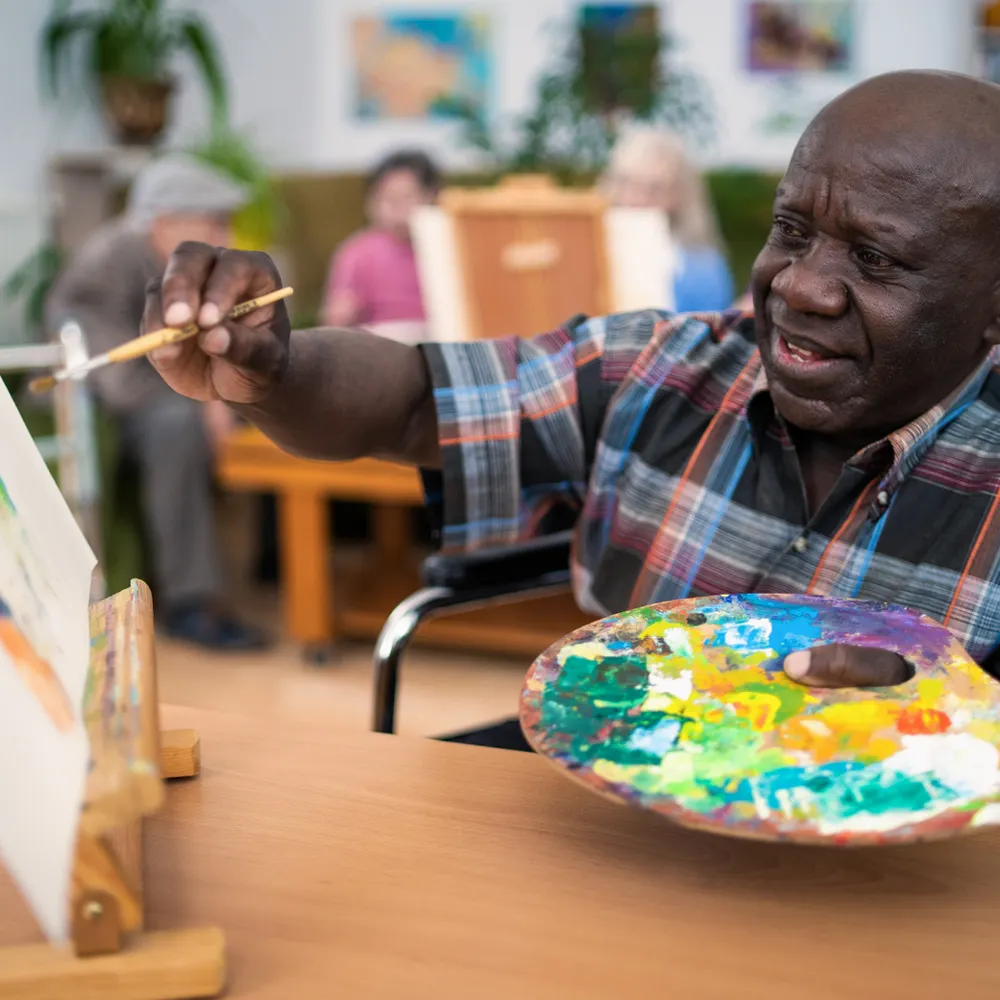
Don't judge the output. A canvas that looks like a child's scrawl may be the most meaningful thing the person has produced that week. Protect the process—even if that means tolerating mess or unconventional behavior during painting sessions.
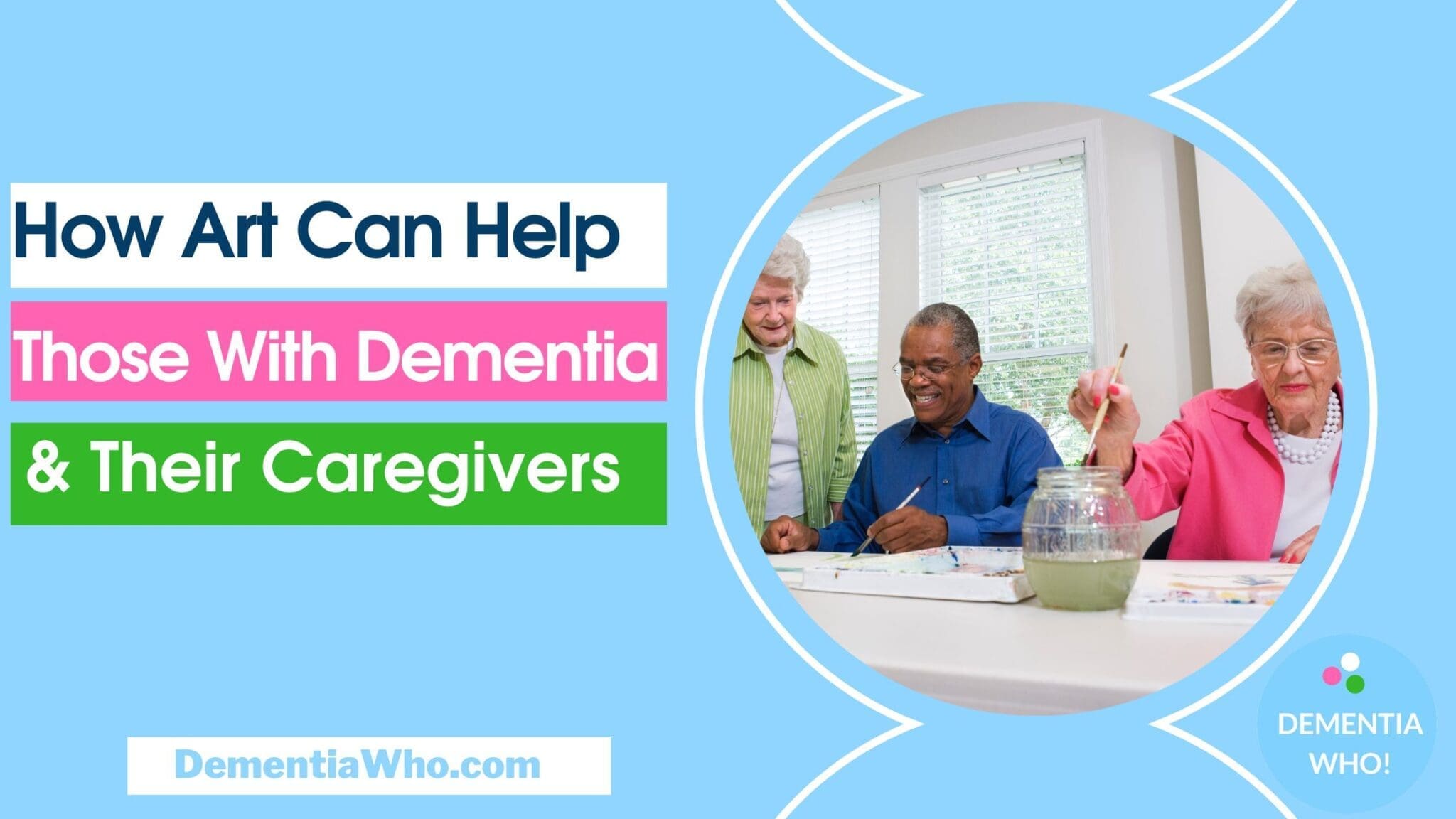
caregiver tips art dementia
4. Create safe, supportive art sessions
Organize short sessions with familiar materials. Reduce clutter, offer one or two color choices, and keep canvases small. Sometimes a single sheet of paper and a broad brush is enough. The goal is engagement, not mastery.
PRESERVING LEGACY AND FINDING MEANING
After he passed, our family faced choices about what to keep and how to honor his work. We selected representative pieces for a small home exhibition, digitized the archive, and compiled a memory book that paired images with anecdotes. In curating, we tried to respect the continuity of his life rather than impose a narrative of decline. We included early technical studies, the repetitive series from middle years, and the late gestural works. Displayed together, the arc felt less like loss and more like a complex life in full.
Sharing without sensationalizing
There is a temptation to present these works as tragic proof of deterioration. Instead, we framed them as evidence of persistence—the fact that even as some cognitive doors closed, the impulse to create remained. That framing guided our conversations with grandchildren and with friends who asked about his condition.
- Creative work can reveal cognitive changes early and serve as a nonverbal record.
- Documenting art with dates and context turns personal observation into useful data.
- Art sessions should prioritize comfort and connection over technical outcome.
- Curating an artist's late work is an act of compassion and legacy preservation.
CONCLUSION: WHAT I LEARNED FROM THE CANVAS
My father's paintings taught me to pay attention in a new language. They forced me to slow down, to notice the small shifts in hue and hand, and to translate gesture into care. They showed me that dignity does not depend on cognitive ability; it lives in the way we listen, respond, and hold the work of another human being. In the end, the timeline of his art was also the timeline of our relationship: a record of presence, love, grief, and the stubborn, beautiful work of trying to understand one another.
Caregiving is often taught as a series of tasks. My father's canvases taught me that it is equally a practice of bearing witness—looking for the traces that remain, and honoring them. If you are caring for someone with dementia and they make art, take a moment to sit with it. Photograph it. Ask about it. Let it be both evidence and invitation. The paintings may not bring back the person you used to know, but they will keep you company while you learn the shape of who remains.