
Ulysses Submarine’s 20-Year Atlantis Easter Egg Revealed
The moment arrives in shadow: a hulking, familiar silhouette glides into frame, portholes winking like eyes, rivets and plates catching a single shaft of light. For most viewers it was a pulse of texture in a larger adventure — a vessel that carried the plot forward and the protagonists deeper into myth. For more than two decades, however, a tiny decision buried in that submarine’s paint and brass escaped notice. Pull back the film one frame at a time, lift the resolution of the remastered transfer, and suddenly the Ulysses reveals a quiet, intentional joke, a narrative breadcrumb, and a professional signature all at once. This is the story of that detail: how it was designed, why it remained invisible for 20 years, and what its discovery says about craft, fandom, and the slow archaeology of moving images.
A Brief Frame: Why Small Things Matter
In cinematic storytelling, objects do emotional and narrative work. A single handkerchief can become a character's moral turning point; a photograph can compress a lifetime. The Ulysses submarine is a case study in how design elements that seem incidental can carry a compressed language of meaning. For fans, such discoveries are a thrill. For creators, they are deliberate acts — sometimes sly, sometimes earnest — placed where only a patient eye or a later era of technology can retrieve them.
The Hidden Mark: What We Found
The detail is small: an engraved nameplate tucked beneath a maintenance hatch on the starboard side, almost perfectly centered between two bolted plates. With standard-definition transfers and a quick cut in the scene, the plate reads as a smear of bronze. On the restored, high-definition scan it resolves into a brief line of text — not a word of dialogue, not a plot clue in the usual sense, but a signature and an encoded wink: a surname, a year, and a set of coordinates that do not point to the ocean near the film's fictional setting but to a real-world archive where the creative team researched ancient maps.
Ulysses submarine nameplate engraved detail
The most cinematic secrets are the ones meant to be found by time itself.
Why It Was Missed
There are three practical reasons the mark went unnoticed for so long.
- Resolution and Playback Speed. For years the majority of viewers saw the film on formats that did not render that fine plate detail. Quick edits and motion blur masked micro-typography. Even critics watching on projection prints were unlikely to stop and single-step the frame.
- Viewer Expectation. Viewers are trained to focus on faces, action, and dialogue. Background text in motion-picture mise-en-scène often functions as texture rather than information. Unless someone is looking for a signature, the brain glosses it over.
- Intentional Obscurity. Design teams sometimes embed signatures and private references at a scale that ensures they will be found only by obsessive fans or later restoration efforts. That privacy is a kind of playful contract between creators and the future.
How It Was Hidden in Plain Sight
The placement of the nameplate is instructive. It sits at a transitional point in the shot where foreground machinery overlaps with a midground character, occupying a compositional crosshair that tends to draw attention away from micro-detail. Lighting designers kept that corner slightly underexposed so the shot read as atmospheric rather than literal; the plate catches a reflection only in those frames that follow the submarine's turn. From an art direction perspective, that means the team wanted the vessel to live as a single sculptural unit — a background prop integrated into action — and not as a billboard for inside jokes. The signature therefore functions as an Easter egg, not a plot device: discoverable, but not intrusive.
Design Language: Materials, Texture, and Storytelling
To appreciate why the plate exists and what it meant to its creators, we must look at the submarine's broader design language. The vessel's skin blends industrial grit with archaic ornamentation: corrugated plating and welded seams meet brass rivets, hand-painted insignia, and a weathered patina that evokes age and hard service. That hybrid aesthetic signals a story beat: this is not a sleek, modern machine but an artifact of an era and culture — an engineered relic adapted for exploration. The nameplate reads like a historical artifact within the film's diegesis: something a crew would affix to record maintenance or ownership, and something that might carry a note about who contributed to the craft in the real world.
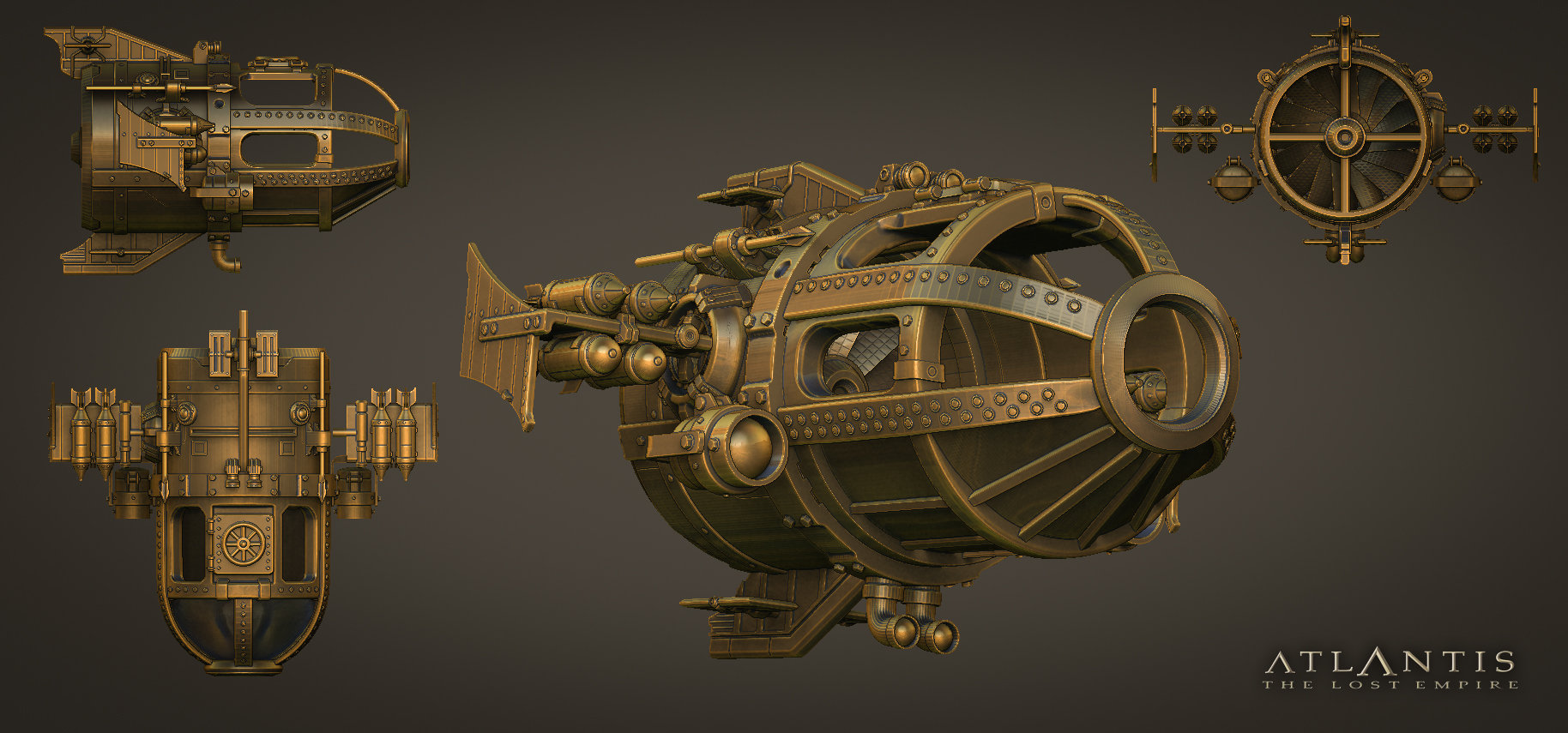
Atlantis film submarine design analysis
The Production Backstory (How Creators Think About Easter Eggs)
In animation houses and production studios, Easter eggs serve multiple roles. They are morale boosters, quiet jokes to keep long shoots human; they are at times a record — a copyright date or creator credit disguised as set dressing; and they are a way to root a fictional world in real referents. Designers will sometimes inscribe a prop with the name of a mentor, a studio founder, or the street where the art department is located. Placing such a mark on the Ulysses makes sense if you see the submarine as both a narrative object and an opportunity to tether the film to personal histories.
production designer hidden signature prop
Layered Meaning: The Coordinates and the Map
What elevated this particular plate from a private nod to cultural artifact was its inclusion of coordinates. Placed beneath the surname, these numbers at first glance look like production codes. A closer read — and a curious viewer plotting them on a map — reveals they point not to a set of dramatic open ocean but to an archive and cartographic collection where the art team researched ancient sea charts and mythic place names. This is where the Easter egg becomes both a wink and a claim: the creators are acknowledging their sources, pointing not to treasure but to scholarship and craft.
Tech and Time: Why Restoration Matters
If the discovery arrived with a new high-definition transfer, that is not an accident. Remastering brings with it a kind of forensic clarity. Color grading makes shadows richer; upscaling lifts textures; scan resolution reveals ink strokes and plate etching. Restorations often unmask details that were present but unresolved — and in doing so they change how modern audiences read older films. That one ornate plate took 20 years to read is as much a comment on changing technology as it is on human perception.

high-definition film restoration frame analysis
What the Detail Tells Us About Narrative Intent
There are two useful ways to interpret the nameplate—practical and poetic. Practically, it is a form of credit and archival note: a way for the production to insert a piece of its process into the world of the movie. Poetically, it is a testament to the film's theme: exploration is always built on the shoulders of others. By pointing to the research archive, the team signals that their imagined Atlantis was grounded in real cartographic curiosity. The plate becomes a physical metaphor: every journey is annotated by the names and records of those who came before.
How Fans Reacted: From Reddit Threads to Deep Cuts
When the discovery circulated among fan communities, the response mirrored a pattern familiar to every fandom: meticulous replication, mythmaking, and a rush of affection. Fans enlarged the frame, recreated the plate in 3D printing projects, and exchanged hypotheses about the inscription's significance. Some celebrated the find as proof that creators still hide surprises in plain sight; others treated it as a starting point for new fan theories that connected plot dots across the film's universe. That the plate could generate fresh speculation two decades on speaks to the vitality of active viewing and collective attention.
The Ethics of Hidden Credits
Embedding names and private references in props is a common practice, but it raises questions: does a hidden credit satisfy recognition for artists who contributed labor? Is it an affectionate ritual, or an evasion of formal acknowledgment? Those are complicated questions. In many production cultures, the plate is a supplementary tribute — the formal credits still list full production staff. But hidden credits can function as a heartfelt, tactile thank-you in a medium where so much work is invisible to the casual audience.
Framing the Artifact: Comparative Examples
Film history is studded with similar moments. Consider the sculptor's initials on a prop in a puppet film, a graffiti tag in a background that names a crew member, or a small painting in a scene that replicates an animator's home artwork. The Ulysses plate sits in this lineage: a tiny physicality that binds production labor to the fictional world. Over time, these artifacts become site-specific — they are less about the original joke and more about the relationship between audience and maker.
What This Means for Future Viewings
Discoveries like the Ulysses plate change how we watch. We become more patient, more willing to linger on margins. Restoration work becomes not simply about improved aesthetics but about unlocking new interpretive possibilities. And creators may lean into this economy of hidden details, knowing that today's viewers can interrogate a frame with the intensity of a conservator.
A small engraved plate shifted a generation's conversation about how films carry their own histories.
Practical Takeaways for Creators and Viewers
- For creators: Place details with intent. If you're embedding a micro-reference, consider how it reads at different resolutions and who you intend to find it.
- For restorers: Treat props and backgrounds as textual artifacts; digital clarity can change cultural readings of a work.
- For viewers: Slow down. Pause, freeze, and look at the margins. The reward is not just novelty but a deeper appreciation of craft.
Conclusion
When the Ulysses plate finally read clearly, it did what all good Easter eggs do: it rewarded attention, invited curiosity, and connected the art to its makers. What was once an anonymous smear of bronze became a network of meanings — a signature, a citation, and a small cultural artifact that bridged production and narrative. Twenty years later the detail did not rewrite the film's story, but it enriched the way we tell stories about craft. In an age when every pixel can be inspected and every frame archived, the most subtle creative gestures have the potential to outlast their makers and to keep a conversation going between artists and their audience for generations.
- Small production details can carry outsized meaning and are often intentionally obscured for future discovery.
- Technological improvements like remastering can reveal micro-details that change our interpretation of a work.
- Hidden credits and Easter eggs are affectionate gestures that celebrate craft but should not replace proper recognition.