TikTok Cleaner Uncovers 40-Year Museum Art Installation
museum mirror cleaning viral video
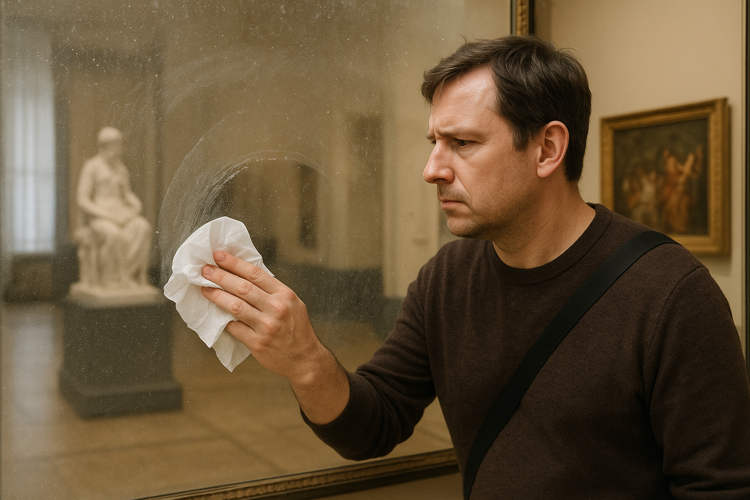
The moment was almost cinematic: a short, unglamorous video—shot on a phone, shaky with the nervous energy of someone doing routine work—showed a staffer or volunteer leaning toward a large, streaked museum mirror, wiping away what they thought was grime. As the glass cleared, a composition beneath the surface emerged: not a reflection but an artwork built into and behind the mirror. What viewers assumed was a dirty maintenance job became a discovery of a site-specific installation that had quietly survived decades in plain sight. The clip rippled across social platforms, prompting delight, bafflement and an urgent conversation about how museums care for, catalogue and communicate about their own collections.
"It looked like dirt until you wiped it—and then it was history staring back at you."
A small action, a large ripple
When people think of art discoveries, they imagine attic trunks, long-lost canvases or archaeological finds. Rediscovery within a museum—an institution whose business is looking after art—feels paradoxical. Yet these incidents reveal that museums, like any human organization, accumulate gaps: paper trails fray, labels fall off, accession numbers are misplaced and expectations about who is allowed to touch an object can become rules that silence curiosity.
The TikTok clip does more than deliver the satisfying visual of a before-and-after clean. It surfaces a series of institutional questions: How did an artwork come to be concealed behind a mirror? Was it intentionally site-specific and therefore integrated into the architecture? Had curators known of its presence and simply assumed it was no longer of interest? Or had the work been miscatalogued, labeled as a fixture or lost in the shuffle of redecorations and staff turnover?
The artwork itself: possibilities and context
Without seeing the object in person, conservators and curators working from description piece together scenarios that are plausible and telling. One possibility is that the object was conceived as a mirror installation—an artist using reflective surfaces to frame the viewer and the room as part of the work. Another is that the work is a backing piece—paint, collage or an assemblage placed behind the glass to create the illusion of a layered reflection. In the 1970s and 1980s, many artists experimented with mirrors and reflective materials as conceptual devices; a piece installed forty years ago would align with that era's appetite for site-sensitive experiments.
Materials matter. Adhesives yellow, mirror backing oxidizes, paper discolors and pigments shift. If the installation was placed behind glass, that micro-environment might have preserved fragile elements in unexpected ways—protected from light but trapped with humidity changes that affect stability. Conversely, an apparently protected work could have been slowly deteriorating in silence, its condition invisible until someone physically intervened.
site-specific art installation 1980s
How does a museum 'lose' its own art?
People outside museums often assume collections are precisely tracked: every object numbered, photographed and cross-referenced. Many institutions have robust systems like accession databases and condition reports, but human error, resource constraints and organizational change can create blind spots.
- Decades of turnover: Staff retirements, new leadership and shifting priorities can sever institutional memory.
- Cataloguing practices: Older entries might be handwritten or stored in paper files that never migrated to a digital system.
- Integrated works: Site-specific pieces that are part of a building's fabric—mirrors, murals, installations—are sometimes recorded differently from moveable objects and can be misidentified as architecture or tooling.
- Re-hangs and renovations: During remodels or temporary exhibitions, works can be removed and misfiled, or their labels detached and discarded.
These factors don't excuse lapses; they explain why even well-meaning institutions sometimes discover their own materials anew.
Conservation: the knife-edge between preservation and harm
The person with a cloth in the TikTok clip exercised an act that is both intimate and fraught in museum work: cleaning. To professional conservators, cleaning is a carefully considered intervention. Every surface responds differently to solvents, abrasives and moisture. A misplaced swipe can remove an original layer, dissolve an adhesive, or cause irreversible damage.
That risk complicates the celebratory moment. On one hand, a serendipitous clean revealed an artwork to the public and sparked engagement. On the other, it underscores why many institutions restrict who can touch collection objects. Ideally, when discovery happens in a museum, trained conservators immediately assess condition, document the find and stabilize materials using reversible, well-documented techniques.
What conservators look for first
- Material identification: Glass, metal leaf, paint, adhesives or organic materials like fabric or paper.
- Condition: Flaking, discoloration, mold, corrosion or micro-cracking.
- Originality: Signs that parts are original versus later additions or accidental accretions.
- Environment: Whether the installation has been protected from light, pests and humidity or exposed to damaging cycles.
If the piece proves to be a bona fide artwork, the discovery triggers a workflow: cataloguing, provenance research, conservation treatment, and often a discussion about display and interpretation. If the work appears to be an architectural leftover or unintentional assemblage, curators weigh whether it should be preserved for its historical value or removed as part of restoration.
Provenance, artist rights and legal considerations
Rediscoveries often launch detective work. Curators and registrars scour accession ledgers, exhibition records and donor files to trace when and how a piece entered the collection. The provenance trail can reveal whether the artist donated the work, whether it was part of a temporary installation, or whether it was mistakenly retained during a renovation.
There are also legal and ethical dimensions. In many countries, artists and their estates retain certain moral rights over works, including the right to attribution and, in some cases, to object to destructive treatment. When a work re-emerges, museums must consider whether conservation or display would conflict with donor agreements or the artist's intentions. Even decisions about whether to publicize the find can have implications for privacy, copyright and the artist’s reputation.
Social media, transparency and the museum's public
What makes this episode distinctly modern is the platform: TikTok. Short-form video has become a primary way people experience museums from afar. An unscripted discovery aligns with a social appetite for surprise, authenticity and behind-the-scenes access. For museums, that appetite is both opportunity and risk.
On the plus side, viral clips can draw new audiences, galvanize donors and justify investment in conservation. They humanize institutions and showcase the labor that keeps collections alive. But when staffers or visitors are filmed without institutional guidance, the clip can spread misinformation: assumptions about neglect, sensational claims that an artwork was "forgotten," or pressure to rush conservation work to satisfy public curiosity.
When institutions respond: best practices
Museum responses that balance transparency with professionalism tend to follow a pattern: initial acknowledgement, careful documentation, condition assessment, provenance research and a public-facing narrative that explains the process. Instead of immediate sensationalism, measured communication helps the public understand both the thrill of discovery and the care required afterward.
Practical steps museums can implement include:
- Rapid response protocols for unexpected finds that prioritize stabilizing materials and documenting context.
- Public communications templates that convey facts without speculation.
- Staff training on what to do—and not do—when encountering potential artworks while performing maintenance.
- Digitization efforts to migrate paper catalogues into searchable databases, reducing the chance of institutional amnesia.
A broader cultural conversation
Beyond the institutional checklist, recoveries like this invite reflection on what we value and how we see objects. An artwork discovered behind a mirror raises philosophical questions about visibility and care: who notices things and why, and how labor—often unglamorous and underpaid—plays a role in cultural custodianship. The TikTok user who wiped the glass is part of a lineage of people whose quiet work sustains public culture: custodians, preparators, registrars and volunteers whose attentiveness keeps history accessible.
There is also a democratic element. In the pre-digital museum model, discoveries and scholarship were often the purview of specialists. Social media flattens that dynamic—citizens can play an active role in pointing out, documenting or questioning what they find. That shift requires institutions to be nimble and collaborative, ready to integrate public observations into their research pipelines without compromising standards.
- Increased public interest and engagement.
- Potential crowdsourcing of knowledge and leads.
- Opportunities to tell richer institutional stories.
- Risk of damage from untrained handling.
- Possibility of misinformation and reputational harm.
- Pressure to act publicly before full research is complete.
Real-world parallels and precedents
History is dotted with rediscoveries that transformed collections and scholarship: hidden murals revealed during renovations, sketches found in storage that reframe an artist's career, or ephemeral works that gain new life after being recontextualized. These precedents show that rediscovery can prompt reevaluation—both academic and public—and sometimes alter an institution’s identity. The museum that appeared to forget an object can instead become a site of unexpected reconciliation with its past.
What visitors should know
Visitors are not just passive consumers of museum content; they are part of the preservation ecosystem. A few simple practices make a big difference: follow posted rules about touching and photographing, avoid wiping surfaces, and alert staff if something seems unusual rather than intervening. Museums value engaged, curious visitors—those who help protect and preserve the collection by being observant and respectful.
Key takeaways
- Unexpected discoveries inside museums are rare but revealing: they expose gaps in documentation, preservation and institutional memory.
- Cleaning can both reveal and harm; conservation is a specialized field requiring careful assessment before intervention.
- Social media amplifies rediscovery, offering engagement and risk—institutions must communicate clearly and act deliberately.
- Rediscoveries offer an opportunity: to reconnect communities with collections, to reassess practices, and to celebrate the often unseen labor of cultural stewardship.
Conclusion: a mirror to institutional care
The video of a person wiping a mirror and revealing an artwork is a small human drama with outsized implications. It reminds us that museums are living institutions where history and material culture can surprise us—sometimes with delight, sometimes with urgency. The act that began as maintenance became a public moment that asked a fundamental question: how do we want our cultural institutions to behave when the past reappears unexpectedly?
If the object behind the glass becomes part of a renewed exhibition, its story will belong to a constellation of voices: the artist who made it, the staff who preserved or overlooked it, the TikTok user who revealed it and the public who followed the discovery. That communal authorship, messy and messy and rich, may be the best outcome: a living reminder that stewardship is not a static duty but an ongoing conversation between people and the works they choose to remember.
Rediscovery is not always neglect—sometimes it is the result of accumulated human stories meeting a moment of attention.