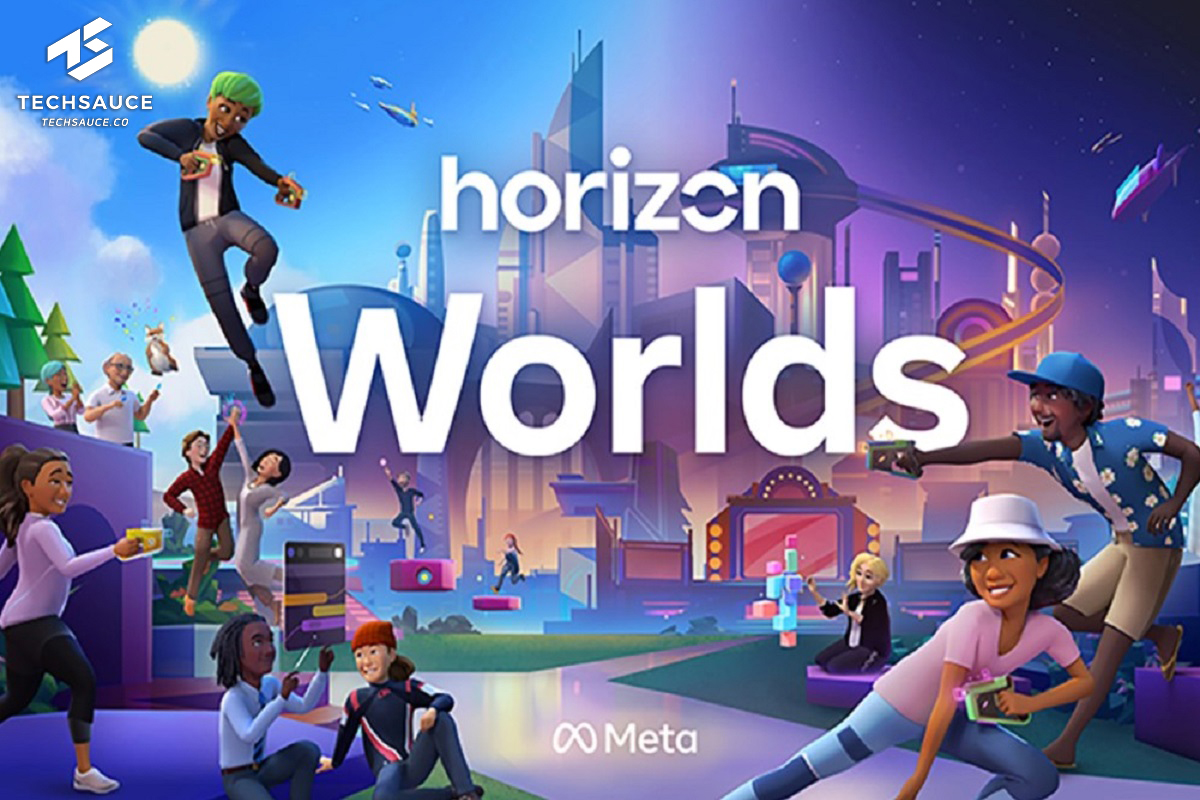
The Metaverse Collapse: Why Horizon Worlds Is Shutting Down
On its surface the story is simple and brutal: after a multi-year push and roughly eighty billion dollars poured into an ambitious vision of an immersive internet, Horizon Worlds — once the flagship social environment of the metaverse era — is closing its doors. Beneath that brevity is a long, instructive unraveling: technology that did not meet human needs, communities that became unmanageable, and business choices that confused novelty for value. The shutdown is both the end of an expensive experiment and a clear signal: building the future requires more than spectacle.
Meta metaverse investment failure
A decade of hype, and where the money went
The metaverse was, for many executives, the next platform after mobile. Venture capital, corporate budgets and a conspicuous wave of acquisitions financed a sweeping bet: that people would trade flat screens and web pages for presence — avatars, rooms, persistent virtual property and spatialized social interactions. Much of that investment went into hardware, developer grants, studios to create virtual content, and marketing aimed at convincing mainstream audiences to adopt a fundamentally different way to socialize online.
Hardware subsidies attempted to lower a high barrier to entry; content studios produced elaborate spaces meant to dazzle rather than satisfy; and platform teams prioritized scale and partner deals over the incremental development practices that build long-term engagement. The result was spectacular visual demos and a patchy daily experience: for many users there was little reason to stay beyond a few novelty sessions.

virtual reality social spaces
Failure of product-market fit: presence is not a product
One of the core missteps was treating the abstract idea of "presence" as an acceptable product outcome. Presence — the psychological sense of being in the same place as others — is an engineering achievement, but it is not itself a reason people build habits. Successful platforms match a form to a clear, recurring human task: chat solves conversation, photos capture memory, email organizes asynchronous work. The metaverse promised a new kind of interaction but rarely defined the repeatable, ergonomically comfortable actions that would make it indispensable.
Without compelling, lightweight use cases that require spatial interaction — not just cosmetic 3D rooms — adoption stalled. People returned when there was a particular reason to be there: a concert, a unique game, a tightly moderated community. Those were exceptions, not steady drivers of engagement.
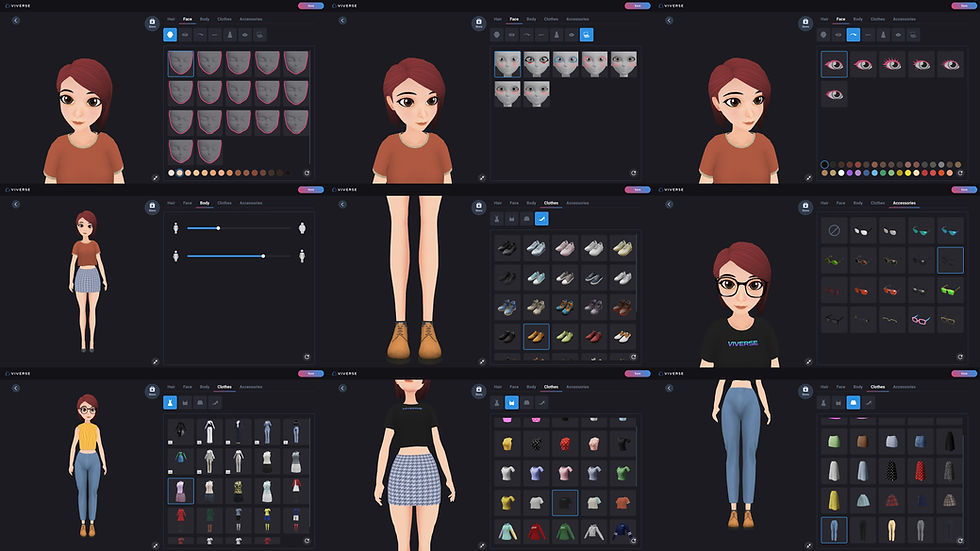
VR avatar design examples
Toxicity and moderation at scale
Social problems that are challenging on two-dimensional platforms became thornier in immersive spaces. Abuse feels more immediate when you inhabit an avatar. Moderation tools designed for text and images struggled to translate to gestures, voice, and the emergent behaviors of embodied users. Experimentation with automated enforcement produced false positives and negatives; moderation teams were overwhelmed by the speed and variety of incidents. As a result, many users — particularly newcomers and those from vulnerable groups — described the environments as unsafe or exhausting.
"Presence without safety is not immersion — it's a new way to make harm feel closer."
Economics that never balanced
Another persistent problem was monetization. Virtual goods, land sales and creator revenue shares were supposed to fund an ecosystem that made the platform self-sustaining. But speculative markets for digital real estate and tokenized assets fostered bubbles more than healthy commerce. Developers found the distribution racket difficult: discoverability was poor, creator payouts were uncertain, and the user base was too small and unevenly distributed to support many sustainable businesses.

digital real estate market crash
Platforms subsidized creator activity for years without resolving discoverability and retention. That left a long tail of half-built experiences and an even longer trail of investor losses.
Design friction: comfort, onboarding, and the tyranny of novelty
Physical discomfort — motion sickness, headset weight, battery life — remained a stubborn barrier to daily usage. Onboarding flows were often too complex, asking users to master spatial authoring tools or social norms that were ill-explained. The first sessions felt like demos; the second sessions required effort. Most consumers choose convenience over novelty, and the metaverse repeatedly demanded time and tolerance that mainstream audiences were unwilling to give.

VR headset user experience
The developer ecosystem fracture
Developers are the lifeblood of any platform. For the metaverse era, however, the platform promise was inconsistent. Tooling changed, APIs shifted under developers' feet, and revenue models were experimental. Indie creators couldn't predict if their work would still be discoverable next quarter. Larger studios found the economics unattractive compared to other formats — mobile games, console releases, or even emerging web-native interactive formats. Over time the developer pipeline narrowed, leaving fewer fresh experiences to attract new users.
Leadership and company strategy misalignments
Vision-driven, top-down strategies can inspire, but without bottom-up metrics they risk becoming echo chambers. In several cases, leadership signals prioritized big bets — huge branded spaces, celebrity partnerships, and PR-friendly launches — while product teams flagged day-to-day churn and weak retention. That misalignment produced a product roadmap that chased headlines rather than users. When the numbers failed to materialize, large investments had already hardened into fixed costs.
Regulatory and reputational pressures
The metaverse also attracted scrutiny: privacy in persistent shared spaces, the rights attached to digital goods, and the social responsibility of platforms that host immersive interactions. Regulators and advocacy groups demanded clearer guardrails. For a flagship product already struggling with community safety and commercial viability, the added cost and attention of compliance made the economics less tenable.
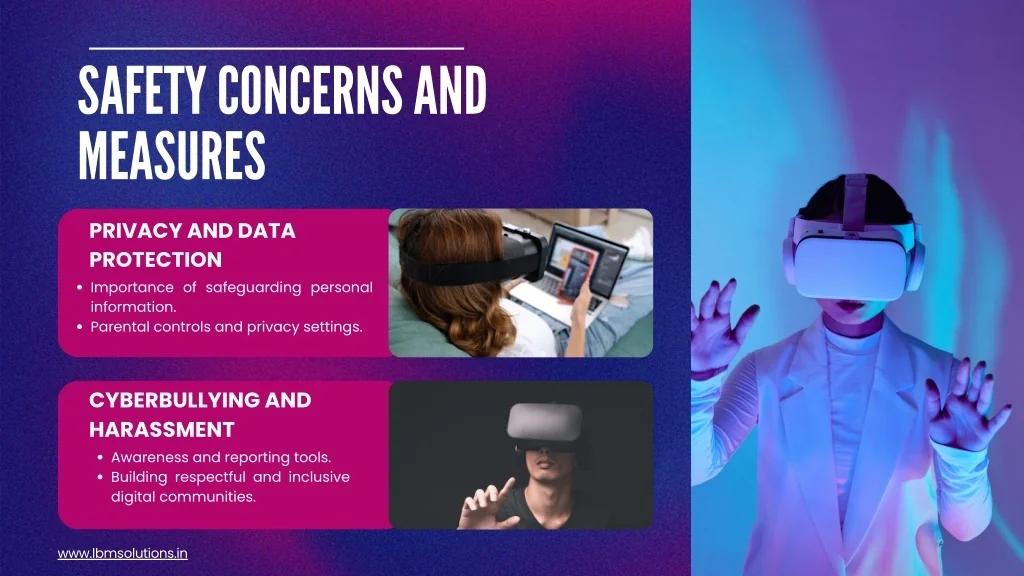
metaverse community safety issues
What the shutdown means for XR and spatial computing
The end of a flagship social VR product is not the end of the broader field. XR technologies — from enterprise AR overlays to VR training simulations — have clear, proven use cases where presence adds measurable value. The failure of a consumer social metaverse should reframe expectations, not extinguish development across adjacent domains. Investors will likely shift capital toward concrete, measurable ROI applications: industrial maintenance, healthcare training, remote collaboration for specialist teams, and mixed-reality overlays that augment rather than replace existing workflows.
What founders and product teams should learn
There are concrete lessons here for anyone building ambitious platforms:
- Start with repeatable jobs: Design around specific tasks people will do daily, not abstract experiences of presence.
- Measure safety as engagement: Track safety metrics alongside DAU/MAU; retention depends on perceived safety.
- De-risk developer economics: Prioritize discoverability, predictable payouts, and stable APIs.
- Iterate ergonomics: Invest in onboarding and comfort as core features, not afterthoughts.
- Align leadership and metrics: Reward teams for user retention and real value creation, not only for marquee partnerships.
A future that de-emphasizes the spectacle
If there is a productive aftermath to this shutdown, it is that the industry will likely become more pragmatic. The allure of a grand unified virtual world is strong, but product roadmaps that prioritize narrow, high-value experiences will survive. Expect to see smaller, interoperable virtual spaces optimized for particular communities and practical tasks. Interoperability standards, not single-company castles, could be the healthier long-term outcome.
- Refocus on realistic XR use cases.
- Less speculative investment in unsustainable virtual assets.
- Opportunity for better safety-first design.
- Job losses and wasted investment capital in failed projects.
- Public skepticism about XR persists.
- Creators who bet on the platform face existential risk.
What comes next for users and creators
For users, shutdowns mean fragments: communities will migrate, and memories of virtual spaces will persist as screenshots and videos rather than living places. For creators, the path forward is pragmatic diversification — build cross-platform, prioritize direct relationships with audiences, and design experiences that can live on the web, consoles, or light XR clients. Creator sustainability will depend on portability and multiple revenue channels: subscriptions, events, commissions and hybrid product offerings.
Broader cultural consequences
Beyond engineers and investors, the bigger cultural implication is humility. Tech culture has cycles of grand visions followed by corrective collapses. The metaverse era reminded us that technological possibility is not destiny. Social products live or die on the realities of human behavior, economics and governance. The spectacle of immersive demos cannot substitute for the quieter work of building sustainable human rituals.
"The metaverse failed not because the tech couldn't be built, but because it tried to prescribe how people should live online instead of listening."
Final lessons and the roadmap forward
The shutdown of a major metaverse platform is a costly lesson in ambition without discipline. But it does not close the book on XR; rather, it opens a new chapter. That chapter will be narrower, messier, and more useful: enterprise and professional workflows, accessible mixed-reality enhancements, and small communities with clear incentives to stay. The future will favor builders who treat presence as a feature, not a thesis.
Conclusion
The closure of Horizon Worlds marks a turning point. It is a repudiation of an expansive, single-vendor dream and a reminder that platform success requires aligning technology with the granular realities of human habits, safety and commerce. The metaverse is not dead; it is being disciplined. The next phase will be less cinematic and more honest: smaller bets, pragmatic products, and an insistence that immersive tech must earn its keep in the world people actually live in.
- The shutdown exposes a core mismatch between the idea of presence and daily user needs.
- Safety, comfort and predictable creator economics are non-negotiable for sustained engagement.
- Future XR growth will come from practical use cases and interoperable, portable experiences.
Opinion feature: analysis based on industry patterns, product lessons and cultural trends.