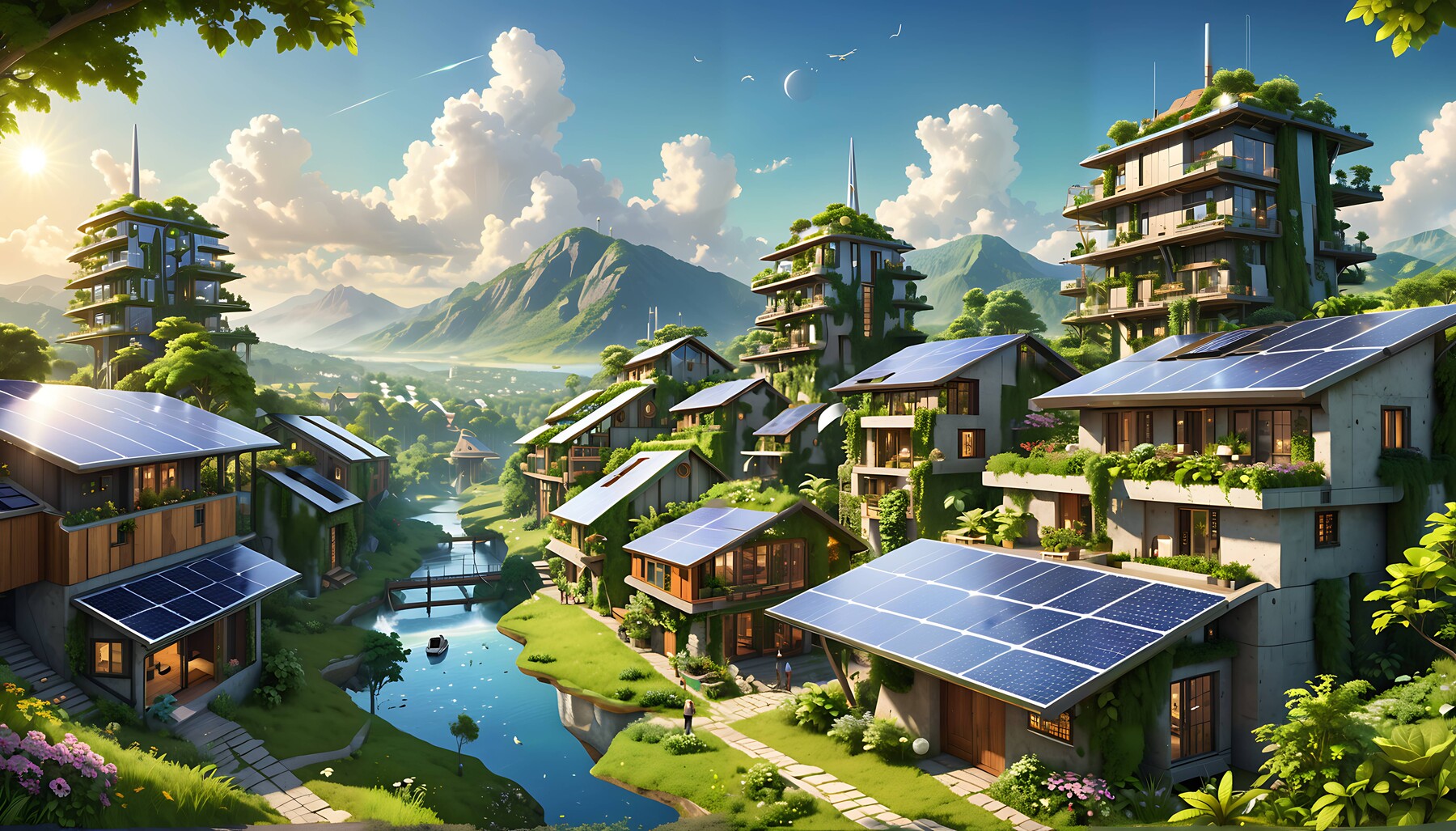
Solarpunk Futures: Designing Sustainable Cities in Harmony
The word "solarpunk" carries both a promise and a provocation: a promise that technology and nature can be allies rather than antagonists, and a provocation to imagine futures beyond bleak dystopias. In its clearest form solarpunk is an ethic and an aesthetic—an idea that insists on livable cities powered by sunlight, nourished by soil, and organized around human dignity. This feature unpacks what solarpunk really means, how it translates into design and policy, where its principles are already visible, and how communities and planners can begin to build toward that thriving, verdant future.
WHAT IS SOLARPUNK?
Solarpunk defined
At its core, solarpunk is a future-oriented cultural movement that combines optimism about renewable energy and decentralized technology with an insistence on ecological regeneration and social justice. It rejects both techno-utopianism that ignores ecological limits and defeatist narratives that assume collapse is inevitable. Instead, solarpunk imagines practical, beautiful, and equitable systems: energy grids that are distributed and community-owned, housing that is retrofitted for efficiency and comfort, and neighborhoods where public space is abundant and biodiverse.
Origins and influences
Solarpunk grew out of a web of influences: the DIY maker movement, permaculture pioneers, renewable energy advances, and a lineage of speculative fiction that imagines alternatives to extractive capitalism. It borrows aesthetics from Art Nouveau's plant motifs, the craft-forward ethos of the Arts and Crafts movement, and the community-oriented spirit of cooperative economics. While often associated with polemical fiction and visual art, its real power lies in applied design—how cities and technologies are reconfigured to support life rather than merely consumption.
“Solarpunk is not a retreat into past nostalgia; it is an active reimagining of how systems can be retooled so both cities and ecosystems can thrive.”
PRINCIPLES OF SOLARPUNK DESIGN
Energy: decentralized, renewable, resilient
Solarpunk begins with energy. Solar panels, wind turbines, and small-scale hydro are not just gadgets but civic infrastructure. The movement prioritizes decentralization—microgrids, community solar gardens, and household storage that reduce vulnerability to centralized failures. Energy systems are designed to be resilient to shocks and flexible enough to support seasonal and local needs.
Biophilic and regenerative urbanism
Biophilic design brings nature into daily life: street trees that cool sidewalks, urban wetlands that manage stormwater, and green corridors that support pollinators. Regenerative principles go a step further—designs that improve ecological health over time rather than merely sustaining the status quo. Think soil-building community gardens, constructed wetlands that filter runoff, and buildings that sequester carbon in their materials.
Circular economy and material mindfulness
A solarpunk economy minimizes waste through repair, reuse, and closed-loop material flows. From textile take-back programs to buildings designed for disassembly, the idea is to treat materials as stocks to be stewarded. This mindset changes manufacturing, procurement, and the way cities plan for demolition and reuse.
Social equity and participatory governance
Crucially, solarpunk is not just an aesthetic of green roofs and solar arrays; it insists on fairness. Community land trusts, cooperative energy ownership, and participatory budgeting are part of the toolkit. Without these governance mechanisms, green upgrades risk becoming a vector for displacement and exclusion.
SOLARPUNK IN PRACTICE: WHAT IT LOOKS LIKE
Neighborhood scale: streets, food, and energy
At a neighborhood scale solarpunk looks like microgrids powering blocks of mixed-use housing, narrow, walkable streets shaded by fruit trees, and pocket farms tucked into courtyards. Instead of wide boulevards designed only for cars, streets become commons where children play and elders socialize. Local energy cooperatives advertise shares alongside CSA baskets at weekend markets—economic life knit tightly to place.
Buildings: retrofits and living architecture
Solarpunk architecture favors adaptive reuse and passive design. Where demolition once cleared the path for new construction, designers now find ways to insulate, daylight, and electrify existing structures. Living façades, green roofs, and materials like cross-laminated timber reduce embodied carbon while creating healthy, calming indoor environments.
Food systems: urban agriculture and soil restoration
Solarpunk food systems re-localize production. Rooftop farms, vertical planters, and community orchards shorten supply chains and connect people to seasonality. More importantly, they prioritize soil health—building carbon-rich soils through composting, biochar, and cover cropping, which in turn improves water retention and biodiversity.
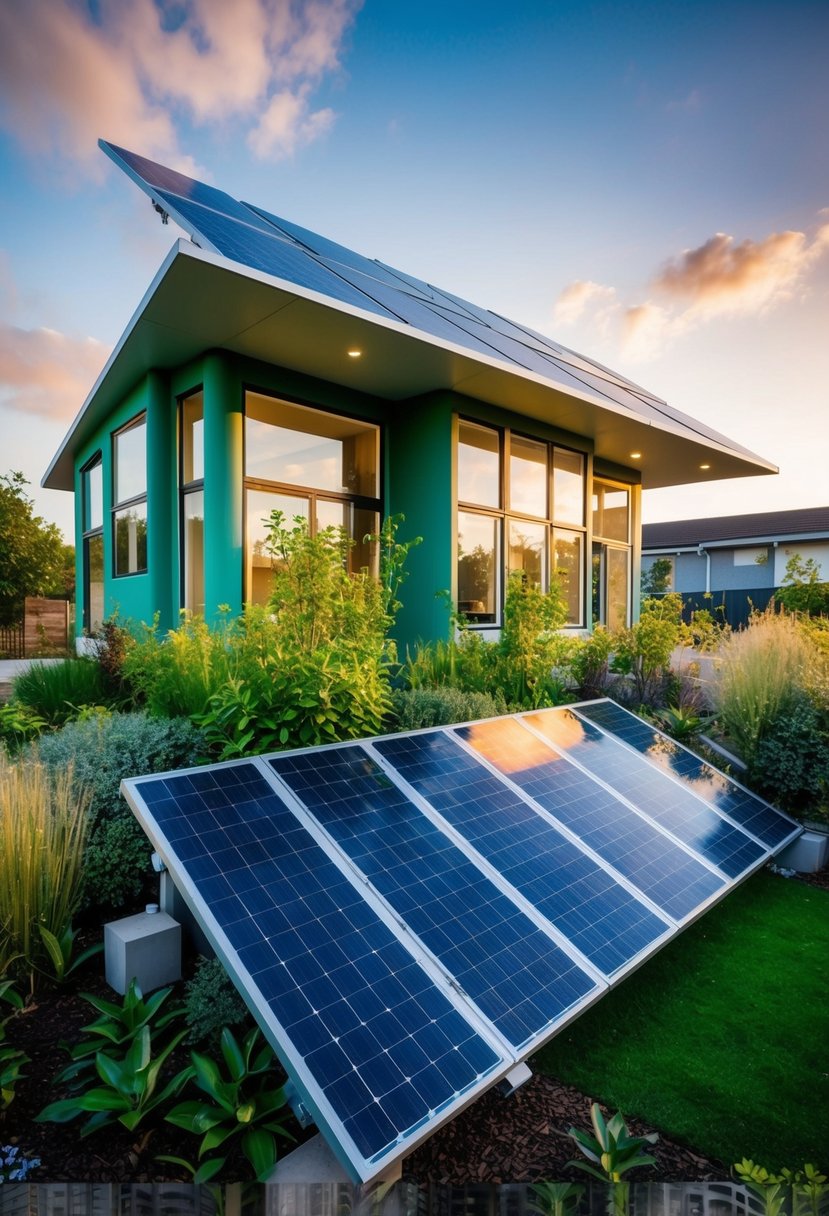
Solarpunk architecture green roofs
TECHNOLOGIES THAT ENABLE SOLARPUNK
Solar, storage, and smart grids
Solar panels combined with battery storage and intelligent controls make distributed energy practical. Smart inverters, demand response systems, and open-source energy management software let communities prioritize resilience and affordability. The emphasis is on reliability and sovereignty: systems that keep critical loads running during outages and give neighbors a say in how power is produced and shared.
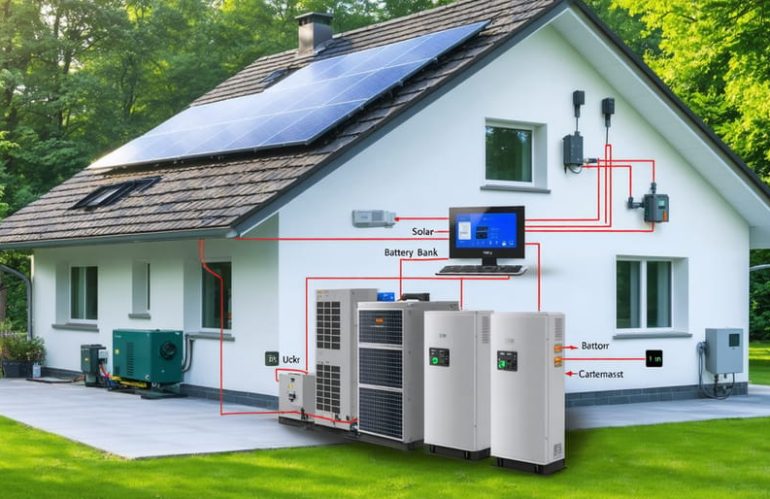
Solar panels battery storage
Materials innovation and low-impact construction
New materials—recycled aluminum, low-carbon concrete alternatives, engineered timber—reduce the climate footprint of buildings. Design for disassembly ensures components can be reused at end of life. Even low-tech choices, like locally sourced stone or reclaimed brick, reduce transport emissions and preserve cultural character.
Nature-based engineering
Rather than hard engineering alone, solarpunk favors hybrid approaches—bioswales that filter water and provide habitat, urban forests that sequester carbon and cool neighborhoods, and green infrastructure that reduces flood risk while increasing amenity value.
- Resilience in face of shocks
- Health gains from green space
- Economic opportunities in local enterprise
- Upfront costs for retrofit and infrastructure
- Governance complexity for equitable implementation
- Scaling challenges across diverse regions
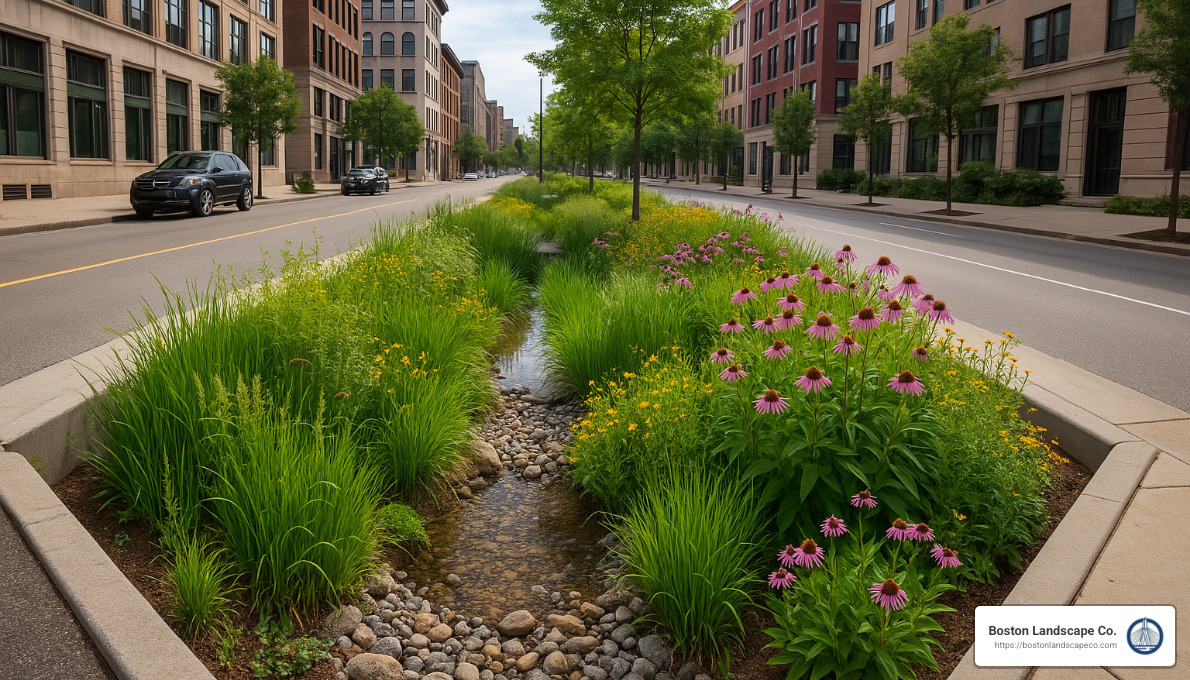
Bioswales green infrastructure
CULTURE, ART, AND AESTHETICS
A hopeful style
Solarpunk's visual language is deliberately hopeful—sunlit streets, hand-crafted furniture, clothes dyed with plant pigments. It rejects the bleakness of many speculative genres and instead offers designs that make sustainability desirable. This matters: aesthetics shape aspiration and what policymakers and developers think is feasible.
Storytelling and community practices
Storytelling—through fiction, city walks, and participatory design workshops—helps communities rehearse new rhythms of life. Festivals that celebrate harvests from rooftop gardens, repair cafés, and public energy dashboards all build a cultural infrastructure that normalizes solarpunk practices.
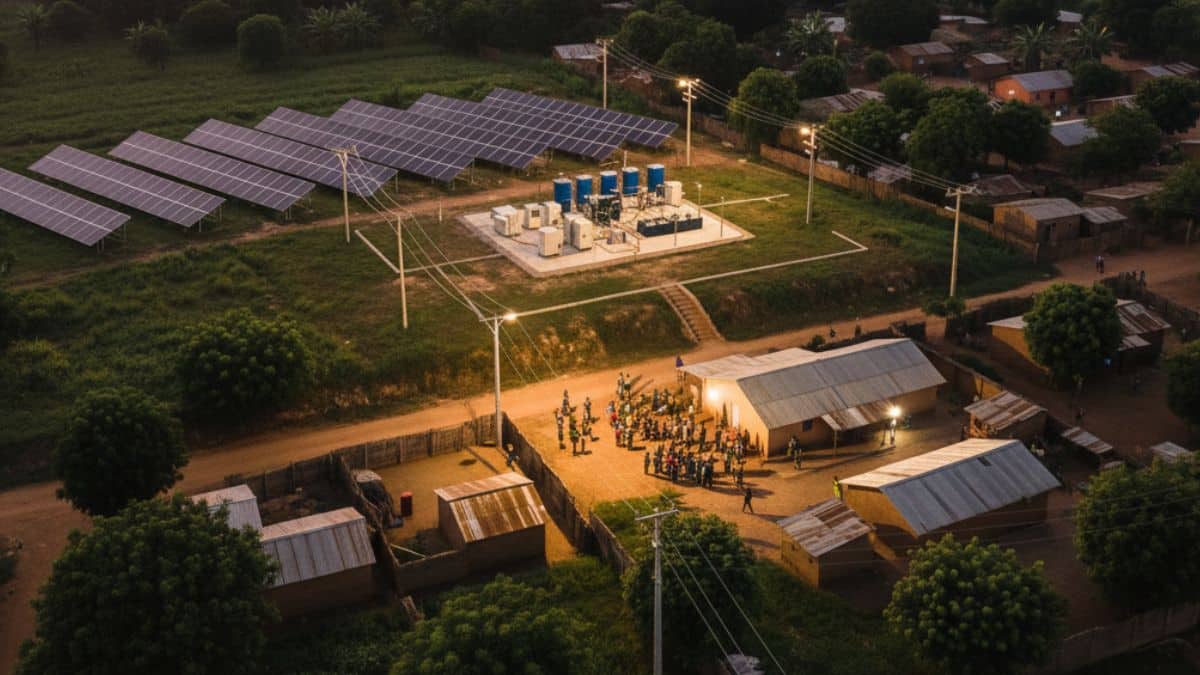
Community solar garden microgrid
CRITIQUES AND REAL WORLD CHALLENGES
Equity vs. aesthetics
One common critique is that solarpunk can become a boutique aesthetic for the affluent. Without explicit policies—affordable housing protections, community ownership models, anti-displacement measures—green improvements can accelerate gentrification. Addressing this requires that solarpunk be explicitly anti-elitist in design and policy.
Technical and policy barriers
Barriers include outdated zoning codes, grid interconnection rules that favor large utilities, and financing models that undervalue long-term social returns. Overcoming these obstacles is often less about technology and more about governance: reforming codes, incentivizing community energy, and creating green finance instruments that support equitable retrofits.
HOW TO START: A PRACTICAL ROADMAP
Household and block-level actions
- Energy: Install rooftop solar where possible; join community solar or a local energy co-op if not.
- Water: Add rain barrels or shared cisterns; plant native rain gardens.
- Food: Start a neighborhood garden or support local permaculture projects.
- Materials: Prioritize reuse and repair; organize swap meets and tool libraries.
Neighborhood and municipal strategies
- Zoning reform: Allow mixed use, accessory dwelling units, and urban agriculture.
- Finance: Create revolving funds, green bonds, and on-bill financing to lower upfront barriers.
- Governance: Support community land trusts, energy co-ops, and participatory budgeting.
POLICY, ECONOMICS, AND SCALE
Aligning incentives
Scaling solarpunk solutions requires aligning incentives across stakeholders. Utilities need pathways to integrate distributed energy while earning fair returns. Developers must see value in low-carbon materials. Public budgets must prioritize long-term savings from efficiency and resilience, not merely short-term construction costs.
Measuring success
Success metrics should go beyond kilowatt-hours and include social outcomes: days of autonomy during outages, affordable housing preserved, increases in urban tree canopy, reductions in urban heat islands, and local job creation. A holistic metrics framework keeps solarpunk accountable to its equity commitments.
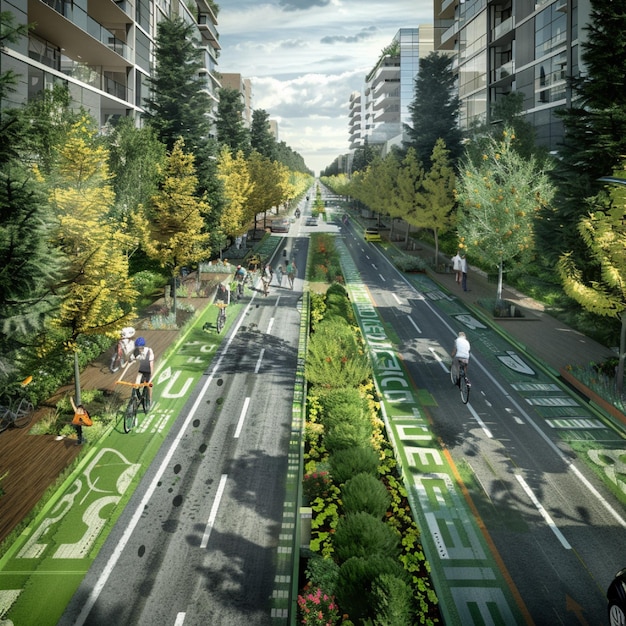
Biophilic urban design street trees
CONCLUSION: A PRACTICAL UTOPIA
Solarpunk is a practical utopia—not a denial of complexity but a design ethic that balances technological ingenuity with ecological humility and social justice. It is rooted in the everyday: the shade of a street tree, the hum of a community microgrid, the taste of tomatoes picked on a rooftop. Bringing solarpunk to scale will not be easy; it requires policy shifts, new financing models, and a willingness to center community voice. But it also offers a clear alternative to despair: a future in which cities are engines of regeneration rather than extraction.
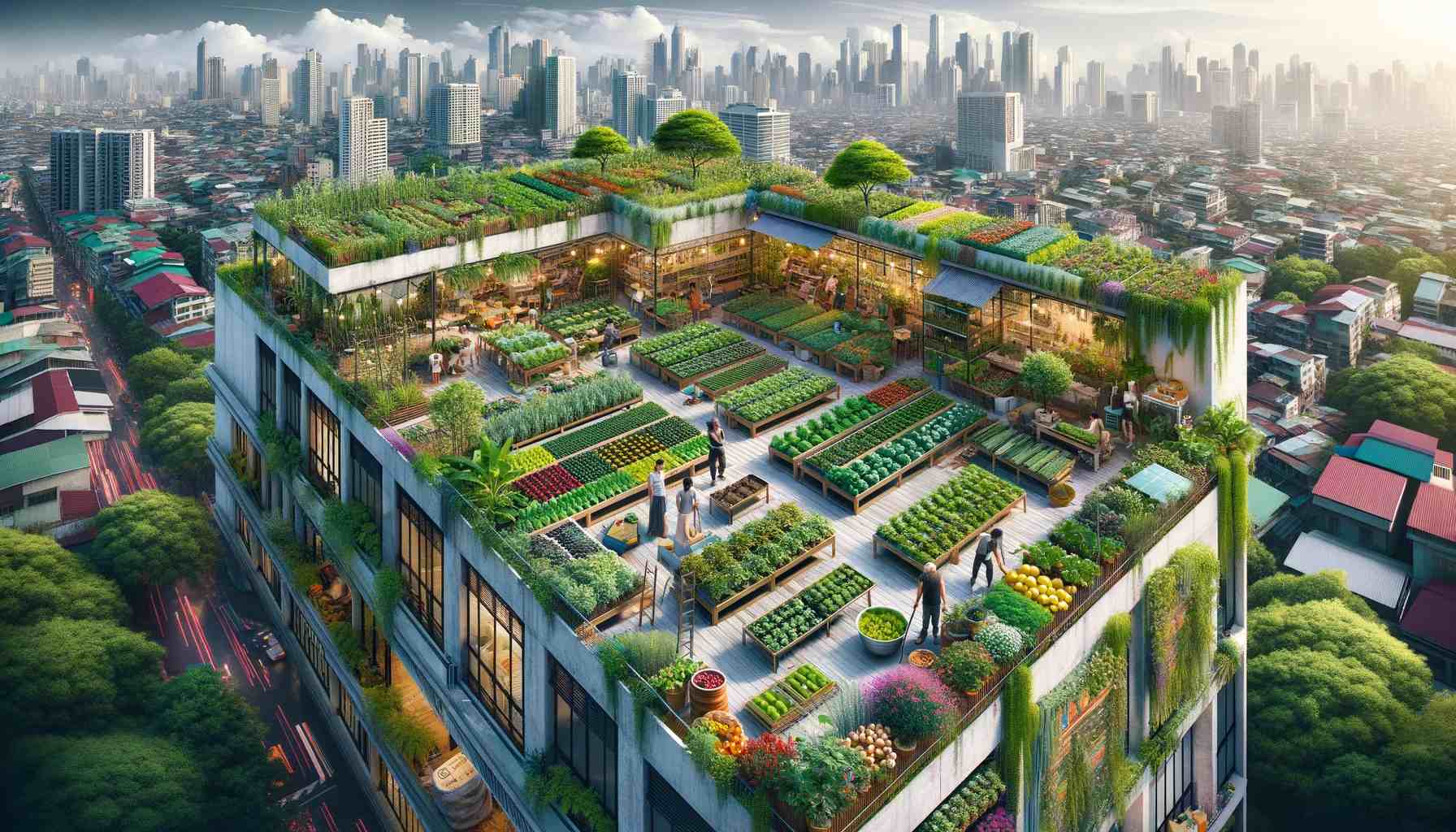
Urban agriculture rooftop farms
- Solarpunk integrates renewable technology with regenerative urbanism and social equity.
- Decentralized energy, biophilic design, and circular materials are central to implementation.
- Policy reform, community ownership, and inclusive governance prevent green displacement.
- Local actions—from rooftop gardens to energy co-ops—are practical first steps anyone can take.
Imagining sustainable cities means designing systems that welcome both sunlight and people.