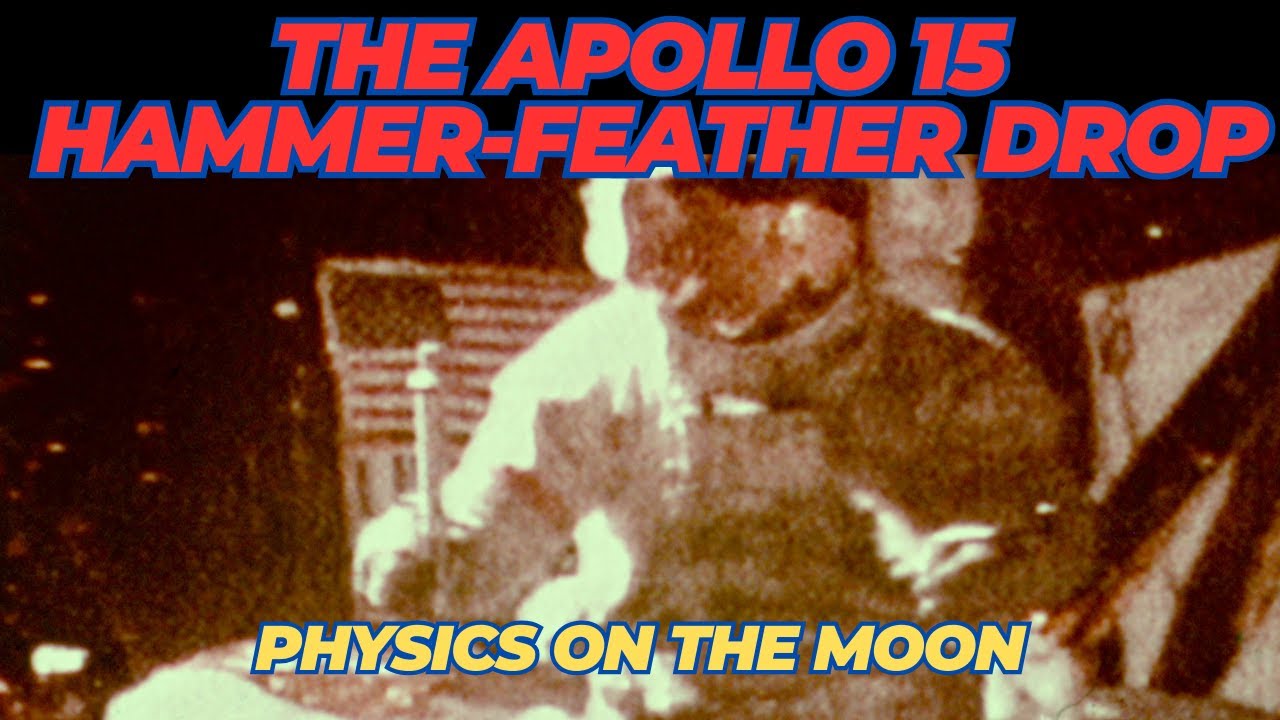
Scott's Moonfall: Apollo 15 Hammer and Feather Demonstration
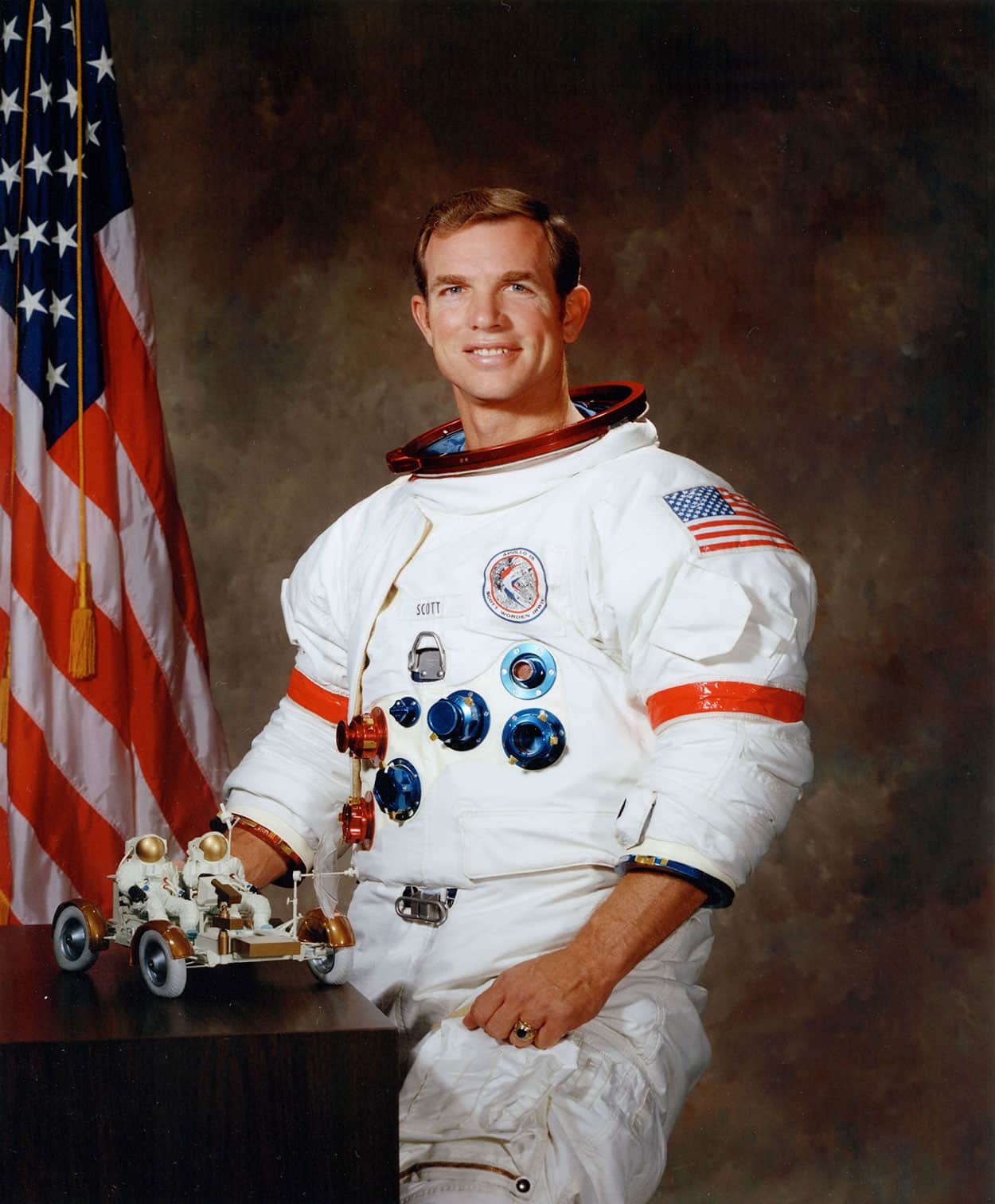
Commander David Scott Apollo 15
On a pale, airless plain more than 238,000 miles from Earth, a simple act folded together two threads of human curiosity: an ancient question about how nature works and a modern journey to the Moon. Commander David Scott, standing in the soft lunar regolith during the Apollo 15 mission in July 1971, held in his gloved hands a geological hammer and a falcon feather. With the gravity of the Moon weighing down each motion but without the dampening hand of atmosphere, Scott released both objects. They touched the lunar dust at the same instant—an elegant, visual proof of a truth first proposed by Galileo more than three centuries earlier and a moving demonstration of how science travels across time and space.
"On the Moon, a feather and a hammer fall together, proving a simple law of nature in the most dramatic setting imaginable."
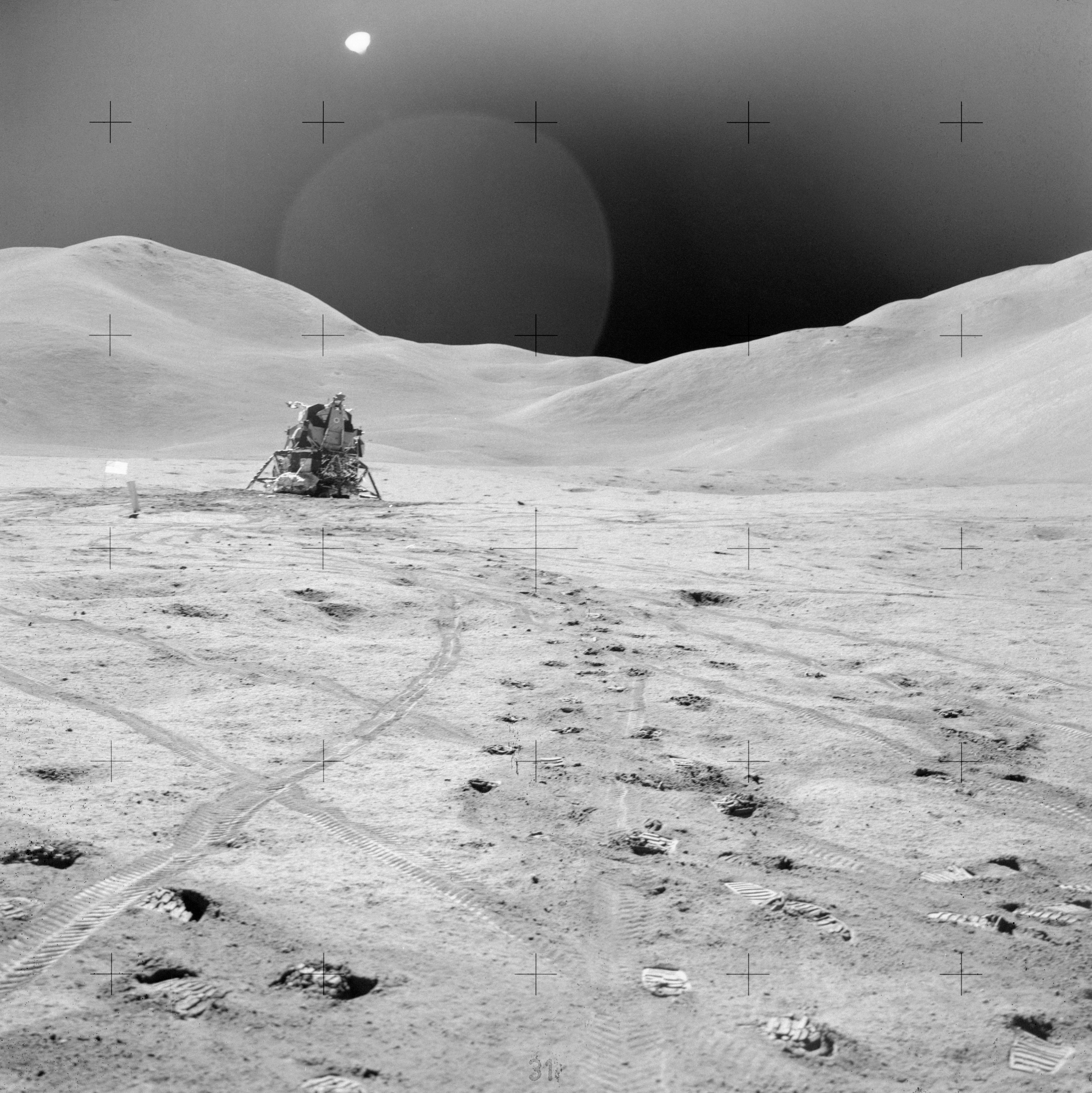
Apollo 15 lunar surface EVA
A Moment That Bridged Centuries
The single gesture by Scott is often recalled as a neat anecdote in the book of space history, but the moment deserves a closer look. It was part demonstration, part lesson, part theatrical commentary on the continuity of inquiry. To understand why Scott chose that pair of objects and why the result mattered, we must rewind to the problem that haunted natural philosophers for centuries: Do heavy objects fall faster than light ones?
Galileo's Question
Galileo feather hammer moon experiment
Galileo Galilei, writing and experimenting in the early 17th century, challenged the prevailing Aristotelian idea that heavier objects fall faster. Through inclined planes, careful timing, and narrative thought experiments—some apocryphal, some real—he argued that in the same gravitational field, all bodies accelerate at the same rate regardless of mass, provided air resistance is negligible. That conclusion underpinned the later formulation of universal gravitation by Newton and became a cornerstone of classical mechanics.
Why the Moon Was the Perfect Laboratory
Earth-bound demonstrations are always complicated by air. A feather on Earth flutters, driven by aerodynamic drag, while a metal weight descends cleanly. Remove the air and the distinction vanishes. The Moon, with its essentially vacuum environment and surface gravity about one-sixth of Earth's, offered a near-ideal natural laboratory for a visceral and unambiguous demonstration. Scott's experiment did exactly that: a controlled, visual statement that in vacuum, gravitational acceleration is independent of composition and shape.
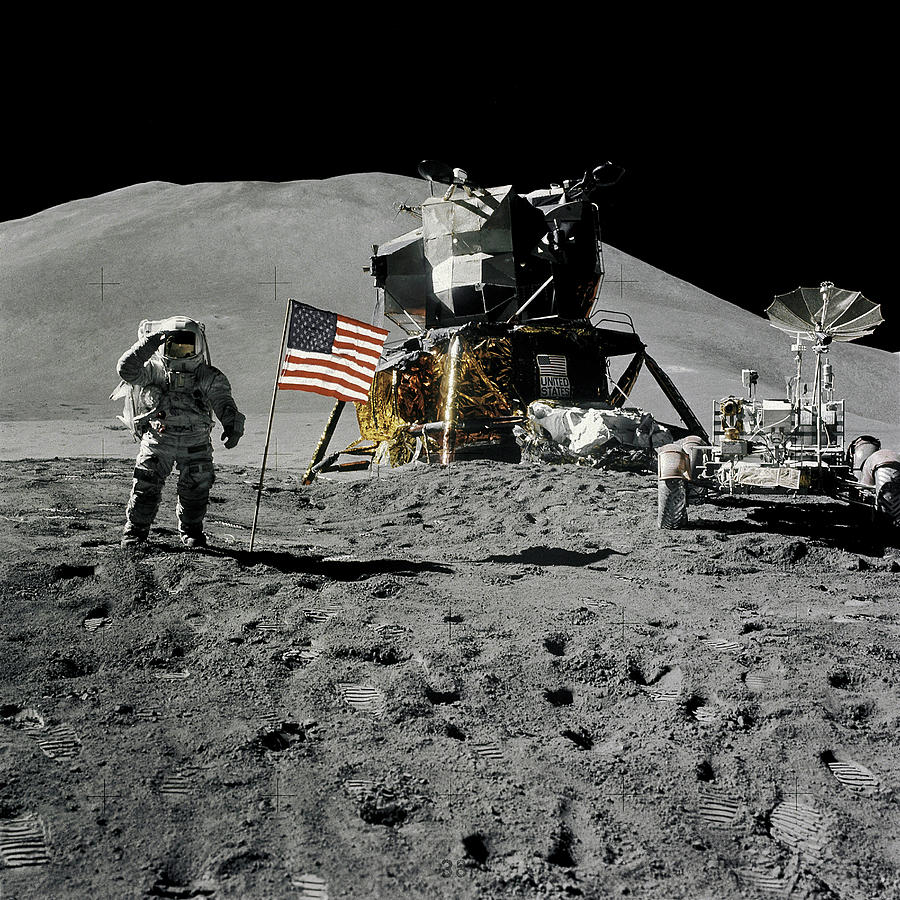
Apollo 15 lunar rover deployment
Context: Apollo 15 and a New Kind of Mission
Apollo 15 was not merely a joyride to the Sea of Tranquility. Launched in July 1971, it was the fourth crewed mission to land on the Moon and the first of the 'J-missions'—longer surface stays with an emphasis on science. Scott, along with lunar module pilot James Irwin and command module pilot Alfred Worden, carried an expanded program of geology, extended EVAs, and new hardware including the Lunar Roving Vehicle. Science was no longer an afterthought; it was central. The hammer-and-feather demonstration fit squarely into that ethos: a small, memorable experiment that communicated a fundamental principle to both specialists and the public.
The Setup: Simple Tools, Careful Hands
The tools used were plain: a geologist's hammer—an instrument the astronauts used repeatedly to collect rock samples—and a feather from a falcon patch carried as a symbolic prop. Scott, trained as an engineer and pilot as well as an enthusiast of geology, selected items he could manipulate in a space suit and that could survive the mission environment. The feather, lightweight and deliberately chosen for its dramatic contrast with the hammer, had an additional layer of meaning: falcons are associated with vision and speed, connecting metaphorically to human exploration.
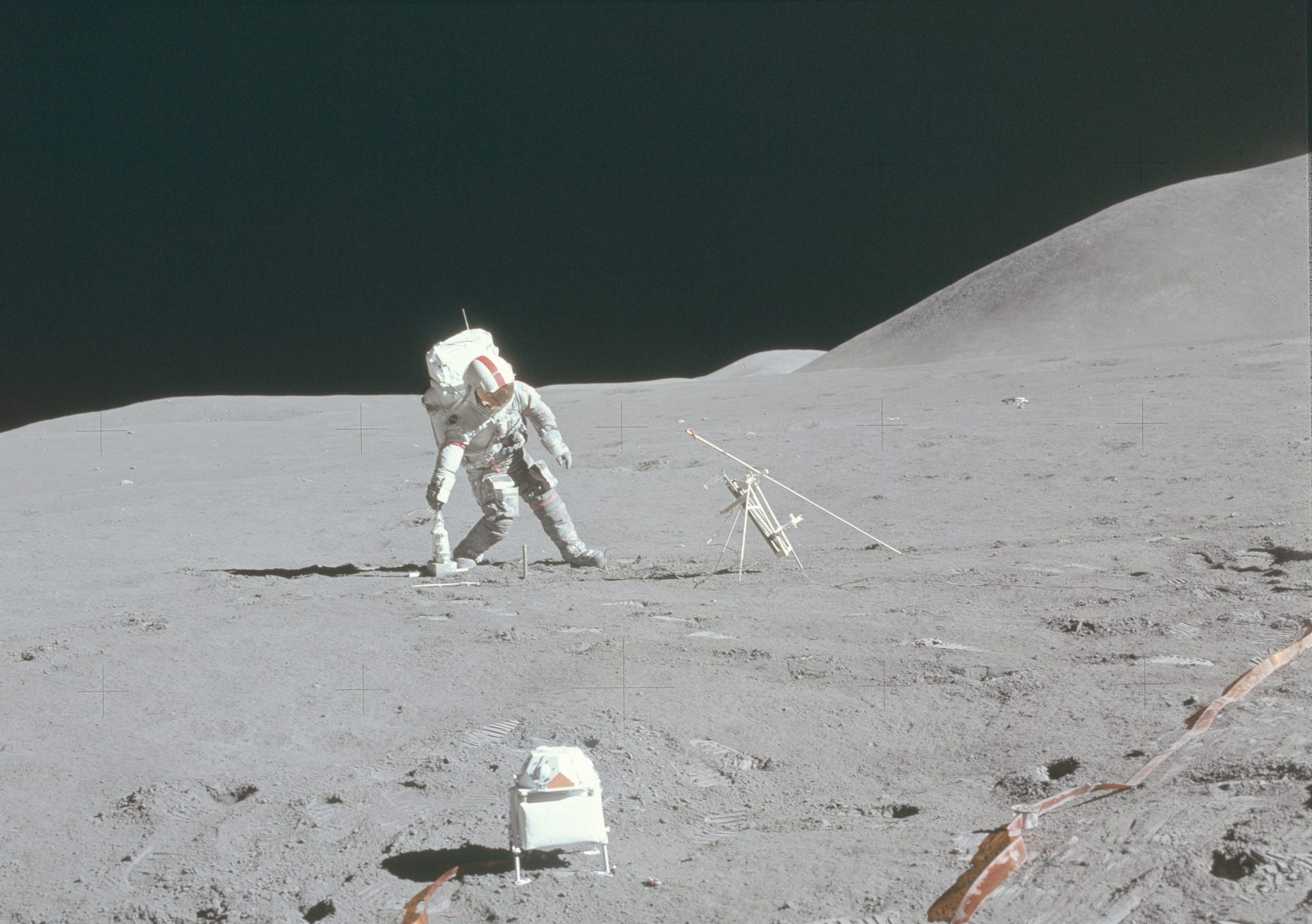
Apollo 15 Falcon feather demonstration
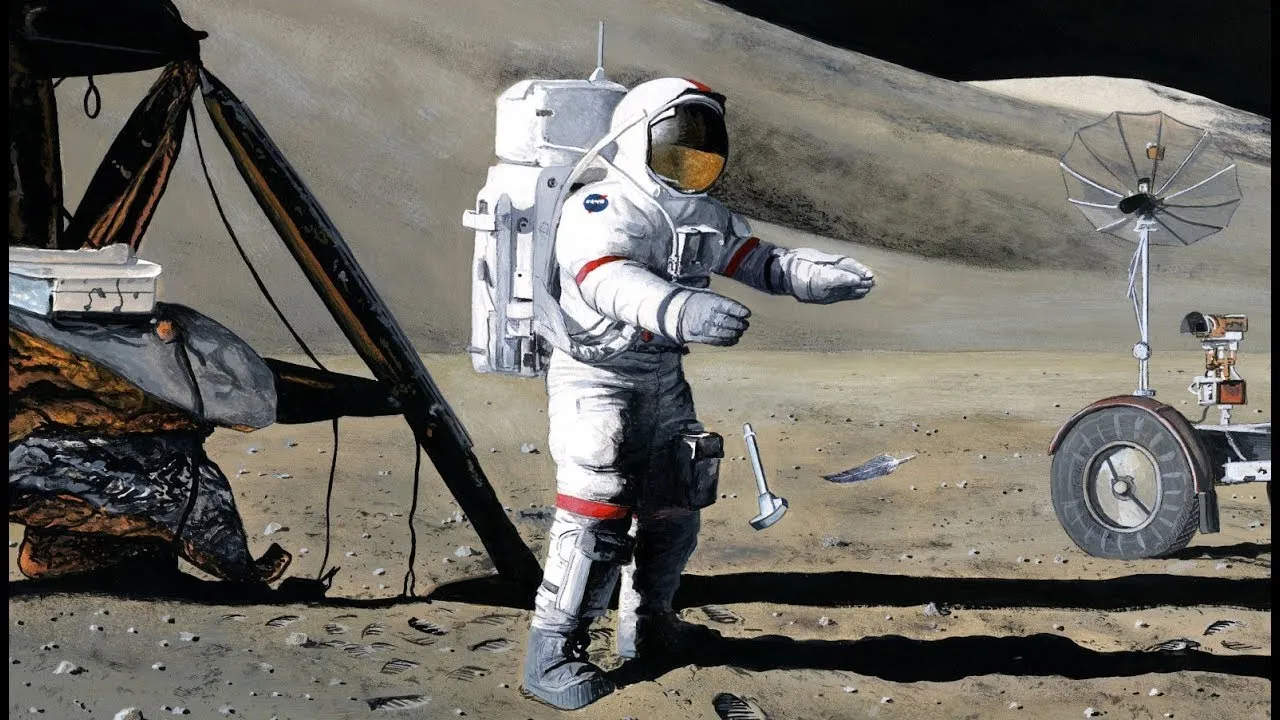
Commander David Scott releasing a hammer and a feather on the lunar surface during Apollo 15.
The Experiment, Step by Step
Scott's approach was as much about timing and optics as physics. In front of cameras and with the lunar horizon behind him, he explained briefly the idea that, without air, objects fall at the same rate. He then held the feather and the hammer at approximately the same height and released them simultaneously. The two objects dropped and met the dust together—no flutter, no delay. For viewers back on Earth, the image was arresting: a feather and a hammer hitting the Moon in perfect synchrony.
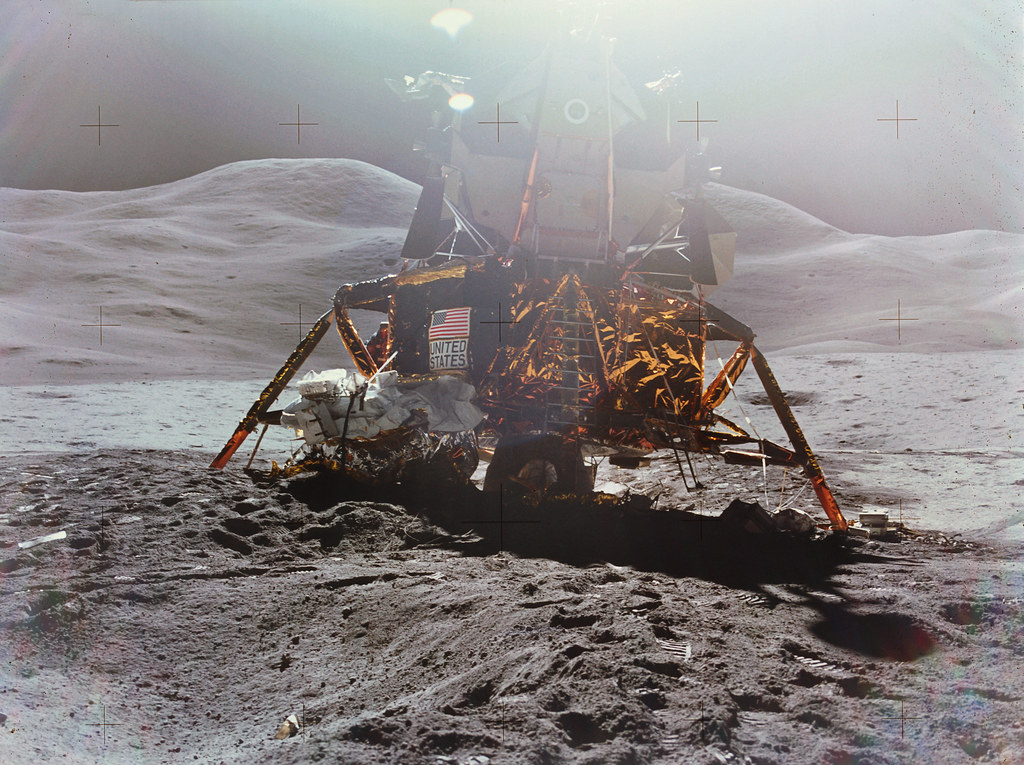
Apollo 15 lunar module Falcon
Why This Visual Matters
Science is often abstract; its laws live in equations and controlled lab charts. But humans remember phenomena best through story and spectacle. Scott's demonstration transformed Galileo's theoretical insight into an image that anyone could grasp at a glance. For students, lovers of science, and the general public, a feather and a hammer landing together on the Moon registered as incontrovertible proof.
The Physics in Plain Language
At the heart of the demonstration is a simple mathematical fact: in a gravitational field, the acceleration g is independent of the mass of the falling object. On Earth, the presence of air produces an additional force—drag—that depends on shape, density, and velocity. A feather has high drag relative to its weight, so on Earth it reaches a low terminal velocity and floats down slowly. In the Moon's vacuum, drag is effectively zero, so both objects accelerate at the same rate determined by lunar gravity (roughly 1.62 meters per second squared) and land together.
An Intuitive Analogy
Imagine rolling different weights down a frictionless ramp: without friction, their masses don't change the time it takes to reach the bottom. Replace the ramp with the vertical pull of gravity and the same logic applies. Scott's feather-and-hammer is simply the vertical, vacuum version of that ramp demonstration.
Beyond the Physics: Symbolism and Legacy
Scott's demonstration fused science with storytelling. It was an intentional nod to Galileo—not merely an experiment, but a cultural handshake across centuries. In that moment, a Renaissance argument validated in a modern space era, science demonstrated continuity: the same law that Galileo derived by careful laboratory work held true on a world never before visited by humans.
Public Reception and Educational Impact
The broadcast of the experiment had immediate impact. For educators, the image became a teaching staple: a concise demonstration of air resistance and the universality of free fall. For the public, it distilled complex physics into a memorable vignette. Even decades later, the footage is replayed in classrooms and documentaries as an exemplar of experiential science communication.
- Clear demonstration of principles in a dramatic setting.
- High public engagement through visual storytelling.
- Practical limits of replicating the experiment for hands-on learners.
- Risk of oversimplification if the role of air resistance is not emphasized.
Technical Notes and Nuance
Although the demonstration is straightforward, a few technical points are worth noting. First, timing and synchronization are key—Scott released the objects as simultaneously as a suited astronaut could manage. Second, the Moon's reduced gravity changes fall time: a drop from a given height takes longer on the Moon than on Earth because g is smaller, but the important factor is that both objects share the same acceleration. Third, the local terrain and the angle of release can slightly affect the path, but not the basic conclusion.
Why Precision Still Matters
Scientists and engineers always watch for confounding factors. On the lunar surface, electrostatic dust adhesion, suit-generated air currents around the suit during depressurization (brief and minimal), or small initial velocity differences could in principle introduce tiny disparities in arrival times. In practice, the demonstration’s visual clarity overwhelms such microeffects, and the result stands robust.
Anecdotes from the Mission
Scott’s personality—disciplined, curious, and slightly theatrical—shaped how the demonstration unfolded. He had been a mission commander who cared about the science and the storytelling, knowing that images from the Moon resonated in ways words could not. Crew exchanges before the EVA, rock sampling sequences, and Scott’s deliberate, explanatory commentary all fed into a narrative that made the experiment feel both spontaneous and carefully staged.
Connections to Other Lunar Science
While the hammer-and-feather moment is compact, Apollo 15's broader scientific contributions were substantial: extended stays enabled deeper geological sampling, the lunar rover expanded range, and the crew collected specimens that reshaped understanding of lunar composition and volcanic history. The feather-and-hammer gesture was a small, symbolic thread woven into a larger tapestry of discovery.
How the Moment Echoes Today
Decades on, Scott's demonstration still appears in physics lectures and popular treatments of space history. It is a reminder that compelling science communication does not require complexity—sometimes the clearest lessons are the simplest. The feather and the hammer remain metaphors for how environments change observable outcomes, and how experiments must account for context to reveal underlying laws.
Teaching and Replication in Classrooms
Modern educators use Scott’s example as a launching point for experiments, historical readings, and ethical conversations about exploration. Students can replicate aspects of the experiment in vacuum chambers, using drop towers, or with containers where air is partially removed. Teachers often pair the visual clip with equations for acceleration and drag coefficients to connect intuition with quantitative analysis.
- Step 1: Pose the historical question: do heavy and light objects fall differently?
- Step 2: Demonstrate air resistance with a feather and rock on Earth.
- Step 3: Show the Apollo 15 clip and discuss the role of vacuum.
- Step 4: Perform controlled experiments if equipment allows (syringe vacuum, sealed containers, or computational simulations).
Conclusion: A Small Gesture with Lasting Power
David Scott’s hammer-and-feather demonstration during Apollo 15 is a compact parable of science: an elegant experiment, a respectful nod to intellectual heritage, and a piece of public pedagogy performed on the grandest possible stage. It distilled centuries of debate into a single image and, in doing so, underscored the continuity of scientific inquiry from Galileo’s laboratory tables to the lunar plains.
"A feather and a hammer landing together on the Moon: a visual bridge from Galileo to space age science."
- Scott’s demonstration on Apollo 15 visually confirmed that in vacuum all objects fall at the same rate, independent of mass.
- The experiment linked Galileo’s early modern insights to 20th-century space exploration, creating a powerful educational moment.
- While simple, the demonstration underscores crucial experimental considerations like air resistance, timing, and environmental context.
Final Reflection
Science advances through ideas and demonstrations that travel across generations. The hammer and the feather, released by a suited astronaut on a world once reserved for myth and dream, remind us that discovery is both practical and poetic. In that single exchange with lunar gravity, Commander David Scott paid homage not only to Galileo, but to the enduring human habit of asking: how does the world work? The Moon answered with quiet clarity.