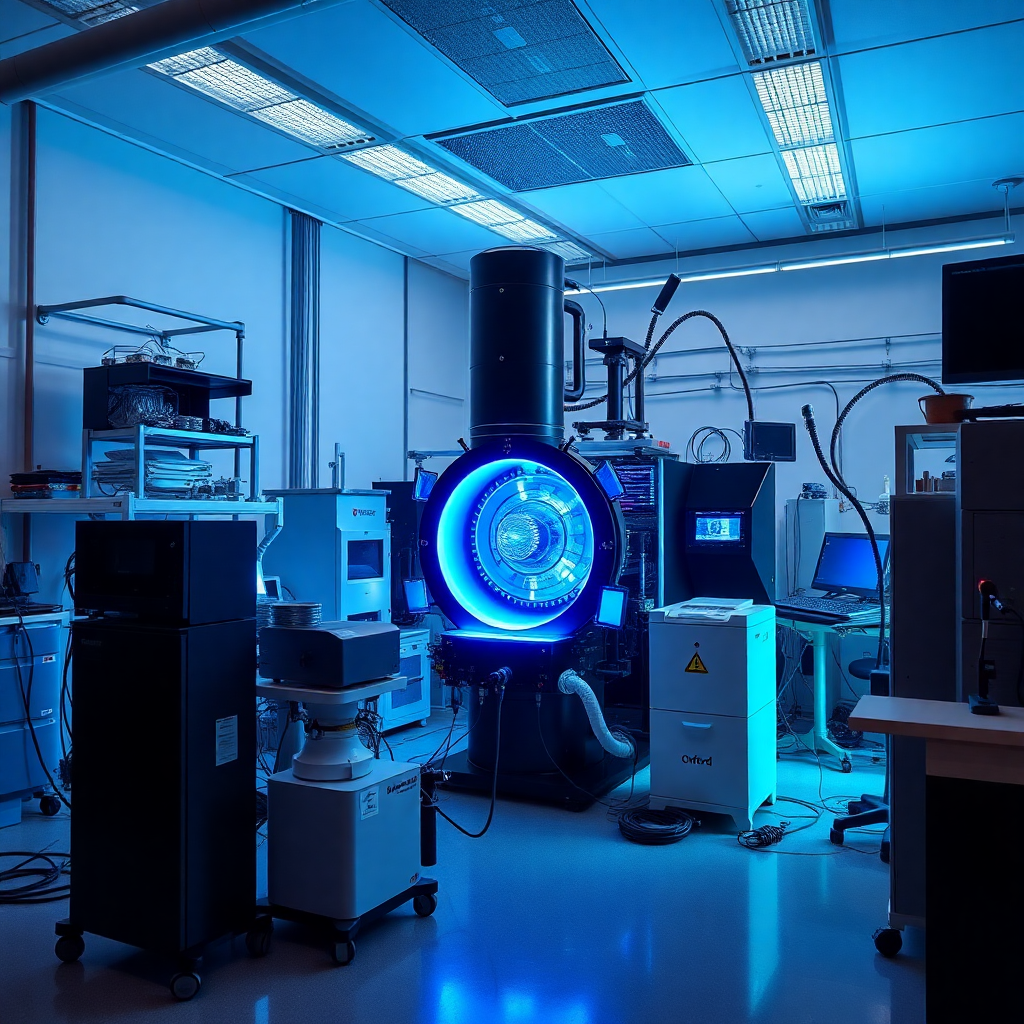
Scientists Broke a Textbook Rule in Physics — What It Means
It sounds like a journalism headline written to shock: scientists have broken a rule that generations of students learned as if it were carved into stone. The reality is both subtler and more interesting. Over the last decade, carefully engineered experiments in small, driven, or quantum systems have exposed boundaries to the simple statements that live in many introductory physics classrooms — most notably how we talk about entropy, irreversibility, and conservation when a system is not isolated. Those experiments don't demolish the brilliant edifice of thermodynamics or quantum mechanics. Instead they reveal the contours of its foundation: where classical approximations stop working and new, richer rules must be taught.
How a ‘textbook rule’ becomes a simplification
Textbooks are tools. In classrooms we teach clear, idealized statements because learners need crisp starting points: energy is conserved, and the second law of thermodynamics tells us entropy never decreases in an isolated system. Those axioms work extraordinarily well for cars, stars, and steam engines. But they rely on hidden assumptions — most importantly that systems are closed or at least weakly coupled to simple environments, and that observation and control play no active thermodynamic role.
When experiments started probing tiny systems — single atoms, nanoscale electronic devices, engineered photonic structures — with precise feedback and rapid control, the textbook assumptions started to show their age. The apparent rule-breaking often comes down to this: textbooks state universal rules for idealized, closed cases; modern experiments work with open, driven, information-rich setups where additional bookkeeping is essential.
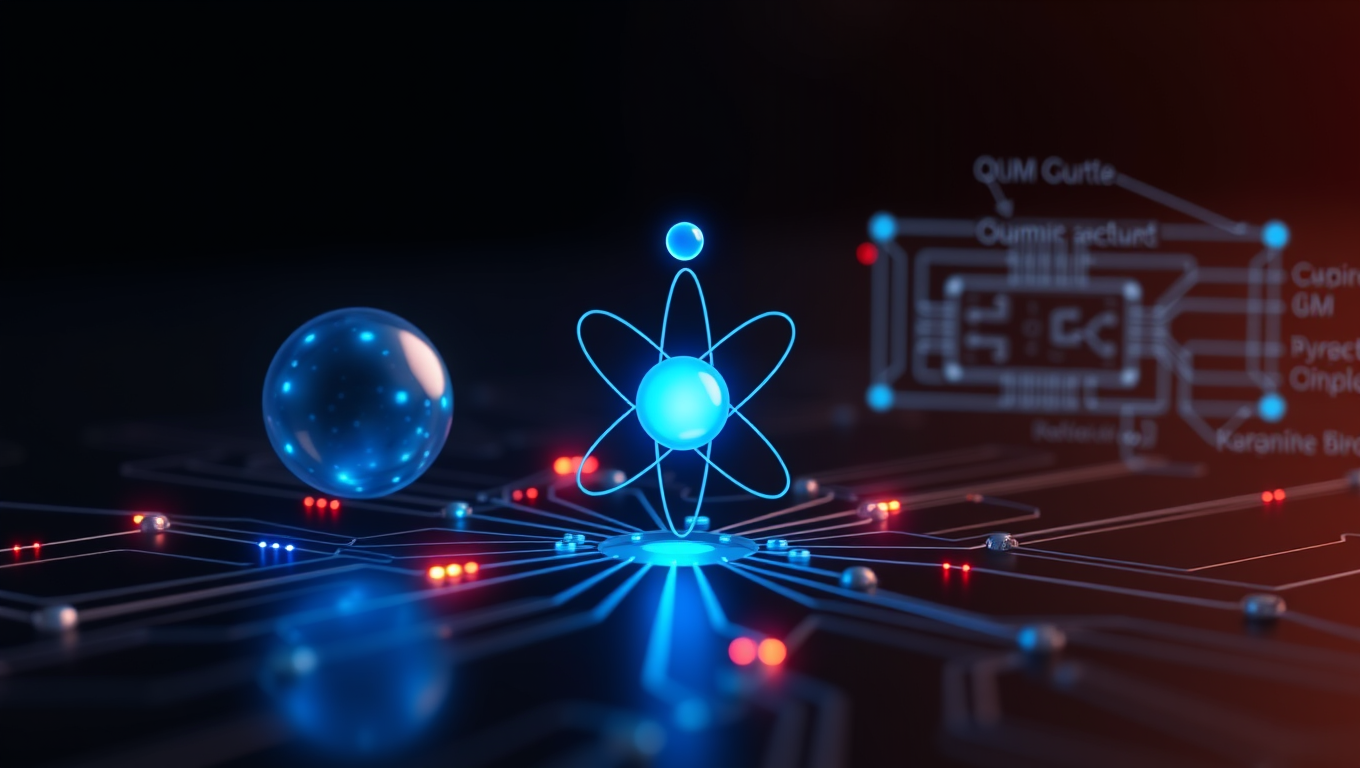
single atom quantum system
Physics textbooks taught the map; today's experiments are redrawing the borders.
The rule people mean — a closer look at the second law
The most famous and consequential rule implicated by recent work is the second law of thermodynamics, typically phrased as "entropy of an isolated system never decreases." That is true for truly isolated systems when entropy is defined in the conventional thermodynamic sense. But the modern story introduces new actors: information and reservoirs that exchange energy in structured ways.
Consider Maxwell's demon, a thought experiment from the 19th century in which a hypothetical creature sorts fast and slow molecules to reduce entropy without doing work. For decades Maxwell's demon was a puzzle. The resolution came when physicists recognized that information processing has thermodynamic costs: erasing a memory requires dissipating heat, as expressed by Landauer's principle. More recent experimental work has operationalized aspects of the demon — implementing feedback loops that extract work by using information about microscopic states. Those experiments don't violate the second law when the full information and energy accounting is included, but they show something classroom statements often omit: information is a thermodynamic resource.

Maxwell's demon illustration
Non-equilibrium and fluctuation theorems: small systems behave differently
Textbook thermodynamics largely addresses large systems near equilibrium, where statistical fluctuations are negligible. In small systems, fluctuations dominate and surprising processes that are impossible macroscopically become appreciable. Fluctuation theorems, such as the Jarzynski equality and Crooks relation, provide exact results for the probability distributions of work and entropy production even far from equilibrium. They make room for transient entropy decreases in small subsystems while preserving global constraints.
Experiments with trapped ions, colloidal particles, and single-electron circuits have demonstrated these theoretical predictions concretely. Those observations make the classroom statement about entropy feel incomplete rather than false: yes, the second law holds on average and for closed systems, but its manifestations at the microscopic, stochastic level are richer.

thermodynamic engine microscale
A new twist: non-Hermitian and PT-symmetric physics
Another strand of work that has challenged simple textbook narratives comes from non-Hermitian physics and parity-time (PT) symmetric systems. Conventional quantum mechanics relies on Hermitian operators to guarantee real energy eigenvalues and unitary evolution — conditions closely tied to conservation and reversibility. But when systems are open and exchange energy or particles with their environment in structured ways, effective descriptions using non-Hermitian Hamiltonians become useful.
Non-Hermitian systems can exhibit exceptional points and unconventional spectral properties that allow behavior absent in closed systems: directional amplification, loss-induced transparency, and apparent non-conservation in subsystems. Those properties have been realized in photonics, acoustics, and electronic circuits. Again, the headline "textbook rules broken" overstates the case: the fundamental theory is not invalidated; rather, the applicable mathematical description must be extended when loss, gain, and measurement are integral to the setup.
What the pivotal experiments look like
Although the specifics vary, common features connect experiments that prompt textbook revisions:
- Small scale: single particles, superconducting qubits, or nanoscale mechanical resonators where thermal and quantum fluctuations are significant.
- Strong coupling to engineered reservoirs: environments tailored to exchange energy or information in controlled ways rather than simple heat baths.
- Active measurement and feedback: real-time monitoring of microscopic states followed by rapid control operations that use that information.
- Non-equilibrium driving: periodic or continuous driving forces that keep the system far from equilibrium.

nanoscale electronic device circuit
Take an experiment where researchers trap a tiny bead in a laser trap, monitor its motion with nanometer precision, and apply feedback forces conditioned on position and velocity. By timing the feedback correctly, the researchers can extract work from random fluctuations and temporarily reduce the bead's entropy relative to the environment. The total entropy — including the controller's memory and the energy cost of measurement and erasure — remains consistent with thermodynamics. Yet the simple classroom statement that entropy must always increase looks inadequate unless you carefully define the system boundary and include information terms.
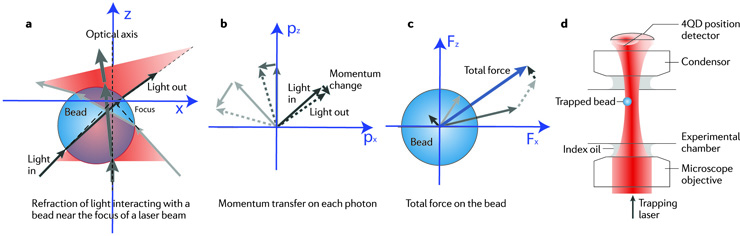
laser trap optical tweezers bead
Why textbooks need to change
There are three complementary reasons a modern physics curriculum should be updated.
- Clarity about assumptions: Students must learn when and why an assumption — like isolation or weak coupling — is made, and how violating that assumption changes predictions.
- Integration of information and thermodynamics: Information processing is no longer an abstract sidebar; it has measurable thermodynamic costs and benefits that matter in computation and nanoscale technologies.
- Non-equilibrium as a core topic: Many contemporary systems — biological machines, quantum devices, and engineered materials — operate far from equilibrium. Teaching equilibrium first is historical, but modern curricula should accelerate non-equilibrium concepts.
Practical consequences: computing, energy, and measurement
These experimental developments are more than academic. They feed into rapidly developing technologies:
- Low-energy computing: If information erasure has thermodynamic costs that can be engineered or minimized, then principles from fluctuation theorems and reversible computing could dramatically reduce energy per operation.
- Microscopic engines: Devices that harvest thermal fluctuations or exploit information to produce work have been proposed and prototyped. While not replacing macroscopic engines, they offer possibilities for powering sensors and nanoscale machines.
- Precision metrology: Measurement back-action and engineered reservoirs can be used to amplify signals or suppress noise in sensors, improving performance beyond naive textbook limits.
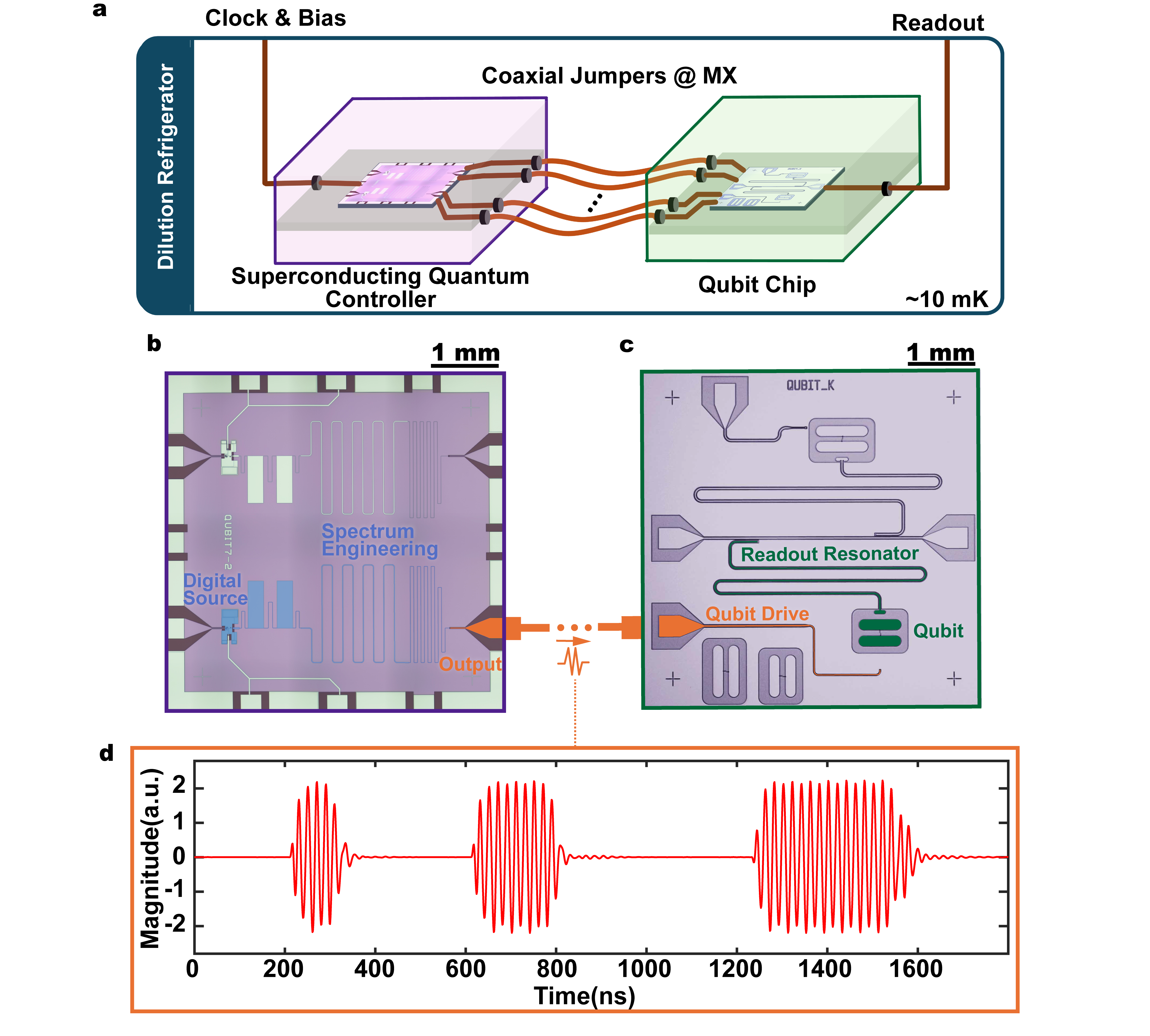
superconducting qubit chip
Philosophy and pedagogy: what science gains
Beyond technical corrections, these developments invite a deeper conversation about how we teach and understand physical law. Science advances by refining statements that were once believed universal. The shift is healthy — it shows physics is alive: experimental ingenuity reveals phenomena that sharpen our theoretical language.
For students and the public, the lesson is equally valuable. Simplified rules are not lies; they are stepping stones. But as technology probes regimes once inaccessible, we must teach the caveats along with the rules. That intellectual honesty improves scientific literacy and prevents the kind of confusion that fuels sensational headlines.
Common misunderstandings
Several recurring misunderstandings crop up in public conversations:
- "The second law is wrong": No. The second law stands when the system is defined appropriately and all sources of entropy, including information reservoirs, are included.
- "Perpetual motion is possible": Not in any useful, scalable sense. Apparent transient gains are offset by costs in measurement, memory, or driving energy.
- "Quantum magic replaces physics": Quantum effects allow new behaviors, but they don't abrogate conservation laws; they complicate how those laws are applied.
Voices from the lab
Researchers in labs around the world describe the feeling as exhilarating. Experimentalists relish the control they can now exert over single qubits, photons, and atoms. Theorists enjoy the stimulus: anomalies force new mathematics, from refined fluctuation relations to generalized thermodynamic identities that include information terms.
"We didn't break physics — we expanded the ledger," one researcher puts it. "You have to count information like you count heat."
What to expect next
The near future will likely bring both conceptual and applied advances. Conceptually, expect more unified frameworks that treat information, measurement, and environment on equal footing with energy and work. Practically, look for improved low-energy logic elements, robust microscopic actuators, and sensors that exploit non-equilibrium strategies.
Education will follow slowly but surely. Introductory physics courses may keep their axioms but add early modules that flag limitations and introduce thought experiments like Maxwell's demon alongside modern experimental realizations. Advanced courses will integrate fluctuation theorems, stochastic thermodynamics, and non-Hermitian descriptions as standard fare.
- Textbook rules are often idealizations whose limits appear in small, driven, or information-rich systems.
- Recent experiments show entropy and conservation must be discussed with careful system boundaries and information costs.
- These discoveries enrich technology prospects for computing, sensing, and nanoscale engines while offering fertile ground for pedagogy updates.
Conclusion — a law unchanged, a story expanded
When headlines claim physicists have "broken" a rule, the more accurate description is that experimental finesse has revealed where simple statements stop being complete. The laws of physics remain powerful and predictive, but their application requires care. By bringing information, measurement, and engineered environments into the thermodynamic ledger, scientists are rewriting chapters — not tossing the book. For students, practitioners, and curious readers, that is a profoundly exciting development: the map was never finished, and now we can draw its new, detailed borders.
Illustration: an engineered nanoscale system where measurement and feedback temporarily reduce subsystem entropy while the full system, including the controller, obeys thermodynamic constraints.