Recreating the First Moments: Smashing Oxygen to See the Big Bang
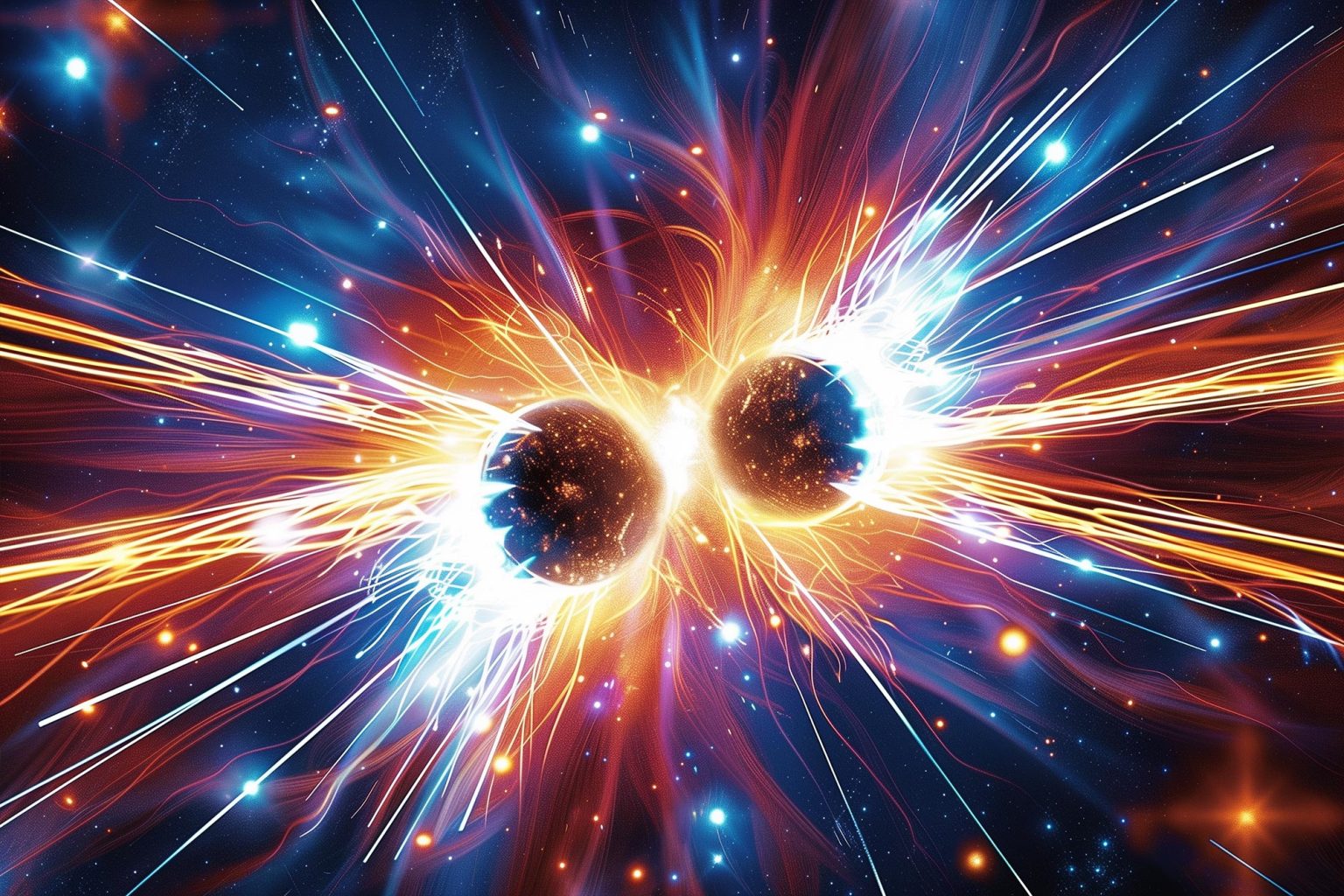
The image is cinematic: two tiny specks of ordinary matter hurtling toward one another at near light speed, vanishing into a blaze of subatomic fragments and heat so intense that protons and neutrons lose their identities and quarks and gluons roam free. That flash lasts a whisper — a trillionth of a trillionth of a second — yet inside it lie clues to how the visible universe formed in the first microseconds after the Big Bang. Recent experimental programs that intentionally smash oxygen nuclei provide a remarkably clean and surprising laboratory for probing that primordial state of matter, the quark-gluon plasma, and for testing how ordinary matter emerged from the chaos.
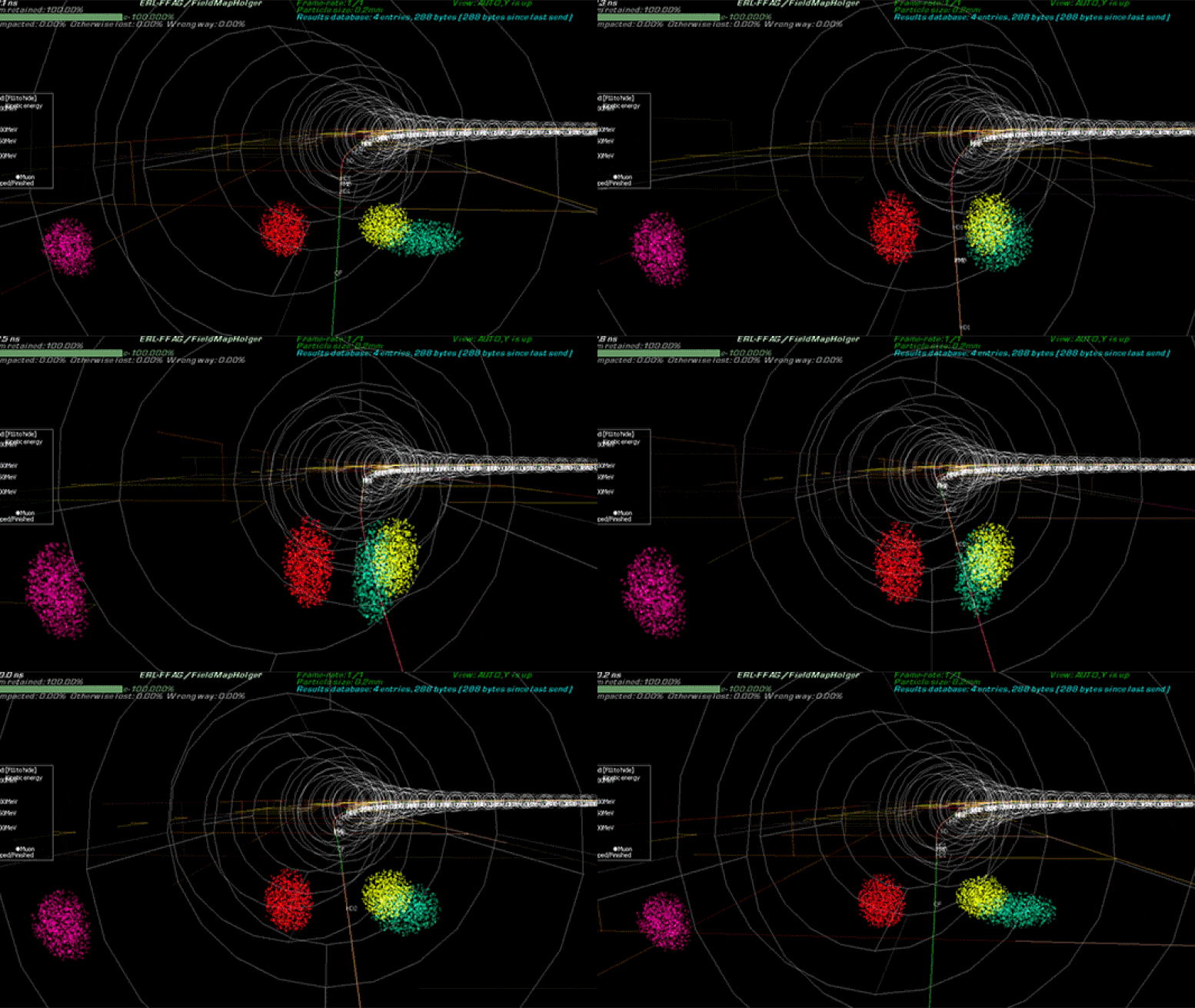
particle accelerator collision visualization
Why Smash Nuclei at All?
To understand the logic of smashing anything you must first accept an odd truth about modern physics: the best way to understand how nature behaves at extreme density and temperature is to recreate a slice of that extremity in a controlled setting. Colliders do exactly that. By accelerating atomic nuclei and colliding them head-on, scientists concentrate a huge amount of energy into an extremely small volume. Under those conditions, the strong force that normally confines quarks inside protons and neutrons becomes screened, and matter enters a new phase — the quark-gluon plasma (QGP). It is the closest laboratory analog to the universe a few microseconds after t=0.
What Is Quark-Gluon Plasma?
Quark-gluon plasma is not a familiar state like solid, liquid, or gas. It is a hot, dense soup of the fundamental constituents of hadrons: quarks, which carry fractional electric charge, and gluons, which mediate the strong force. In everyday matter quarks are confined inside composite particles. QGP is the deconfined phase where these constituents move in a correlated, nearly perfect fluid. Studying QGP tells physicists how confinement and the transition to ordinary hadrons — a process called hadronization — actually happen under extreme conditions.
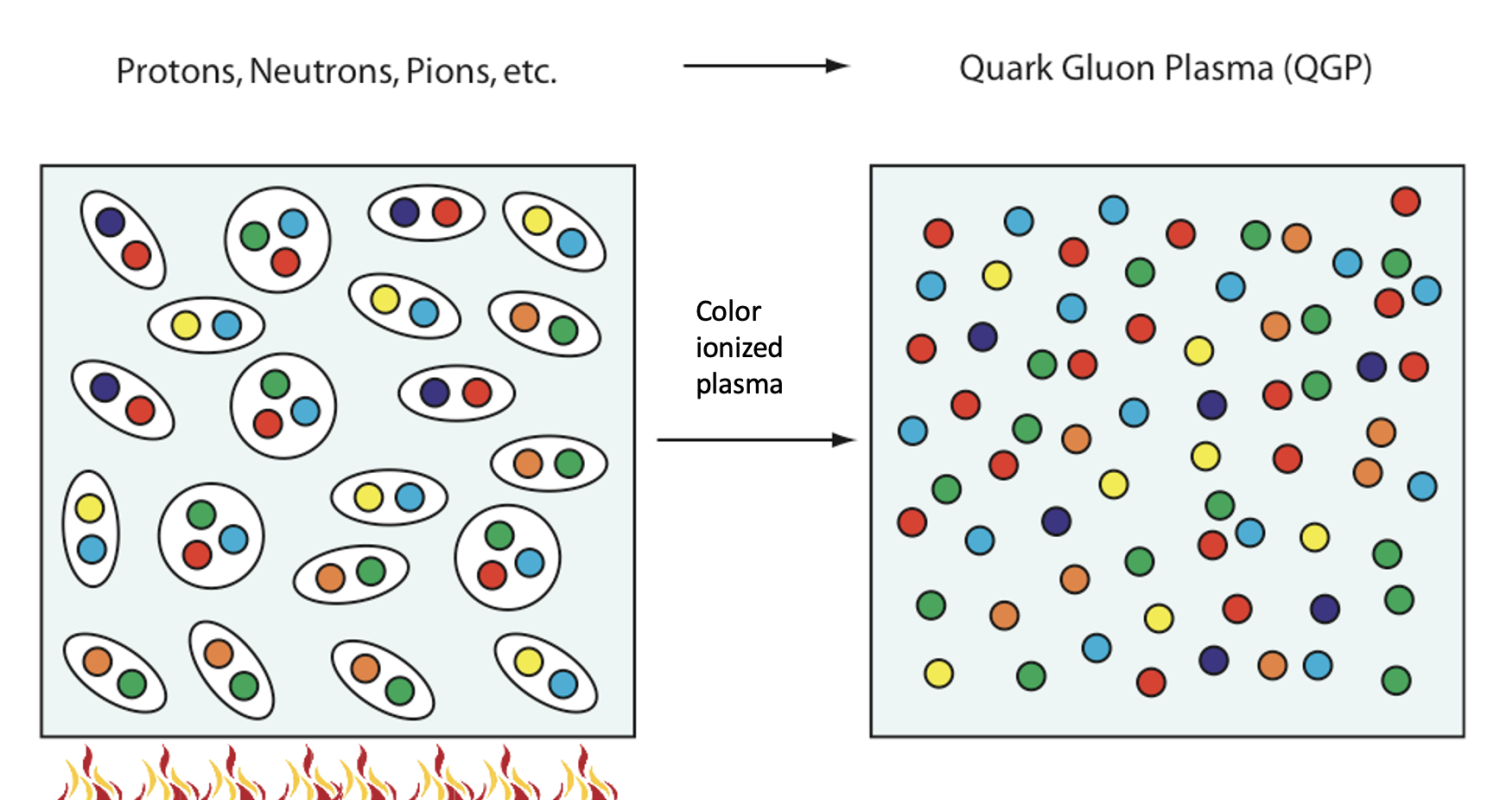
quark gluon plasma fluid model
Why Use Oxygen Nuclei?
Most heavy-ion programs have traditionally used the heaviest stable nuclei available, like lead or gold, because collisions of large nuclei create the largest and longest-lived fireballs — easier to measure and model. So why deliberately choose a lighter species such as oxygen?
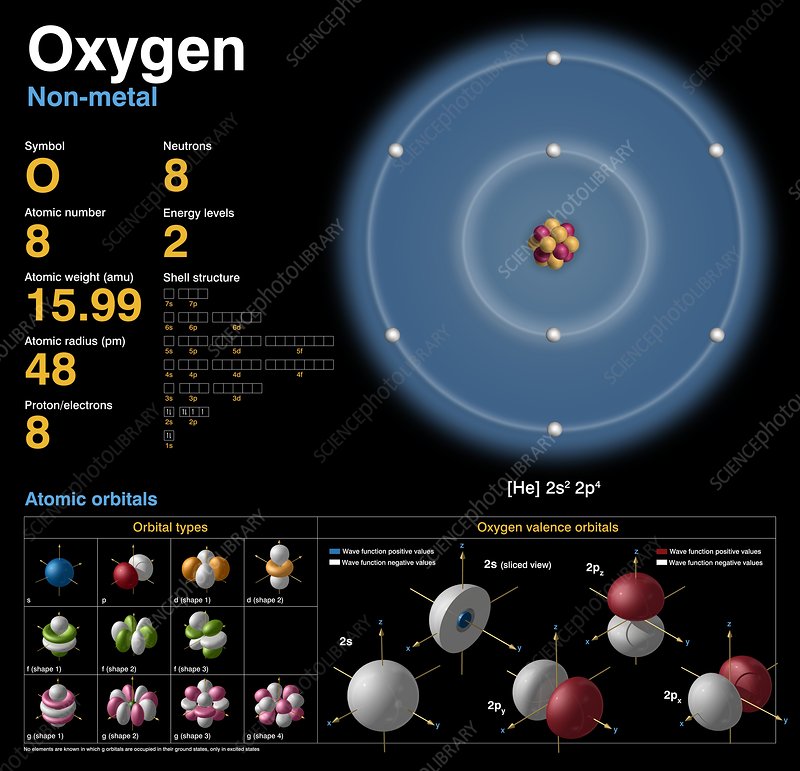
oxygen nuclei atomic structure
A Cleaner, Tunable Laboratory
Oxygen nuclei produce collisions that sit between the extremes of proton-proton strikes and head-on lead-lead smashups. They are large enough to create collective behavior characteristic of QGP but small enough that the medium is less opaque and the geometry of the collision matters more. That intermediate size allows scientists to tune the initial conditions: they can test how QGP signatures scale with system size, how the onset of collective flow appears, and whether certain telltale effects persist when you shrink the fireball. In short, oxygen gives a cleaner, more controllable laboratory for answering questions that heavy-heavy or proton-proton collisions cannot.
Bridging Nuclear Physics and Cosmology
There is another reason oxygen is compelling: oxygen is cosmologically familiar. It is one of the most abundant heavy elements produced in stars, and it plays a direct role in the chemistry of planets and life. Using an element with that pedigree to reach back into the earliest instants of the universe offers an evocative bridge between stellar evolution and primordial physics. While the early universe featured free quarks and gluons rather than full oxygen atoms, colliding oxygen nuclei is an elegant experimental step toward understanding how ordinary elements ultimately emerged from the quark soup.
How the Experiment Works
At its core the experiment is straightforward in concept and fiendishly complex in execution. Accelerators prepare beams of oxygen nuclei, boosting them to energies at which their center-of-mass collision produces the required energy density. Two beams cross inside a detector instrumented to measure thousands of outgoing particles that spray from the collision. From those remnants physicists reconstruct the fireball’s lifetime, temperature, and collective motion.
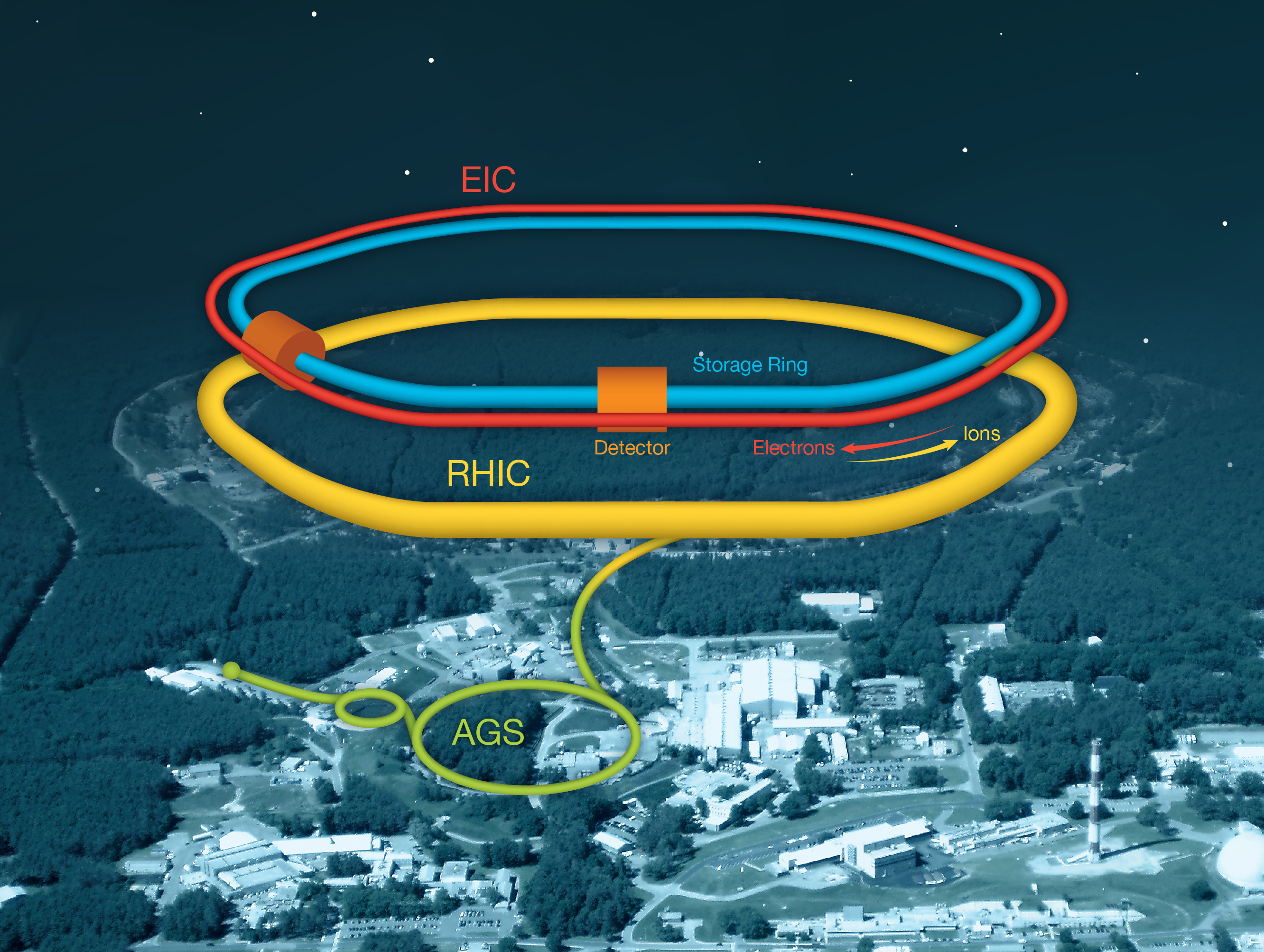
RHIC particle collider facility
Beam Preparation and Collision Geometry
Preparing an oxygen beam requires stripping electrons and then using strong electromagnetic fields to accelerate the bare nuclei. Operators control beam intensity and focus to define how many nucleons interact in each event and whether collisions are central (head-on) or peripheral (grazing). Collision geometry matters: it shapes the pressure gradients inside the fireball and therefore the pattern of particle flow that emerges when the plasma hadronizes.
Detectors and Signatures
Modern heavy-ion detectors are layered and multipurpose. They include tracking chambers that map particle trajectories, calorimeters that measure energy, and particle-identification systems that separate pions, kaons, protons and heavier fragments. The signatures of a QGP are subtle and statistical: elevated production of low-momentum particles, collective flow patterns (like elliptic flow), suppression or modification of high-energy jets (jet quenching), and enhanced production of certain heavy quark pairs. By comparing oxygen-induced patterns against those from proton and lead collisions, physicists isolate which signals truly indicate deconfinement and which can arise from other effects.
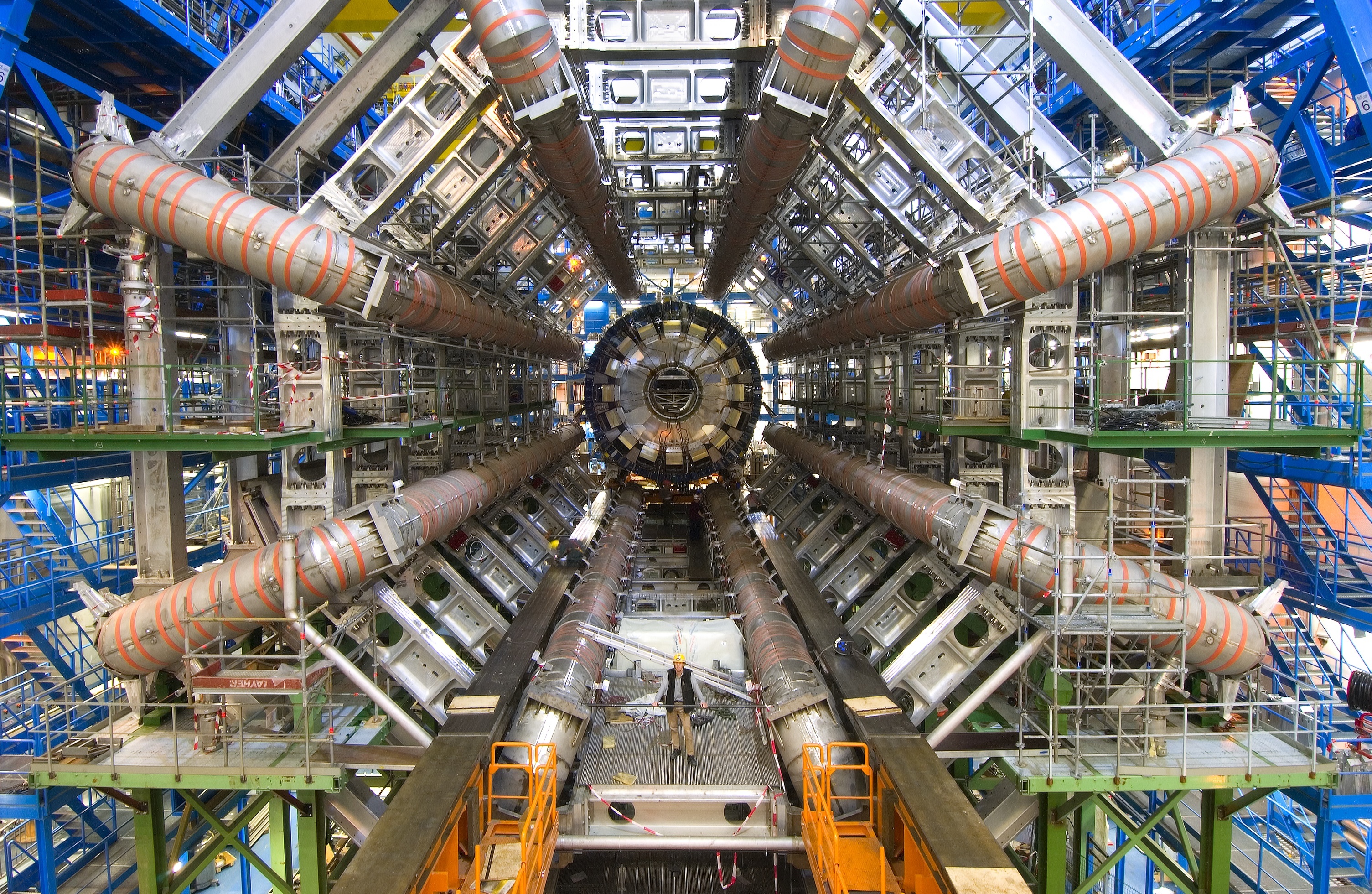
CERN large hadron collider detector
"The oxygen program gives us a laboratory to test how the universe’s earliest matter transitions into the familiar particles that built stars and planets."
What Scientists Are Looking For
There are several driving scientific goals behind oxygen collisions. First, researchers want to determine whether a small but strongly interacting droplet of QGP forms and behaves like the bigger systems. Second, they want to map how QGP properties—viscosity, diffusivity, screening length—scale with system size and lifetime. Third, scientists use oxygen runs to benchmark theoretical models and simulation frameworks that attempt to bridge quantum chromodynamics (QCD) with observable particle yields.
Understanding the Onset of Collectivity
One debate in the field is where true collective behavior — behavior best described by fluid dynamics — begins. Proton-proton collisions sometimes display surprising flow-like patterns, raising the question of whether collective phenomena require large volumes of matter or simply high density and short lifetimes. Oxygen collisions help resolve this by occupying an intermediate regime: if they show robust elliptic flow and other collective markers, it strengthens the idea that collectivity is a general property of dense QCD matter, not a quirk of large nuclei.
Calibrating Jet Quenching and Energy Loss
Jets—narrow sprays of particles originating from energetic quarks or gluons—lose energy traveling through a QGP. This jet quenching depends on the medium’s opacity. Oxygen systems provide an opportunity to study how energy loss scales with path length and density. A precise calibration across system sizes helps physicists extract quantitative properties of the medium, like its transport coefficients, rather than merely detecting qualitative effects.
high energy particle spray detector
Challenges and Surprises
Experimental programs always contain surprises, and oxygen collisions are no different. Smaller systems produce fewer particles per event, which makes statistical studies tougher. Background processes—hadronic rescattering, nonflow correlations, and fluctuations in initial geometry—can mimic the signatures of QGP. Disentangling these requires meticulous analysis, sophisticated event selection, and robust theoretical modeling. Yet those very difficulties can yield payoffs: inconsistencies between model predictions and oxygen data point to places where theory must improve, and often lead to deeper understanding.
Technical Hurdles
Running with a new ion species requires operational upgrades and procedural checks: ion sources must produce stable beams, injector chains must be tuned for different charge-to-mass ratios, and detectors must be calibrated for changes in multiplicity and particle composition. These are engineering challenges that take months or years to prepare, but they also strengthen accelerator and detector systems for future programs.
Why It Matters Beyond Particle Physics
This program has implications that ripple beyond the collider halls. First, it refines our narrative of the universe’s thermal history: by experimentally mapping the transition from deconfined quarks and gluons to hadrons, physicists anchor theoretical models used in cosmology. Second, it drives technological innovation in accelerator science, large-scale detectors, and data analysis—tools that often find applications in medicine, materials science, and computing. Finally, it sharpens the public story of how fundamentally bizarre microphysics connects to the ordinary atoms that make life possible.
Interpreting the Results
Interpreting oxygen collisions is a multi-step process. Experimentalists produce differential particle spectra, flow harmonics, and jet modification measurements. Theorists then input these into hydrodynamic and transport models of QCD matter. The key is consistency: a convincing picture emerges only when the same set of medium parameters explains many different observables across system sizes. Oxygen runs provide additional data points that constrain those fits and reduce model degeneracy.
A Model-Testing Ground
Because oxygen occupies the middle ground, it is an ideal stress test for theoretical frameworks. Models that succeed for lead and proton systems but fail for oxygen expose missing physics: perhaps the treatment of initial-state fluctuations is incomplete, or the hadronization mechanism is oversimplified. Each discrepancy directs the community toward improved formulations and, ultimately, a more faithful description of QCD under extreme conditions.
Broader Scientific and Philosophical Insights
Beyond the technical achievements, there is a larger intellectual payoff. These experiments instantiate a kind of scientific time travel: by creating the same physical conditions that existed microseconds after the Big Bang, we can test our assumptions about emergence, complexity, and the arrow of time. The data tell a quiet but profound story: that under extreme conditions matter behaves collectively and that the familiar particles we take for granted are the outcome of an exquisitely choreographed cooling and recombination process.
"Small changes in collision geometry and system size open new windows on how the early universe’s ingredients assembled themselves into the atoms around us."
Looking Ahead: What’s Next?
Oxygen collisions are not an endpoint but a waypoint. Future programs will iterate on beam species, energies, detector upgrades, and analysis techniques. Combining oxygen results with precision measurements from heavier ions and proton systems will move the community toward quantitative extraction of QGP properties. Advances in machine learning and high-performance computing will speed the comparisons between data and theory, shrinking uncertainties and revealing subtler effects.
Strategic Directions
- Comparative campaigns across species to map scaling laws.
- High-statistics runs to measure rare probes like heavy quarkonia and high-energy jets in small systems.
- Detector upgrades to improve vertex resolution and particle identification at low momentum.
Conclusion: Small Nuclei, Big Questions
Smashing oxygen nuclei to recreate a sliver of the Big Bang is an elegant expression of modern experimental physics: precise, ambitious, and deeply connected to fundamental questions about origin and composition. The intermediate scale of oxygen collisions gives scientists a laboratory to test where collective, fluid-like behavior begins and how the quark-gluon plasma cools into the particles that built the cosmos. The work demands technical mastery and theoretical clarity, and it promises rewards that reverberate through cosmology, nuclear physics, and beyond.
- Oxygen collisions occupy an intermediate regime between proton-proton and heavy-ion collisions, enabling tests of collective QCD behavior.
- Studying QGP in smaller systems sharpens theoretical models and helps extract quantitative medium properties.
- These experiments strengthen the bridge between particle physics and cosmology by experimentally probing conditions just after the Big Bang.
Further Reflection
Ultimately, the oxygen program is a reminder that to understand the grandest scales we sometimes must master the tiniest. By controlling and measuring flashes of primordial matter, physicists convert ephemeral chaos into enduring knowledge — and, in doing so, illuminate how the universe evolved from an exotic plasma into the rich tapestry of elements we observe today.