
Palantir CEO: AI Will Destroy Humanities Jobs — What's Next
The bluntness of the statement—AI "will destroy" humanities jobs—lands like a cold gust of reality in newsrooms, university halls, and corporate strategy meetings. Whether framed as a warning, a provocation, or a call to action, the claim forces a necessary conversation about the anatomy of work in an age when software can write, summarize, translate, grade, and generate original creative content. This article dissects what the statement means, separates reasonable fears from hyperbole, and lays out realistic, practical pathways for people whose jobs and livelihoods sit at the intersection of language, culture, and meaning.
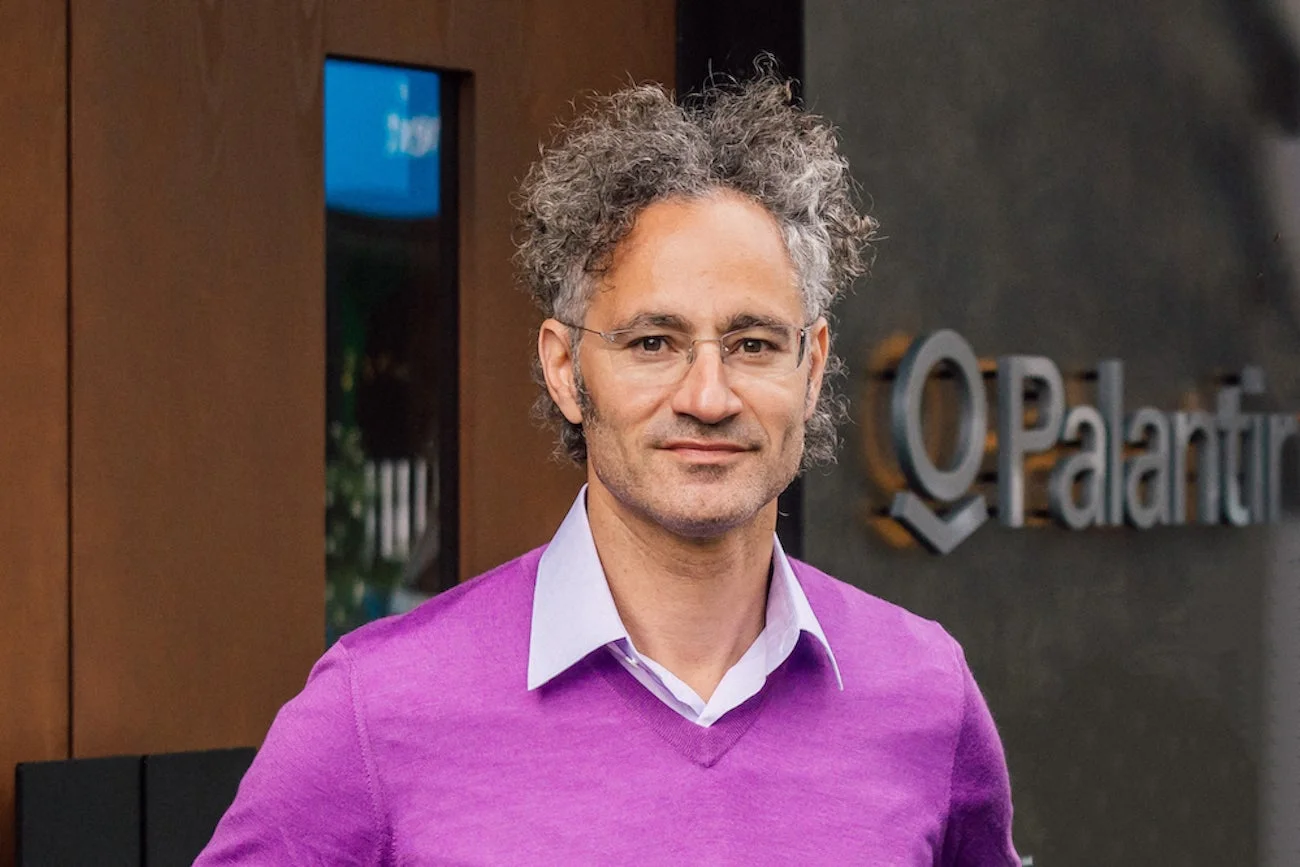
Palantir CEO Alex Karp
What the Warning Actually Means
A provocation, not a prophecy
When a leader of a major technology company says that AI will "destroy" humanities jobs, the remark performs several functions. It dramatizes risk, attracts attention to the speed of technological change, and implicitly urges stakeholders to respond—by training, regulating, or redesigning work. But language that predicts wholesale destruction risks obscuring a more granular truth: AI often automates tasks within jobs, rather than erasing entire professions overnight. Understanding the difference between tasks and occupations is vital to making productive policy and career choices.
Task-level disruption vs. profession-level transformation
Modern labor economists emphasize that automation replaces tasks, not whole occupations, in the short to medium term. For example, a novelist's ability to generate original narrative voice and deep cultural observation is different from a copy editor's repetitive line-editing tasks. AI models that excel at producing drafts or suggesting revisions put pressure on certain activities, but professionals who adapt by integrating AI into their workflows can preserve, and sometimes expand, their roles.
The real question is not whether AI can write, but what human judgment remains indispensable.
Which Humanities Jobs Are Most Vulnerable?
Roles defined by repeatable, pattern-based work
The humanities encompass a wide range of jobs—from academic researchers and museum curators to journalists and translators. Jobs most vulnerable to automation share a common trait: a heavy concentration of repetitive, pattern-recognizable tasks. These include:
Copyediting and basic content production: Routine editorial tasks and first-draft content generation are increasingly attainable for generative AI.
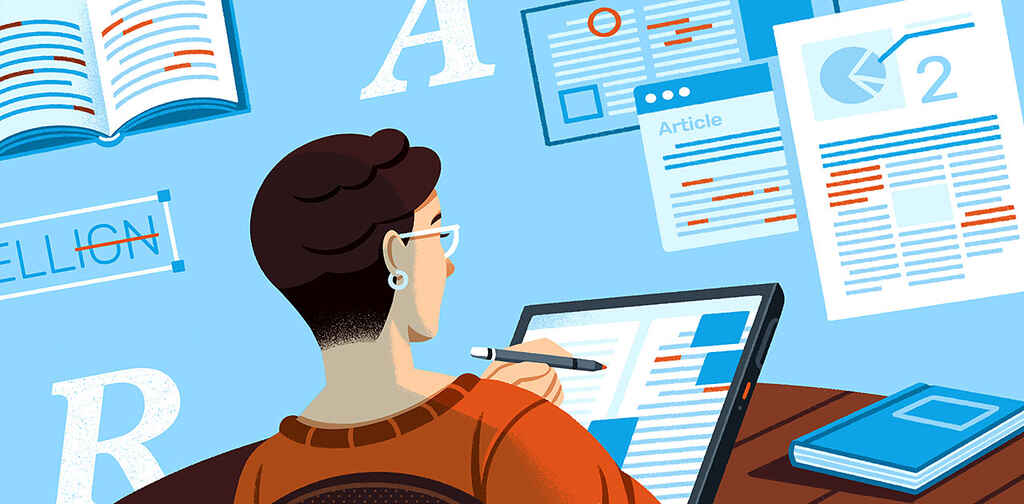
copyeditor working computer
Translation at scale: Machine translation has matured to the point where many straightforward translation jobs are under pressure, especially where nuance can be sacrificed for speed.
translation software interface
Data extraction and literature reviews: Research assistants whose work focuses on assembling citations, summarizing texts, or extracting facts are exposed to tooling that can accelerate or replace those tasks.
Administrative roles in cultural institutions: Ticketing, cataloguing, metadata entry, and routine communications can be automated or made far more efficient with AI systems.
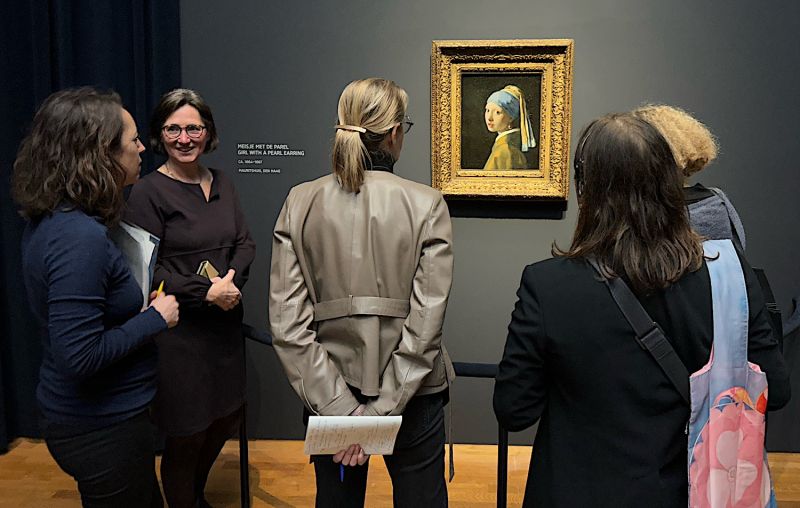
cultural institution museum curator
Roles that are likely resilient—at least for now
Certain humanities professions hinge on human discretion, deep contextual interpretation, and interpersonal engagement. These include therapists and counselors, public intellectuals who synthesize complex ideas for civic debate, and curators or teachers who shape experiences. Even here, the shape of the work will change: teachers will use AI-powered grading and content-generation tools, but the human labor of mentorship, ethical guidance, and emotionally intelligent intervention remains difficult to automate.
humanities classroom teaching
Why Humanities Skills Still Matter
Critical thinking, contextualization, and moral judgment
Humanities education cultivates transferable skills that are increasingly valuable in a world of machine assistance. Critical thinking, the capacity to read between lines, to evaluate sources, and to wrestle with ambiguity—these are capabilities that underpin the responsible deployment of AI. Employers are learning that a team of engineers without people who understand ethics, history, and human behavior creates brittle systems that perform well on benchmarks but poorly in real contexts.

critical thinking ethics workshop
Interpretation over information
AI excels at surfacing patterns and producing plausible outputs, but it lacks an authoritative moral perspective and lived experience. Humanities-trained professionals offer interpretation, story framing, and the cultural literacy required to connect technology to meaningful human outcomes. In many industries, the value arises not from pure information production, but from interpretation and sense-making—precisely the domains where humans retain comparative advantage.
How AI Replaces Tasks, Not Whole Professions
A practical taxonomy of automation
Think of every job as a bundle of tasks. Some are routine and predictable; others require improvisation and empathy. AI excels at automating the former. Consider a journalist's workflow: fact-checking, transcription, and drafting basic articles are tasks that AI can handle or accelerate. But investigative reporting—finding hidden documents, cultivating confidential sources, making ethical choices about publication—relies on human craft. The likely future is hybrid: humans amplified by AI to cover more ground and focus on higher-value work.

AI automation workplace
Examples of augmentation
In publishing, editors already use tools that suggest headlines, check grammar, and propose structural edits. In museums, digital assistants can surface visitor data and recommend exhibit layouts, freeing curators to design deeper experiences. In classrooms, grading and feedback can be semi-automated, allowing instructors to concentrate on individualized teaching and mentorship. In these scenarios AI becomes a force multiplier rather than a replacement—provided institutions redesign roles to capture the productivity gains for workers and learners.
Augmentation creates opportunity only when organizations deliberately redesign work to shift humans to higher-order tasks.
Economic and Social Implications
Winners, losers, and the risk of widening inequality
Automation rarely affects all workers evenly. Skilled professionals with access to capital, networks, and strong digital fluency can leverage AI to increase productivity and earnings. Conversely, workers in roles that require less bargaining power and fewer credentials can face job loss and downward pressure on wages. The humanities sit somewhere in the middle: some graduates pivot easily into tech-adjacent roles, while others in precarious cultural-sector positions may struggle to capture benefits.
Public policy levers
Policymakers can influence how the gains from AI are distributed. Options include subsidized reskilling programs, portable benefits for gig and contingent workers, incentives for companies that create human-centered hybrid roles, and updated intellectual property frameworks that determine how AI-generated works are owned and monetized. Ignoring policy will likely produce concentrated gains and social fallout; proactive policy can smooth transitions and expand opportunity.
What Workers Can Do — Practical Steps
1. Reframe your value
Rather than seeing the threat as existential, think of it as a prompt to articulate the distinct human value you bring. List the tasks in your current role. Identify which are routine and which require judgment, persuasion, or social intelligence. Make a plan to delegate or automate the routine tasks and emphasize the judgment-driven parts in pitches, résumés, and performance reviews.
2. Learn to work with AI
Technical mastery isn't necessary to benefit from AI. Learn to prompt effectively, evaluate AI outputs critically, and integrate tools into your workflow. Familiarize yourself with basic concepts such as hallucination, bias, and model limitations so you can safeguard quality and ethics in your work.
3. Build hybrid portfolios
Many successful humanities professionals combine domain expertise with digital or data skills: a journalist who understands data visualization; a museum educator who builds interactive digital programs; a literature PhD who consults on narrative design for user experience. Small, practical credentials—microcourses in data literacy, user research, or project management—can pay outsized dividends.
Actionable step: Map three new skills you can learn in the next six months and the exact micro-credentials or projects that will prove them.
Actionable step: Replace one routine weekly task with an AI tool and document the time saved and the new value created.
What Employers, Educators, and Policymakers Should Do
Employers: redesign roles and share gains
Companies that introduce AI without changing job design risk hollowing out roles and creating low-trust workplaces. A better approach is to redesign positions so that humans focus on higher-order tasks, and then share productivity gains through higher pay, better training budgets, or reduced hours. Develop joint human-AI performance metrics and invest in workforce development as part of product roadmaps.
Educators: teach translatable skills and digital fluency
Universities and training providers should pair humanities curricula with applied digital skills—data literacy, human-centered design, ethical reasoning about technology. This hybrid approach preserves the strengths of the humanities while making graduates more resilient in varied labor markets. Embed experiential projects that require students to use AI ethically and creatively.
Policymakers: safety nets and incentives
Regulation of AI must balance innovation and public interest. Policies that subsidize reskilling, support transitional income, and incentivize firms to invest in human capital can reduce social frictions. Intellectual property, attribution, and labor standards also deserve careful attention; a societal bargain about how value is shared will determine whether AI concentrates wealth or broadens opportunity.
A Roadmap for a Human-Centered AI Future
Principles to guide the transition
Adopt a few practical principles: prioritize augmentation over replacement; measure and redistribute productivity gains; invest in lifelong learning; design technologies with explainability and human oversight; and maintain public funding for cultural institutions that preserve civic memory and creative experimentation. The philosophy behind these principles matters as much as the technologies they accompany.
Concrete milestones for the next five years
Set targets that are measurable and equitable. For example: every cultural institution receiving public funds should allocate a percentage of its budget to digital capacity building within three years. Universities should require a foundational data-literacy module in humanities majors. Employers adopting AI in knowledge work should publish workforce transition plans that include reskilling commitments and impact assessments.
A future where AI amplifies rather than erodes human meaning depends on choices made today.
Conclusion — What This Warning Really Asks of Us
The warning that AI "will destroy" humanities jobs is a provocation that invites a clearer question: will we allow technology to hollow out roles that enrich public life, or will we choose to redesign work so that machines handle drudgery and people focus on judgment, meaning-making, and care? The former is possible; the latter is preferable and achievable with coordinated policy, deliberate employer action, and worker initiative. Humanities practitioners are not relics; they are essential translators between technology and the complex world it serves.
Key Takeaways
- AI is more likely to automate tasks within humanities jobs than to erase entire professions overnight.
- Humanities skills—critical thinking, interpretation, ethical judgment—remain valuable and hard to automate.
- Workers should reframe value, learn to use AI as a tool, and build hybrid skill portfolios.
- Employers and educators must redesign roles and curricula to capture productivity gains for workers.
- Policymakers need to support reskilling, safety nets, and equitable distribution of AI's benefits.
Practical TipStart by automating one repetitive task and reinvest the time saved into a creative or strategic responsibility.
The CEO's warning works as a wake-up call. It should not be read as a fatalistic endpoint but as a deadline for thoughtful action. Humanistic skills can and should be retooled for a century defined by algorithms—if institutions and individuals choose to act with purpose.