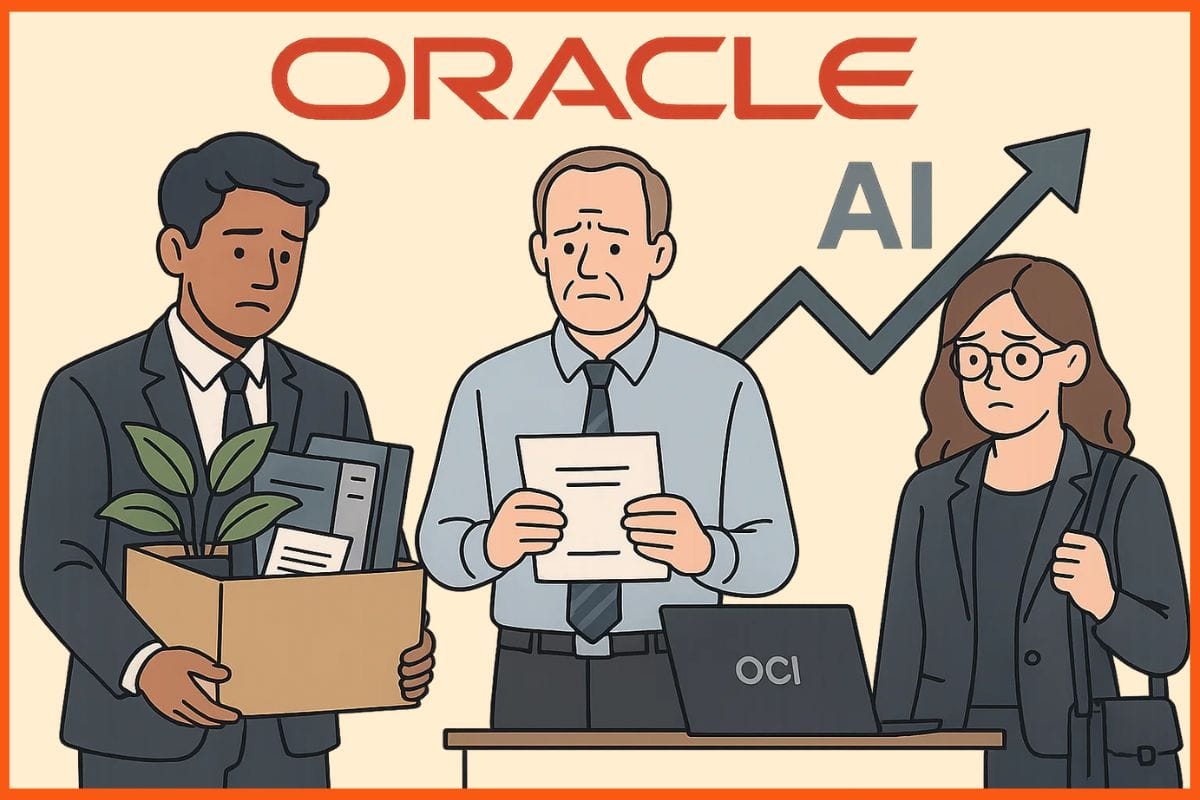
Oracle Fires 30,000 via Email After Profit Surge — Why It Matters

Oracle corporate headquarters building
The headline landed like a shockwave: Oracle terminated roughly 30,000 employees by email shortly after reporting a dramatic profit uptick. Whether every detail of that reporting is settled or will be contested later, the combination of a sharp profit increase and a large-scale, impersonal wave of job cuts crystallizes a question that keeps surfacing across the technology sector: how do companies reconcile surging profits with sweeping workforce reductions, and who ultimately pays the price?
When corporations prioritize short-term returns, the human cost of efficiency plays out in live email inboxes and disrupted careers.
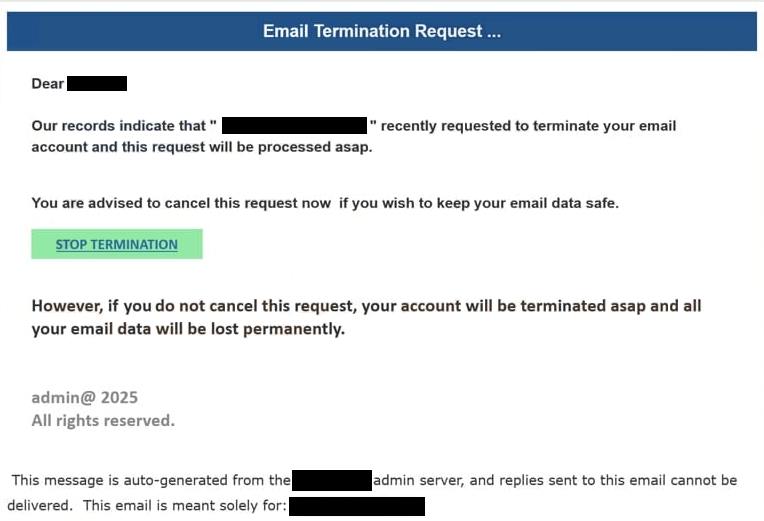
email termination notification screen
Context: Profit, Performance, and the Optics of Layoffs
Corporate results and personnel decisions do not always move in lockstep. A company can report significant profit growth while simultaneously cutting labor costs if management believes the existing structure is misaligned with future priorities. A 95% profit surge—or any claim of a near-doubling in profitability—commands attention because it suggests either an exceptional improvement in operations, a one-time accounting or tax benefit, or an industry tailwind such as accelerating cloud adoption. But optics matter: when those gains are followed by large, rapid layoffs, public perception tilts toward accusations of opportunism or misaligned priorities.

tech company layoffs announcement
Why profits and head count can diverge
There are several structural reasons a company might show high profits while reducing headcount:
- One-time gains: Asset sales, tax adjustments, or accounting reclassifications can inflate a period's net income without expanding the long-term revenue base.
- Automation and platform maturity: As enterprise software firms operationalize cloud platforms, they may require fewer support and implementation staff per customer.
- Strategic reallocation: Firms sometimes pivot resources toward higher-margin businesses—selling hardware or legacy services while investing in cloud and subscription models—triggering workforce realignments.
- Shareholder pressure: Public companies face constant scrutiny to show margin expansion and earnings per share growth, which can incentivize cost reductions even amid healthy top-line numbers.

corporate profit surge chart
The Mechanics and Morality of Mass Terminations by Email
Firing employees en masse by email is a blunt instrument. It is logistically simple—centralized HR systems can trigger notifications once a decision is made—but it is fraught with moral and practical pitfalls. The mode of delivery affects how the action is perceived internally and externally and how quickly affected staff can respond.
Practical consequences for employees
Receiving termination news by email compresses time for questions: employees cannot immediately clarify final pay, healthcare continuation, accrued vacation payouts, or outplacement resources. It can also cause delays in supervisors initiating transitional support. In jurisdictions with notice requirements, how and when these emails are sent can become the focus of legal scrutiny.
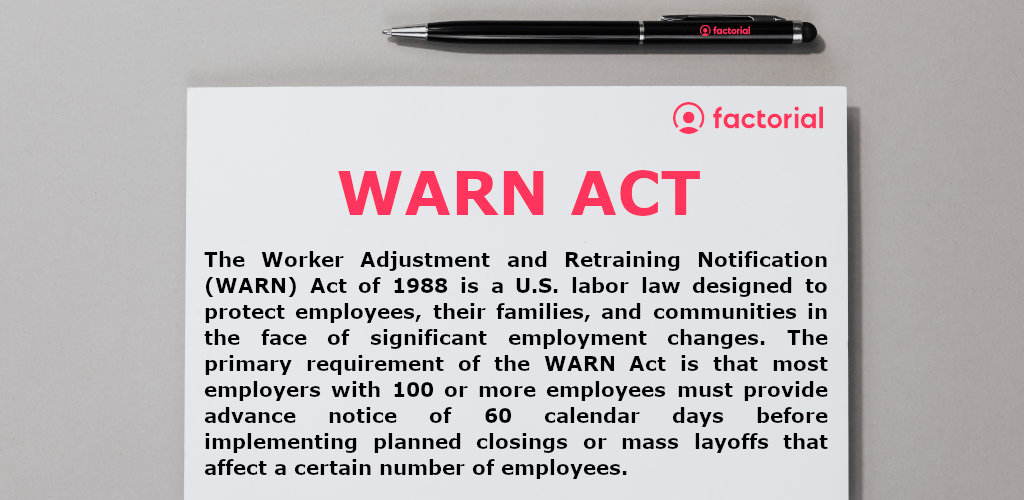
WARN Act legal document
Ethical and cultural fallout
Even when layoffs are defensible from a strategic viewpoint, the manner of execution shapes company culture for years. Impersonal terminations erode trust among remaining staff, reduce morale, and can drive attrition among high performers who judge the environment as insecure or uncompassionate. Customers may also react if product support or relationship teams are disrupted suddenly.
Legal and Regulatory Considerations
In the United States, large-scale layoffs are subject to regulations like the Worker Adjustment and Retraining Notification (WARN) Act, which generally requires 60 days' advance notice for mass layoffs affecting a threshold number of employees. There are exceptions and nuances—plant closing vs. mass layoff definitions, faltering company exceptions, and state-level equivalents—that complicate application. Regardless of the specific rules, sudden email notifications raise questions about compliance, and affected workers may pursue claims if they believe notice or severance obligations were not met.
How companies attempt to limit liability
Organizations frequently layer severance offers, change-of-control arrangements, and release agreements to mitigate legal risk. They also deploy HR and legal teams to create standardized communications and checklists to comply with employment laws across jurisdictions. But legal compliance is only a baseline—the reputational and operational consequences often exceed legal exposure.
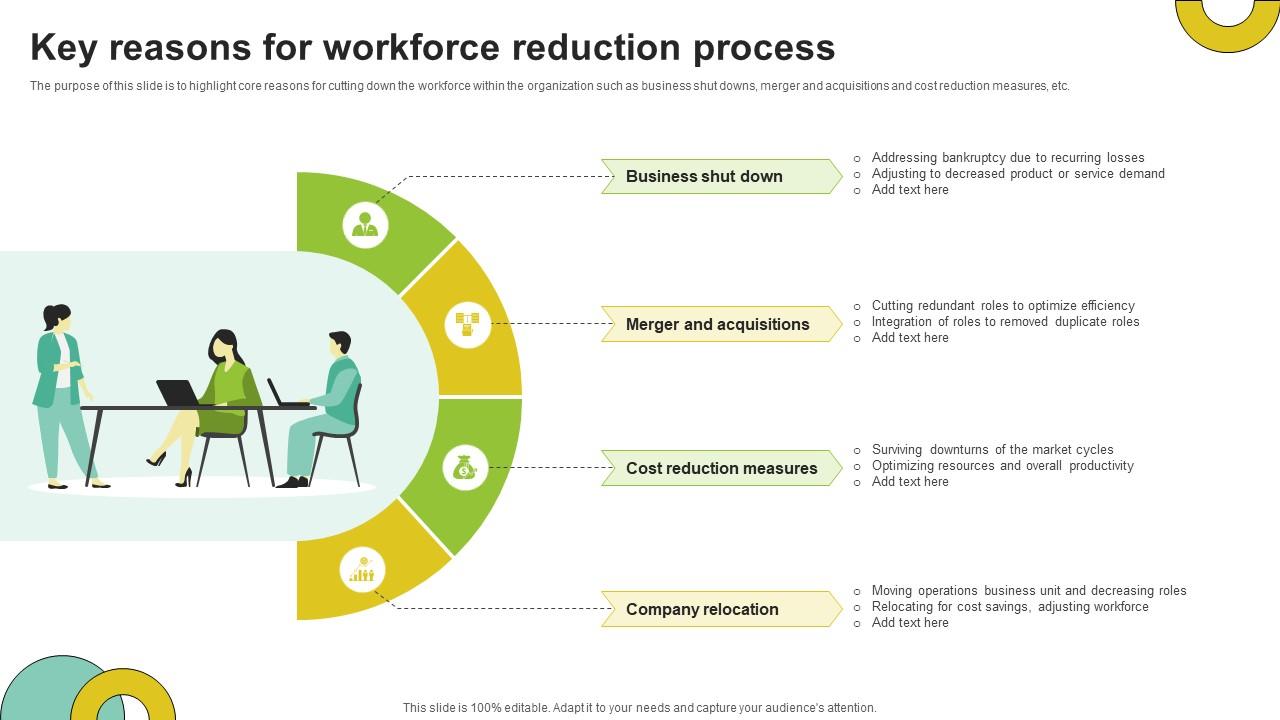
technology workforce reduction meeting
Industry Trend: Tech Job Cuts Are Accelerating — Why Now?
The technology industry has moved through several hiring cycles in recent years: frenetic expansion during boom periods, followed by consolidation and corrections. Factors propelling the current wave of cuts include the maturation of cloud computing, pressure to turn revenue into profits, macroeconomic uncertainty, and the rapid adoption of automation and AI that changes labor needs.
Macro drivers
- Capital discipline: Investors pushed many tech companies to demonstrate profitability after years of growth-at-all-costs strategies.
- AI and automation: New tools boost productivity but can also reduce demand for certain roles, especially repetitive operational positions.
- Product consolidation: As vendors consolidate offerings, duplicate roles across sales, engineering, and support are more likely to be eliminated.
Comparing waves of layoffs
Layoffs are not homogeneous: some are targeted restructurings aimed at overlapping product teams, others are broad cost cuts meant to improve margins. The method—whether voluntary buyouts, staged reductions, or immediate terminations by email—signals different intentions and risk profiles for the business.

cloud computing server infrastructure
Human Cost: What Happens to 30,000 Careers Overnight
Thirty thousand people losing their jobs in a compressed period is not an abstract statistic; it is tens of thousands of households, benefits relationships, and professional networks suddenly disrupted. The immediate consequences include income shock, loss of health insurance, and a scramble to find new roles in a competitive market. For senior employees, the reputational hit can be uneven: some will be rehired quickly at other firms, while others—particularly those specialized in now-deprioritized legacy systems—may need to reskill.
Support that makes a difference
Companies with responsible offboarding programs typically offer a combination of severance pay, continued healthcare coverage, job placement services, access to training, and time for executives to transition accounts to new contacts. These steps do not erase the disruption, but they materially improve outcomes for affected workers.
What This Means for Oracle's Business Trajectory
For a company in enterprise software and cloud infrastructure, cutting staff can have mixed strategic effects. Short-term improvements to margins may satisfy investors, especially if capital allocation trends toward research, cloud expansion, or acquisitions. But the trade-offs include potential slowdowns in customer support, longer product development cycles, increased technical debt, and higher recruiting costs when growth resumes.
Talent and product risks
Removing experienced teams risks losing institutional knowledge. For customers on long-term implementations, the churn of people supporting those projects can interrupt deployments and erode trust. For Oracle specifically—known for a broad portfolio of enterprise systems and its cloud positioning—sudden workforce reductions must be managed carefully to avoid service degradation.
Signals Investors and Competitors Will Watch
Investors parse layoffs for clues about strategy: are cuts surgical or wholesale? Are they shifting investment into higher-growth segments like AI-enabled cloud services? Competitors watch hiring freezes and rescues as opportunities to recruit talent and pitch customers alternatives. The broader market reads these moves as part of an evolving playbook of capital discipline and labor optimization.
What to watch next
- Severance and notice details: The scale of pay, benefits continuation, and outplacement packages indicate whether the move was purely cost-driven or intended to be softer on employees.
- Customer retention metrics: Renewals and support complaints will reveal whether the cuts hit service delivery.
- Hiring patterns: Rapid re-hiring for cloud or AI roles suggests a reallocation of capital rather than a reduction in ambition.
Advice for Affected Employees and Managers
If you are affected, prioritize immediate practical steps: confirm your termination date in writing, request pay and benefits details, and ask for documentation of any severance offer. For managers who remain, communicate transparently to rebuild trust and outline what the company will do to support remaining employees.
Practical checklist for laid-off employees
- Document everything: Save emails, severance offers, pay stubs, and benefit summaries.
- Understand your rights: Review any required notice periods under local law and the terms of your employment agreement.
- Leverage networks: Reach out to former colleagues, mentors, and recruiters immediately.
- Prioritize finances: Make a short-term budget and evaluate COBRA or local health insurance options.
Broader Implications for the Tech Ecosystem
Large layoffs at a major enterprise player ripple through the ecosystem. Vendors that supply services to the firm may feel pressure, smaller software shops may see an influx of talent and customers, and local economies that rely on high-tech wages can experience measurable effects. At a societal level, repeated cycles of mass hiring and firing contribute to labor market uncertainty and pressure on retraining systems.
Policy conversations this sparks
Events like this renew debates about strengthening worker protections, incentivizing long-term investments in communities, and rethinking how companies report and use metrics tied to employee decisions. Some policy proposals floating in public debate include more granular disclosure of workforce reductions in quarterly reports and incentives for companies that invest in reskilling programs as part of major reorganizations.
Conclusion: Reading the Signals Beyond the Headline
Between a profit surge and mass layoffs there is a story not just of numbers, but of priorities. Companies that choose to cut workforce quickly to protect margins may do well in the next earnings cycle—but they risk longer-term costs in innovation, customer relationships, and talent. For policymakers, investors, and employees, the imperative is to look beyond headline metrics and examine how decisions are executed and who bears their consequences.
Final reflection
One email can sever a salary and benefits; the response to that rupture—from severance and retraining to transparent governance—determines whether the action was an isolated cost-cutting maneuver or part of a credible, humane strategy to reposition a business for the future.
- Profit increases do not preclude workforce reductions; the two can coexist for strategic and accounting reasons.
- Mass terminations by email are efficient but can cause legal risk, cultural damage, and customer disruption.
- Employees should document, review benefits, and leverage networks quickly; companies should offer meaningful offboarding support.
- Investors and competitors will watch severance details, customer retention, and subsequent hiring to infer strategic intent.
Reporting and analysis reflect structural and human consequences of major corporate workforce actions; readers affected by layoffs should consult legal or HR professionals for personal advice.