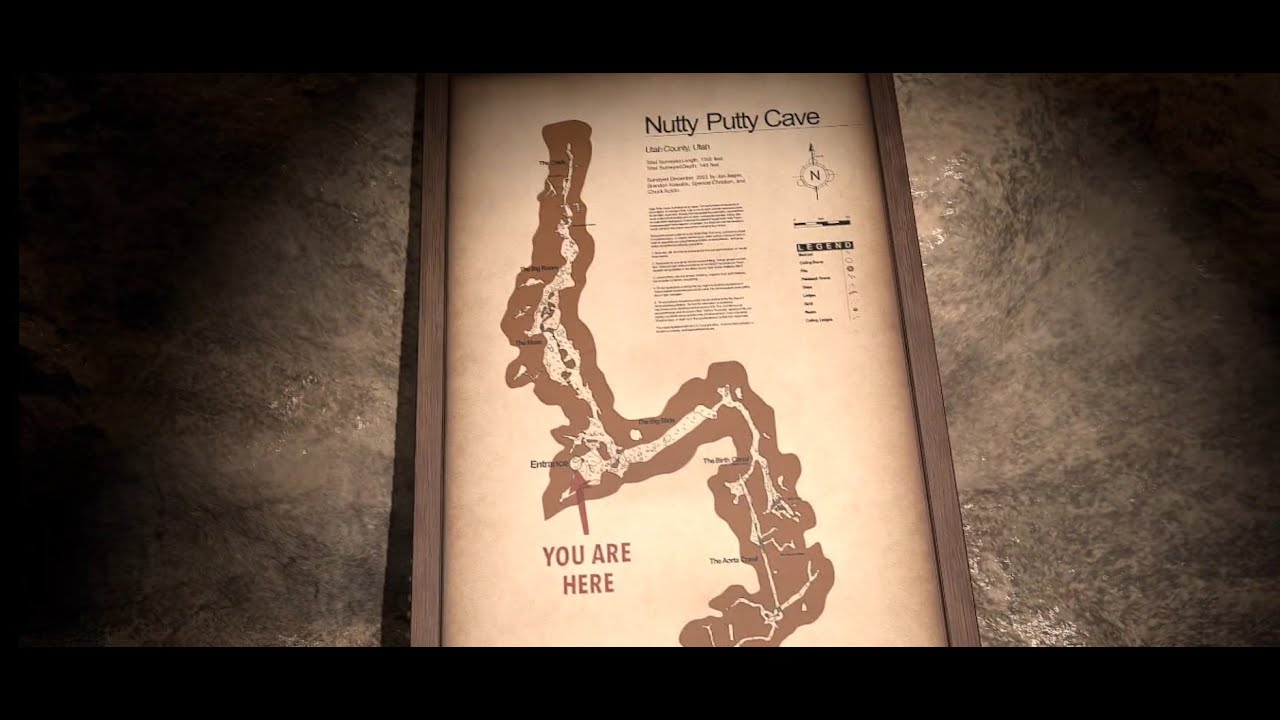
Nutty Putty Cave VR Reconstruction Reveals Final Spot
The image that became emblematic of a rescue operation gone tragically wrong was not a photograph but a memory lodged in the minds of rescuers, family members, and cavers: a tiny, dark throat of stone where a young man slipped beyond reach. That memory has been given a new kind of life — an exacting, navigable reconstruction in virtual reality that recreates the narrow world where John Edward Jones became trapped. The reconstruction does not change the facts of the past, but it does change how we see them: anatomically precise geometry, textured walls, and measured distances allow experts and the public to understand, with granular clarity, what that passage was like and why extraction proved impossible.
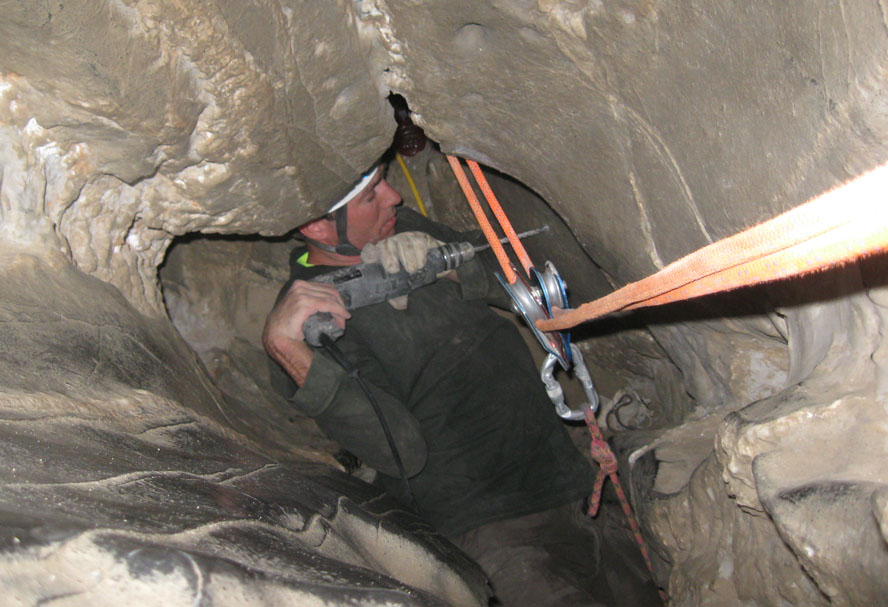
John Edward Jones Nutty Putty Cave
A Brief History: Nutty Putty and a Community Marked by Loss
Nutty Putty Cave, a karst feature carved into the limestone and gypsum of central Utah, was a magnet for adventurous cavers because of its sinuous, claustrophobic passages. For decades it was a training ground for tight-passage techniques and a place where people tested their tolerance for confined spaces. For many it was also a reminder of the limits of human maneuverability in subterranean environments. The cave's name carried an odd charm; the experience of entering narrow chambers, squeezing through necks of stone, and emerging on the other side was part accomplishment and part rite of passage.
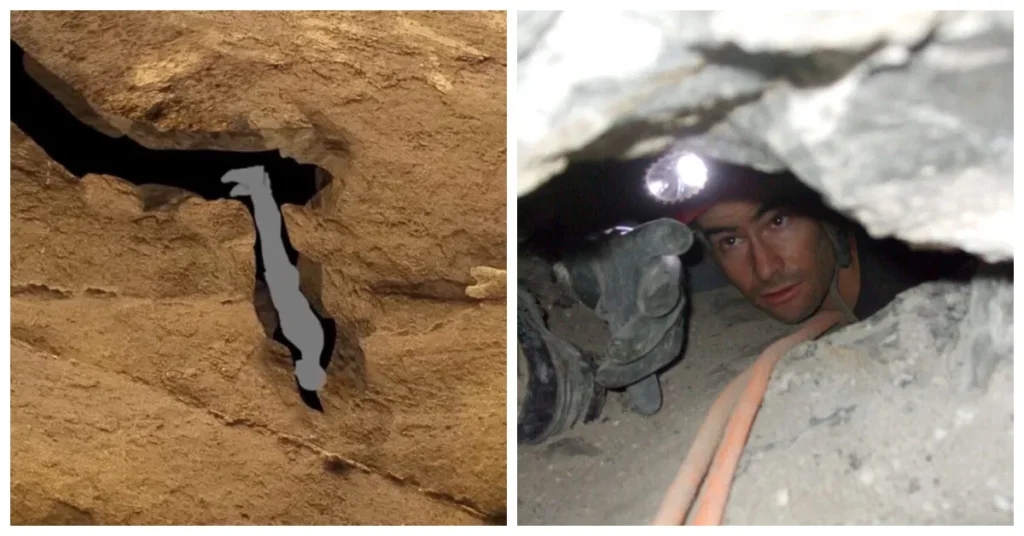
Nutty Putty Cave tight passage
When John Edward Jones became trapped, the response galvanized an enormous rescue effort. Volunteers, trained cave rescuers, hospital staff, and equipment specialists converged to attempt an extraction. The story reverberated far beyond the cave mouth because it exposed a deeply uncomfortable truth: in certain conditions, modern tools and human will are not always enough.
Why Reconstruct the Passage in Virtual Reality?
On the surface, virtual reconstructions can seem like an exercise in technological virtuosity. But the project that recreated Jones's final location was motivated by multiple practical and ethical goals. First, there was an educational imperative: to teach rescuers and cavers about spatial constraints that can defeat even the most coordinated operations. Second, there was a technical one: to demonstrate how modern mapping techniques—photogrammetry, structured-light scanning, and lidar—can document inaccessible spaces with millimeter-scale precision. Third, and perhaps most sensitively, there was a memorial purpose: creating a non-invasive, virtual representation that allows families and the public to observe and reflect without disturbing a closed, sacred site.
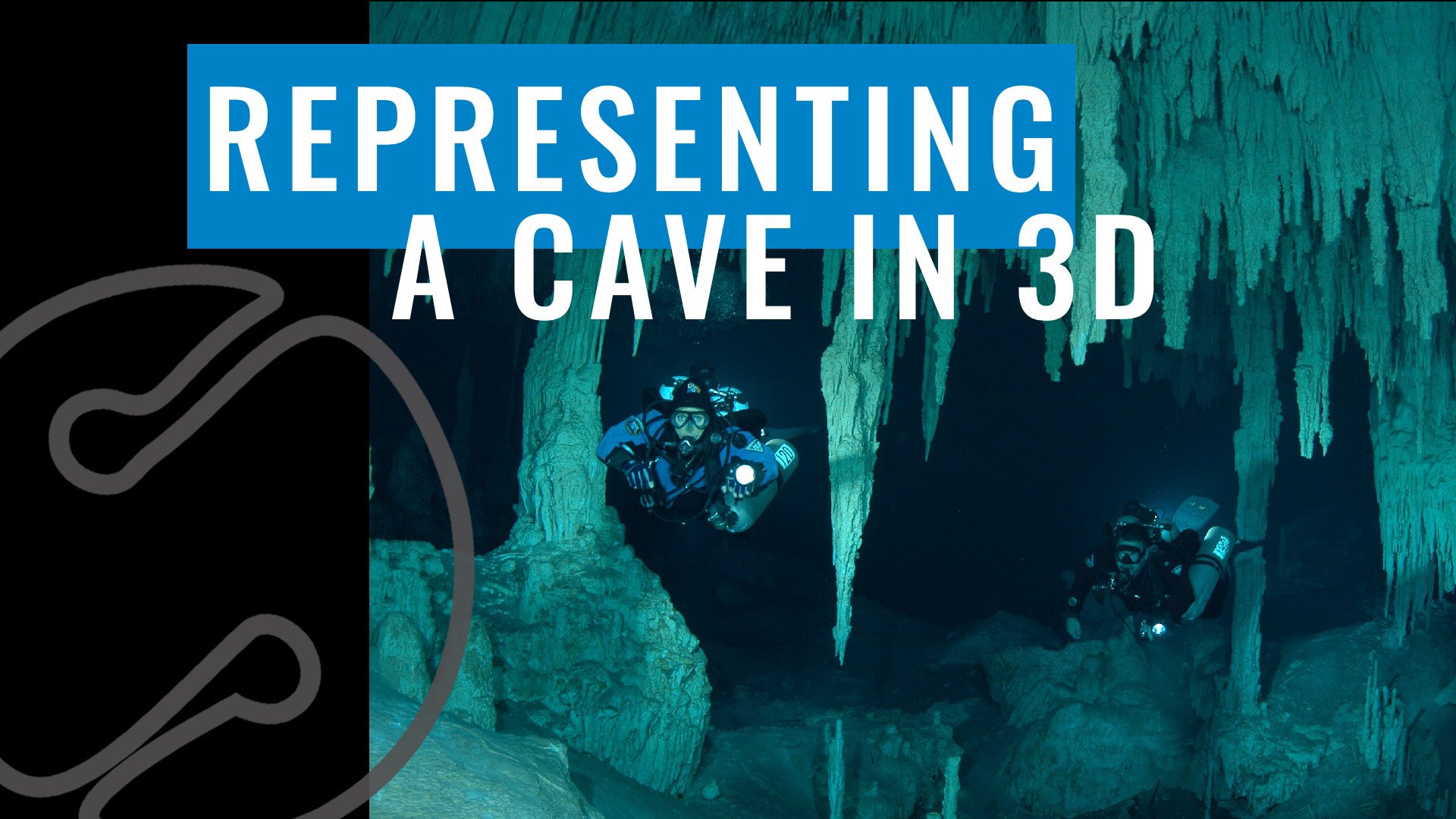
VR cave mapping photogrammetry
Technical Foundations: How the Reconstruction Was Built
The VR model combines several data-capture methods. Photogrammetry—taking hundreds or thousands of photographs from different vantage points and mathematically reconstructing surfaces—produces highly detailed textures. When paired with lidar scans and structured-light surveys that record exact distances, the result is a mesh with real-world dimensions and surface fidelity.
Cave rescue VR simulation
Importantly, the team working on the reconstruction had to reconcile scanning limitations with the cave’s physical reality. Tight squeezes prevent bulky scanning rigs from reaching some points, so long-reach probes with miniature sensors and remote-operated cameras were used. Those devices created reference frames: fixed coordinate points that allowed individual scans to be stitched together. The mesh was then cleaned, decimated to reasonable polygon counts for VR performance, and textured with color data derived from the photogrammetry step. The final output was imported into a VR engine where lighting, collision, and navigation logic were tuned to replicate how a person would perceive and move through the space.
Balancing Authenticity and Sensitivity
Reconstructing a site of death raises immediate ethical questions. How much fidelity is appropriate? Should the model be publicly available? Who decides what is shown and how? The project leaders opted for a tiered access approach. A public-facing version generalized some details and focused on educational objectives: passage widths, angles, and distances were visible, but the model avoided sensational presentation. A restricted research version retained full fidelity for forensic study and training but required permission for access, reflecting a respect for the privacy of those affected.
"Technology can illuminate, but it must also honor."
What the VR Reconstruction Revealed
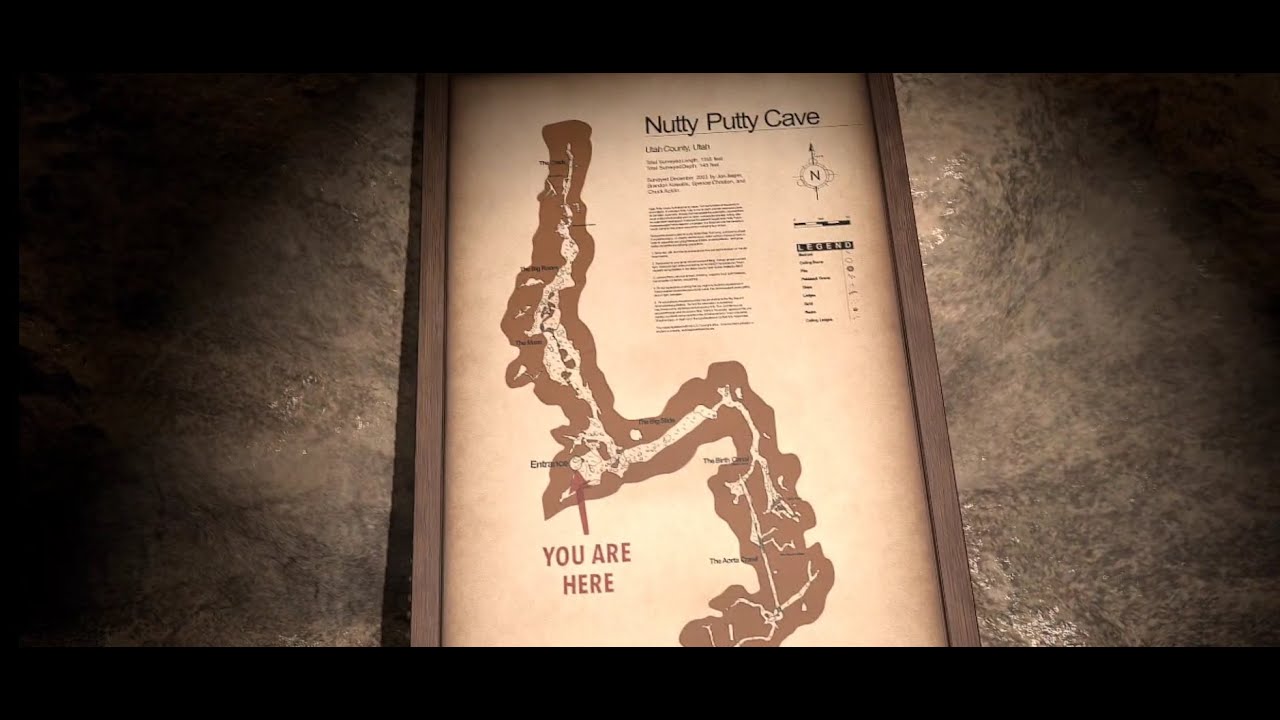
At the heart of the VR experience is a sober, stark demonstration of constraint. Users can measure the exact width of the squeeze, the angle of the turns, and the distances between anchor points. The models revealed that the section where Jones became immobilized featured a combination of features that compounded the difficulty: a constricting cross-section that tightened within a curve, angled bedding planes that shifted body orientation unpredictably, and ceiling nodes that prevented leverage or extension of rescue devices.
Nutty Putty Cave closure sign
Beyond the immediate geometry, the VR environment also exposed secondary complications. For example, small irregularities and nubs of rock that seem trivial at waist height can become critical points that catch gear or pry contraptions away from their intended path. Illumination in the VR model, tuned to realistic headlamp output, made it plain why visibility hampered attempts to assess and manipulate the trapped person’s position.
Lessons for Search and Rescue Professionals
Rescue teams gained several concrete takeaways from the reconstruction. First, measurement matters: precise spatial mapping allows planners to model strategies and predict whether an extraction is physically possible without causing further harm. Second, simulations enable rehearsal: teams can try pulley systems, angle changes, and patient repositioning inside VR before attempting them in the field. Third, psychological factors become clearer; rescuers can experience, in a controlled environment, the claustrophobic stresses that influence decision-making under duress.
These insights do not produce a silver bullet. They do, however, shift rescue work from improvisation toward informed design. Equipment developers can test whether specialized devices will function in the narrow geometry the way manufacturers claim. Training institutions can integrate the model into curricula, exposing students to realistic, constrained scenarios they might otherwise only read about.
Broader Technological Implications
The Nutty Putty VR reconstruction is part of a larger trend: immersive documentation of inaccessible or sensitive spaces using converging capture technologies. Archaeologists map tombs, heritage conservators preserve fragile interiors, and industrial inspectors scan pipelines where humans cannot safely enter. Each application shares a common logic: capture once, analyze many times. The digital twin becomes a durable artifact for investigation and education.
Because VR models are interactive, they also democratize understanding. A layperson can step through a passage and appreciate the constraints rather than rely on a narrator’s description. That accessibility raises new responsibilities about how traumatic sites are represented: preserving dignity while providing clarity.
Ethics, Memorialization, and the Family
When technological capacity meets human grief, consent becomes central. The family of John Edward Jones and members of the caving community were consulted during the project. Their perspectives shaped the access policy and the decision to emphasize structural learning over sensational detail. For many families, a virtual model offers a way to revisit a site they can no longer physically access, which can be a form of closure. For others, any recreation is painful. The project team’s governance model respected those differences and limited distribution accordingly.
Memorialization in digital form also raises questions about permanence and control. A virtual model can persist indefinitely, everywhere and instantly accessible. That permanence requires robust stewardship and clear policies about use, reproduction, and educational framing.
Limitations and Responsible Use
No reconstruction, no matter how precise, can fully substitute for direct field assessment or the lived realities of being inside a space. Sensor noise, occluded regions, and the compromises required to render interactive environments mean that VR should be treated as a robust supplement, not an absolute authority.
Moreover, there is the danger of technological determinism: assuming that a model's clarity resolves moral or operational ambiguity. In complex rescue situations, human judgment, medical realities, and unforeseeable structural quirks matter as much as dimensions on a screen.
"The model clarified the space; the moral questions remained human-sized."
Policy and Practice: What Changes Now?
Agencies that oversee cave access and public safety have several practical policy options informed by the reconstruction. First, risk assessments can incorporate measured geometry thresholds: if a passage falls below a specified width or features certain compounded constrictions, it can be flagged for restricted access. Second, permit systems can require informed consent and explicit safety briefings for cavers planning to enter high-risk passages. Third, training centers can invest in VR modules that allow both volunteers and professionals to practice extraction strategies in a zero-risk environment.
In addition to these operational shifts, the reconstruction demonstrates a model for collaboration: engineers, ethicists, rescuers, and family representatives working together to determine access and presentation. That cross-disciplinary governance can serve as a template for other sensitive sites.
- Educational clarity: precise visualization of spatial constraints
- Training utility: safe rehearsal for responders
- Non-invasive documentation: preserves site without physical disturbance
- Ethical complexity: risk of causing harm to families
- False certainty: overreliance on models
- Access control: challenges in governing distribution
Voices from the Field
Rescue professionals who have used the VR reconstruction describe it as disorienting in the best sense: it upends assumptions. One veteran rescuer noted that once a trainee walked the virtual squeeze, their appreciation for small measurement differences became visceral. A caving instructor said the model reframed risk conversations — when students can see the geometry before they enter, their choices change.
Family members and community voices expressed mixed emotions. Some welcomed the reconstruction as a non-invasive way to understand and remember; others worried that any public depiction risked reopening wounds. The project's stewards worked to honor those voices by establishing transparent rules and maintaining an emphasis on education rather than spectacle.
Designing Responsible VR Experiences for Sensitive Sites
Best practices emerge from this project that apply beyond Nutty Putty. First, adopt a consent-first policy: consult stakeholders from the outset. Second, implement tiered access so researchers can work with high-fidelity data while the public sees a contextualized, sensitive version. Third, pair models with interpretative frameworks: explanatory narration, expert commentary, and trigger warnings that prepare viewers for traumatic content.
Finally, maintain a plan for long-term stewardship. Who curates the model? Who updates it as new data or ethical standards evolve? Answering those questions avoids the digital equivalent of neglect.
Conclusion: Technology as Witness, Not Replacement
The virtual reconstruction of Nutty Putty Cave's claustrophobic passage transforms a painful story into an instrument for learning. It sharpens our understanding of physical reality in ways that words cannot: precise widths, awkward angles, and invisible impediments become visible and measurable. Yet technology does not resolve the moral questions that follow a rescue tragedy. Consent, sensitivity, and governance determine whether a digital twin serves healing or causes harm.
For rescuers and training professionals, the model is already proving its worth: better planning, safer rehearsal, and clearer design requirements for equipment tailored to narrow spaces. For the public, it provides a window into the material facts of a difficult event without necessitating further disturbance of a closed site. For families, it offers both solace and the risk of renewed grief — a reminder that digital remembrance is not one-size-fits-all.
Key Takeaways
- VR reconstructions can document inaccessible, sensitive spaces without physical disturbance.
- Accurate geometry and lighting reveal practical constraints that affect rescue feasibility.
- Ethical governance, family consent, and tiered access are essential for responsible use.
- These models are powerful training tools but should not replace field judgment and medical considerations.
Final Reflection
When a space is too small to save someone, understanding that space becomes a solemn duty. The Nutty Putty VR reconstruction does not change what happened to John Edward Jones, but it does broaden our capacity to learn from it. If embraced thoughtfully, technology can help prevent future tragedies by turning a painful memory into a lasting lesson — one measured in millimeters, narrated with care, and governed by respect.