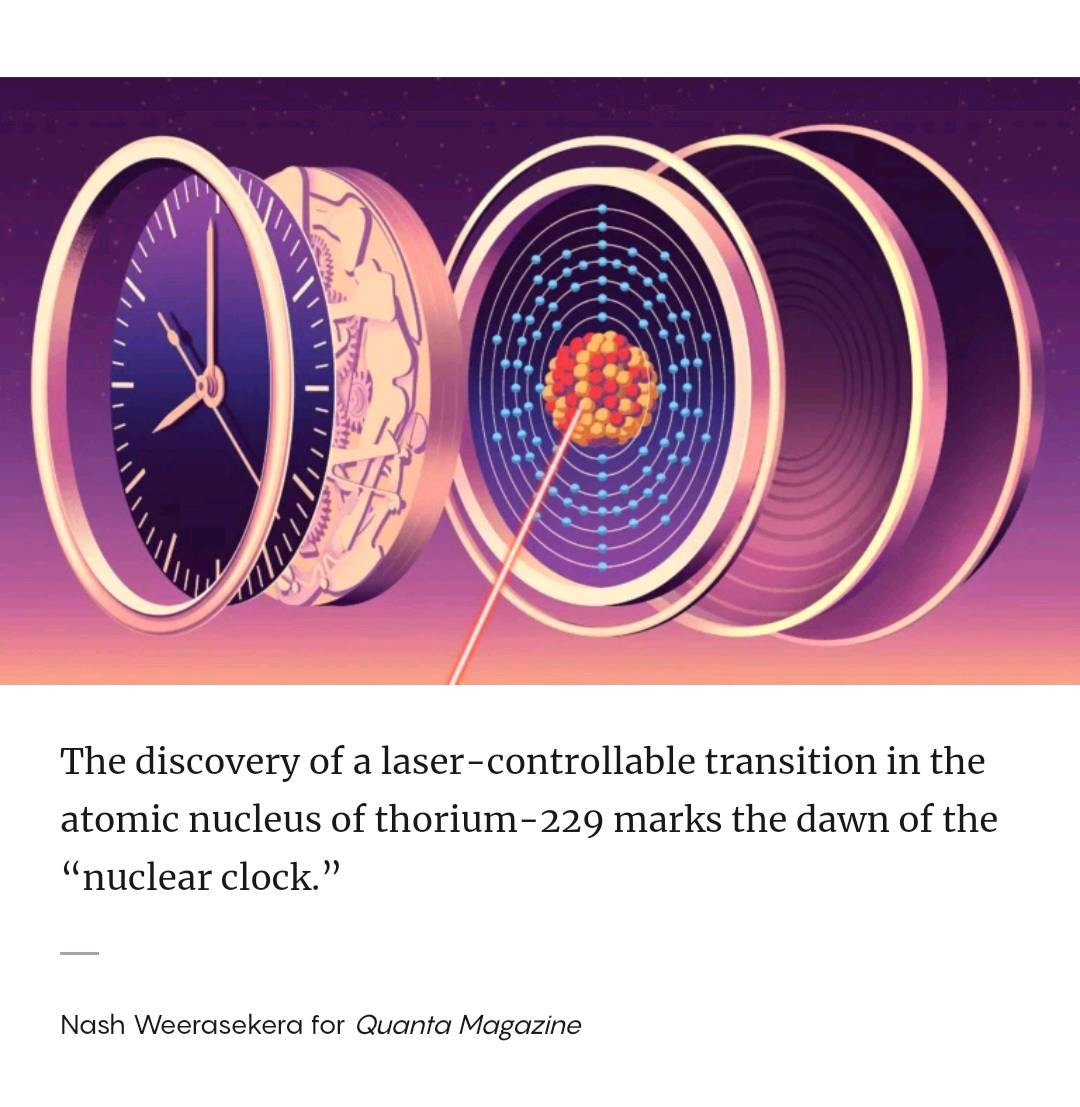
Nuclear Clocks Poised to Eclipse Atomic Timekeeping
The history of precise timekeeping is a series of revolutions. Mechanical escapements gave way to quartz oscillators, which in turn yielded control to atomic clocks whose hyperfine and electronic transitions define the second with breathtaking accuracy. Now, a quiet but profound advance is gathering momentum: the nuclear clock. By locking lasers to energy levels inside atomic nuclei rather than to the motion of electrons, scientists hope to build clocks that are less susceptible to environmental noise and capable of testing physics at previously unreachable scales. This article walks through what a nuclear clock is, why it matters, how scientists are building them, the remaining engineering challenges, and the real-world consequences if they succeed.
What Is a Nuclear Clock?
A nuclear clock measures time using oscillations tied to a nuclear transition—the tiny energy difference between two states of an atomic nucleus. Atomic clocks today use transitions between electronic energy levels or hyperfine states of atoms such as cesium, rubidium, or ytterbium. Nuclear energy levels are typically millions of times higher than electronic ones, but in a rare and useful exception certain nuclei possess an excited state with an unusually low energy gap that can be accessed by optical or near-optical photons. The most prominent candidate is thorium-229 (Th-229), whose isomeric state lies at an energy low enough that it can, in principle, be addressed with lasers.
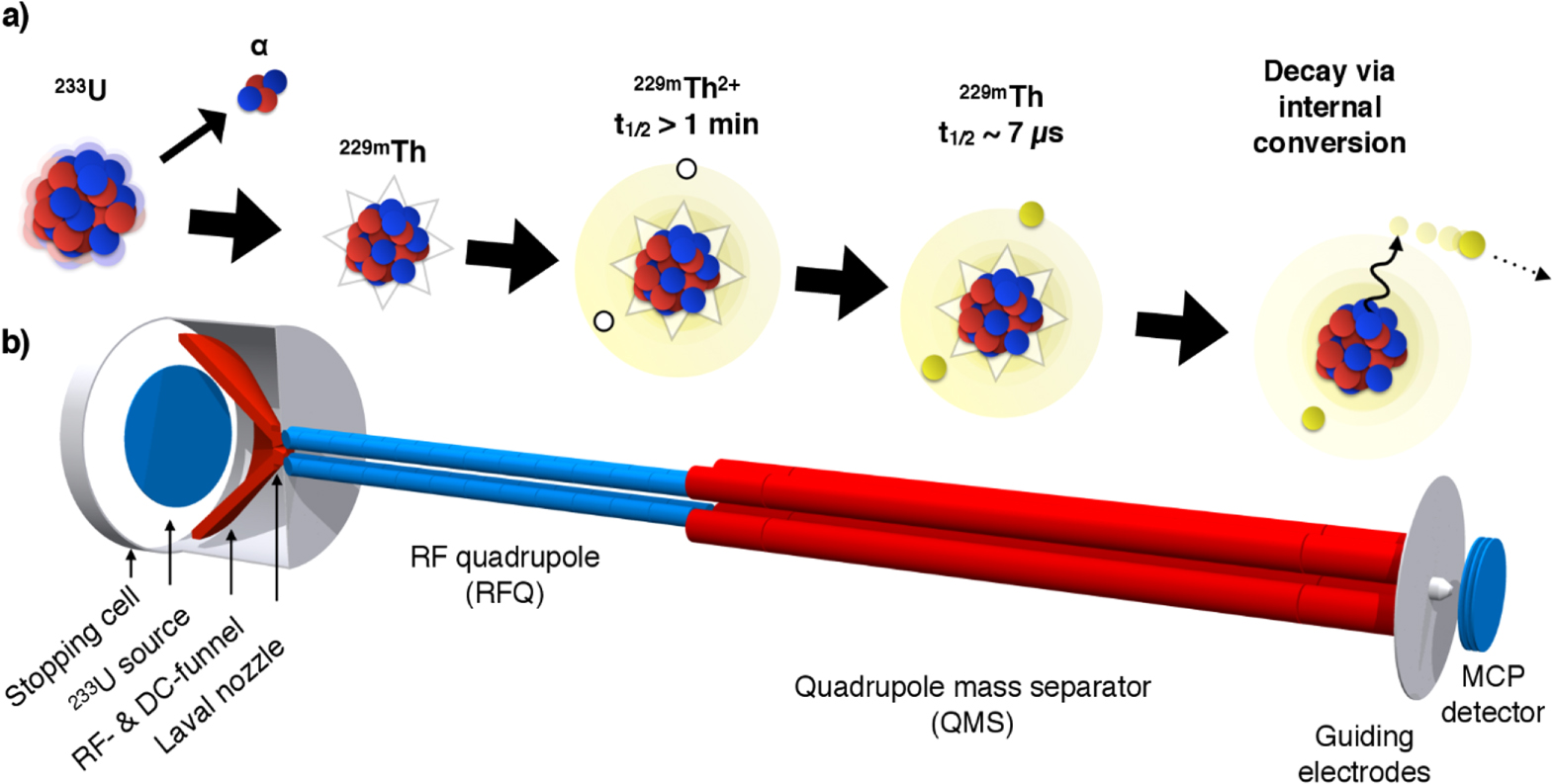
thorium-229 nuclear isomer
Why the nucleus?
There are two core reasons nuclear transitions are attractive for timekeeping:
- Intrinsic isolation. Nuclei are tiny and deeply bound; they interact much less with external electric and magnetic fields than the outer electrons that determine atomic transitions. That makes nuclear transitions intrinsically less sensitive to environmental perturbations that cause frequency shifts and noise.
- Higher effective quality factor. The combination of narrow natural linewidths and high transition energies yields a higher quality factor (Q) for oscillation, in principle enabling better fractional stability—think of a pendulum that swings more persistently and less affected by friction.
Put simply: because the nucleus sits under the electron cloud and is more immune to disturbances outside the atom, a clock tied to a nuclear transition can, in theory, keep time more precisely and with fewer systematic shifts than the best atomic clocks.
A clock that measures the heartbeat of the nucleus could sharpen our view of the universe and redefine how humanity keeps time.
How a Nuclear Clock Works
Constructing a nuclear clock involves several interlocking components. First, you need a nucleus with an accessible low-energy excited state. Second, you must prepare atoms or ions that contain that nucleus and hold them nearly motionless while probing the transition with light. Third, you need lasers at the right wavelength and frequency stability to resolve and lock to the nuclear resonance. Finally, frequency combs and electronics translate that optical frequency into a usable clock signal.
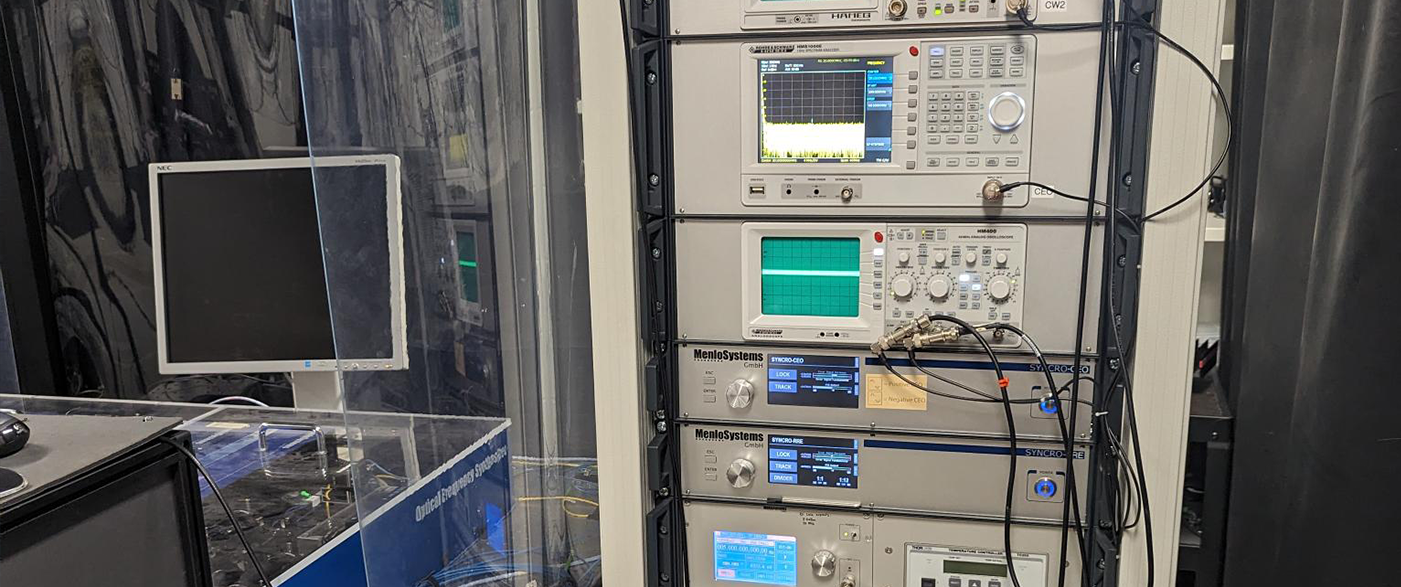
frequency comb optics laboratory
Primary steps in operation
- State preparation: Trap and cool ions or embed nuclei in a crystal lattice to reduce Doppler and motion-induced broadening.
- Interrogation: Illuminate the sample with a laser tuned to the nuclear transition and detect whether the nucleus absorbs or emits the expected photon—this is the timing tick.
- Feedback: Compare the laser frequency to the resonance and use feedback loops to stabilize the laser so that it follows the nuclear transition.
- Readout: Convert the stabilized optical frequency into microwave signals or timing pulses via frequency combs and photonics for use in electronics and applications.
Why Nuclear Clocks Could Surpass Atomic Clocks
In laboratory demonstrations, state-of-the-art optical atomic clocks already achieve fractional uncertainties approaching 10^-18 or better. Nuclear clocks are expected to push that ceiling even lower. The main potential advantages include:
- Reduced sensitivity to fields: Nuclear transition frequencies are far less perturbed by stray electric and magnetic fields that plague electronic transitions.
- Lower systematic shifts: Factors like blackbody radiation shifts and Stark shifts have a dramatically smaller effect on nuclear energy levels.
- Improved long-term stability: Because nuclei provide a more immutable reference, clocks based on them could show less drift over months and years.
These improvements matter not just for making a "more precise" clock on paper. They open new experimental windows: detecting tiny changes in fundamental constants, mapping gravitational potential with centimeter-level precision via relativistic redshift, and creating time networks so stable they can spot the faint fingerprints of passing gravitational waves or exotic dark matter couplings.
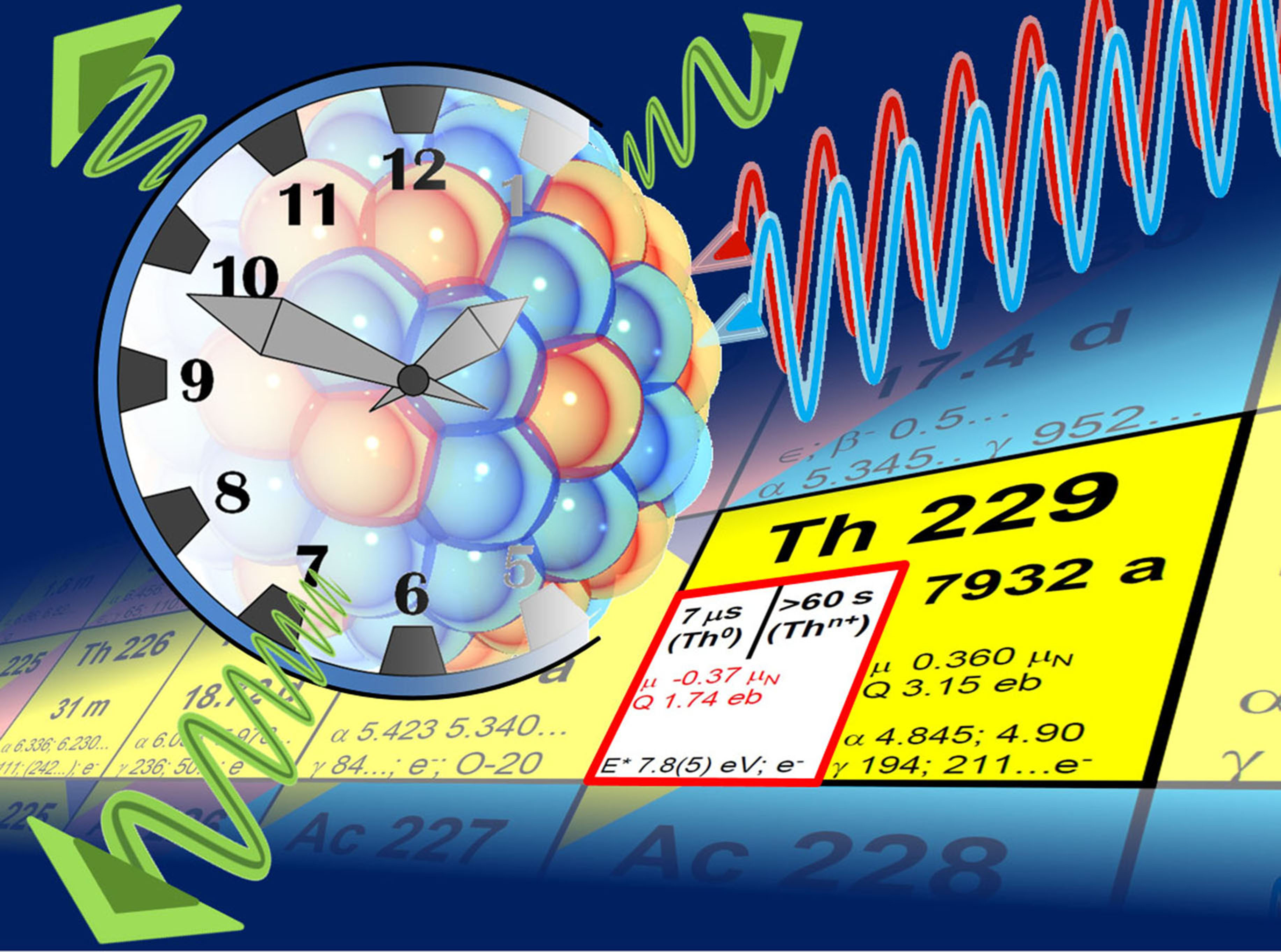
atomic clock comparison nuclear
Practical Challenges and Roadblocks
No breakthrough comes without hard engineering. Nuclear clocks confront a series of technical challenges that are different in flavor from those solved for atomic clocks.
Laser technology and wavelength
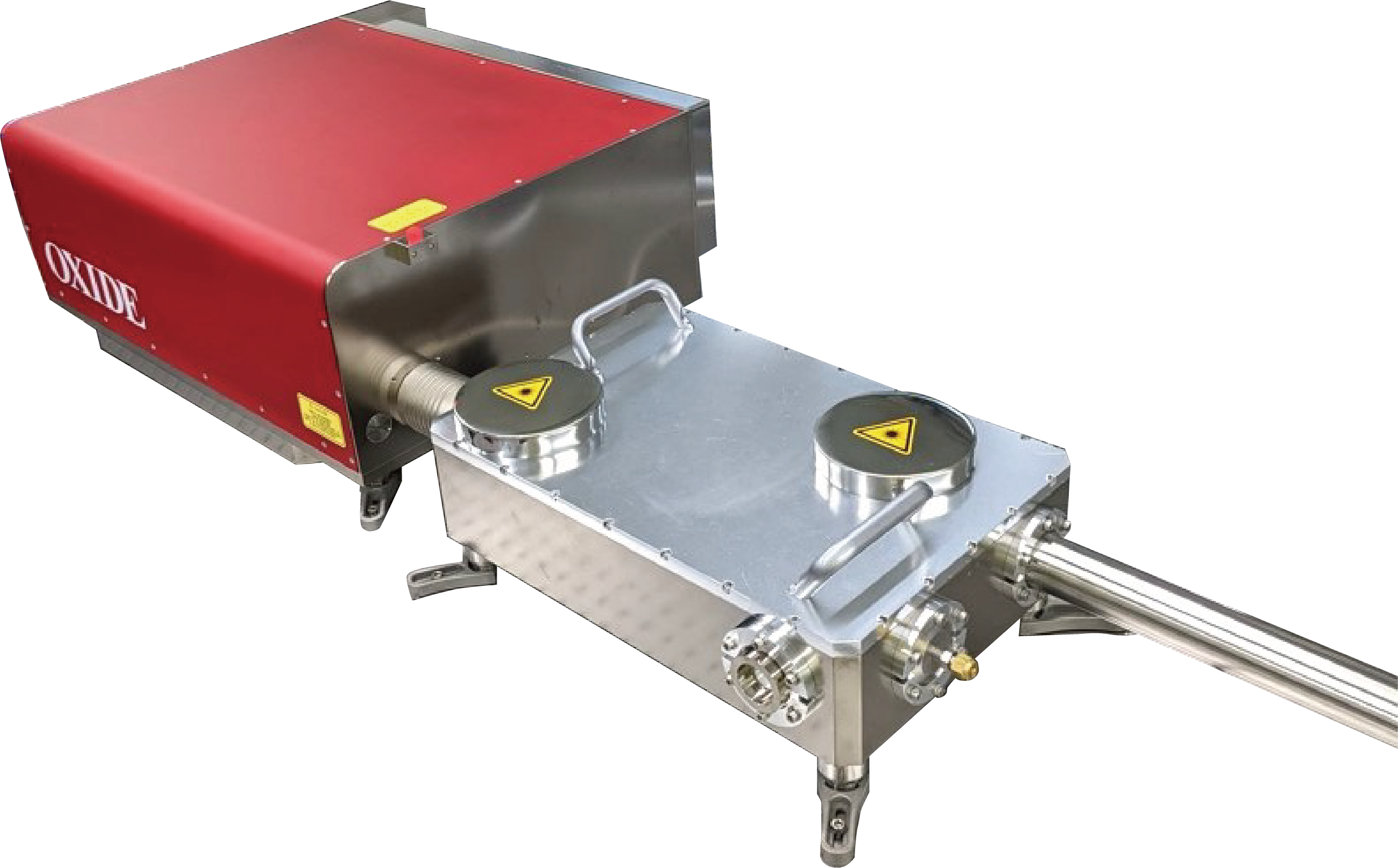
Accessing nuclear transitions can require light in the vacuum-ultraviolet (VUV) or even more demanding spectral regions. Generating exceptionally narrow-linewidth, high-power, and frequency-stable lasers at those wavelengths is nontrivial. Advances in nonlinear optics, high harmonic generation, and VUV frequency stabilization are essential to interrogate nuclear resonances cleanly.
vacuum ultraviolet laser equipment
Preparation and detection
Trapping and cooling ions containing an excited nucleus is feasible but requires complex ion-trap designs and sympathetic cooling schemes. Solid-state approaches—embedding thorium in a crystal host—simplify some aspects of scaling but introduce inhomogeneous broadening and host-material interactions that must be understood and minimized.
Radioactivity and safety handling
Although candidate isotopes like thorium-229 are only weakly radioactive at the small quantities used in lab clocks, laboratories still must adhere to radiological safety protocols. That adds layers of complexity to commercialization and field deployment that will need careful regulation and engineering workarounds.
Reference frame and environmental control
Atomic clocks succeed because experimentalists have learned to eliminate or accurately model every tiny systematic effect. Nuclear clocks will require the same painstaking environmental controls—temperature, stray fields, vibration—and new models to account for any residual coupling between nuclear states and the surroundings.
Possible Architectures: Ion vs. Solid-State
There are two broad approaches under exploration.
Single-ion nuclear clocks
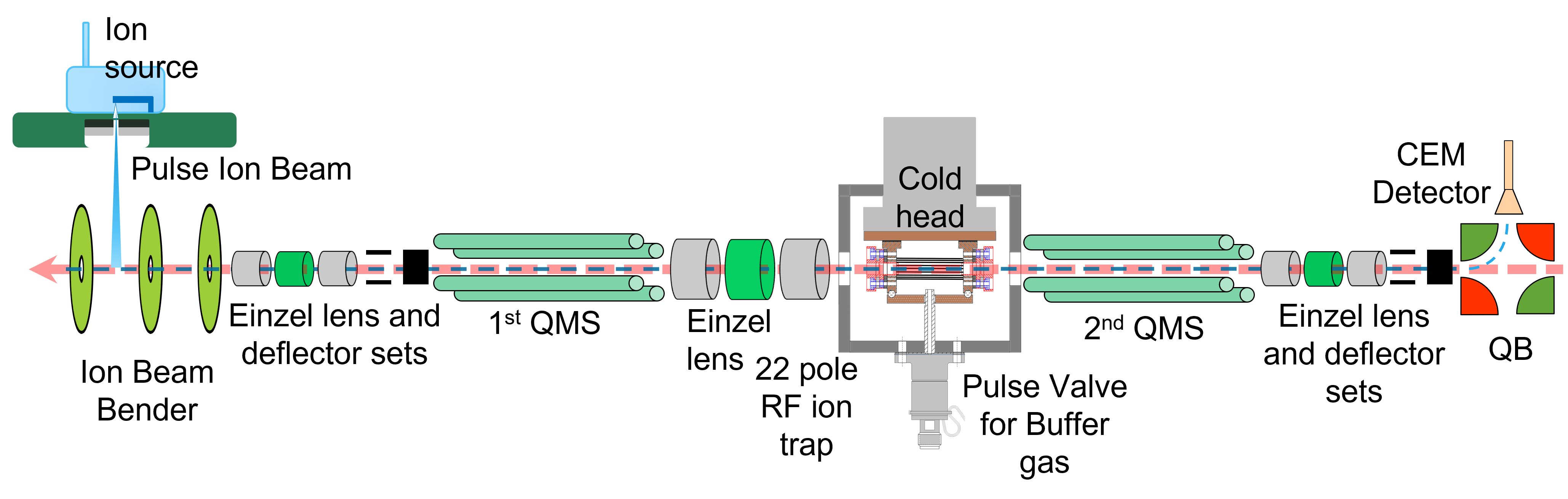
These mimic modern optical ion clocks but replace the electronic reference with a nuclear transition in a trapped ion. Advantages include excellent environmental control and well-developed ion-trap technology. The primary drawback is signal strength: single-nucleus probes require long interrogation times and exquisite detection sensitivity.
single ion trap laboratory
Solid-state nuclear clocks
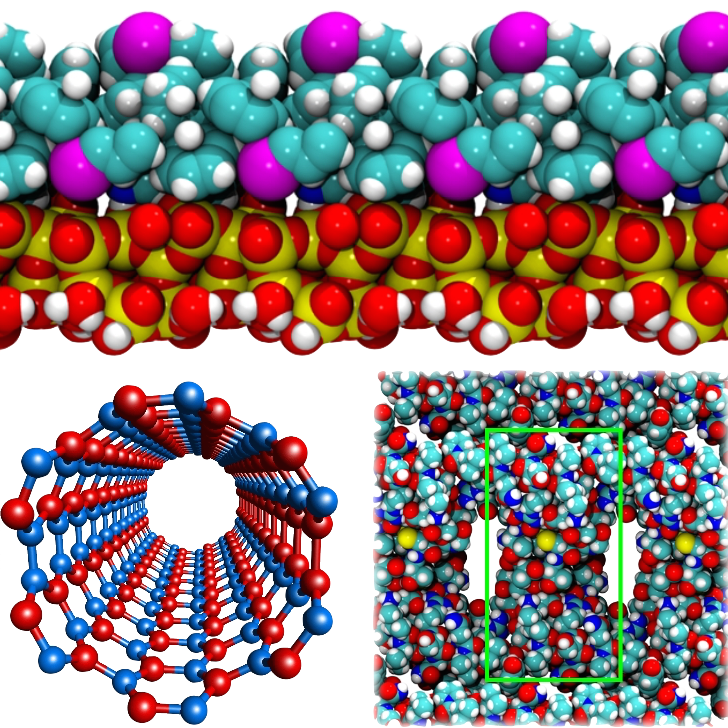
Embedding many nuclei in a crystalline host promises stronger signal and easier scaling. However, the host lattice can shift and broaden the transition frequency, so selecting suitable materials and engineering the lattice environment are active research areas.
solid-state crystal thorium host
| Feature | Ion Nuclear Clock | Solid-State Nuclear Clock |
|---|---|---|
| Signal strength | Low (single or few ions) | High (many nuclei) |
| Environmental isolation | Excellent | Challenging (host effects) |
| Scalability | Complex and modular | Potentially scalable |
Applications That Could Change
If nuclear clocks achieve their promised performance, a raft of technologies and science disciplines would feel the impact.
- Redefining the second and time standards. Metrology agencies could adopt nuclear references for the international second or for supplementary standards with lower systematic uncertainty.
- Geodesy and Earth science. Improved clocks can measure gravitational potential differences (relativistic redshift) with centimeter-level height sensitivity across continents—revolutionizing sea-level studies, hydrology, and crustal motion monitoring.
- Navigation and communications. Satellite navigation systems like GPS depend on ultra-precise clocks. Nuclear clocks could reduce navigation errors or enable new formations of distributed timing networks.
- Tests of fundamental physics. Ultra-stable clocks are among the best tools to search for temporal variation of fundamental constants, dark matter couplings, or violations of local position invariance and Lorentz symmetry.
- Timing for large-scale physics experiments. Particle accelerators, very long baseline interferometry, and gravitational-wave networks could all benefit from a new tier of timing precision.

gravitational potential mapping geodesy
The Timeline: When Might Nuclear Clocks Go Mainstream?
Predicting a timetable is hard: each step depends on solving discrete technical problems—accurate determination of the transition energy, lasers that operate where needed, and packaging that meets safety and robustness requirements. Reasonable scenarios discussed in the field range from a decade for robust laboratory prototypes to multiple decades for routine commercial and space deployment. In practice, incremental development—hybrid systems, specialized metrology deployments, and scientific observatories—will likely precede any broad replacement of atomic clocks in consumer or global infrastructure.
What success looks like
- Demonstration of a reproducible, narrow nuclear resonance with reliable interrogation techniques.
- Demonstration of fractional stability and accuracy surpassing the best optical atomic clocks under comparable conditions.
- Engineering of compact, safe packages for field or satellite use with manageable maintenance requirements.
Ethical, Commercial, and Policy Considerations
Nuclear clocks bring both promise and responsibility. They require tiny amounts of radioactive isotopes that are nonetheless regulated, and their development will intersect with policy on nuclear materials, export controls, and safety standards. Commercialization pathways must factor in radiological licensing, supply chain considerations for isotopes, and the societal acceptance of devices labeled “nuclear” even if they pose negligible risk at small scales.
Economic and industrial implications
Industries that rely on timing—telecom, finance, navigation—could face both opportunity and disruption. New timing standards may advantage organizations that adopt them early, while standards bodies and regulators will need to coordinate global interoperability to avoid fragmentation.
If nuclear clocks deliver on their promise, they will not only make measurements more precise but will change the kinds of experiments we can conceive.
- Exceptional potential stability and accuracy
- Lower sensitivity to environmental perturbations
- Powerful new tool for fundamental physics
- Technical complexity and exotic laser requirements
- Regulatory and safety hurdles around radioactivity
- Long timeline for deployment and standardization
Conclusion: A New Tick for a New Age
From cesium fountains that defined the second in the 20th century to optical lattice clocks that rewrote the limits of precision in the 21st, timekeeping has advanced by chasing ever cleaner, more isolated oscillators. Nuclear clocks represent the next conceptual leap: anchoring our measure of time to the robustness of the nucleus. The road ahead is technically demanding and governed by careful policy choices, but the stakes are high—improved navigation, new tests of physical law, and a deeper ability to sense the subtle changes in our world. For scientists and technologists, the appeal is simple and profound: a clock that watches the nucleus is a clock that can see the cosmos more clearly.
- Nuclear clocks use rare low-energy nuclear transitions—most notably in thorium-229—to provide a potentially superior time reference to electronic atomic clocks.
- They promise reduced environmental sensitivity and improved long-term stability, opening applications in geodesy, fundamental physics, and navigation.
- Significant technical hurdles remain, including specialized lasers, material engineering, and regulatory issues related to radioactivity; mainstream deployment could take years to decades.