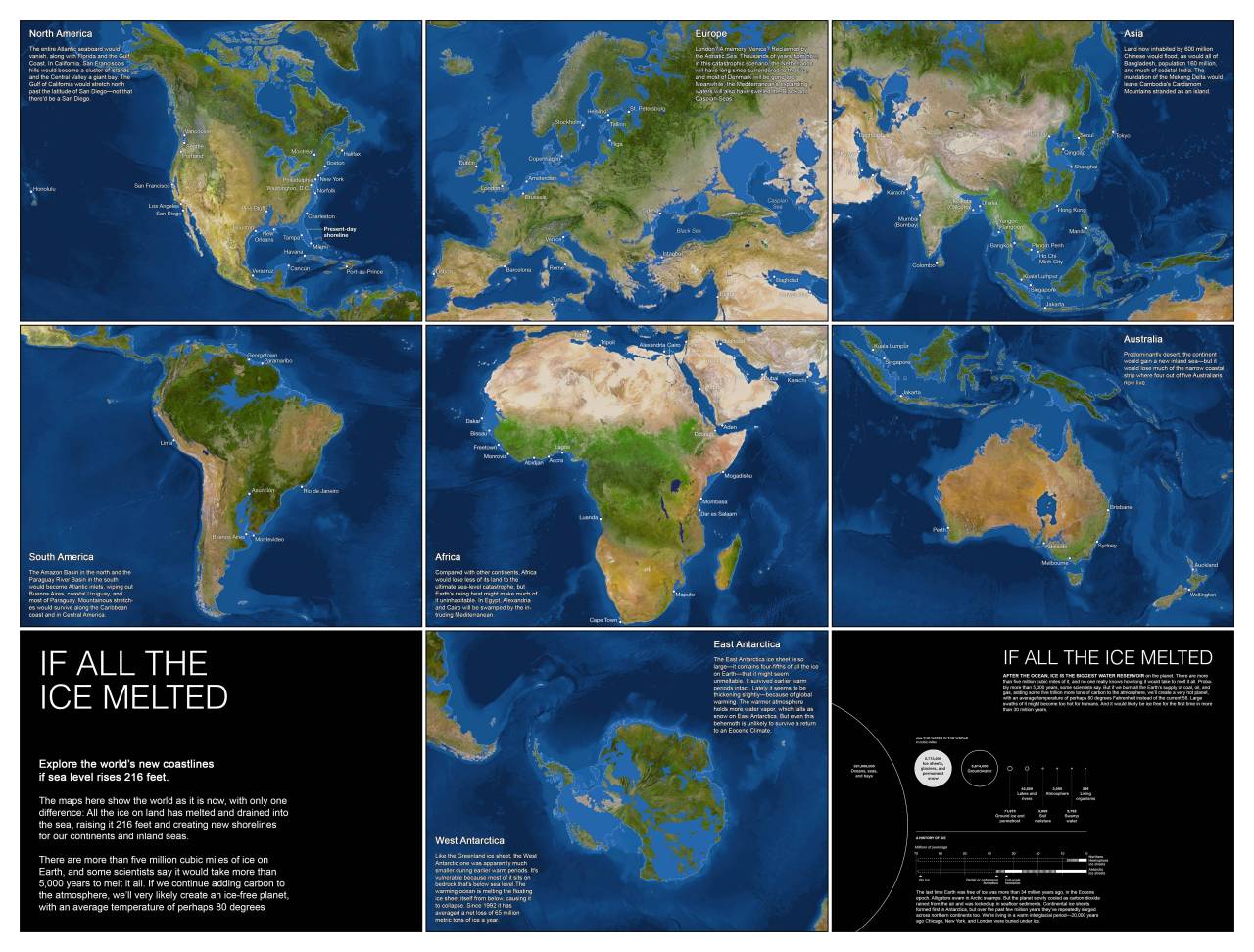
If All the Ice Melted: How Global Geography Would Transform
Imagine waking up to a world where the white domes of Greenland and the vast frozen deserts of Antarctica no longer exist—where familiar coastlines have been redrawn and entire cities sit beneath cold, quiet seas. This is not a science-fiction map; it is the physically plausible outcome if every last glacier, ice cap, and ice sheet currently locked on land were to melt. The scenario is extreme, remote in human timescales, and yet valuable: it clarifies how intimately our geography, climate, ecosystems, and built world depend on stored freshwater in solid form.
A complete melting of Earth's land ice would raise global sea level by roughly 66 meters, remapping coastlines and reshaping civilizations.
The Scale of Earth's Ice
To grasp the consequences, start with scale. Earth's permanent ice is concentrated in three main reservoirs: the Antarctic ice sheet, the Greenland ice sheet, and mountain glaciers and smaller ice caps scattered across continents. Together these store the majority of the planet's freshwater. If all this ice on land were to melt and flow into the oceans, global mean sea level would rise on the order of tens of meters—commonly estimated at about 66 meters (roughly 216 feet). That figure synthesizes contributions from Antarctica (the largest, on the order of 58–60 meters), Greenland (approximately 7 meters), and smaller glaciers and caps.
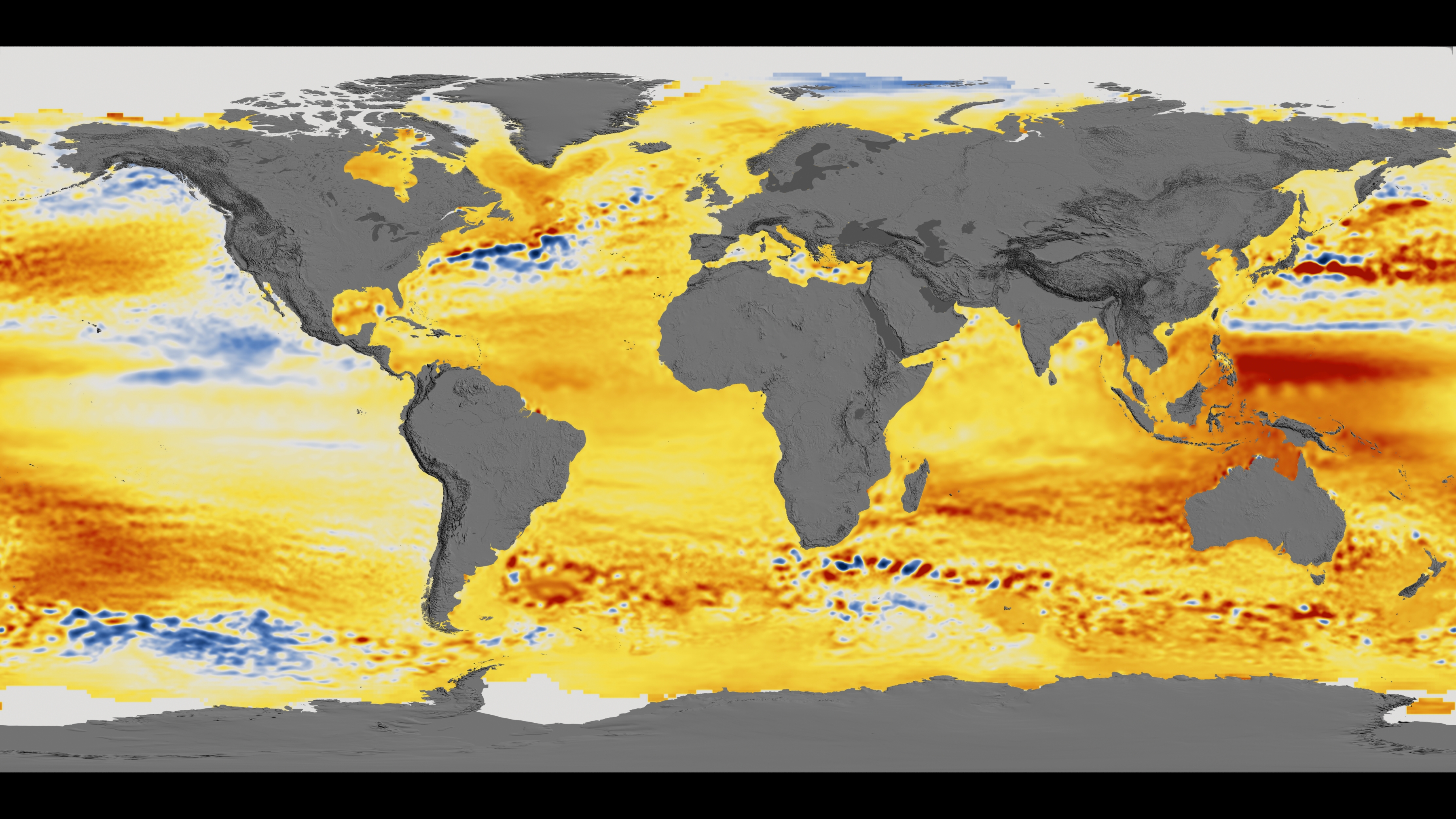
66 meters sea level rise
Why 66 meters matters
Numbers are abstract until placed on a map. A rise of 66 meters would not simply push a few meters of water over beaches. It would flood low-lying continental shelves, drown river deltas, and convert inland basins into new seas. Many modern megacities—built where rivers meet the ocean—would retreat or vanish beneath the waves. But the transformation goes far beyond inundation: removing the weight of ice would change the Earth's crustal shape, ocean circulation would be altered, and ecosystems that evolved around narrow climatic niches would face sudden collapse.
How the Melting Would Unfold (Timescales and Processes)
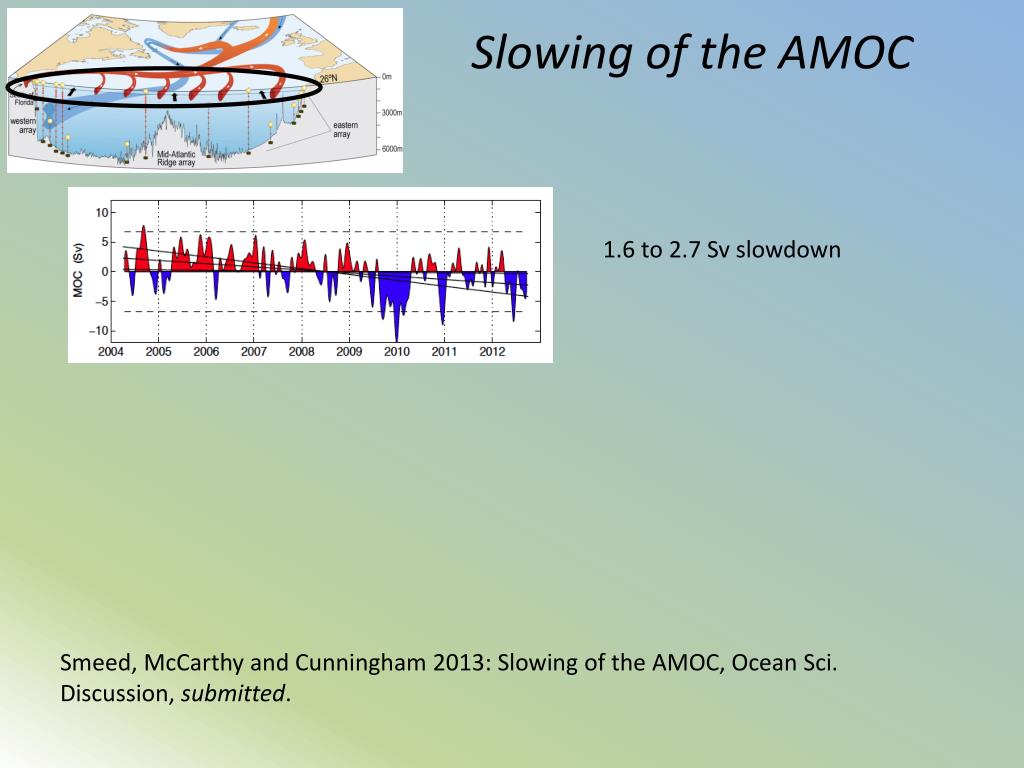
Complete loss of all land ice is not a matter of years; it would likely take centuries to millennia under strong sustained warming. The speed depends on feedbacks: as ice retreats it exposes darker land and ocean, which absorb more solar energy and accelerate warming. Melting also freshens surface oceans, potentially altering major currents like the Atlantic Meridional Overturning Circulation (AMOC). Permafrost thaw releases methane and CO2, amplifying climate forcing. Even in an extreme scenario, some components—especially the East Antarctic interior—would respond over millennia. Still, partial melting of key elements (Greenland, West Antarctica) could raise sea level by meters within centuries.
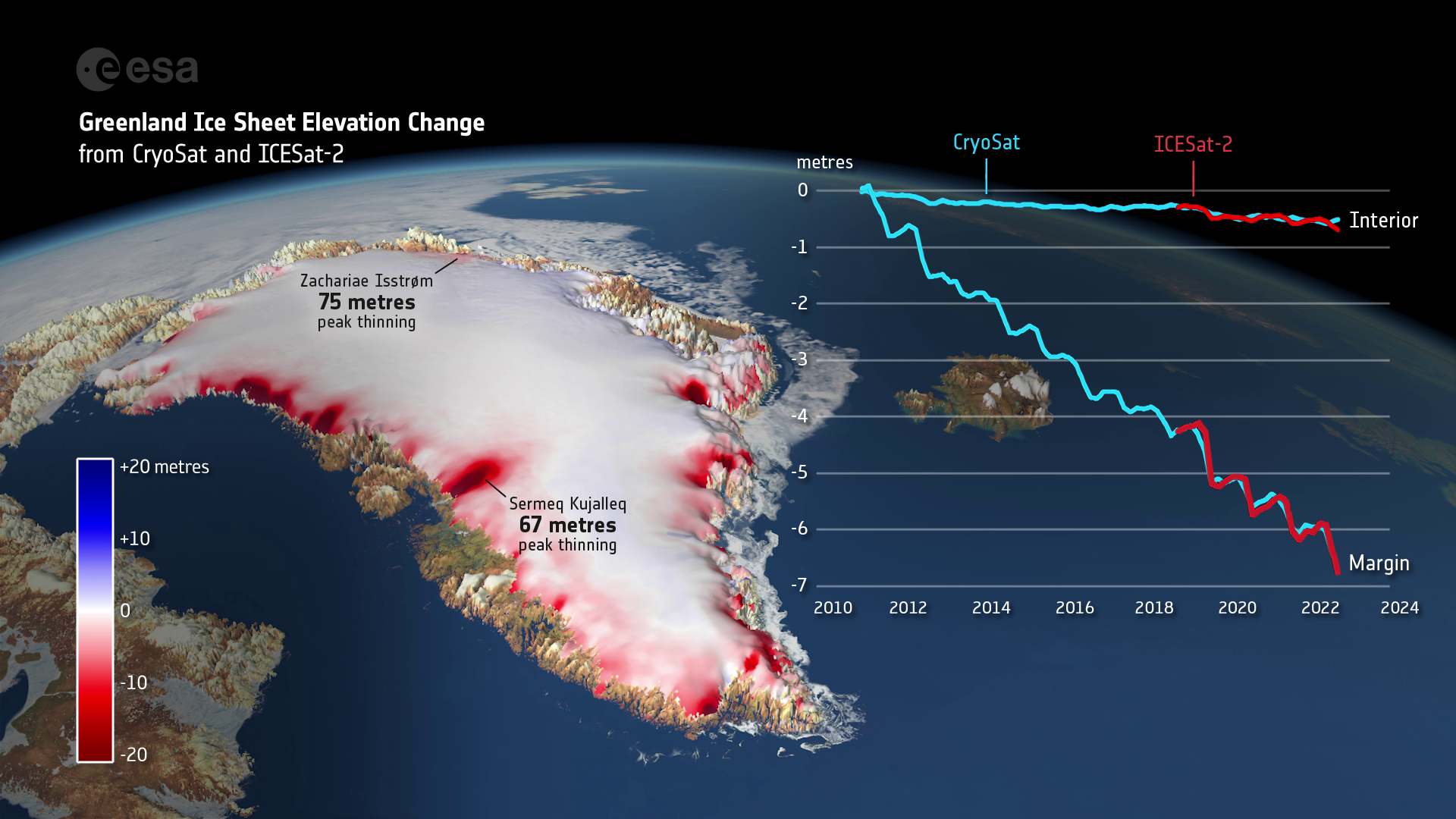
Greenland ice sheet melting
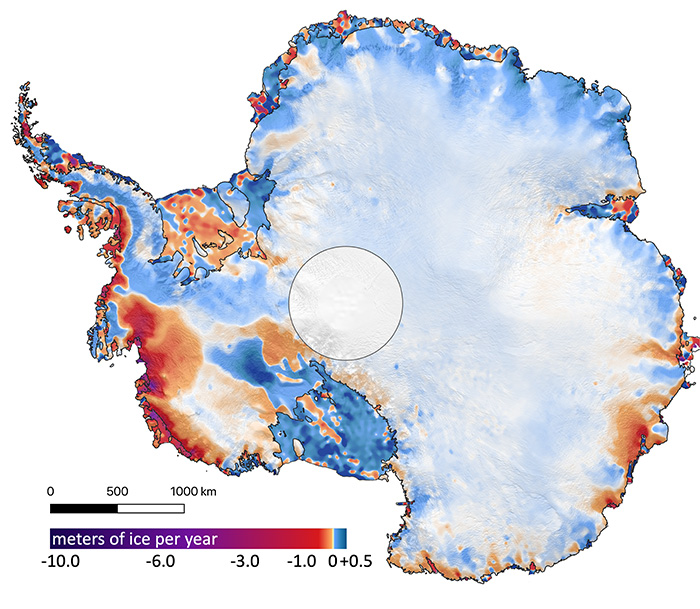
Antarctica ice sheet melting
Immediate Geographic Transformations
Coastlines Rewritten
At 66 meters of sea level rise, continental margins would be the most visible casualty. Continental shelves that are now exposed during low tides would become permanently submerged. River valleys and low-relief plains would become elongated fjords and internal seas. Major river deltas—home to intensive agriculture and dense populations—would be inundated and transformed into saline estuaries extending far upriver.
Cities and Cultural Heritage Underwater
Many of the world’s largest population centers are concentrated at or near sea level. Under a 66-meter rise, entire metropolitan regions would be underwater or pushed far inland: much of Bangladesh and the Ganges-Brahmaputra delta would be gone; large parts of the eastern United States coastline would be submerged; northern Europe’s low-lying coasts would be radically shortened; the Netherlands—already famed for its dikes—would become a remnant of higher ground; and island nations would suffer total territorial loss.
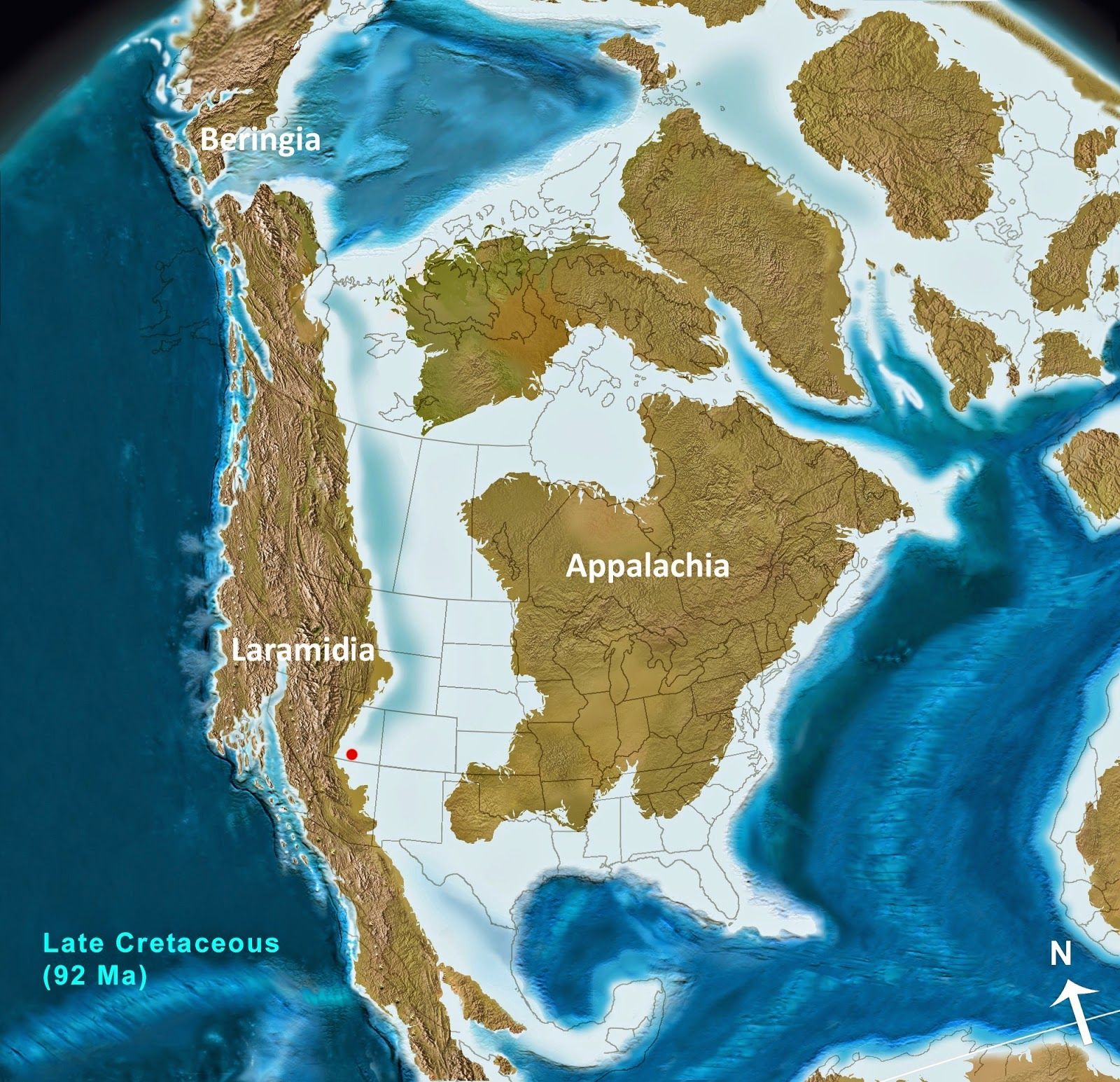
North America submerged coastline
Europe flooded coastlines map
Regional Case Studies
North America
On North America's east coast, the continental shelf would allow the sea to penetrate much farther inland. Cities that now sit on broad coastal plains—New York, Norfolk, Charleston—would face vastly reduced land area. Low-elevation regions of Florida would be almost entirely submerged; Miami and much of the peninsula would be lost, leaving only higher interior and panhandle ridges as islands. The Gulf Coast would be reconfigured into a complex archipelago of drowned river systems.
Europe
Western and northern Europe would experience a double shock: inundation of lowland areas and shifting climatic patterns as ocean currents respond to freshening from meltwater. The North Sea would expand, affecting cities like Amsterdam, Rotterdam, and parts of London. Much of Denmark and northern Germany’s lowlands would be underwater, rearranging the map of the continent.
Asia
The Indo-Gangetic Plain and Southeast Asian deltas—agricultural heartlands and population centers—would be transformed into shallow seas. Bangladesh and the Mekong Delta would be drastically reduced in land area, displacing hundreds of millions over time. China’s eastern seaboard and cities on the Yellow and Yangtze deltas would confront large-scale loss of arable land and infrastructure.
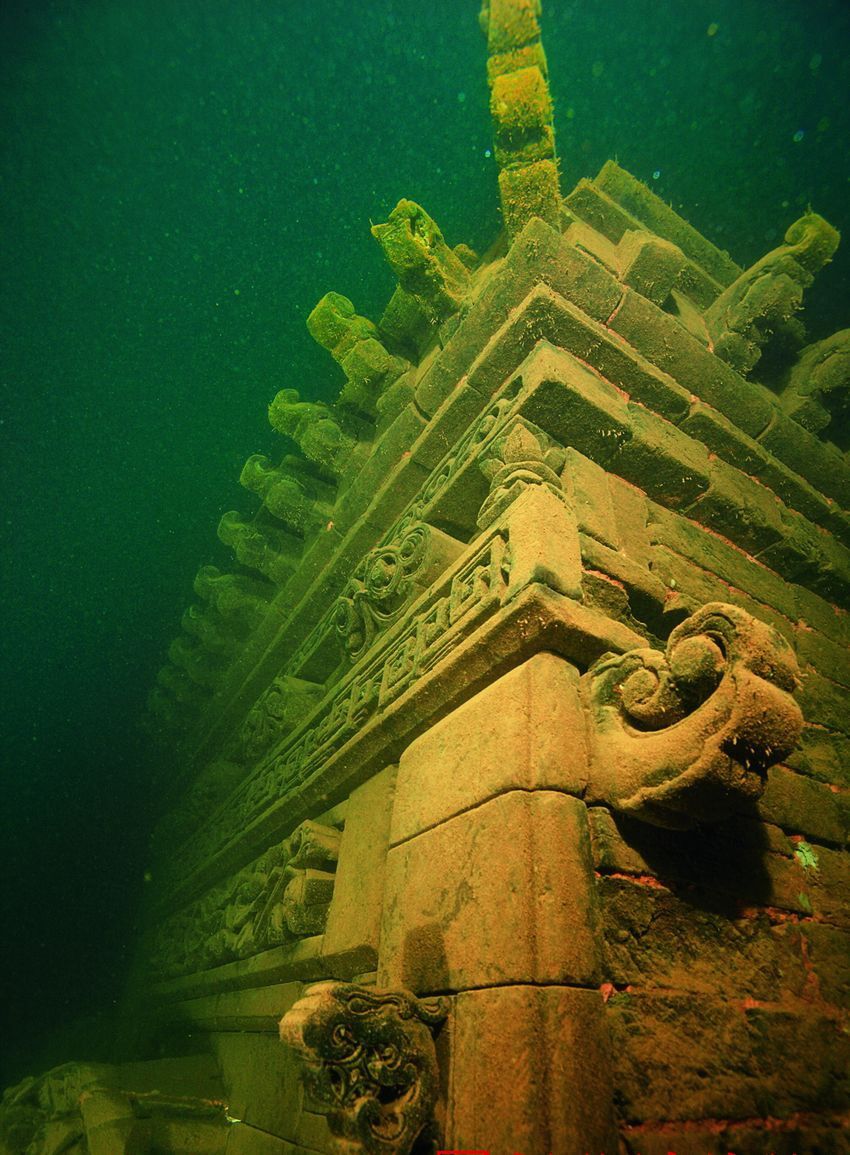
Asia delta cities underwater
The Arctic and Newly Navigable Routes
Beyond inundation, the disappearance of sea ice would open Arctic shipping routes for parts of the year. While this might reduce travel distance between some ports, it's a mixed blessing: new routes would cross fragile ecosystems and be subject to geopolitical contestation. Loss of permafrost would also reshape northern landscapes—causing ground subsidence and altering hydrology.
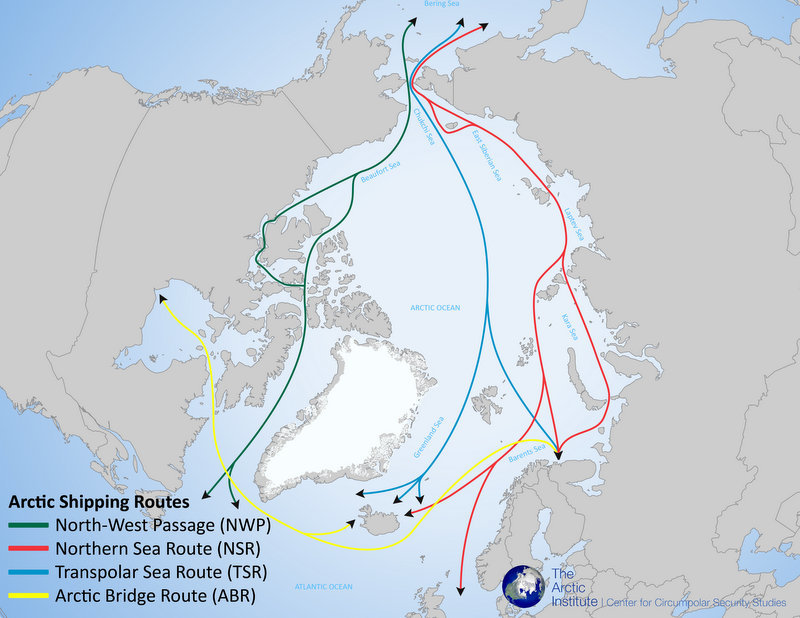
Arctic shipping routes opening
Secondary Effects: Climate, Ecosystems, and Human Systems
Ocean Circulation and Regional Climate
Massive freshwater input from melting ice would alter ocean salinity and density gradients that drive large-scale currents. A slowdown or reorganization of the AMOC could cool parts of northern Europe even as the planet warms overall. Shifts in ocean heat transport change storm tracks and precipitation patterns, redistributing climate risk globally.
AMOC ocean circulation slowdown
Ecosystem Collapse and Biodiversity Loss
Coastal wetlands and estuaries, coral reefs, and many specialized terrestrial habitats would lose their ecological niches. Coral reefs, already stressed by warming and acidification, would face habitat compression as shorelines migrate. Freshwater ecosystems connected to glaciers—cold, oxygen-rich streams and lakes—would disappear, threatening species adapted to icy meltwater.
Human Displacement and Societal Strain
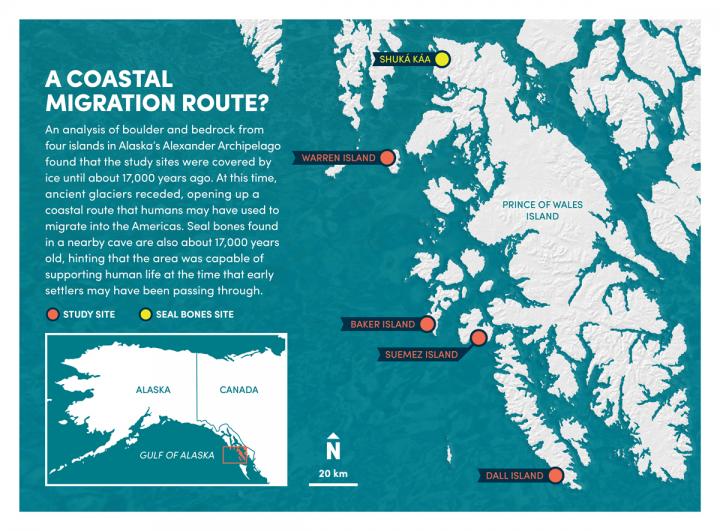
One of the clearest human consequences is migration. Hundreds of millions could be forced to relocate inland over generations. This would stress food systems, urban infrastructure, and international governance. Entire nations might lose territories, creating legal and humanitarian crises. Economies built on coastal trade, tourism, and fisheries would be uprooted.
Geophysical Responses: Isostatic Rebound and New Landscapes
Isostatic Adjustment
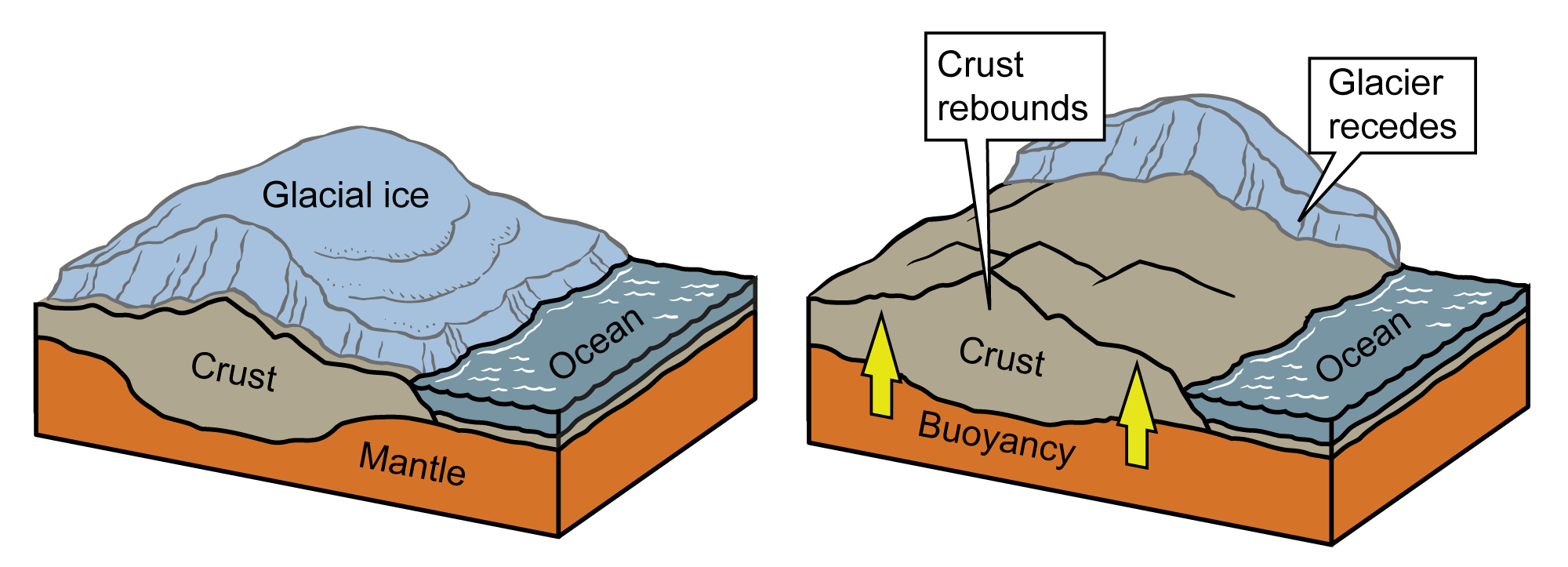
Ice sheets depress the crust beneath them. When that weight is removed, the crust rebounds upward in a process called isostatic adjustment. This rebound is slow—decades to millennia—but can expose some land previously pressed to lower elevations. Paradoxically, regions formerly beneath thick ice may eventually sit higher relative to sea level than before, altering local sea-level changes relative to the global mean.
isostatic rebound crust uplift
Formation of New Basins and Saline Lakes
As coastlines migrate inland, topographic lows could trap seawater, creating inland seas and saline lakes where fresh lakes once existed. River courses would adjust, sedimentation patterns change, and new wetlands would form in higher ground depressions—remaking hydrological networks.
What Would Survive—and What Could Be Reclaimed?
Not all is lost. High-elevation plateaus, mountain ranges, and interior uplands would become refuges for terrestrial life and civilization. Over geological timescales, land uplift and sediment deposition could allow humans to reclaim some areas. However, the cultural and ecological loss—cities, heritage sites, coastal agriculture, and unique ecosystems—would be irreversible on human timescales.
Adaptation, Mitigation, and Moral Imperatives
Two Pathways: Prevent and Prepare
There are two broad responses. Mitigation aims to reduce greenhouse gas emissions to avoid the deeper end of the scenario. Adaptation accepts sea-level rise and focuses on defense, retreat, and transformation of livelihoods. Historically, societies combine the two: work to limit warming while adapting to changes already locked in. Planning for multi-meter rise today—through managed retreat, resilient urban design, and international cooperation—is an urgent pragmatic step even if full melting remains distant.
Ethical and Equity Considerations
Those who contributed least to historical emissions often live in the most vulnerable places: small island states and low-lying deltas. Ethical policy requires financial and technical support for adaptation and displacement. International law, compensation mechanisms, and new models of sovereignty (for territories that disappear) will be tested.
Practical Takeaways for Citizens and Policymakers
- Invest in resilience: strengthen inland infrastructure, diversify food systems, and plan urban growth away from vulnerable coastlines.
- Protect knowledge and heritage: digitize cultural records and prioritize relocation of irreplaceable artifacts and archives.
- Support global mitigation: emissions reduction delays and limits are the only reliable path to avoid the worst long-term outcomes.
- Build equitable policies: finance migration, compensation, and capacity-building for the most affected nations.
Conclusion
The simple thought experiment of all Earth's land ice melting reveals the fragile scaffolding beneath our present geography. A roughly 66-meter sea-level rise would redraw maps, erase low-lying cultures, and restructure climate and ecosystems in complex ways. While the timeframe for complete melting stretches beyond most human institutions, partial melting already underway will reshape lives within generations. The exercise is not intended to be fatalistic; it is a clarifying lens that shows why reducing emissions, preparing for change, and designing equitable international responses are not abstract policy choices but existential ones.
coastal migration displacement map
- A complete melt would raise sea level by roughly 66 meters, inundating continental shelves and coastal plains.
- Major currents, ecosystems, and human systems would be altered—producing cascading, long-term impacts.
- Adaptation, mitigation, and global equity are essential to reduce harm and manage displacement.
This article explores a worst-case physical scenario to illuminate the stakes of climate action and adaptation planning.