Humanity's Last Exam: The 2,500-Question Test AI Fails
The thought experiment reads like science fiction: a single, sprawling examination intended to probe every corner of intelligence — pattern recognition, nuance, common sense, moral judgment, cultural literacy, abstraction, long-term planning, and the tiny intuitions that humans absorb over years of living in communities. Scientists built such a test: 2,500 questions, calibrated to stump current AI systems even when they excel at narrow benchmarks. The result is not merely a tally of wrong answers; it is a mirror held up to our assumptions about intelligence, an invitation to rethink how we evaluate both machines and people.
AI model failure test
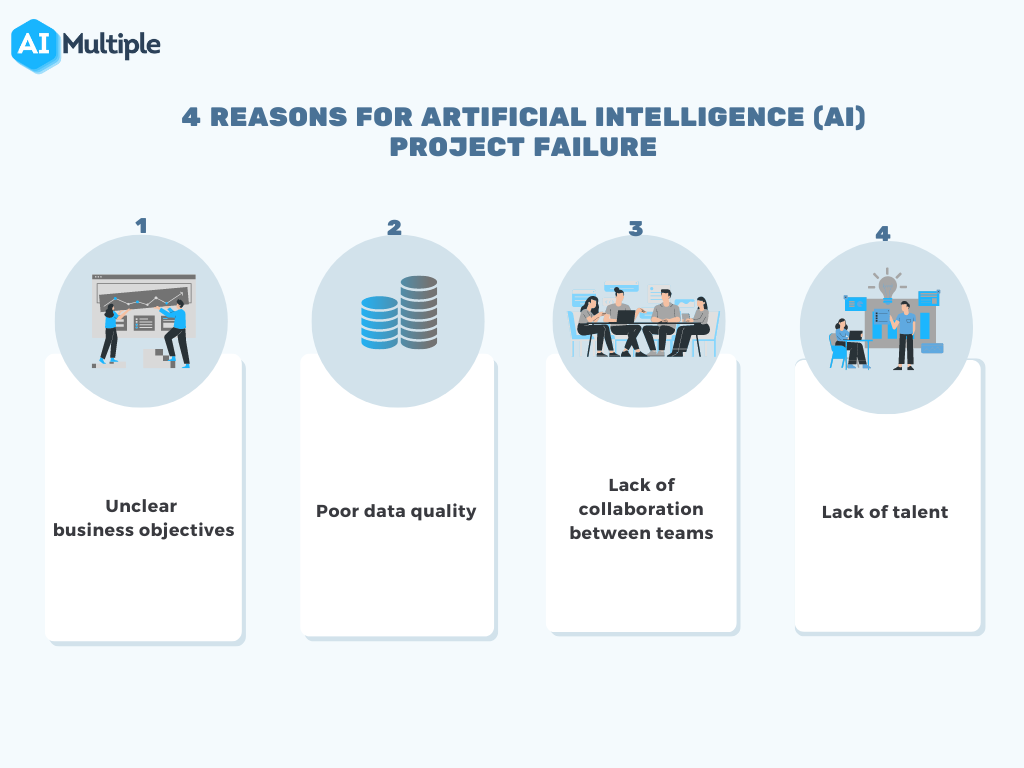
If an algorithm can write a poem, summarize a legal brief, and pass a coding exam, why does it still fail where a person with ordinary life experience succeeds?
WHY THIS EXAM EXISTS
The exam began as a response to a familiar pattern: every time researchers develop a new benchmark, models quickly optimize for it. Image classification scores skyrocket, natural language benchmarks tick upward, and the field congratulates itself — until adversarial examples, distribution shifts, or subtle reasoning problems reveal the brittle core beneath the performance. The 2,500-question exam was intentionally exhaustive and heterogeneous, built to resist narrow optimization and to expose the depth of an agent's understanding rather than its capacity to pattern-match within a distribution.
human intelligence vs machine
Design Principles
The test designers followed several core principles when assembling questions:
- Breadth: Cover many domains: everyday reasoning, idiomatic language, ethics, causality, counterfactuals, long-range planning, visual description (encoded as text prompts), and creative synthesis.
- Context sensitivity: Include multi-part scenarios where answers depend on subtle changes and evolving facts.
- Common-sense traps: Use questions that require lived experience or embodied knowledge rather than encyclopedic recall.
- Adversarial resistance: Avoid repetitive patterns and guard against shallow heuristics.
- Human calibration: Validate question difficulty against a diverse pool of humans, not only experts or students.
The result is a test that looks superficially like an extreme standardized exam, but underneath is a lattice of qualitative and quantitative challenges designed to reveal whether a system truly models the world or only maps inputs to plausible outputs.
adversarial AI testing
WHAT AIs CAN DO — AND WHERE THEY STUMBLE
Contemporary generative AI systems demonstrate extraordinary competencies: drafting emails, generating code, translating, and synthesizing large quantities of text. Yet when faced with the exam's diversity, they fail regularly in ways that are revealing rather than merely disappointing.

benchmark dataset stress test
Patterns of Failure
Failures fall into several categories.
- Shallow coherence: Models produce answers that read as plausible but collapse under verification or when pushed to explain their reasoning step by step.
- Context slippage: In multi-part scenarios, models lose track of earlier constraints, contradict themselves, or ignore earlier facts.
- Over-literalism: Questions requiring metaphor, irony, or cultural subtext are answered literally or awkwardly.
- Commonsense gaps: Everyday intuitions — like the physics of a falling object in an unusual setup or why a parent might behave a certain way — are often incorrect.
- Ethical nuance: Moral dilemmas that hinge on salient human values, conflicting duties, or ambiguous incentivization provoke responses that are vague, rule-seeking, or inconsistent.
One illustrative item asked test subjects to plan a three-day itinerary for a caregiver recovering from minor surgery who also needs child supervision for an energetic toddler. Human respondents prioritized low-physical-strain activities, built in nap-compatible timing, and proposed local help options. The model suggested sightseeing and crowded venues at peak hours — a sign that it optimized for scenic choices rather than the lived constraints of caregiving.

human-AI collaboration education
Why These Failures Matter
These mistakes are not trivial adjudication errors. They reveal that many advanced models operate largely as pattern synthesizers: prolific, persuasive, and fast, but lacking the anchored, cross-situational models of cause and effect that humans develop through time and interaction. When stakes are low, a convincing answer is often sufficient. When stakes rise — in medicine, policy, or personal care — superficial fluency is dangerous.
AI ethics and policy exam
THE EXAM AS A LENS ON HUMAN COGNITION
The exam's construction forced a deeper question: what does it mean to understand? Psychologists and philosophers have long debated whether knowledge is propositional (facts and statements) or procedural (skills and tacit knowledge). The 2,500-question format deliberately blends both types: some items test declarative recall, others require multi-step problem solving or the sort of situational judgment that comes from embodied experience.
Tacit Knowledge vs. Explicit Knowledge
Consider the difference between knowing the chemical formula for baking soda and knowing when to add it to a recipe to achieve the right texture. AI memorizes formulas easily but lacks the embodied sense that guides timing and small adjustments. The exam's designers included variants of such tasks to probe tacit understanding: not merely what is true in principle but what works in practice given messy constraints.
The test asks machines to perform not only 'what is' but 'what to do now' in complex, lived situations.
IMPLICATIONS FOR EDUCATION AND ASSESSMENT
One obvious implication concerns how we evaluate students and design curricula in an age of capable AI. If machines can pass narrow standardized exams through pattern recognition and rote synthesis, then those exams may no longer distinguish deep understanding from well-trained mimicry.
Rethinking Standardized Testing
This 2,500-question experiment suggests three shifts for assessment:
- Move toward synthesis: Assessments should favor tasks requiring integrated knowledge across domains, such as project-based work, portfolios, and performance tasks.
- Emphasize process: Ask students to document reasoning steps, reflect on uncertainty, and justify choices — not just supply final answers.
- Include embodied and social tasks: Evaluation should measure skills that remain hard to outsource to models, such as teamwork, empathy, craft, and situational judgment.
These shifts help preserve the value of human learning while clarifying where AI can assist rather than replace. For educators, the exam is a blunt signal that teaching for pattern recognition alone is insufficient for a future where machines can replicate that performance at scale.
ETHICAL, POLICY, AND SAFETY CONSIDERATIONS
Beyond education, the existence of an exam designed to outstrip current AI abilities raises policy questions. Who should decide which competencies matter? How do we avoid designing tests that privilege certain cultural experiences over others? And what are the responsibilities of creators whose systems perform well on public benchmarks but fail silently in real-world contexts?
Bias, Access, and Cultural Fairness
Tests that draw on specific cultural references or embodied norms risk disadvantaging those outside the reference frame. The exam's designers attempted to mitigate this by including human calibration across diverse backgrounds, but no test is neutral. Policymakers must therefore treat benchmarking as one input among many, and combine it with representative, participatory evaluation processes.
AI Safety and Deployment
For regulators and product teams, the exam is a reminder that passing benchmarks is necessary but not sufficient for safe deployment. Safety requires stress-testing in realistic environments and transparent documentation of failure modes. Where automated systems will interact with vulnerable people or make consequential recommendations, organizations must design fallback plans, human oversight mechanisms, and clear communication about uncertainty.
HOW WE CAN CLOSE THE GAP
Scientists and engineers are already exploring strategies to build models that better approximate the breadth of human competence the exam measures. These strategies fall into technical, methodological, and organizational approaches.
Technical Approaches
Technical fixes include multi-modal training that integrates sensory and procedural data, architectures that support persistent world models, and mechanisms for explicit, verifiable chain-of-thought reasoning. Reinforcement learning in realistic simulated environments can teach agents about consequences over time, while memory systems can preserve context across extended interactions.
Methodological and Cultural Shifts
Methodologically, the field must value robustness alongside raw performance. That means investing in diverse benchmarks, adversarial testing, and interdisciplinary evaluation that incorporates cognitive science and social context. Culturally, engineering teams should diversify the perspectives involved in model design to catch blind spots rooted in homogeneous experience.
WHAT THIS MEANS FOR JOBS AND HUMAN ROLES
An obvious worry is that an exam exposing AI weaknesses might slow deployment; the complementary worry is that these systems will nevertheless transform labor markets by automating tasks they can perform reliably. The two are not mutually exclusive. Even imperfect AI can displace roles where supervision is weak and stakes are low.
Shifting Human Work
Rather than a zero-sum story of replacement, a more useful framework is recomposition: humans move toward tasks that require nuanced judgment, interpersonal skills, and creative integration, while machines handle routine synthesis and information retrieval. Organizations that redesign roles to pair humans with AI — where machines surface options and humans validate and contextualize — will gain the most.
The most valuable human skills will be those that remain costly for machines: judgment under uncertainty, trust-building, and embodied problem solving.
PRACTICAL RECOMMENDATIONS
For leaders, educators, and policymakers reading about the exam, here are pragmatic next steps.
- Invest in robust evaluation: Fund and require stress-tests that mirror realistic deployment contexts for high-stakes systems.
- Redesign assessments: For education and hiring, shift toward performance tasks and process documentation that are harder to automate.
- Build human-in-the-loop systems: Ensure oversight, escalation paths, and clarity about machine confidence.
- Foster interdisciplinary teams: Include educators, social scientists, and domain experts in model design and evaluation.
- Communicate limits transparently: Public-facing systems should clearly state known failure modes and uncertainty ranges.
CONCLUSION
The 2,500-question 'Humanity's Last Exam' is less a final arbiter than a diagnostic tool. It exposes where state-of-the-art AI is brittle, and it forces a broader conversation about what we value in intelligence. The takeaway is not that machines are doomed to fail indefinitely, nor that humans are uniquely privileged in every domain. Instead, the exam clarifies the work ahead: building systems that integrate long-range context, embodied knowledge, and ethical discernment while redesigning institutions that rely on rote evaluation.
- Benchmarks matter, but breadth and realism are essential to reveal true competence.
- AI failures often stem from lack of embodied, social, and procedural knowledge.
- Education and assessment should shift toward synthesis, process, and embodied tasks.
- Practical safety requires human oversight, transparent limits, and adversarial testing.
Final Thought
Technology will continue to surprise us, sometimes by doing what we expected and sometimes by failing in new and instructive ways. The real value of the exam is not in declaring victory or defeat but in sharpening our questions. If we care about building systems that genuinely augment human life, we must insist that benchmarks measure what matters and that innovation be paired with humility.