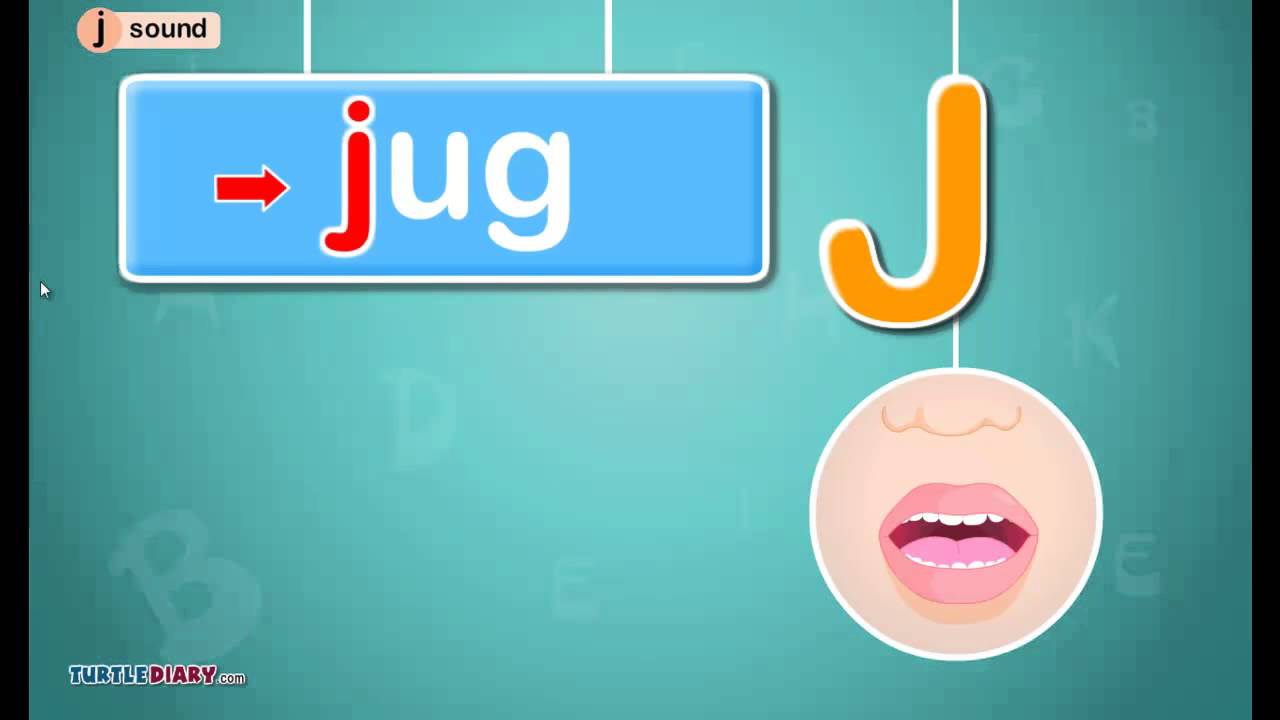
How the Letter J Sounds Around the World
Few letters carry as much cross-linguistic personality as the letter J. For English speakers it is a familiar voiced affricate—think jump, jar, or jacket—yet spin a globe and J will perform many other roles: a voiced fricative, an approximant, a palatal affricate, even a silent helper. This travelogue of sound unpacks how J is pronounced in major languages, why those pronunciations developed, how to read them using the International Phonetic Alphabet (IPA), and practical tips for learners trying to navigate the surprising variety behind a single character.
![English letter J pronunciation [dʒ]](/uploads/posts/how-the-letter-j-sounds-around-the-world/img-1-2f78edd5.jpg)
English letter J pronunciation [dʒ]
Why J behaves so differently: a quick linguistic primer
The letter J is historically recent compared with letters like A or B. It emerged in Latin-script orthographies as a variant of I, and over centuries orthographic conventions split the two symbols. Pronunciations, however, are determined by local sound systems (phonologies), contact with other languages, and spelling reforms. Phonetically, J can represent several related but distinct sounds: a voiced postalveolar affricate [dʒ] (English), a voiced postalveolar fricative [ʒ] (French), a voiceless velar fricative [x] (Spanish and Portuguese in certain positions), an approximant [j] (German and many Slavic languages in their romanizations), or an alveolo‑palatal affricate [tɕ] (Mandarin pinyin). Understanding these categories helps you predict how J will sound in unfamiliar languages.
A quick IPA guide
Before diving into specific languages, here are the IPA symbols you will see again and again:
- [dʒ] — voiced postalveolar affricate, English J in jump.
- [ʒ] — voiced postalveolar fricative, French J in jour.
- [x] / [χ] — voiceless velar/uvular fricative, Spanish/Portuguese J in jefe or jantar (depending on dialect).
- [j] — palatal approximant, like English Y in yes; often written as J in German and Slavic Latin alphabets.
- [tɕ] — alveolo-palatal affricate, the pinyin J in Mandarin jī.
Keep these symbols handy — they are the Rosetta Stone for comparing J across languages.
The English J: the familiar affricate
What it sounds like
In General American and Received Pronunciation, J usually denotes the sound [dʒ], an affricate that begins with a brief stop [d] and releases into a fricative [ʒ]. Words: jump [dʒʌmp], judge [dʒʌdʒ], major [ˈmeɪdʒər]. The English J is robust and nearly universal across dialects, though some accents have subtle variations (e.g., affrication decreases before certain vowels).
Why English keeps [dʒ]
English inherited the affricate largely through Old French influence after the Norman Conquest. Latin written with I/J became differentiated in orthography, and English orthographic conventions stabilized J for the affricate sound.
The Romance family: three common faces of J
Spanish: J as a harsh fricative
In Spanish, J usually represents a voiceless velar or uvular fricative, often transcribed as [x] or [χ], depending on dialect. Think of jefe or jamón—Spanish J sounds like the Scottish loch or the German ich—but sometimes more guttural in certain Latin American dialects. Crucially, Spanish orthography reserves the letter J for this fricative sound and does not use the letter for the affricate [dʒ].
![Spanish letter J pronunciation [x]](/uploads/posts/how-the-letter-j-sounds-around-the-world/img-2-ab30dba5.jpg)
Spanish letter J pronunciation [x]
French: J as a soft fricative
French J corresponds to [ʒ], a voiced postalveolar fricative. Words like jeu (game) and jour (day) use this sound. It is smoother and more anterior (closer to the teeth and palate) than the Spanish [x], giving French J a softer, buzzing quality. Where English uses [dʒ], French often uses [ʒ] or alternates depending on historical derivation.
![French letter J pronunciation [ʒ]](/uploads/posts/how-the-letter-j-sounds-around-the-world/img-3-ed52028d.png)
French letter J pronunciation [ʒ]
Portuguese: variation by region
Portuguese shows dialectal variation: in continental Portugal, J is typically [ʒ] (voiced fricative) as in jovem (young), while in Brazilian Portuguese J often surfaces as [ʒ] too, though some Brazilian accents can push towards [ʒ] or [ʐ] (a retroflex variant). In certain positions and in European varieties, a more guttural sound near [ʒ] to [ʁ] may be heard.
Germanic languages: Y-like J and the English exception
German and Dutch: J as [j]
In German and Dutch orthography, J represents the palatal approximant [j] — essentially the English y-sound. Jugend (youth) in German and jouw (your) in Dutch showcase this use. This can confuse English learners who expect [dʒ]. The historical reason: Germanic phonologies did not develop the affricate the way Romance languages did, and the Latin I/J split remained a marker of the glide.
![German letter J pronunciation [j]](/uploads/posts/how-the-letter-j-sounds-around-the-world/img-4-a06179ec.jpg)
German letter J pronunciation [j]
Scandinavian languages: similar patterns
Swedish, Norwegian, and Danish often use J for [j] as well, but surface realizations can be complex. In Swedish, for example, J before front vowels can produce palatalized consonant clusters, and dialects differ widely: standard varieties generally use the glide [j], while regional accents can realize it stronger or softer.
Slavic languages: the alphabet matters
Polish, Czech, Slovak: J as [j]
Many Slavic languages that use Latin alphabets write J for [j]. Polish ja (I) and jelen (deer) both begin with the glide [j]. Czech and Slovak show similar patterns. Because these languages also have separate letters or diacritics for sounds like [ʒ] or [dʒ], J's role as the palatal approximant is usually clear.
South Slavic (Serbian, Croatian, Bosnian): J as [j]
South Slavic languages that use Latin script also adopt J for [j]. For example, in Croatian the name Janko starts with [j]. Note: In Serbian Cyrillic the same sound is written with the letter Ј (which maps directly to Latin J), underscoring the shared phonetic role.
One letter, many phonemes: J is a chameleon shaped by history, contact and native sound systems.
Exceptions, borrowings and orthographic wrinkles
Languages that use J for affricates other than [dʒ]
Some languages use J to represent a range of affricates or fricatives depending on position and neighboring vowels. For example, in some orthographies influenced by French or Portuguese, J may signal [ʒ] in native words but pattern differently with loanwords. Similarly, in languages that adopt Latin script recently (through reform or colonial influence), the mapping from J to sound can reflect the influence of the adopting country's dominant language.
Transliterations and romanizations
Romanization systems complicate matters further. For example, Russian's Cyrillic letter й is often romanized as j (as in Ivan Petrovich becomes Ivan Petrovich or sometimes Ivan Petrovich with j forms in other names), but the Cyrillic letter ж is usually transliterated as zh to reflect [ʒ]. In the case of pinyin (Mandarin romanization), the Latin letter j denotes a palatal affricate [tɕ] that is quite different from English [dʒ]. So when you see J in a romanized form of a non-Latin script, always check the romanization conventions first.
Asia and the Middle East: J's diverse faces
Mandarin Chinese (pinyin)
Pinyin uses j to mark the alveolo‑palatal affricate [tɕ], as in jiā (family). It's voiced differently and articulated with the tongue closer to the palate than English [dʒ]. Learners often mistake it for English J because of the letter, but the articulatory target and acoustic quality are distinct.
![Mandarin pinyin J [tɕ]](/uploads/posts/how-the-letter-j-sounds-around-the-world/img-5-738b706d.png)
Mandarin pinyin J [tɕ]
Japanese romaji
In Hepburn romanization, Japanese uses J for the [dɕ] or [dʒ] sound when rendering じ or ぢ depending on historical spelling. Modern Japanese speakers typically pronounce じ as an affricate close to [dɕ] or a fricative depending on environment, so the romanized J approximates the native sound but not perfectly.
Arabic and Hebrew
Arabic and Hebrew historically lacked a Latin-script J; transliteration conventions vary. Arabic ج (jeem) is pronounced [dʒ] in many dialects (Egyptian), [ɡ] in others (Gulf, Levant variations), and [ʒ] in some North African varieties. Transliteration often uses j to reflect [dʒ] (e.g., Jamal). Hebrew's י (yod) corresponds to [j], so J is not native to Hebrew orthography; when Latin letters are used for foreign names, j is frequently used to indicate English-style [dʒ].
![Portuguese letter J pronunciation [ʒ]](/uploads/posts/how-the-letter-j-sounds-around-the-world/img-6-4cbdfbe4.jpg)
Portuguese letter J pronunciation [ʒ]
Common learner pitfalls and practical tips
Don't assume—look for patterns
Beginners often assume J always equals English J [dʒ]. That assumption causes mispronunciations: a Spanish niño is not pronounced with an English J, and a German Jahr begins with [j], not [dʒ]. To avoid mistakes, learn the target language's typical J mapping early and practice minimal pairs that contrast J with similar sounds.
Use IPA and romanization notes
Learn the IPA symbols for the sounds you encounter, and when reading romanizations, check the system used (Hepburn, pinyin, ISO transliterations). Accurate pronunciation resources and language-specific guides will usually give an IPA transcription you can trust.
Practice drills
Targeted practice accelerates mastery. Try these exercises:
- Contrastive repetition: Pair English J [dʒ] words with Spanish jefe [x] or French jour [ʒ] to feel the tongue and airflow differences.
- Minimal pairs: For languages using [j], contrast ja vs. za or ya vs. za to build the palatal glide muscle memory.
- Shadowing: Repeat short native utterances immediately after a speaker to tune timing and voicing.
Why orthography and identity matter
Spelling choices carry cultural weight. Countries that reformed orthography used J to reflect phonemic distinctions important to identity and standardization. For example, in many European languages the choice to use J for [j] rather than inventing a new letter reflects conservative adoption of Latin-based scripts. In postcolonial contexts, the mapping of J can also indicate historical ties to colonizing languages (Spanish, Portuguese, French), showing up in place names, family names, and administrative vocabulary.
Pronunciation is a living history: each J tells a story of contact, conquest, reform and regional taste.
Quick reference: how J sounds in selected languages
Below is a compact cheat-sheet for common languages (useful when you travel or learn):
- English: [dʒ] as in jump.
- Spanish: [x] or [χ] as in jefe.
- French: [ʒ] as in jour.
- Portuguese: [ʒ] (with regional variants).
- German/Dutch/Scandinavian: [j] (English y).
- Polish/Czech/Slovak/Serbo-Croatian: [j] (glide).
- Mandarin (pinyin): [tɕ] as in jiā.
- Japanese (romaji): approximates [dɕ] or [dʒ] depending on the syllable.
- Arabic (dialectal): varies — [dʒ], [ɡ], or [ʒ].
Surprising facts and curiosities
Practical roadmap for learners
If you are studying a language, follow this checklist to master the J sound there:
- Identify the target sound: Check the language's pronunciation guide or dictionary for IPA of words with J.
- Map articulation: Is it a glide ([j]), a fricative ([ʒ]/[x]), or an affricate ([dʒ]/[tɕ])? Visualize tongue placement: forward for [ʒ], back for [x], palatal for [j]/[tɕ].
- Listen to native speakers: Use short, repeatable clips to imitate.
- Practice minimal pairs and shadowing: Build muscle memory and timing.
- Record yourself: Compare your audio to natives and adjust voicing and place of articulation.
Conclusion
The letter J is a compact lesson in how orthography, history and phonology interact. Across languages it may be a voiced affricate, a soft fricative, a guttural rasp, or a light palatal glide. For travelers, language learners, and curious readers the key is simple: don't read J with English ears. Learn the local mapping, use IPA as your decoder ring, and practice targeted contrasts. In doing so you'll unlock more accurate pronunciation and discover, along the way, small windows into each language's past.
- J maps to many sounds worldwide — [dʒ], [ʒ], [x], [j], [tɕ] among the most common.
- Historical contact and orthographic choices explain much of the variation.
- Use IPA and targeted drills to master language-specific J pronunciations.
A concise phonetic tour: the letter J is small on the page but big in variety.

Arabic ج transliteration as j