
How Metallica Forced Napster to Ban 335,435 Users
In the spring of 2000, a confrontation unfolded that felt less like a dispute between a band and a service and more like the opening salvo of a cultural war. Metallica, then at the peak of its mainstream clout, handed Napster — the emblematic peer-to-peer music-sharing service — a list so large it read like the logs of a small nation: roughly 335,435 user records compiled by a consulting firm hired to monitor illegal sharing. The demand was stark and simple: ban these users and stop the unauthorized distribution of Metallica's music. What followed was a tangle of technical sleuthing, public outrage, legal maneuvers, and conversations about privacy and the future of music distribution that still echo today.

Metallica band members 2000
THE ORIGIN STORY
From Napster's Rise to a Band's Breaking Point
At the turn of the millennium, Napster exploded onto the cultural stage. Its interface was rudimentary, its promise intoxicating: anyone could share MP3 files directly from their hard drive with millions of users around the world. For listeners, Napster felt liberating; for many artists and record labels, it felt like theft on an industrial scale.
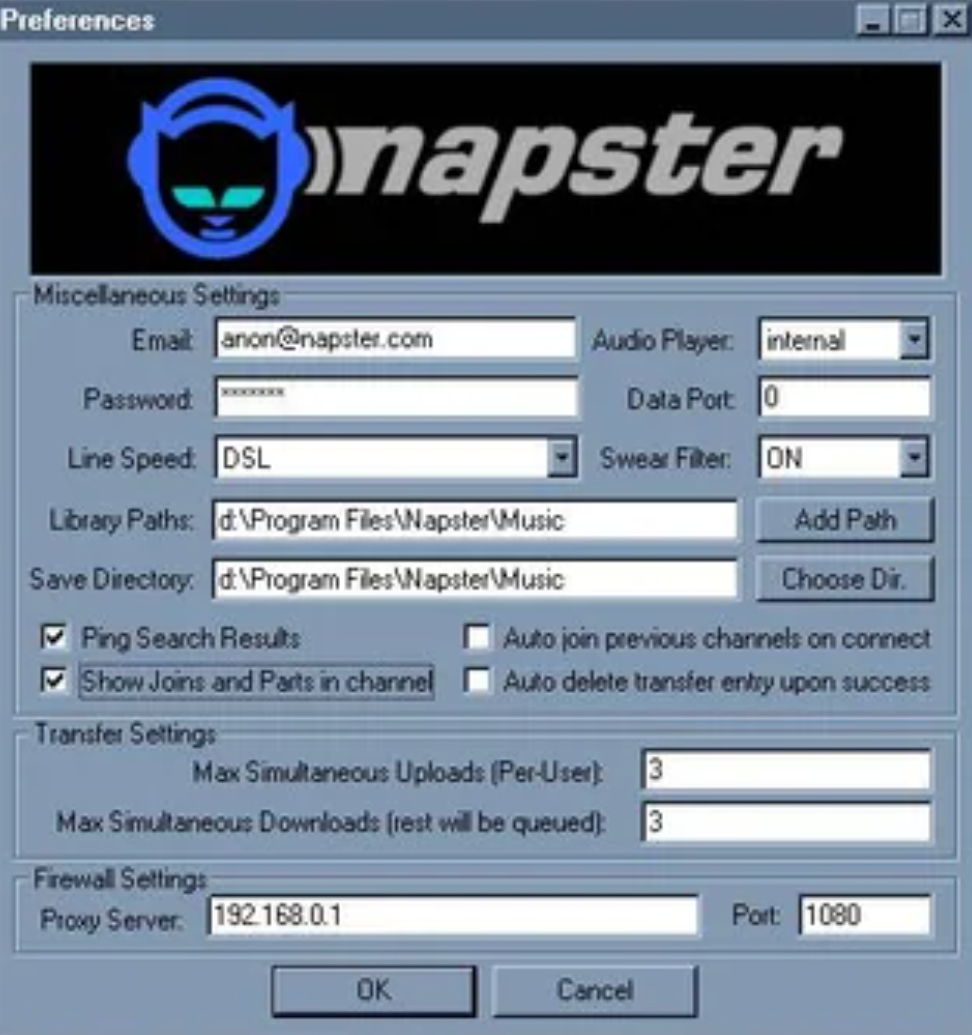
Napster interface 2000
Metallica’s response didn't occur in a vacuum. Years of declining album sales, rising costs of touring and promotion, and an increasing inability of existing business models to capture new forms of digital consumption fed the band’s alarm. For artists who relied on album sales as a revenue backbone, uncontrolled sharing threatened livelihoods and the industry’s ability to invest in new talent.

MP3 file sharing icon
Hiring a Watchdog
To push back, Metallica engaged a private consulting firm tasked with monitoring Napster traffic and identifying accounts that appeared to be sharing the band’s copyrighted work. The process — by modern standards of automated detection and data aggregation — was rudimentary but effective enough for the era: scanners, manual checks, and server queries that correlated filenames and transfer logs with user identifiers. The outcome was a voluminous dossier of user records. The number most often repeated in accounts of the episode is 335,435 — the purported size of the list.
The band’s move to hand Napster a six-figure roster of alleged infringers reframed a cultural argument as an administrative demand: stop the people, or stop the service.
TECHNOLOGY AND TACTICS
How Monitoring Worked
Monitoring Napster at scale in 2000 required a mix of network probing and pattern recognition. Peers advertising files could be queried, and filenames — often containing artist and song titles — were the primary flags. That meant names like "Metallica - One.mp3" were easy to spot. The consulting firm’s agents searched for matches, recorded the IP addresses and usernames associated with sharing, and aggregated entries into a master list.

Lars Ulrich testimony Congress
Two technical realities are important here. First, filenames are noisy signals: they can be misattributed, truncated, or spoofed. Second, IP addresses in that era often indicated a household or an ISP gateway rather than a single individual. Those caveats complicate any claim that a compiled list equated to definitive proof of individual criminality.
The Data: Quantity, Not All Context
A 60,000-page report of 335,435 user records sounds exhaustive, and it was exhaustive in volume. But volume didn't always mean context. Many entries were likely repetitive (multiple shares from the same user) or ambiguous (file names that matched but weren’t actually infringing). Despite these ambiguities, the list’s sheer scale became a weapon of persuasion: present enough names and the pressure to act shifts from abstract outrage to an operational imperative for a platform that did not want legal exposure.
LEGAL AND ETHICAL FALLOUT
Metallica v. Napster: Legal Fight Escalates
Metallica’s actions came as the band was preparing and pursuing formal legal action. The list of users they provided to Napster was effectively a demand for enforcement: remove these accounts and stop the distribution. Napster, meanwhile, faced a difficult calculus. Banning users en masse risked alienating the service’s community and raising privacy concerns. Failing to act risked further legal exposure and an intensifying dispute with artists and labels.

Shawn Fanning Napster founder
The dispute raised fundamental questions about responsibility. Did Napster have a duty to police its users and remove infringing content? Did artists or third-party firms have the right to compile and deliver lists of alleged infringers? When private entities perform surveillance and hand over private user data, who is accountable for mistakes?
Privacy, Error and the Problem of False Positives
One of the clearest ethical problems in handing over long lists of users is the risk of false positives. IP addresses rotate, filenames mislead, and shared machines or public terminals can generate entries tied to innocent parties. For individuals wrongfully identified, the consequences could range from temporary loss of access to reputational damage if their names were made public.
Beyond the question of correctness lies the broader concern about surveillance: private firms monitoring individual behavior at scale — then delivering results to powerful cultural actors and platforms. This pattern foreshadowed later controversies about data harvesting, doxxing, and outsourced enforcement that would become common in the social media era.
CULTURAL REACTIONS
Fans, Backlash, and the Image Problem
Metallica paid a reputational price for the move. The band’s anti-piracy stance, amplified by the dramatic delivery of a massive user list, alienated some fans who saw file sharing as a communal exercise rather than theft. For a generation of listeners who had embraced Napster as an egalitarian platform for discovery, Metallica’s actions cast the band as an antagonist to the early internet’s participatory culture.

RIAA anti-piracy campaign
Public sentiment was split. Many artists and industry executives applauded Metallica for defending their livelihoods. Others criticized the approach as heavy-handed and short-sighted, arguing that the future of music distribution required innovation — not litigation — to meet changing consumer expectations.
Long-Term Cultural Effects
The clash contributed to a wider reckoning: music consumption was changing irrevocably. Industry practices would eventually shift from an album-sales model to streaming-based access economies. But that transition took years, and the fights of the early 2000s shaped both the legal frameworks and the public attitudes that guided how streaming platforms, labels, and artists negotiated revenue and control.
The episode sits at the intersection of two truths: the music industry needed new business models, and the internet demanded new norms for ownership and access.
LESSONS IN RETROSPECT
What the Episode Taught the Industry
Several lessons emerged over time. First, enforcement alone was not a sustainable strategy. The industry realized that pursuing every individual file-sharer was costly and alienating, and it ultimately accelerated the search for viable commercial alternatives. Second, the mechanics of detection and enforcement exposed deep privacy trade-offs. Outsourcing surveillance to private firms and producing massive user lists introduced errors and ethical gray zones.
How It Shaped Policy and Product Design
Platforms paying attention to the Napster years designed carefully around liability. Subsequent services leaned into licensing models and greater control over distribution to avoid litigation. The eventual rise of licensed streaming services — with their centralized catalogs, DRM, and revenue-sharing arrangements — can be viewed as a market response to the instability and adversarial posture of the Napster era.
ETHICS, SURVEILLANCE, AND MODERN PARALLELS
Where Private Monitoring Meets Public Interest
Metallica’s decision to compile and deliver a massive user list is an early example of outsourced monitoring with real-world consequences. Today, similar patterns appear across social media moderation, content ID systems, and automated takedown requests. Each instance raises comparable questions: who watches the watchers, how accurate are the signals, and what recourse exists for those wrongly identified?

MediaSentry monitoring software
Contemporary debates about algorithmic enforcement and automated detection echo the Napster episode. The technological tools have improved, but so have the stakes. False positives can now trigger account suspensions, ad revenue loss, or even legal action — and they do so at higher velocity and scale than in 2000.
Balancing Rights and Remedies
The central ethical balancing act is between protecting creators’ rights and protecting individual privacy and due process. Reasonable enforcement requires evidence and pathways for correction. Blanket lists handed from one private actor to another are blunt instruments that can cause collateral harm when used without safeguards.
CONCLUSION
The story of Metallica, Napster, and the 335,435-user list is more than a legal footnote. It is a snapshot of a pivotal moment when music, technology, law, and culture collided. The band’s move to deliver a massive list to Napster crystallized tensions that still inform debates about digital distribution: the rights of creators, the responsibilities of intermediaries, the limits of private surveillance, and the social contracts that emerge around shared technology.
History shows that enforcement can buy time, but it rarely solves structural disruption. The Napster battles pushed the industry to innovate, and the streaming economy that followed reflected both the failures and the lessons of those early skirmishes. At the same time, the episode remains a cautionary tale about data, mistakes, and the human cost when bulk monitoring is treated as proof rather than the start of a careful process.
- Scale is not proof: Large data sets highlight patterns but do not replace careful validation.
- Outsourced surveillance carries risks: Private monitoring can produce errors and ethical dilemmas.
- Enforcement alone is insufficient: The industry eventually adapted through licensed streaming and new business models.
- Due process matters: Mechanisms for appeal and transparency reduce harm when enforcement is automated or outsourced.
The Napster-Metallica episode remains a landmark in the story of digital music — a chapter about enforcement, culture, and the price of transition.