
How Allbirds Pivoted from Shoes to AI — Stock Up 300%

Allbirds wool sneakers footwear
The headlines feel almost cinematic: a brand synonymous with cozy wool sneakers quietly transformed itself into an AI-first company, and the market responded with a threefold rally. For entrepreneurs, investors and retail executives watching the slow-motion disruption of consumer industries, the Allbirds story is an instructive case study in timing, capability transfer, and the art of turning a values-driven brand into a technology platform without losing the soul that made it famous.
You can preserve a brand’s identity while changing its business model — if the shift is rooted in authentic capability and customer value.
The Backstory: From Wool Runners to a Global Brand
Allbirds launched in the mid-2010s with a clear, simple promise: make comfortable, low-impact shoes using natural materials. Founders emphasized design, sustainability and direct relationships with customers. That combination created a passionate base of buyers and considerable brand equity. For years, Allbirds competed on product innovation — refining wool formulations, experimenting with eucalyptus fibers, and building a supply chain that prioritized transparency.
But the same strengths that made Allbirds a household name — material innovation, close customer feedback loops, and a streamlined DTC distribution model — also seeded the capabilities needed for a broader transformation. When margins in apparel and footwear compressed and competition intensified, leadership faced a choice: double down on product extensions or unlock higher-margin, scalable offerings on top of their differentiated know-how. They chose the latter.
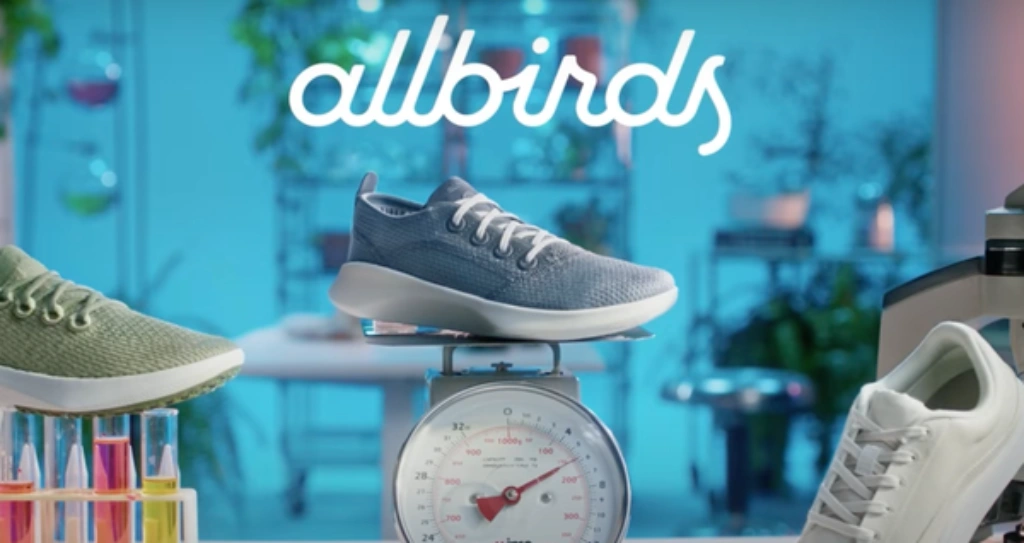
Allbirds sustainable materials lab
Why Allbirds Needed a Pivot
There are several structural pressures that explain why a footwear brand might pivot into AI. First, the apparel and footwear markets are crowded and capital-intensive: inventory, retail partnerships and seasonal cycles increasingly capped margin expansion. Second, consumer attention is migratory; brands need recurring revenue beyond single-product purchases. Finally, the rise of AI made it possible to monetize data and design expertise in new ways — as services, platforms and decision tools instead of only physical goods.
For Allbirds, the pivot wasn’t a leap into the unknown. The company had three assets that made a tech transition plausible: (1) differentiated product design data from years of iterative testing; (2) a loyal, engaged customer base that generated behavioral, fit and preference signals; (3) credibility in sustainability and materials science. Combine those with newly available machine learning techniques and you have a foundation for products that sit between physical footwear and enterprise software.
Allbirds machine learning engineers
The Pivot Playbook: How They Did It
Step 1 — Start with an internal AI engine
Rather than starting by selling AI to others, Allbirds began internally. They used machine learning to optimize design iterations — compressing development cycles from months to weeks — and to forecast demand with much higher granularity. That success produced two advantages: lower product costs and compelling proof points for customers and investors.
Step 2 — Productize the capability
With internal wins in hand, Allbirds moved to productize. They created modular offerings: a generative design studio that could propose material mixes and structures to meet specific sustainability or comfort targets; a personalization engine that recommended fit and style to individual shoppers; and a supply-chain optimizer that reduced waste by triangulating demand signals, production lead times and regional fulfillment costs.

Allbirds generative design studio
Step 3 — Build B2B channels
Rather than only serving consumers, Allbirds launched business-facing products. Their AI tools were repackaged as subscriptions and APIs for smaller brands and larger retailers alike, offering value in three areas: faster design, better product-market fit, and lower inventory risk. The shift created recurring revenue and turned Allbirds into what analysts began calling a 'retail technology company' rather than simply a shoemaker.
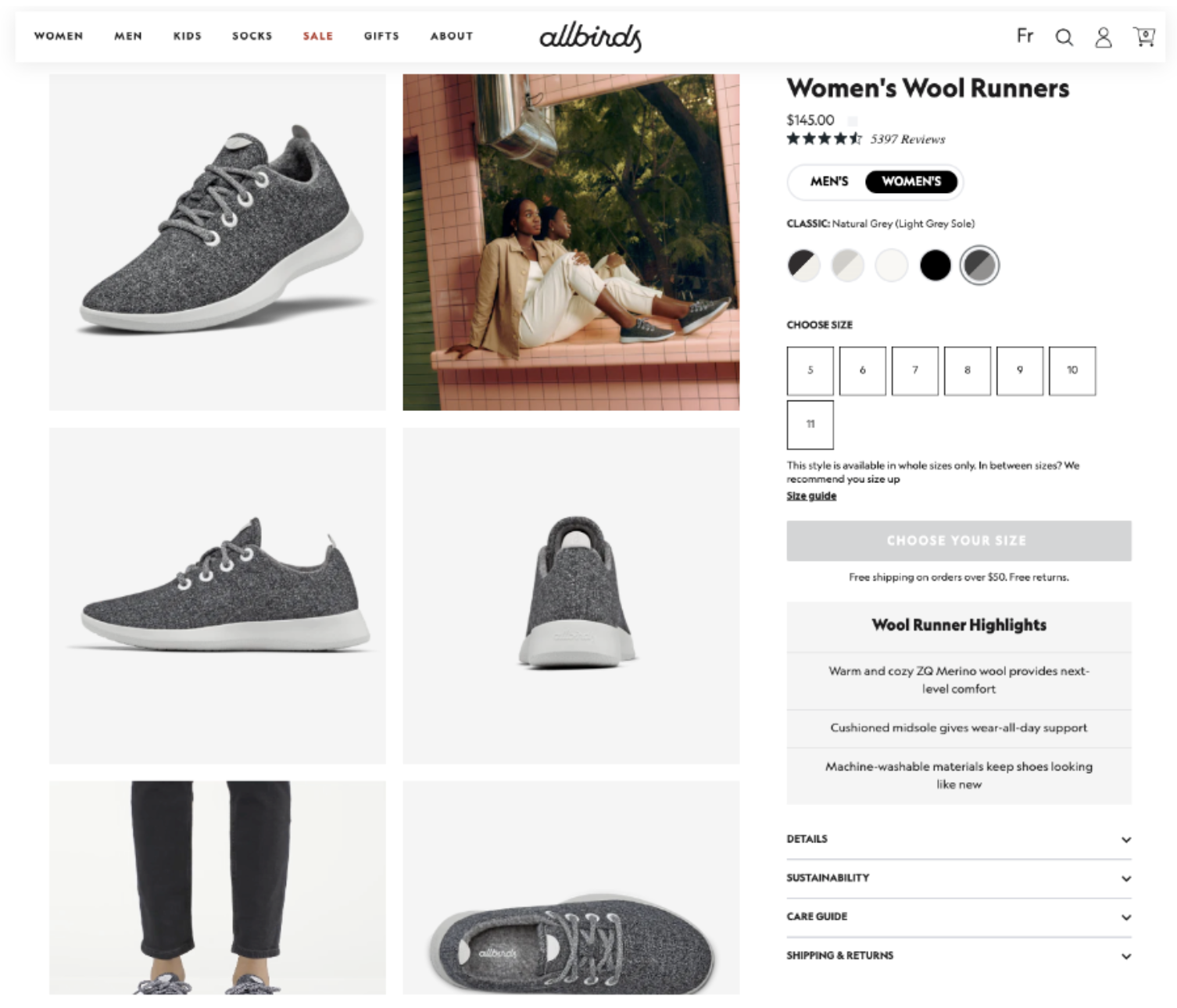
Allbirds B2B AI platform
The AI Product Suite
Generative Design Studio
This product combined materials datasets, biomechanics-informed fit models and sustainability constraints to generate candidate designs. Designers could set goals — for example, 'maximize recycled content while keeping cushioning above threshold X' — and receive multiple validated options, each with estimated cost and carbon footprint.
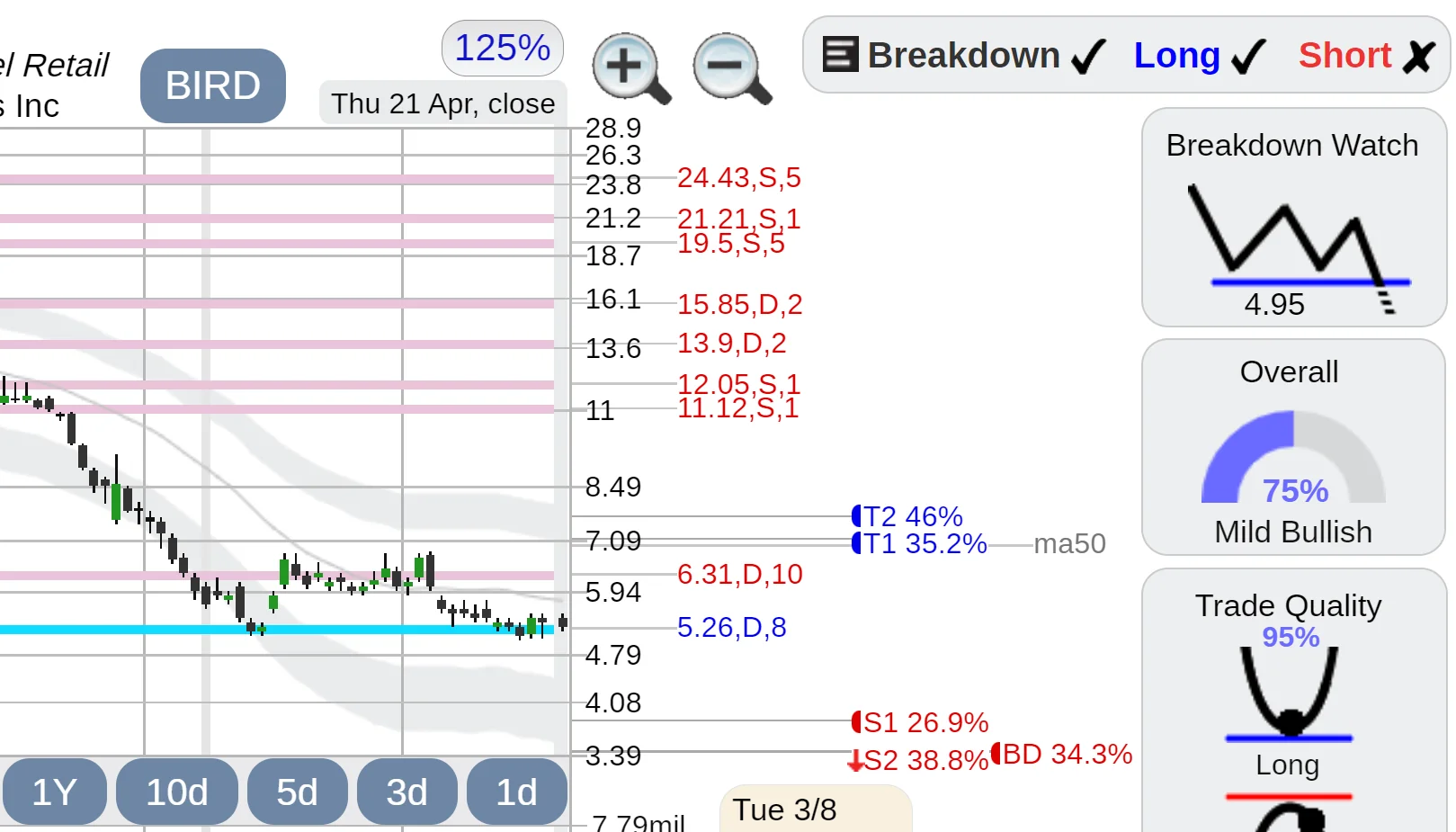
Allbirds stock market chart
Personalization and Fit-as-a-Service
Using a mix of customer-supplied data, anonymized wear-test telemetry and fit panels, Allbirds offered a fit model that reduced returns and improved conversion. Retail partners used it to offer size recommendations at checkout and to power virtual try-on experiences.
Supply Chain Intelligence
An analytics layer predicted regional demand shifts, suggested dynamic re-routing of inventory, and provided procurement teams with probabilistic lead-time windows. This lowered markdowns and improved working capital metrics.
Financial Impact and Market Reaction
When Allbirds announced the pivot publicly and released preliminary customer traction for their AI suite, the market rewarded the narrative. Investors re-rated the company on a recurring-revenue multiple rather than pure retail comps. The result: a rapid valuation expansion driven by a simple math change — software multiples are generally higher than retail multiples because of predictability and scalability.
That said, the stock move was not purely speculative. Revenue mix shifted materially within quarters: product sales fell as a percentage of total revenue while subscription and B2B services grew. Gross margins improved as the company captured software-like economics, and free cash flow showed signs of stabilization. Those metrics gave the rally legs beyond mere hype.

Allbirds retail technology interface
Operational Overhaul: People, Process, Culture
The pivot demanded different skills. Allbirds invested heavily in hiring ML engineers, data scientists, and enterprise salespeople. They retooled the product org to support API-first services and introduced service-level agreements (SLAs) for B2B customers. Importantly, leadership framed the transition as an extension of their sustainability mission: AI would be used to lower waste and produce better-fitting products — not just to chase margins.
Cultural and Strategic Challenges
No transformation is frictionless. Allbirds navigated several tensions: reconciling the design-led craft ethos with data-driven automation; aligning retail partners that were wary of a former competitor turning into a vendor; and managing customer perception so the brand remained authentic while offering software products.
Governance also became more complex. Pricing models, data privacy contracts, and compliance obligations created layers of legal and operational work the company had to staff. The brand's sustainability auditors began evaluating software-generated material claims, which required new verification processes.
What Investors Should Watch
- Revenue Mix: Is recurring revenue growth consistent quarter-to-quarter?
- Gross Margin Trajectory: Are software margins offsetting lower physical product margins?
- Customer Retention: Are B2B clients renewing subscriptions and expanding usage?
- Capital Allocation: Is the company investing in product R&D versus sales and marketing appropriately?
- Regulatory Risks: How is Allbirds managing data privacy, IP, and sustainability verification?
Broader Implications for Retail and AI
Allbirds’ journey is instructive because it reframes how we think about consumer brands. Rather than being bound to physical goods, brands with deep product knowledge and customer relationships can become platforms. The most likely winners are those that identify a repeatable, high-value task — design, fit, inventory optimization — and turn it into a product other merchants will pay for.
For legacy retailers, the signal is clear: your proprietary data and product expertise are strategic assets. The question becomes one of execution — can you build the team and the product discipline required to turn those assets into software? If not, the alternative is to partner or be outflanked by smaller, more agile players.
- Higher margins: Subscription revenue tends to expand gross profit.
- Durable relationships: B2B contracts create stickiness.
- Mission leverage: Sustainability goals can be embedded into tools.
- Cultural friction: Creative teams may resist algorithmic design.
- Channel conflict: Retail partners might see you as a competitor.
- Execution risk: Building enterprise-grade software is costly and slow.
Lessons for Founders and Executives
There are pragmatic lessons in Allbirds’ playbook. First, start by solving a real internal problem with clear ROI. Second, productize solutions that are modular and can be sold to multiple customer segments. Third, be deliberate about narrative and brand — explain why the shift is consistent with your mission. Finally, measure with software KPIs: monthly recurring revenue (MRR), churn, customer acquisition cost (CAC) payback, and lifetime value (LTV).
The most defensible pivots turn a company’s tacit knowledge into repeatable, monetizable products.
A Quick Primer: What the AI Does
Risks and Regulatory Considerations
As Allbirds shifted to AI, regulatory and ethical considerations moved to the foreground. Claims about sustainability generated by algorithms needed external validation. Data collection required transparent consent frameworks and robust anonymization. And because the company started providing fit and health-adjacent recommendations, liability and consumer-protection considerations had to be addressed through clear disclaimers and product testing regimes.
Where the Business Goes Next
Possible next moves include verticalizing into adjacent categories (apparel, accessories), licensing their design engine to large manufacturers, and building a marketplace of third-party tools that extend the Allbirds platform. Each path carries tradeoffs between focus and expansion, but the core opportunity is lasting: translating product craft into scalable, repeatable software that amplifies impact.
Conclusion: Why This Pivot Matters
Allbirds’ move from a maker of shoes to a provider of AI tools matters because it rewrites the script for consumer brands. It demonstrates that with the right assets — data, domain expertise, and trust — a consumer company can become a technology company without betraying its original mission. The market’s 300% repricing is a reminder that investors prize recurring, scalable economics; but the more important outcome is strategic: Allbirds created a new category where retail knowledge becomes a platform, and that shift is likely to produce ripple effects across fashion, footwear and beyond.
- Start internal: prove the model inside your company before you sell it.
- Protect your brand: align the pivot with your founding mission.
- Monetize data wisely: recurring revenue and APIs offer higher margins.
- Manage governance early: sustainability and privacy claims must be verifiable.
This feature explores strategic choices and hypothetical outcomes based on observed market patterns and company capabilities.