How AI Stopped Spotify's Top Engineers From Writing Code

Spotify logo AI code
The headline is built to provoke: a major tech company saying its best developers "haven't written a line of code since December" because of AI reads like a turning point in the history of software. Whether literal or rhetorical, the claim captures a broader shift companies are experiencing as generative artificial intelligence moves from an assistant to, in some workflows, a primary creator. For product leaders, engineers and everyday users it's worth unpacking exactly what this means — technically, economically and culturally — and what the next 12 to 24 months might look like for engineering organizations everywhere.
engineer AI code generation
Nobody expects developers to vanish. The real question is how their role changes when AI begins to take on design, implementation and first-pass validation.
WHAT SPOTIFY'S CLAIM MEANS
At face value the statement is startling. But in practice it can cover a spectrum of realities. One interpretation is literal: top engineers stopped typing production code because AI tools now generate most new code. Another is process-focused: engineers moved into roles that supervise, review and integrate AI output rather than authoring line-by-line implementations. A third interpretation is rhetorical, meant to emphasize the magnitude of AI adoption while not literally meaning a complete absence of human coding.
From authorship to orchestration
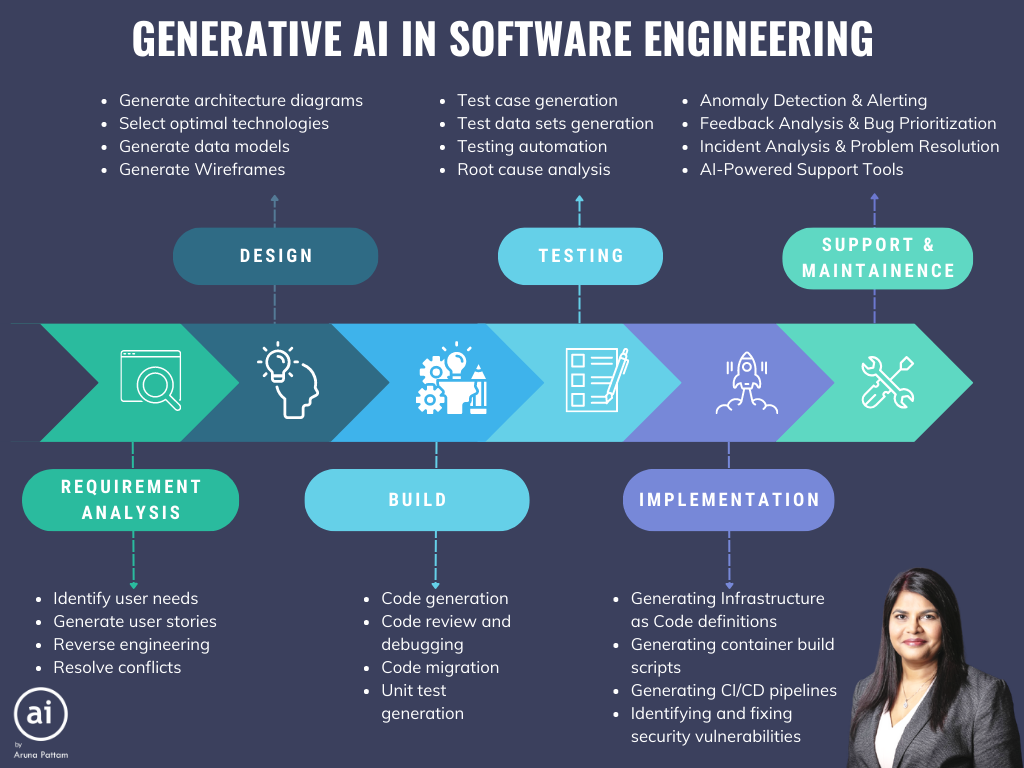
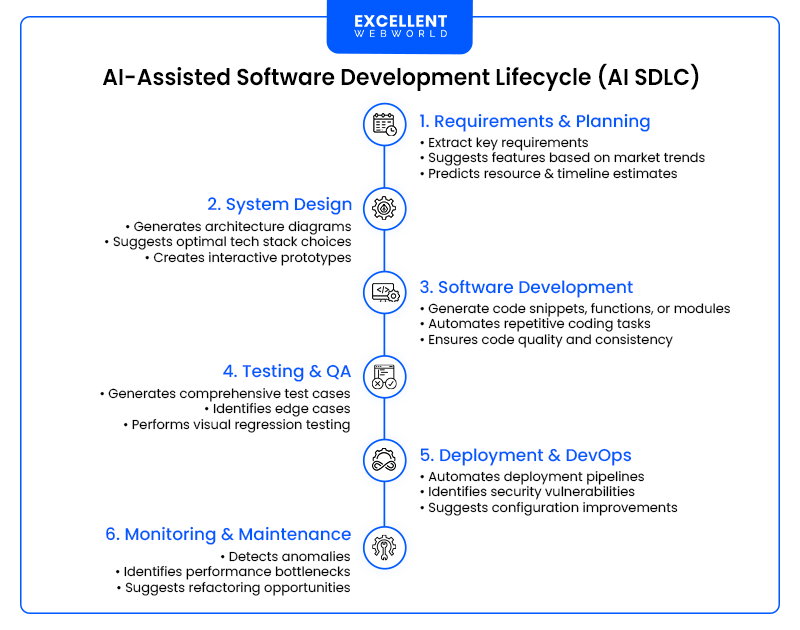
Modern generative models — the kind that power code completion, code synthesis and automated refactoring — can handle many of the repetitive, boilerplate and surface-level tasks that once filled a developer's day. That frees senior engineers to operate at a different level: defining architecture, writing high-leverage tests, specifying intents and creating the prompts, toolchains and guardrails that ensure AI output conforms to product and security needs. In many organizations this transition is already in motion. The engineer who used to implement an API endpoint might now design the contract, produce a small reference implementation, and supervise AI-generated client libraries across multiple languages.
Practical meaning in an enterprise
For a company with Spotify's scale, the shift is operational as well as cultural. Continuous integration pipelines, code review practices, security scanning and observability must be adapted to cope with machine-generated contributions. Policies that once assumed a human author need to account for probabilistic outputs, hallucinations and inconsistent styles. So when leaders say their best developers 'haven't written code,' they often mean those engineers no longer spend their time in the coding groove — they spend it shaping prompts, validating AI outputs, and hardening the systems that stitch human and machine work together.
developer AI-assisted development
TECHNOLOGY: WHAT AI CAN AND CAN'T DO
Where AI shines
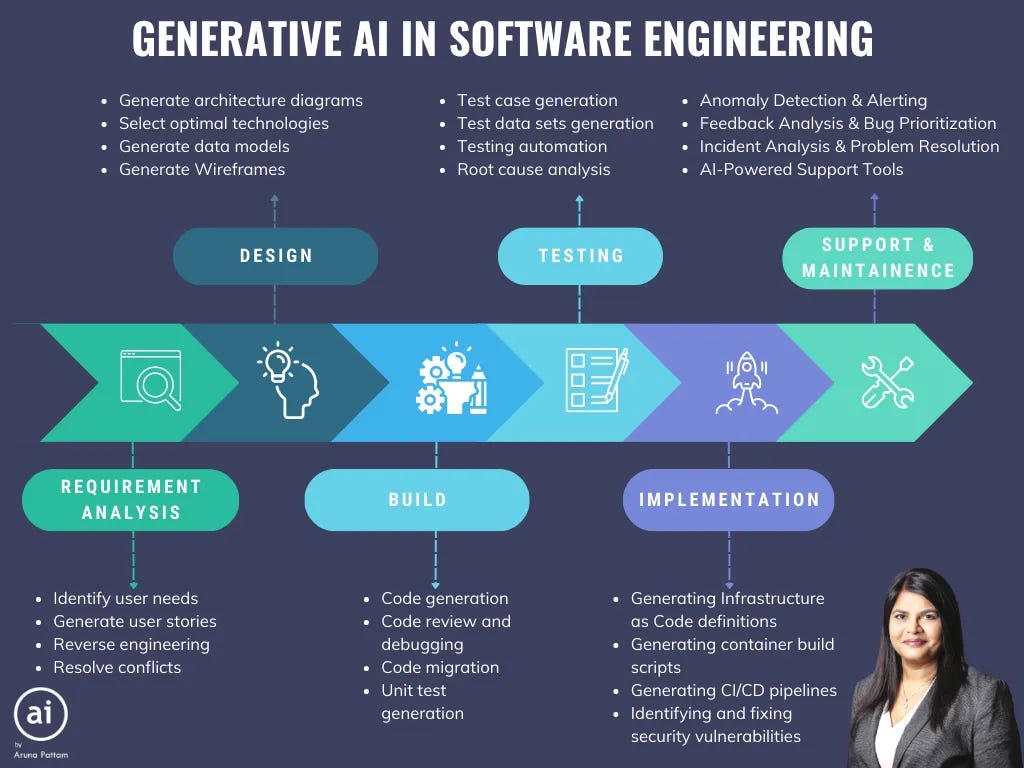
AI excels at pattern completion. That means writing unit test scaffolding, generating CRUD operations, creating consistent client SDKs from API specs, and transforming repetitive code such as serialization, mapping layers or form handling. Tools integrated into IDEs can finish lines, produce plausible functions and translate between languages with surprising fluency. In a mature pipeline, AI can also assist in documentation, generate changelogs, propose migration paths for deprecated libraries, and synthesize implementation ideas from high-level descriptions.
AI code automation
Where humans still lead
There are domains where human experience remains crucial. System design that balances latency, cost, fault tolerance and regulatory requirements is not reducible to one-off code snippets. Security-critical logic, cryptography, subtle race conditions, and product decisions driven by user research need cognitive framing, trade-off analysis, and accountability. Debugging complex incidents frequently demands a deep mental model of distributed systems — something current models approximate but do not reliably replicate.

AI code writing decline
Failure modes to watch
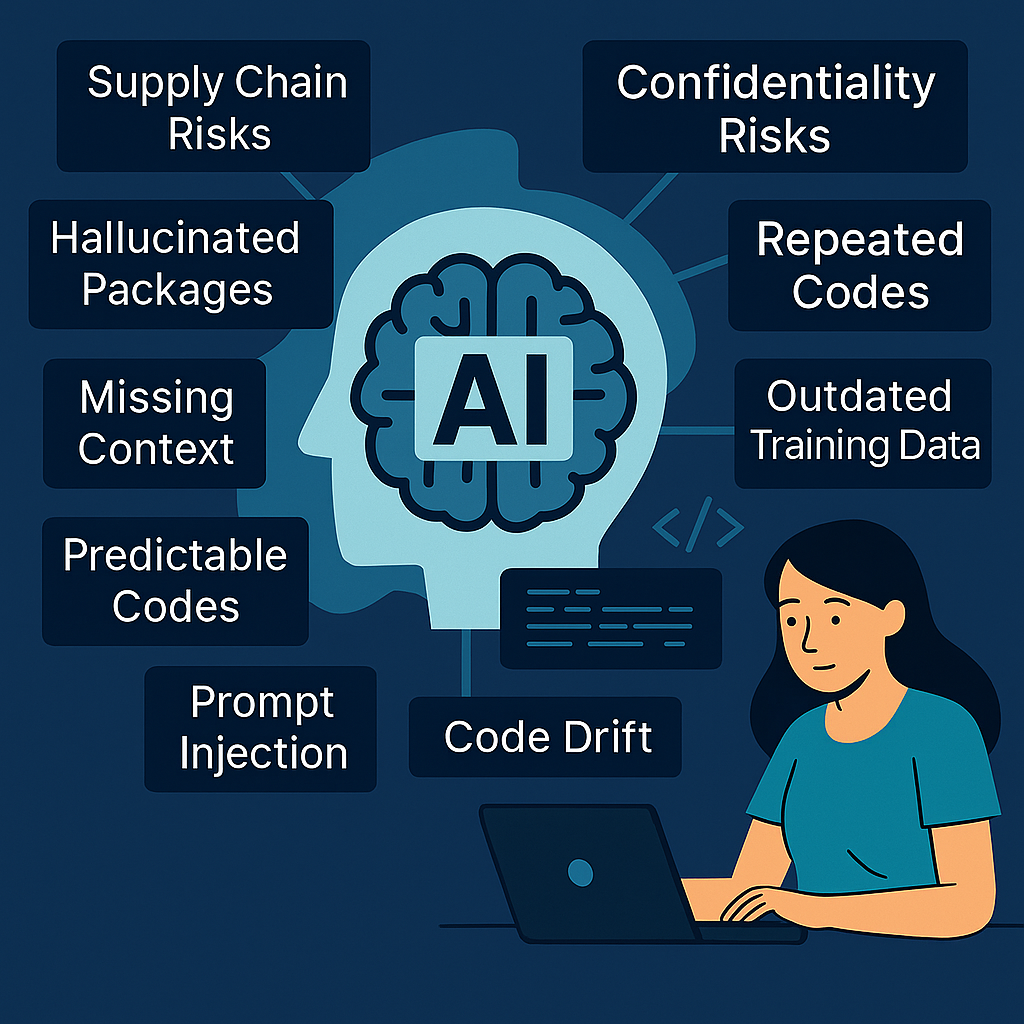
Machine-generated code comes with predictable risks: hallucinations that appear plausible but break at runtime; insecure defaults that introduce vulnerabilities; licensing ambiguities from training data; and brittle solutions that fail under real-world inputs. These failure modes mean that even when AI authors first drafts, organizations must embed rigorous testing, observability and human review into the development lifecycle.
AI code generation risks
ORGANIZATIONAL IMPACT
When a company announces that top engineers aren't writing code, it signals a rebalancing of skills and roles. HR, talent development, and team planning must adapt. Expect changes in job descriptions, performance metrics and career ladders.
generative AI software engineering
New responsibilities and new metrics
Engineers will be measured less on commit volume and more on integration quality, architectural soundness and the ability to design prompt frameworks and evaluation criteria for AI outputs. Operational metrics — mean time to detect and remediate AI-induced regressions, coverage of AI-generated code by tests, and percentage of PRs that required significant human correction — will become meaningful ways to evaluate teams.
engineer role AI change
Upskilling and role design
Companies will invest in rapid upskilling programs so engineers can work effectively with AI toolchains. Training focuses will include prompt engineering, AI evaluation methodologies, model risk assessment, and secure prompt design. Some organizations create new roles — AI integrators, prompt librarians, model reliability engineers — that sit between product teams and traditional platform engineers.
ECONOMICS: PRODUCTIVITY, COSTS, AND BREADTH
AI promises productivity gains but also introduces new costs and trade-offs. The initial uplift often looks like lightning-fast feature iteration because AI can scaffold work that humans would take days to sketch. But the true economics depend on maintenance costs, incident response overhead, and the need for enhanced testing and observability.
Short-term gains, long-term questions
In the short term, companies see faster prototyping and higher throughput. In the medium term, however, the brittle nature of some AI outputs can increase maintenance burden. Engineers must write tests that compensate for model variability, implement monitoring that catches subtle semantic regressions, and create policies that prevent the compounding of small errors into systemic failures.
software engineer AI tools
Budget reallocation
Budgets will shift. Money previously spent on large engineering teams may be redirected toward data infrastructure, model licensing or hosting costs, and new tooling to track AI performance. Legal and compliance teams may also require more resources to audit model behavior, manage licensing concerns and document lineage of generated code.
- Faster prototyping and boilerplate elimination.
- Lower time-to-market for routine features.
- Standardization of repetitive tasks and style.
- Risk of subtle, costly defects.
- Increased reliance on third-party models and vendors.
- Potential erosion of deep engineering craftsmanship over time.
CULTURE AND ETHICS
Beyond code, the narrative touches the soul of engineering culture. Senior engineers often derive identity and career fulfillment from craftsmanship. Shifting to a model where the craft is supervision and governance, rather than hands-on writing, requires clear communication and pathways for professional growth.
Morale and identity
Some engineers may welcome the change, enjoying the release from mundane tasks and the opportunity to focus on high-impact design. Others may feel alienated if their work becomes primarily review and validation. Companies that handle the transition poorly risk attrition among talent who value deep, continuous practice in coding.
Ethical considerations
There are thorny ethical questions: how to acknowledge AI contributions in product release notes, how to attribute responsibility for defects, and how to ensure equitable treatment for engineers whose roles shift significantly. Transparency with customers and users becomes important when product behavior is increasingly influenced by generative models.
MANAGING THE TRANSITION: PRACTICAL GUIDANCE
For leaders wondering how to adopt AI while avoiding pitfalls, a pragmatic, staged approach works best. Here are concrete steps engineering leaders can take.
1) Start with low-risk automation
Automate repetitive, well-understood tasks first: test scaffolding, documentation generation, and refactors that have comprehensive test coverage. Prove value and build confidence before applying AI to security-sensitive systems.
2) Build measurement into every change
Track the impact of AI on defects, incidents, cycle time and customer-facing metrics. Use canary releases and experiment frameworks to surface regressions early. Metrics create an empirical basis for expanding AI use.
3) Institutionalize review and ownership
Make code review processes robust to AI-generated contributions. Consider dedicated 'AI review' gates that check for common hallucinations and insecure patterns. Preserve clear ownership: a human should be accountable for every release, regardless of how much AI contributed.
4) Invest in tooling and observability
Improve static analysis, runtime monitoring and automated test suites. Observability that connects user issues to specific AI outputs helps diagnose failures that originate from model misbehavior.
LEGAL, COMPLIANCE AND RISK
Generative AI raises legal questions about training data, licensing of generated outputs, and regulatory compliance. For companies operating at scale, legal teams must be involved early to define acceptable risk levels and to document model provenance.
Licensing and IP
Organizations need policies for how to handle generated code that resembles copyrighted material. Internal guidelines and licensing audits can reduce exposure, and some companies adopt conservative policies that forbid direct use of non-attributed generated code in safety-critical paths.
Regulatory exposure
Regulators are beginning to focus on model transparency and safety. Engineering teams should anticipate requests for documentation about training data, evaluation practices and the human oversight mechanisms in place when AI is used to produce user-facing functionality.
THE FUTURE: TWO SCENARIOS
Predicting the long-term outcome is speculative, but useful mental models help organizations prepare.
Scenario A — Augmentation wins
AI becomes a pervasive assistant. Engineers increasingly orchestrate and evaluate, not author every line. Productivity rises, but so does the need for new disciplines: model ops, AI security, and human-centered evaluation. Engineering remains central to product success, but its toolkit changes.
Scenario B — Automation without governance
Companies rush to automate without sufficient testing and governance. The result is brittle systems, occasional high-profile outages and a rollback of AI responsibility to larger teams. Trust erodes among engineers and customers, and regulation increases.
CONCLUSION
Spotify's headline — that its best developers haven't written a line of code since December — is emblematic of the inflection point many organizations face. It is not necessarily a prophecy of obsolescence for engineers, but it is a loud signal that the nature of engineering work is changing. The most valuable engineers will be those who can translate product goals into reliable prompts and evaluation regimes, design systems that tolerate probabilistic components, and establish governance so that speed does not come at the expense of safety.
- AI can eliminate boilerplate but introduces new risks requiring human oversight.
- Engineering roles will shift toward orchestration, governance and evaluation.
- Companies should adopt AI incrementally, measure outcomes, and institutionalize accountability.
Final thought
The future of software is not code-less; it is co-authored. Organizations that design the partnership thoughtfully — balancing automation with rigorous human judgment — will turn this inflection into a lasting advantage.