A Carriage of Memory: How One Rail Wagon Became a Stage for Revenge
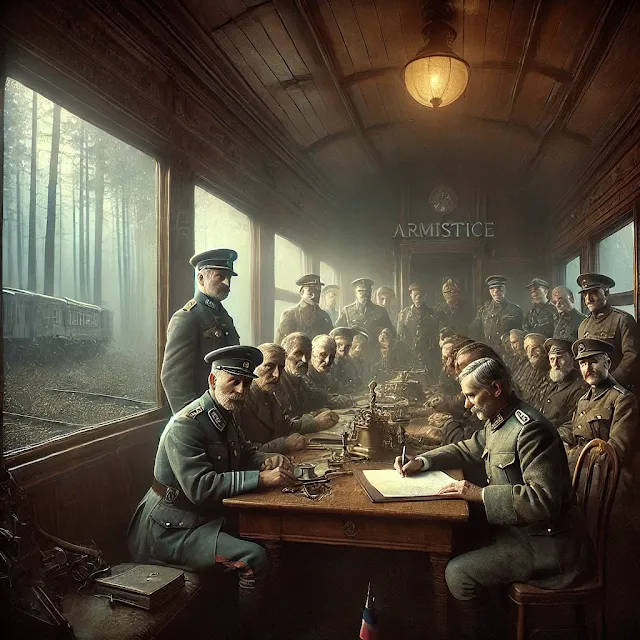
The image is cinematic by design: a dark green railway carriage parked beneath oak trees in the forest of Compiègne, a long table set inside, and beneath the glassy windows the defeated representatives of a nation signing terms dictated by its enemy. In one moment in November 1918, that carriage became the physical site where Germany's Great War came to an end. In another, far more calculated moment in June 1940, Adolf Hitler brought France back to that same carriage and demanded a new surrender. The scene was not only about territory and armistice clauses; it was theatre, propaganda, and a deliberate inversion of historical shame turned into triumph. This is the story of the Compiègne carriage — its symbolism, the staging, and why a single piece of rail equipment mattered so much to nations and men.
1918 WWI armistice carriage Compiègne
THE ORIGINS: THE 1918 ARMISTICE AND THE CAR OF RENOWN
A humble carriage becomes a world symbol
At the end of World War I, the Allies wanted a neutral, secure, and symbolically resonant site to receive Germany’s surrender. The chosen spot was a railway carriage in a clearing near the Compiègne forest in northern France — the same carriage in which, years earlier, high-ranking officials had traveled. On November 11, 1918, around 5 a.m., in that wood-paneled car, Germany signed the armistice that halted the fighting. The terms were read out; the representatives of the German Empire bowed to circumstances that would reshuffle borders and empires.
The carriage itself — modest, military, and unglamorous — immediately assumed an outsized meaning. It was transformed from an object of ordinary transport into a potent symbol of victory and humiliation, engraved in the political and cultural memory of the victorious nations. For the French and their allies, that carriage signified the end of a catastrophic conflict and the restoration of national pride. For German nationalists and veterans, it came to represent the sting of defeat and the refusal to accept a perceived national humiliation.
THE STAGING OF 1940: REVENGE AS PERFORMANCE
A conquered French state and a dictator with an eye for symbolism
When the German Blitzkrieg rolled through France in May and June 1940, the rapid collapse of the French field armies, the evacuation at Dunkirk, and the fall of Paris left the Third Republic politically shattered. German forces occupied large parts of northern and western France, while a fragile armistice government was forming in the unoccupied south under Marshall Philippe Pétain. For Hitler, who had survived the humiliation of Germany’s 1918 defeat as a bitterly formative narrative of the national condition, the opportunity to rewrite history was irresistible.
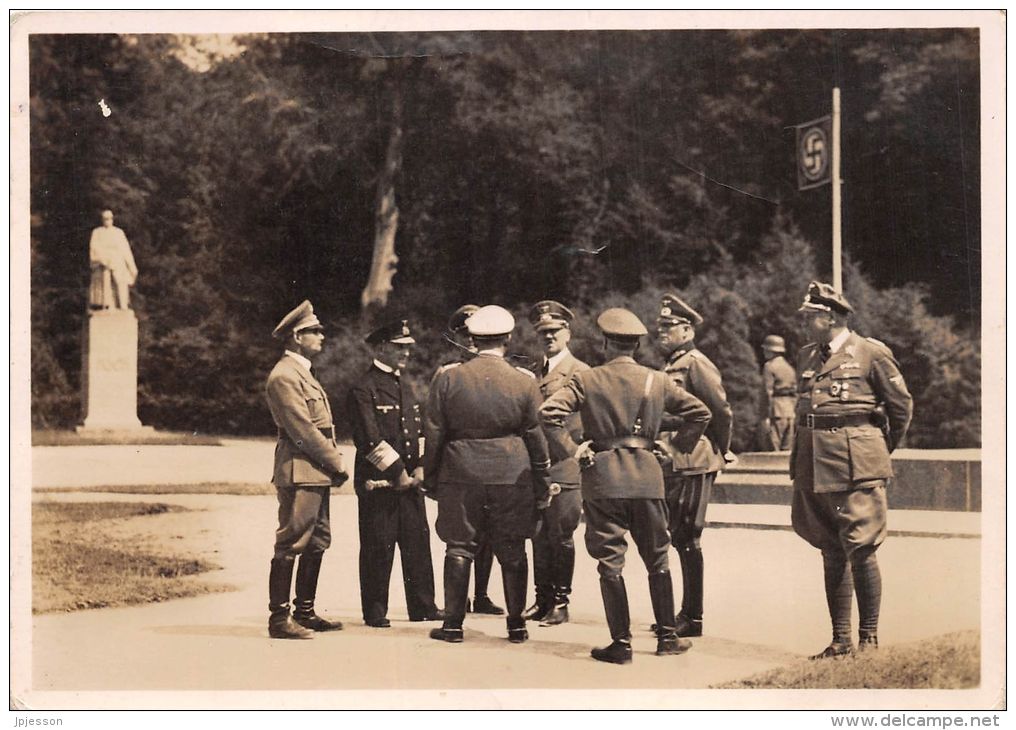
The decision to use the same Compiègne carriage for the 1940 armistice was purposeful. It was designed to create an image: the defeated French negotiating in the same cabin in which German officers had once been bested. In June 1940, Hitler ordered the carriage returned to Germany as a trophy and had it placed in the very clearing where the 1918 armistice had been signed — the psychological goal was to demonstrate a reversal of fortunes and to provide powerful propaganda footage that could be disseminated across Europe.
Hitler’s reuse of the Compiègne carriage was not accidental; it was a staged act of historical inversion, turning a symbol of German humiliation into one of German vindication.
Hitler 1940 Compiègne armistice carriage ceremony
THE DAY IT HAPPENED: JUNE 1940, THE CEREMONY AT COMPIÈGNE
Procedure and personalities
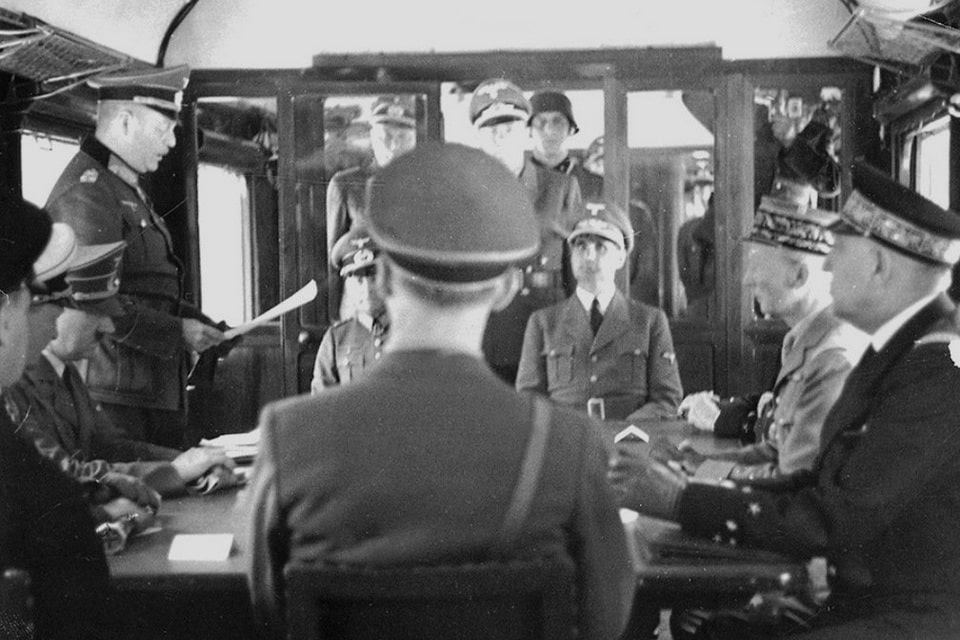
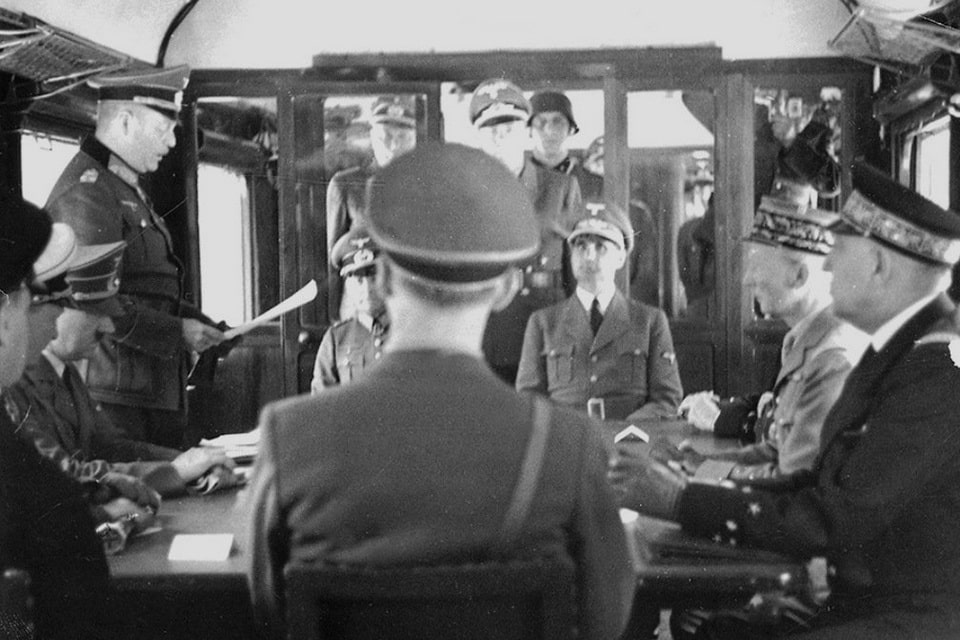
On June 21, 1940, representatives of the French government — now seeking terms for an armistice after military collapse — traveled to the Compiègne clearing. Inside the carriage sat tables and chairs prepared under German supervision. Marshal Philippe Pétain, whose government would soon sign the armistice on behalf of France, and other French delegates were placed in a setting stacked with symbolic meaning. Hitler himself attended portions of the ceremony, insisting that the event be filmed and photographed. Those images were then used to underline the message of German resurgence and French defeat.
There are important personal notes in the scene. Hitler relished the chance not merely to sign documents but to enact a moral drama: the vanquished nation responsible for inflicting the 1918 humiliation was now forced to accept—literally under the same windows—the dictates of its former enemy. For French viewers who would later see the filmed images, the tableau was devastating; for Germans, it was a cathartic confirmation of triumph. In some ways the carriage functioned like a judicial bench: the site of judgment, reversal, and historical correction.
French surrender 1940 Compiègne carriage
WHY THE ACT MATTERED: SYMBOLISM, PROPAGANDA, AND MEMORY
The power of place in modern warfare
Wars are fought with weapons, and they are also fought with symbols. The Compiègne carriage demonstrates how physical objects can be weaponized into instruments of narrative. Hitler’s careful staging fashioned an easily legible story: Germany had been humiliated in 1918; in 1940 that humiliation was overturned. The carriage gave the story an irrefutable, visual anchor.
Propaganda value was immediate. The Germans controlled the narrative by providing photographs, newsreel footage, and official statements that emphasized German ascendancy and French submission. The images traveled not only within Germany but across occupied Europe and into neutral countries. Psychological warfare was central: the spectacle aimed to demoralize resistance, legitimize occupation, and embolden collaborationist regimes.
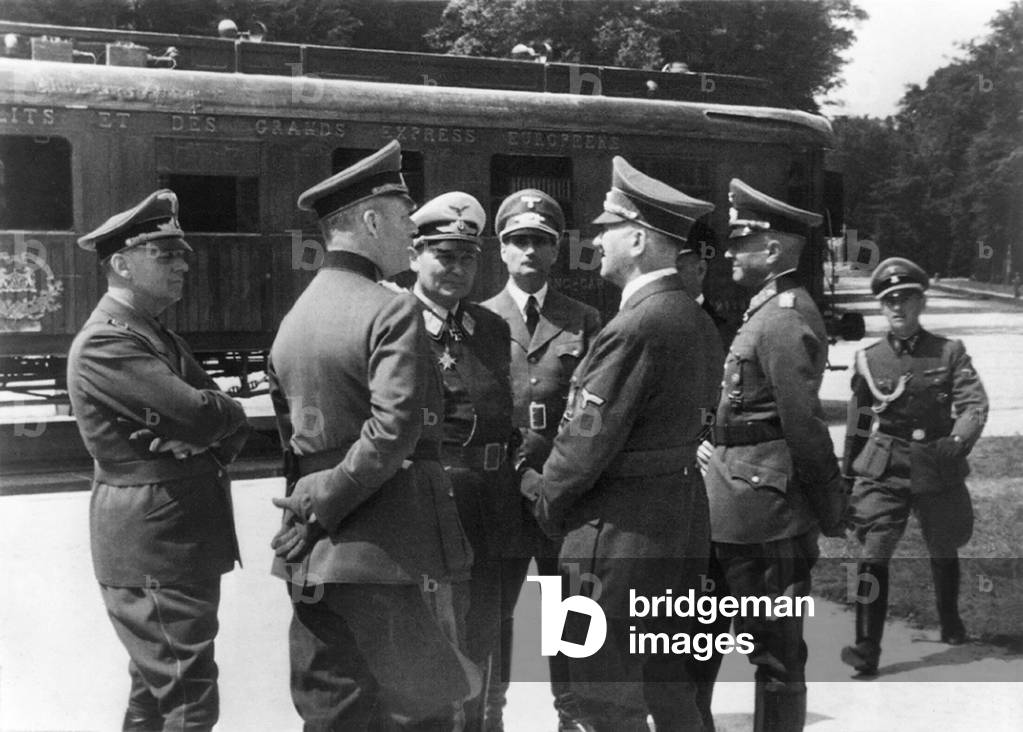
Adolf Hitler Compiègne forest June 1940
THE AFTERMATH: WHAT HAPPENED TO THE CAR AND THE MEMORY
From trophy to ruin
After the 1940 ceremony, the carriage was transported to Germany as a trophy and placed in a museum display in Berlin, itself a display of conquest. The act of carrying the carriage into the heart of the Reich was meant to underscore dominance, to make the vanquished relic a centerpiece of German triumph. Yet the carriage's fate after the war underscores the precariousness of symbolic artifacts: Allied forces later discovered it, and during the chaotic final months of the Third Reich, it was reportedly destroyed by retreating SS units, burned to prevent its recapture. Its physical absence did not erase the images or the memories they carried.
In France, the Compiègne clearing retained its symbolic charge. The site, and the story of the carriage, became a focal point for debates about memory and reconciliation. For many French citizens, the 1940 scene crystallized the trauma of defeat and occupation; for Germans, it later became an uncomfortable reminder of how modern politics can weaponize memory. In the second half of the 20th century, both nations confronted these shared histories in museums, memorials, and in public discourse aimed at understanding — and at preventing — the repetition of such national humiliations and revenges.
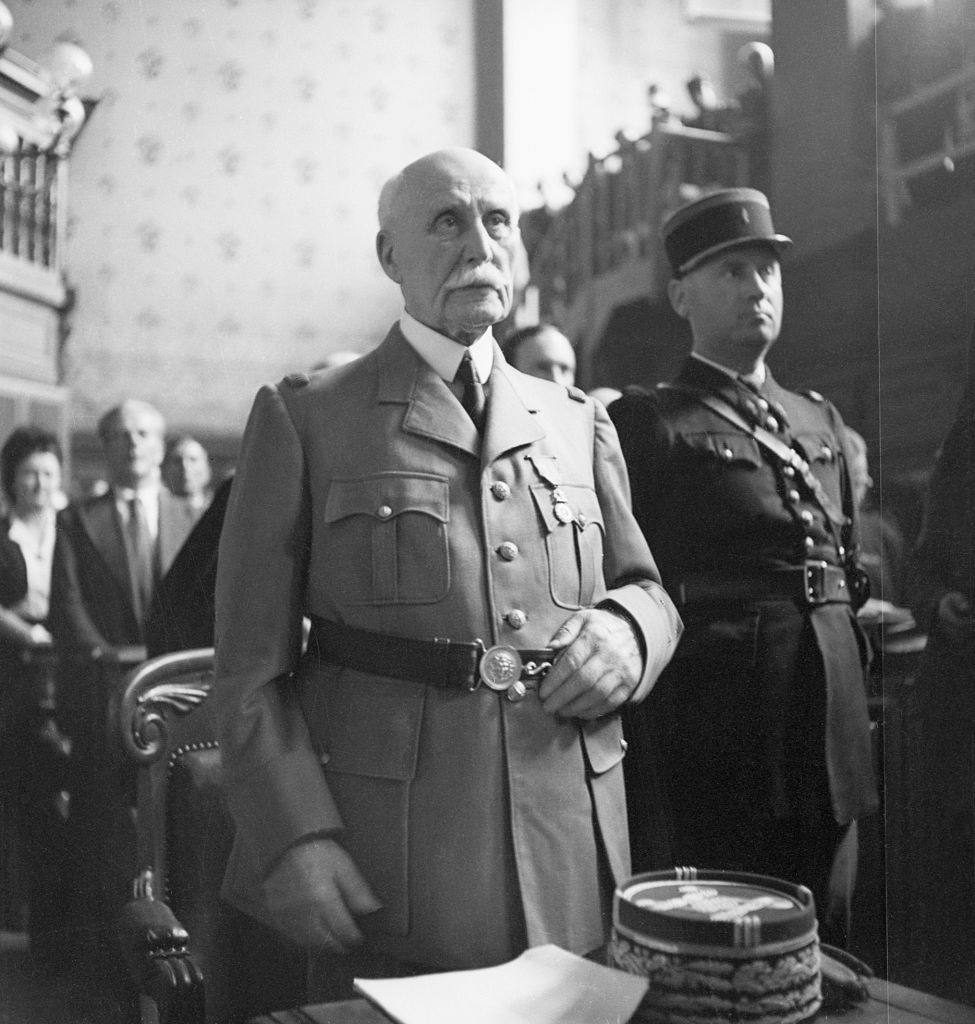
Philippe Pétain Compiègne armistice signing
CONTEXTUALIZING THE ACT: POLITICS, PERSONALITY, AND MILITARY REALITY
Hitler’s psychology and the politics of humiliation
Any single symbolic act exists within broader political and military truths. The 1940 armistice was not only spectacle; it also reflected the balance of forces after France’s military collapse. But Hitler’s insistence on the carriage demonstrates how personal psychology and national myth-making can intersect. The memory of 1918 fueled revanchist sentiment in Germany through the interwar years; Hitler's rise harnessed that sentiment into a program of territorial and ideological revision. The Compiègne stunt translated private grievance into public theater, making it both cathartic for his supporters and a warning to others.
French politics and the calculus of surrender
From the French perspective, choosing to negotiate within the carriage was not a mistake so much as an inevitability under the circumstances. With cities occupied and the army shattered, French leaders sought terms that might spare lives and preserve some autonomy. Signing an armistice under the windows of the carriage that had once held German defeat was an added indignity, but the structural power differential left few alternatives. Pétain's decision to capitulate and later head the Vichy regime would be judged harshly, but must be understood in the context of collapse, fear, and political calculus that prioritized immediate survival over long-term pride.
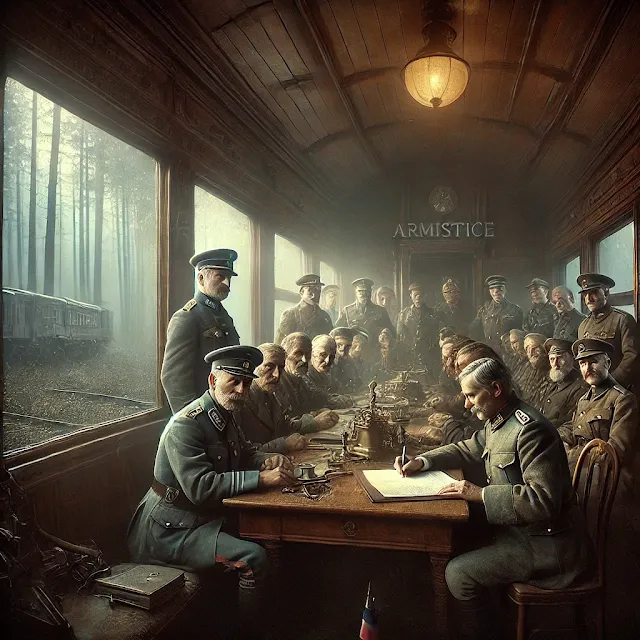
Marshal Foch 1918 armistice carriage
LEGACY: HOW WE REMEMBER AND WHY IT STILL MATTERS
Sites, symbols, and the politics of memory
The Compiègne carriage story is more than a historical anecdote; it is a case study in the politics of memory. Monuments and artifacts accumulate meaning beyond their materiality. They become shorthand for narratives that shape national identities. The 1918 and 1940 events are taught differently in different countries: as liberation or humiliation, victory or embarrassment. That divergence is part of the point. Nations choose which memories to elevate and how to interpret them.
After 1945, Franco-German reconciliation would go on to become a foundation of European peace. Yet reconciliation did not erase the power of images like the Compiègne carriage. Remembering the staged surrender helps explain why symbolism matters in diplomacy and war — and why leaders still use ritual to assert moral authority over rivals. The carriage itself may be gone, but its story remains instructive: symbols can be reclaimed, repurposed, or destroyed, but the memory they carry can be remarkably resilient.
TIMELINE — KEY DATES AROUND THE COMPIÈGNE CARriage
- November 11, 1918: Armistice signed in the Compiègne carriage, ending World War I hostilities on the Western Front.
- June 1940: Following the German conquest of France, Hitler orders the carriage returned to the Compiègne clearing and uses it during the French armistice ceremony.
- Late 1940s: The carriage is taken to Germany as a trophy and later destroyed in the closing months of World War II.
CONCLUSION: LESSONS FROM A PIECE OF WOOD AND GLASS
History does not always unfold in grand narratives of cause and effect; sometimes it is staged on the small platforms of symbolism, where leaders perform meanings for audiences at home and abroad. The Compiègne carriage story reminds us that objects can be instruments of power, that political theater can be as consequential as any military victory, and that the manipulation of memory can have long-lasting effects on national psyche and international relations. To understand the 20th century we must account for battles and treaties, but we must also account for the stagecraft of humiliation and triumph.
No artifact is merely an artifact; it can be a weapon, a wound, or a bridge, depending on who controls its story.
- The Compiègne carriage was reused by Hitler in 1940 as a deliberate act of symbolic revenge for Germany’s 1918 defeat.
- Staging matters: the physical site of an event can amplify its emotional and political consequences.
- Propaganda and the manipulation of public memory played a central role in Nazi strategy during the early years of World War II.
- Objects and places retain historical power long after their physical destruction; memory can outlive material relics.