
European Far-Right Pushes for ICE-Style Immigration Police
The proposal is simple in messaging and bracing in consequence: create a powerful, centralized agency dedicated to identifying, detaining, and deporting undocumented migrants — modeled on the United States' Immigration and Customs Enforcement (ICE). Across Europe, several far-right and populist parties have begun to openly press for versions of an "ICE-style" force, casting it as the necessary tool for restoring national sovereignty, protecting social welfare, and reclaiming control of porous borders. The debate that follows is not merely administrative; it turns on legal norms, human rights obligations, state capacity and the kind of societies European democracies want to be.

far-right politician ICE-style
Why the Idea Has Traction
For politicians seeking a strong, simple response to public anxiety about migration, the appeal is obvious: promise a single agency that gets results. Complex migration flows, media images of overcrowded reception centers and sporadic local tensions create fertile ground for proposals that seem decisive. An ICE-style agency is marketed as efficient, direct and operable under a single chain of command — a contrast to the fragmented, cross-departmental systems that manage migration in many European states.

border enforcement protest
Electoral Incentives
Populist parties can frame immigration enforcement as an existential policy where technocratic hedging has failed. Promises to set up specialized enforcement bodies play well to voters who prefer visible, tangible action. They allow political leaders to claim they are delivering on core campaign pledges without needing to win consensus across multiple ministries.
Administrative Efficiency
Proponents also argue that a unified enforcement agency eliminates duplication. Immigration cases cross police, interior ministries, labor agencies and courts — a single unit focused on enforcement, proponents say, can streamline referrals, standardize procedures and reduce backlogs.
An "ICE-style" agency is not just a policy instrument; it is a symbol: decisive, administrative, and publicly visible.
What an ICE-Style Police Would Mean in Europe
Understanding the implications requires looking at what ICE is and what lessons Europe could borrow — and what it should avoid. In the United States ICE has broad authority to identify, arrest and deport non-citizens, often operating at the intersection of immigration enforcement and criminal investigation. It has faced sustained controversy over its tactics, oversight and the human cost of large-scale detention and deportation.

detention center Europe
Mandate and Powers
An analogous European body would likely centralize arrest powers, coordinate deportations, manage detention facilities and operate cross-border information exchanges. That raises immediate questions about checks on discretionary power: who authorizes raids, what judicial remedies are available, and how will vulnerable populations — including children, torture survivors and recognized refugees — be protected?
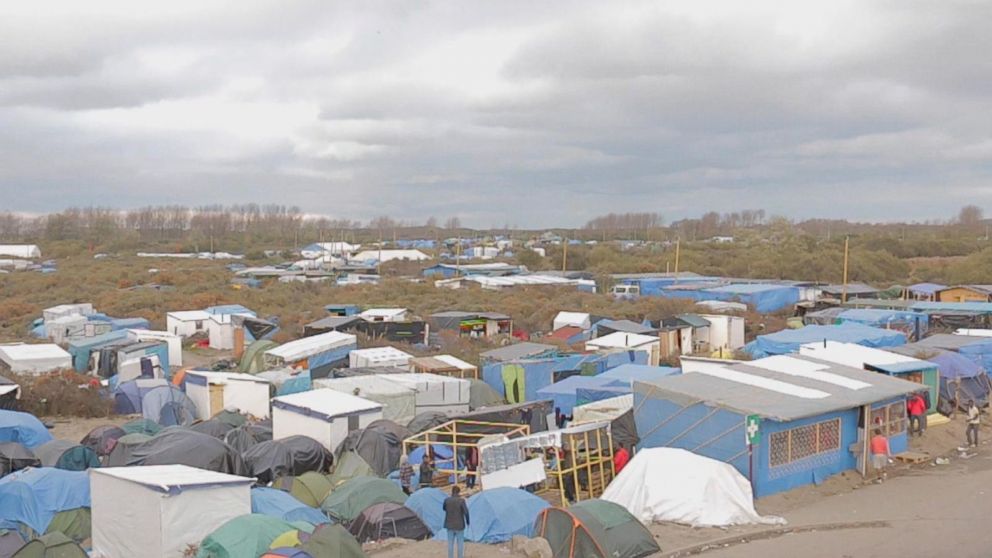
migrant camp Europe
Operational Practices
Operationalizing such a force would also mean decisions about methods: targeted arrests in workplaces and communities, cooperation with local police, detention standards, and use of surveillance technologies including biometric databases. Each decision will be a line where policy becomes practice, with consequences for communities, trust in law enforcement and international legal obligations.

law enforcement raid
Human Rights and Legal Risks
Human rights groups raise a clear alarm: concentrated enforcement tends to increase the use of detention and expedite removals at the expense of due process. In Europe, states are bound by asylum law, non-refoulement obligations and procedural safeguards that reflect decades of legal development. New enforcement bodies operating with limited oversight risk eroding those protections.

human rights protest
Detention and Due Process
Detention of migrants in administrative facilities, without criminal charges, is already a contentious practice in parts of Europe. Expanding enforcement to a robust, well-funded agency could increase detention rates and speed up removal procedures — potentially sidelining asylum applications and legal appeals. The consequence: people who should be protected may be pushed back into danger.
Discrimination and Targeting
There is a persistent risk that enforcement will disproportionately target racialized and marginalized communities. When law enforcement is empowered with discretion and broad mandates, implicit bias and political pressure can shape operations in ways that undermine equality before the law.

immigration checkpoint
Political Context: Which Parties and Where
Across the continent, far-right parties — from national conservative movements to hardline populists — have long campaigned on tough migration stances. In many cases their proposals are calibrated to local constitutional and administrative systems: where interior ministries already have strong powers, demands take the form of new resources and specialized units; in other systems, parties propose entirely new agencies.
From Rhetoric to Policy Proposals
Campaign platforms and legislative proposals vary: some call for accelerated deportations, others for expanded powers to detain migrants pending removal, and some for enhanced cross-border cooperation on returns. Across all these proposals, policymakers promise faster action and fewer bureaucratic delays.
Regional Variations
States in central and eastern Europe with more restrictive immigration frameworks may adopt different models from those in Western Europe where legal oversight and civil-society scrutiny are stronger. Similarly, countries that are part of the Schengen area must also consider the effects on cross-border movement and EU law. The patchwork of national legal systems and EU-level competencies ensures the end result will be uneven rather than uniform.
Operational Challenges and Practical Limits
A functional ICE-style force depends on administrative capacity — trained staff, detention infrastructure, transportation for removals and bilateral agreements with countries of origin. All of these are expensive and politically fraught. Experience shows that promises to deport large numbers of people often bump into real-world limits.
Costs and Capacity
Detention centers, deportation flights and legal processing require sustained budgets. A high-volume enforcement regime increases fiscal exposure. Moreover, deportations require cooperation from countries of origin; without diplomatic agreements, removals can stall and detainees remain in limbo.
Data and Privacy
Modern enforcement leans heavily on data: identity systems, biometric matching, mobile tracking and cross-border databases. That raises privacy and data-protection concerns. Aggregating large datasets tied to immigration status concentrates risk: breaches or misuse can have life-or-death consequences for vulnerable people.
Ethical and Democratic Questions
Beyond practicalities lies a fundamental debate about democratic values. Is the state primarily a guardian of borders or a protector of individuals? The creation of a powerful immigration enforcement agency pushes this question to the foreground: who gets to decide when the balance tilts toward security and when toward protection?
Public Trust and Policing
Where enforcement relies on raids in workplaces or neighborhoods, it can damage trust between law enforcement and communities. That erosion of trust has downstream effects on broader policing goals, from crime reporting to countering radicalization.
Political Normalization
Establishing such an agency also normalizes a certain political vocabulary: framing migration as a law-and-order problem rather than a complex social and humanitarian challenge. Over time, that framing can shift public expectations and constrain policy space for humane, rights-respecting alternatives.

parliament debate migration
The test for democracies is not whether they can build a powerful migration police, but whether they can do so while protecting the rule of law and human dignity.
Alternatives and Safeguards
If governments are serious about addressing irregular migration without sacrificing rights, there are alternatives and guardrails that can be implemented instead of — or alongside — enhanced enforcement.
Strengthening Legal Pathways
Expanding legal routes for labor migration, family reunification and humanitarian admission reduces incentives for irregular movement. A policy mix that combines expanded legal channels with targeted enforcement reduces pressure on enforcement systems.
Community-Based Alternatives to Detention
Supervision, reporting conditions and community support programs can replace large-scale detention while maintaining compliance with immigration procedures. These alternatives are often less costly and produce better integration outcomes.
What Oversight Would Look Like
Any serious discussion of an ICE-style body must put oversight at the center: parliamentary scrutiny, independent ombudsmen, access for human-rights monitors, transparency obligations and clear judicial remedies. Without these checks, concentration of power becomes a pathway to abuse.
Judicial Safeguards
Judicial review of detention decisions, timely access to counsel and enforceable appeal rights are core protections. They ensure that the machine of enforcement does not run roughshod over individual rights.
Parliamentary and Civil-Society Oversight
Regular reporting to parliaments, independent audits and civil-society access to detention facilities keep the public informed and help correct course when policy produces harms.
Conclusion: A Strategic Choice About the Kind of Society Europe Will Be
The push by far-right parties to create ICE-style immigration police is more than an administrative idea; it is a political statement about how societies define safety, belonging and the rule of law. The choice facing European democracies is not binary: they can seek effective migration management while upholding human rights, or they can pursue efficiency at the cost of due process and dignity.
Practical constraints — budgets, diplomatic realities and legal obligations — already limit how far any enforcement experiment can go. The more consequential choice is normative: whether concentrated enforcement becomes the default instrument of migration policy. That choice will shape not only who can enter or stay, but the character of democratic governance in an era of heightened migration politics.
- Political momentum: Far-right parties are promoting centralized immigration enforcement as a visible solution to migration pressures.
- Legal risk: Concentrated enforcement raises serious concerns around detention, due process and non-refoulement.
- Operational limits: Deportations and detention are costly and depend on international cooperation.
- Alternatives: Legal pathways, community-based supervision and stronger oversight can achieve compliance with fewer harms.
- Democratic test: The real question is whether Europe will prioritize swift enforcement or protect rights while managing migration.
Further Reading
This article aims to map the stakes of the debate. Readers who want to follow the policy process should watch three indicators: legislative proposals that alter detention law, budget allocations for deportation infrastructure, and the establishment (or empowerment) of oversight bodies charged with monitoring immigration enforcement.
This feature was prepared to explain policy trends and does not endorse any particular political position.