
Epic Drone Footage: Rabbit's Daring Escape from Two Wolves
The first seconds of the clip are hypnotic: a wide, tilted sweep of open meadow and dappled woodland, the kind of landscape that looks pastoral from a distance and lethal close up. Two wolves appear as dark, purposeful shapes at one edge of the frame; a small, pale rabbit trembles in the sunlit grass a short distance away. What follows is not merely thrilling footage but a miniature drama — predator and prey acted out in high definition from above, a chase filmed by a drone that refuses to blink. The camera carries us through every twist and heartbeat, and the rabbit, impossibly, refuses to surrender.
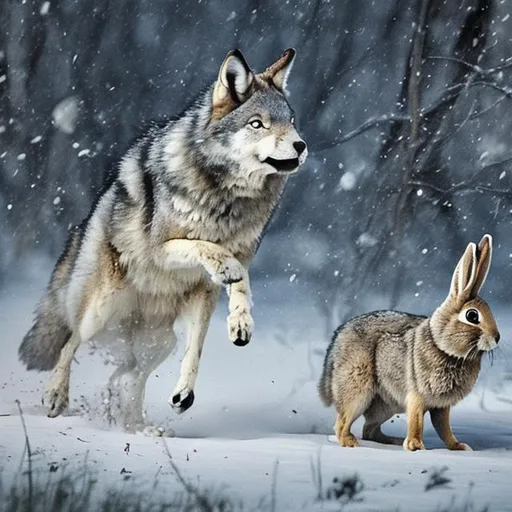
rabbit wolf chase aerial view
Setting the Scene
The sequence takes place across a mosaic of habitats: open meadow that grants visibility, narrow deer trails that funnel movement, and a pocket of young pines that offers the only real cover. From the drone's vantage the geography reads clearly: places where the rabbit can buy seconds with obstacles, where slope and soil change speed, and where the wolves can coordinate a flanking approach. The camera's height keeps the scene objective but intimate — the viewer feels like an invisible witness to an ancient contest.
The Opening Moments
At first, the wolves move in long, efficient steps, noses low, ears forward. They do not sprint; they compact the distance with purposeful strides, conserving energy and maintaining the option to accelerate. The rabbit stands, then darts, and the chase ignites. The drone follows at a modest altitude, tracking with a smooth gimbal so that every beat of the animal's movement is readable. This is not cinematic hyperbole; the camera becomes a tool for measure — of angles, of speed, of decision points.
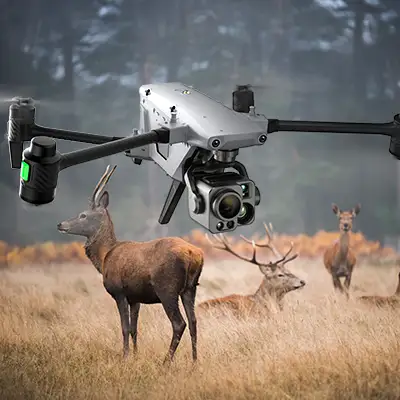
wolf hunting strategy drone footage
The chase is a study in decisions: when to sprint, when to weave, when to use cover — and when the pursuers commit to the risk of overrun.
Minute-by-Minute: How the Chase Unfolds
Because the drone captures the whole arc, we can break the pursuit into stages. The first stage is detection and approach: the wolves close with low, stalking movement, trying not to signal their presence too early. The second stage is the burst: the rabbit explodes from the grass in a narrow, unpredictable line, forcing the wolves to convert measured steps into full sprint. The third stage shows strategy: one wolf maintains the direct line while the other sweeps wide, attempting to cut off escape routes. The rabbit's response is not random; it snakes toward thicker vegetation, uses sudden lateral hops and tight turns, and squeezes through a gap in a thicket where only a small animal can pass.
rabbit escape tactics woodland
Anatomy of the Chase: Speed, Stamina and Agility
On the surface the chase is an arithmetic problem of speed versus speed. But it's more nuanced — endurance, maneuverability, and decision-making matter as much as raw velocity. The wolves show coordinated tactics that take advantage of their endurance, while the rabbit relies on explosive acceleration and agility, plus an intimate knowledge of microhabitat that a predator cannot match in a single bound. The aerial footage demonstrates how small pockets of cover can convert seconds of advantage into life-saving distance.
Predator Tactics: How Two Wolves Work a Chase
Watching from above offers an exceptional lesson in carnivore strategy. When there are two hunters, roles often emerge organically: one becomes the chaser, maintaining pressure; the other attempts to anticipate escape routes and intercept. The drone clip shows this pattern — subtle repositioning, the widening of angles, moments where the wolves pause briefly to re-evaluate the rabbit's path. These pauses are not hesitation; they are calculation. Hunting in pairs reduces the physical cost of a pursuit and increases the chance of closure by constraining options rather than simply outrunning the prey.
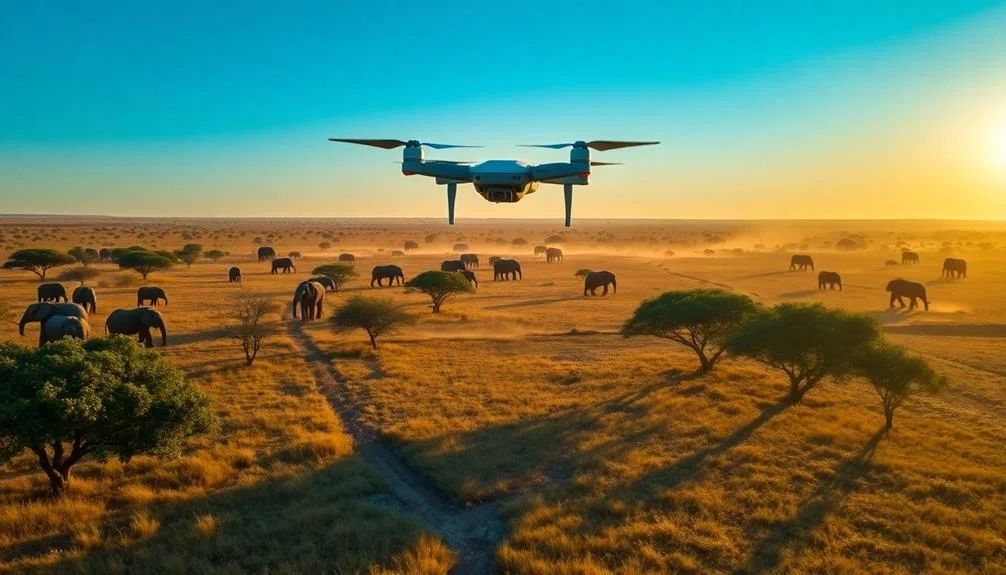
drone filming wildlife ethics
Prey Tactics: The Rabbit's Survival Playbook
Rabbits are evolutionarily engineered for survival in open landscapes. Their defense is a suite of behaviors: freezing to avoid detection, explosive sprinting to break momentum, high-frequency lateral hops to disrupt predators' targeting, and the exploitation of microhabitat — fence lines, burrows, root tangles — where larger predators cannot quickly follow. The footage makes these strategies legible. When the rabbit bends low and weaves, it's exploiting maneuverability; when it bolts for a thicket or a rabbit burrow, it's selecting a refuge that leverages scale.
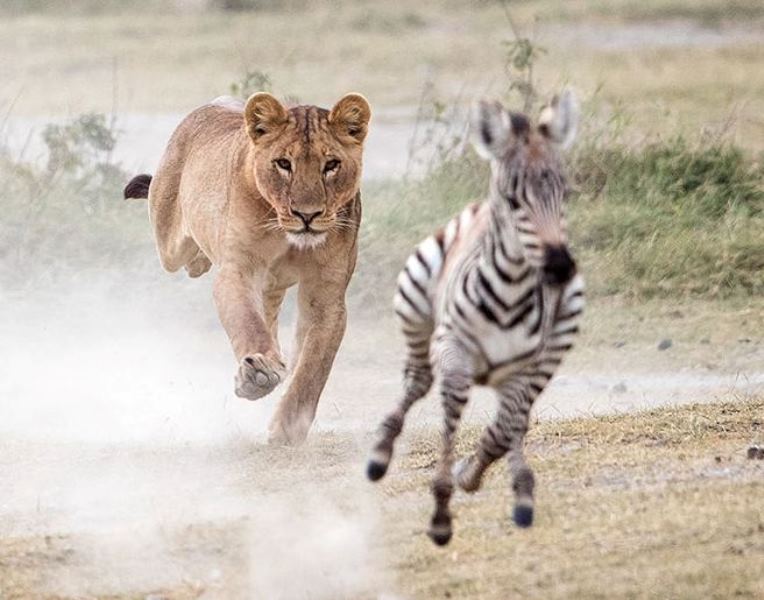
predator prey interaction footage
Technology and Technique: What the Drone Brings to the Story
A drone does more than record — it reveals patterns that are invisible from the ground. The aerial vantage collapses distance and renders the choreography of multiple animals with clarity. Stability systems, high dynamic range sensors, and slow-motion capture can all be used to analyze gait, turning radius, and interaction timing. Filmmakers and researchers now use aerial systems to study hunting success rates, to map escape lanes, and to understand how landscape features shape the outcomes of predator-prey encounters.
Ethics in the Sky: When Filming Becomes Interference
There is a fine ethical line between observation and harassment. Responsible drone pilots keep altitude and distance to avoid influencing animal behavior; a low-flying drone or an aggressive tracking pattern can stress wildlife or alter the natural course of a chase. The footage in question suggests the drone maintained a non-intrusive perspective, but that is not guaranteed in other cases. Best practices include planning flights that minimize disturbance, using zoom rather than altitude reduction to follow action, and never intentionally pushing animals into dangerous situations for the sake of a shot.
A Small Table: Comparative Traits
| Trait | Wolf | Rabbit |
|---|---|---|
| Primary advantage | Endurance and coordinated hunting | Explosive acceleration and agility |
| Typical escape strategy | - | Zigzagging, seeking cover, burrows |
Reading Behavior: What Each Movement Tells Us
Subtle posture changes tell a story the moment you can see the whole stage. A wolf's head tilt may indicate it is tracking scent and wind; a rabbit's leap pattern can show whether it is trying to confuse the pursuer or reach a refuge. The drone footage highlights micro-decisions: where the rabbit anticipates a choke point and chooses a different line, where a wolf hesitates and then accelerates when it senses an opening. These are the moments that transform an ordinary sprint into a test of cognition and instinct.

rabbit burrow escape scene
From above, survival looks like choreography — rapid, messy, and ruled by physics and choice.
What the Video Teaches Field Science and Storytelling
For ecologists, clips like this are data. They can be used to quantify success rates, assess habitat quality, and model predator-prey dynamics across landscapes. For storytellers, the footage provides a visceral way to communicate those dynamics to a broad audience: viewers do not need a textbook to feel the tension. In the best cases both goals align — a compelling narrative that is also scientifically useful.
The Viral Factor: Why Such Footage Captures Public Imagination
There is a primal quality to predator-prey interactions that resonates with viewers: stakes are immediate, the rules are perceived as simple, and the outcome feels consequential. Add technological novelty — the drone's cinematic eye — and you have a story that meshes emotion and wonder. People respond not just to the spectacle but to the rabbit's tenacity. In comment threads and social feeds, the small prey often emerges as an underdog hero, a narrative that helps viewers empathize and reflect on survival beyond human concerns.
Conservation Context: Predators, Prey and Ecosystem Health
Predators like wolves play a crucial role in shaping ecosystems by controlling herbivore numbers and influencing animal behavior in ways that can maintain habitat diversity. The dramatic chase is one small thread in a larger fabric that includes food webs, plant communities, and human land use. Observing such interactions without interference can inform conservation priorities — where to protect corridors, how to manage prey populations, and what habitats provide critical refuge for small mammals.
A Note on Human Responsibility
These moments can be intoxicating to record, but human involvement can tip the scales. Drones should be tools for non-invasive study and storytelling, not instruments that change the natural balance. Respecting wildlife means prioritizing animal welfare over a shot, sharing footage responsibly, and supporting habitat protection that gives all species a fair chance to play out their roles.
How to Watch and Learn: A Viewer's Guide
Watch the clip multiple times. First, take it in for emotional effect; then replay at reduced speed to mark decision points — where the rabbit changed direction, where a wolf readjusted course, where habitat gave an advantage. Note the frames where the chase could have ended differently. Those frames are instructive: they show how single, small choices alter outcomes, and they teach us the value of seeing behavior across space and time.
Final Thoughts: What the Rabbit's Resolve Teaches Us
There is a reason we root for the underdog in such footage: tenacity in the face of overwhelming odds resonates with human narratives of survival and hope. But beyond narrative sympathy, the clip is a precise natural experiment. It reminds us that survival is rarely about absolute superiority; it is about fit between strategy and environment, about split-second choices, and about margins. The rabbit's escape — aided by speed, habitat, and maybe a touch of luck — is a testament to the complex interplay of evolution and terrain.
- Perspective matters: Aerial footage reveals patterns invisible from the ground.
- Strategy beats raw speed: Coordination and knowledge of terrain are decisive.
- Ethics matter: Filming wildlife demands restraint to avoid altering natural behavior.
Closing Note
Watching a rabbit outmaneuver wolves from a drone's eye is an experience that blends awe and inquiry. It invites us to celebrate a narrow victory and to consider the larger systems that make such moments possible. If the video inspires curiosity, let it lead to better protection for the places where these dramas unfold — where every split second matters and where the rules of life and death are written in grass and shadow.