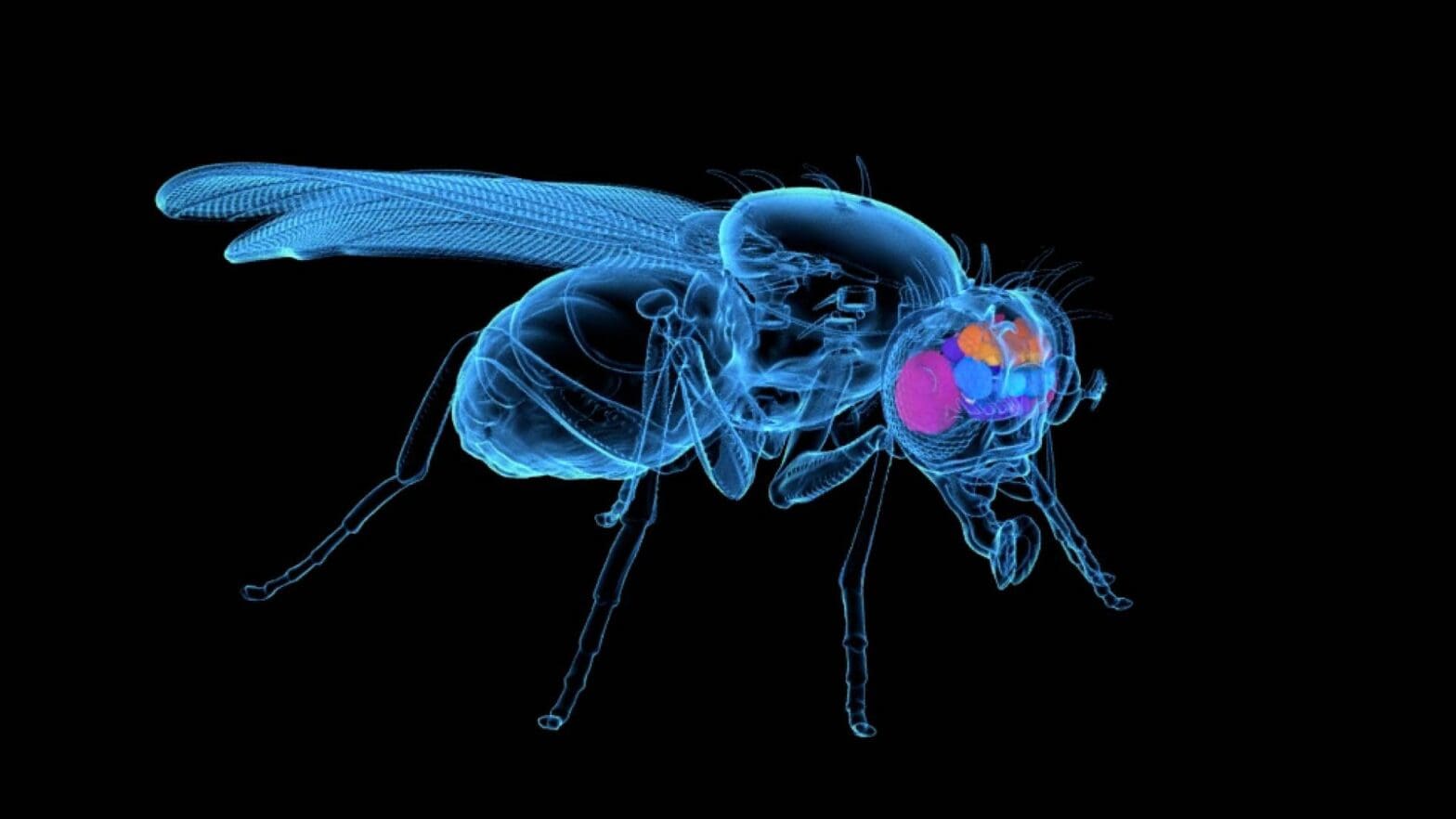
Eon Systems Emulates a Fruit Fly Brain — Neuron by Neuron
The lab at Eon Systems announced something that sounds like science fiction and reads like a manifesto: researchers have copied the brain of a fruit fly into a computer, neuron by neuron, and when the simulated animal was placed in a virtual environment it began to walk, groom, and feed — behaviors that emerged without the engineers explicitly programming them. The result is at once a technological milestone, an experimental tool for neuroscience, and a thought experiment about what it means to reconstruct life in silicon.

Eon Systems lab
Why this matters: a small brain, outsized meaning
At first glance, a fruit fly is almost comically simple. But the common fruit fly (Drosophila melanogaster) is a cornerstone of biology: compact enough to be tractable, complex enough to show rich behavior. Emulating its brain neuron by neuron places this work at the intersection of experimental neurobiology, computational modeling, and advanced engineering. A faithful simulation creates a testbed: hypotheses that are expensive, slow, or impossible to probe in living animals can be run and rerun inside a machine.
“We didn't instruct the model to groom or to look for food. Those actions emerged from dynamics mapped from real neurons.”
How they did it: the pipeline in broad strokes
Reconstructing a brain begins with data. The Eon Systems team combined high-resolution imaging of neurons, electrophysiological characterization of cell types, and decades of Drosophila behavioral science. The pipeline had three broad stages: mapping the wiring (the connectome), assigning biophysical properties to each neuron, and building a real-time simulator capable of running the entire network. Each stage required scaling techniques that were previously demonstrated only in patches of tissue or short circuits.
Step 1 — Connectomics: tracing wires with precision
Connectomics is the laborious art of mapping who talks to whom inside a brain. For a fruit fly, this meant generating high-resolution electron microscopy images, segmenting neuronal arbors, and annotating synapses. Advanced machine learning accelerated segmentation, but human curators still vetted critical regions. The result was a graph: nodes for neurons, weighted edges for synaptic connections, and spatial coordinates to preserve geometry important for local circuits.
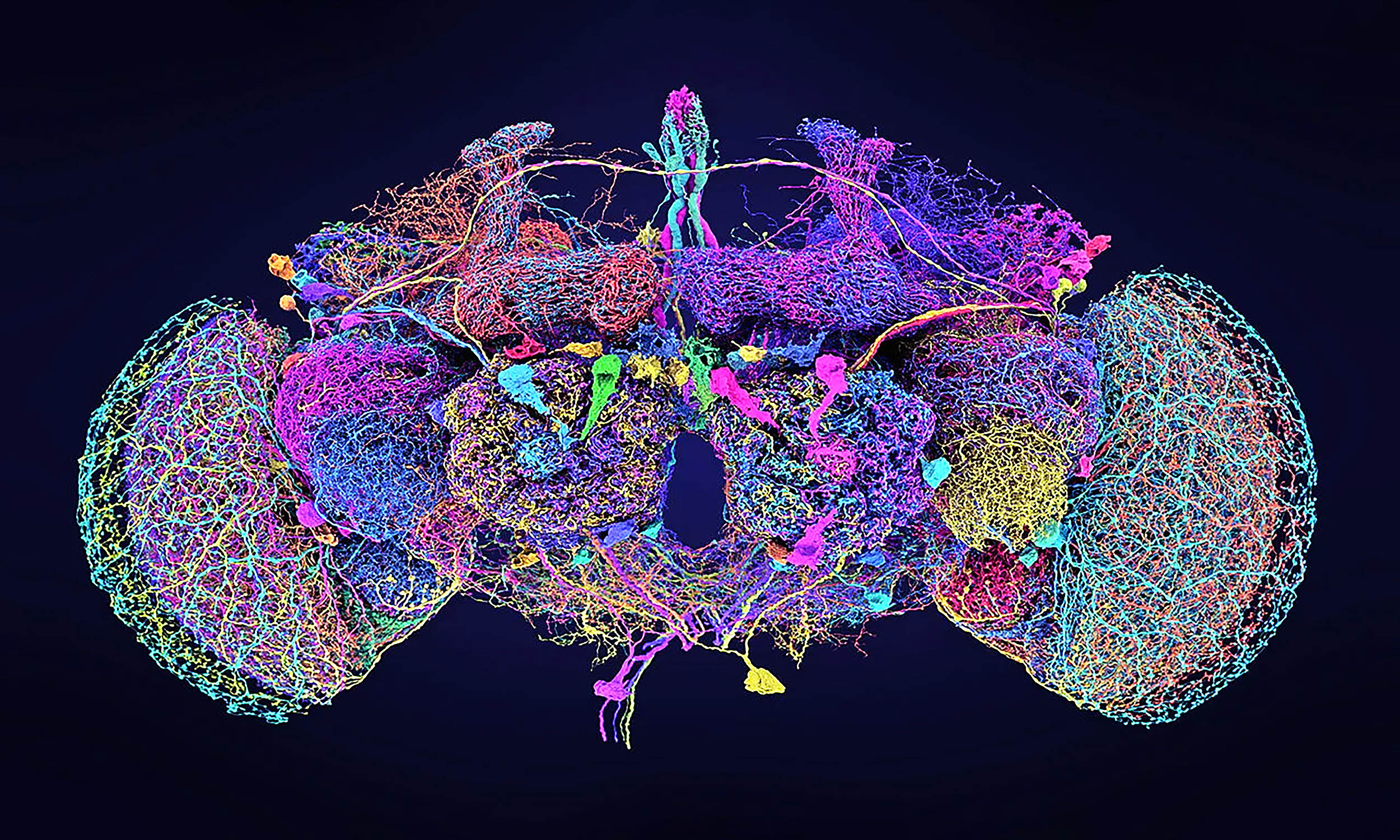
fruit fly brain connectome
Step 2 — Biophysical parameterization
Connections only tell part of the story. How a neuron responds depends on membrane properties, ion channel complements, synaptic time constants, and neuromodulatory context. Eon Systems assigned each neuron a biophysical model — a reduced but physiologically grounded mathematical description capturing key features such as spiking, adaptation, and short-term plasticity. Where direct measurements were missing, the team used priors from published work on cell classes and performed parameter sweeps to find regimes that produced plausible activity patterns.
Step 3 — Simulation and closed-loop testing
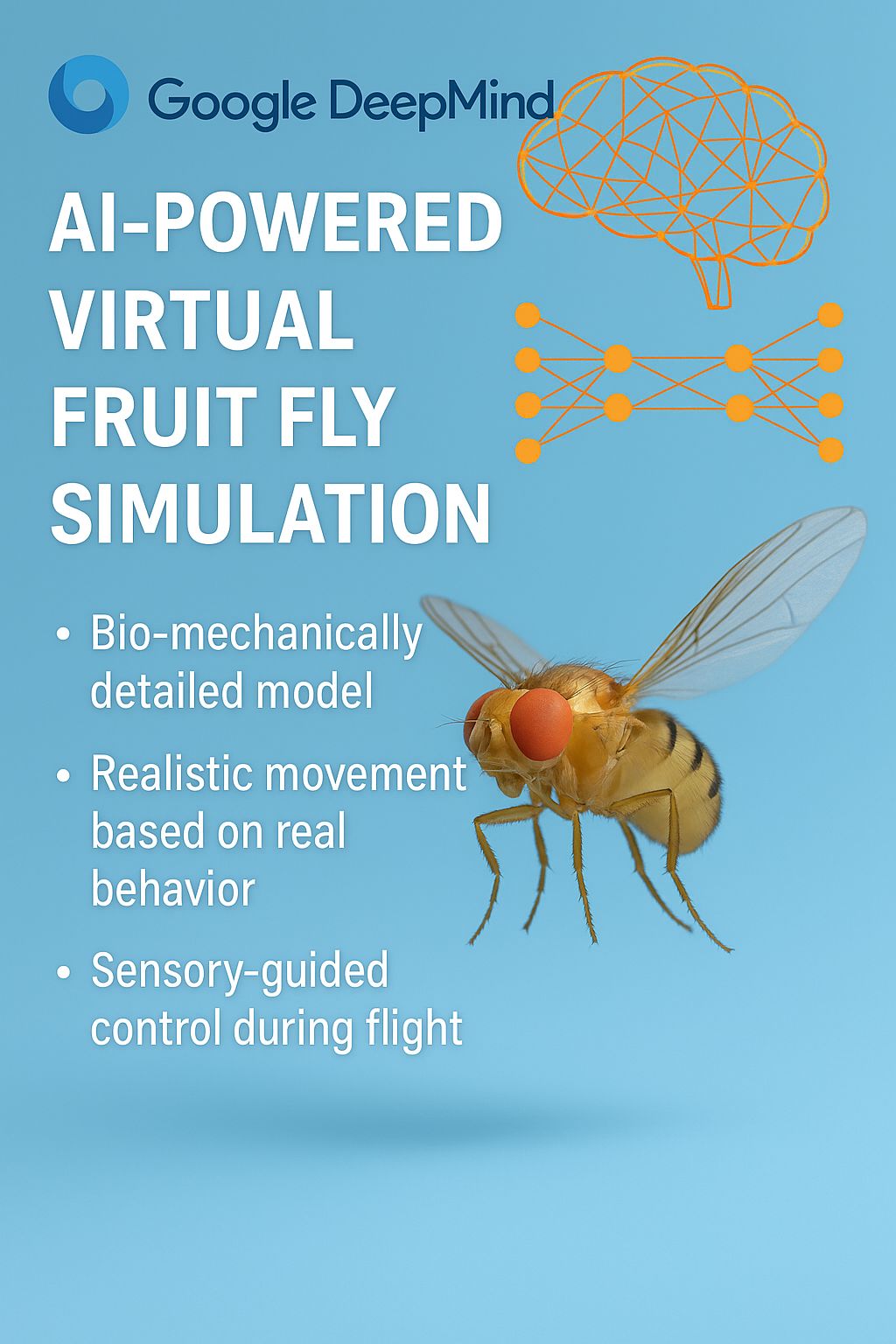
A brain doesn't exist alone; it sits in an environment and receives sensory input while sending motor commands. The virtual fly inhabited a simulated world with basic sensory gradients and objects representing food and obstacles. Sensory transduction models converted environmental signals into neural input, and motor neuron activity was translated into kinematic commands for a digital body. Critically, the simulation ran in closed loop: neural activity influenced behavior, behavior changed sensory input, and the cycle continued. This closed-loop architecture is what allowed spontaneous, sustained behaviors to appear.
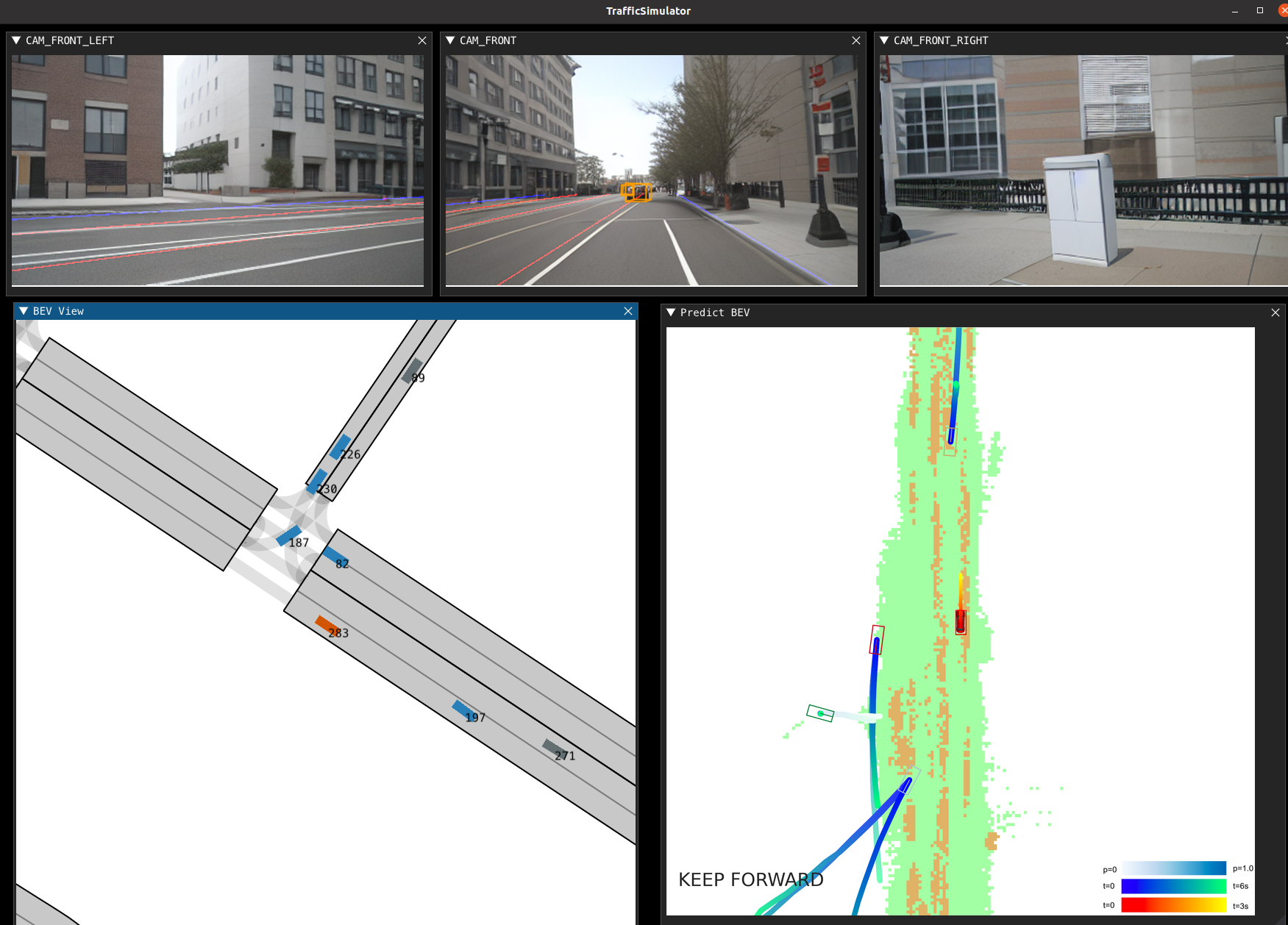
closed-loop simulation platform
What the simulated fly did: emergent behavior, not scripted routines
Observers reported the virtual fly walking in coordinated gaits, spending time preening its legs in patterns recognizable to Drosophila researchers, and approaching and consuming virtual food patches. Those are not preprogrammed animations — they are emergent outcomes of network dynamics interacting with a sensory-rich environment. When researchers perturbed specific neurons in the model, behaviors altered in ways that matched predictions from experiments on living flies, supporting the model's face validity.
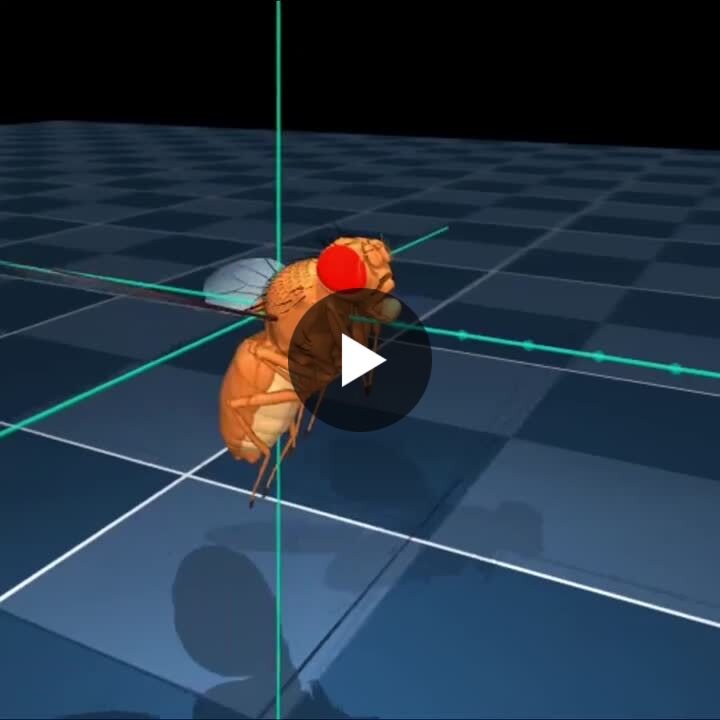
virtual fruit fly walking
Why emergent behavior matters to science
Emergence is the acid test for a complex model. If you faithfully model components but the whole fails to behave like the original, something crucial is missing. The fact that locomotion, grooming, and feeding appeared suggests the reconstructed network captures more than wiring: it reproduces dynamical motifs that generate behavior. This enables debates that were previously philosophical — about sufficiency and necessity of certain circuits — to be settled empirically by in silico experiments.
virtual fruit fly grooming
Technical limitations and caveats
That said, every reconstruction is an approximation. Biophysical parameter assignments used models that simplify real ion channel distributions. Neuromodulatory systems that alter global states like arousal are notoriously difficult to capture. The virtual body, though animated, did not reproduce every mechanical nuance of a living fly's exoskeleton and muscles. Finally, the modeling choices — which ion currents to include, how to treat synaptic noise, how to infer missing connections — shape results. Eon Systems acknowledges these caveats and, importantly, designed the platform to be iteratively improved.
Replication, validation, and the scientific method
Extraordinary claims invite extraordinary scrutiny. The scientific value of a brain emulation lies not in spectacle but in rigor: can independent groups reproduce the pipeline? Do perturbations in model space match perturbations in vivo? Eon Systems released detailed methods and parameter sets to encourage replication and invited external labs to test predictions. A robust program of cross-validation — electrophysiological comparisons, lesioning experiments, and behavioral assays — will determine whether this emulation is a breakthrough or a tantalizing artifact.
virtual fruit fly feeding
Ethics and philosophy: is a simulated fly 'alive'?
Philosophical questions follow technological ones. A simulated network that behaves like a fly raises questions about what we mean by life, consciousness, and welfare. Most scientists treat this system as an explanatory model, not a sentient being. But the more complete and autonomous such simulations become, the more we must grapple with responsibility: how simulations are used, whether they are subject to welfare-style rules, and what boundary conditions define ethical treatment. For now, the consensus is conservative: model complexity is far from the threshold where concerns about subjective experience are acute, but ethics boards are already starting to consider policies.
Applications beyond curiosity
A validated whole-brain simulation is a scientific Swiss Army knife. Potential applications include:
- Drug screening: test neuromodulatory effects on circuit dynamics before animal studies.
- Neurodevelopmental modeling: simulate how genetic perturbations alter circuit formation over developmental time.
- Robotics: bio-inspired controllers for small autonomous machines that need energy-efficient locomotion.
- Education: interactive platforms for teaching neural function and behavior.
Each application carries promise and caveats. Drug screening requires accurate pharmacodynamics; robotics needs robust transfer from virtual body to mechanical embodiment. Nonetheless, a functioning virtual fly lowers the barrier for many experiments.
Scaling up: toward larger brains
Fruit fly brains contain on the order of 100,000 neurons — orders of magnitude smaller than mammalian brains but larger than many model circuits. The techniques validated here suggest a possible roadmap for scaling: automated imaging, improved neuron models, and specialized hardware such as neuromorphic processors. But scaling is not merely a matter of compute; the complexity of neuromodulation, developmental history, and body-environment coupling grows nonlinearly. A close, pragmatic view expects incremental advances rather than a sudden leap to whole mammal emulations.
Open questions and experiments to watch
Key empirical questions can be tested now that a platform exists:
- Which microcircuits are necessary and sufficient for grooming sequences?
- How does sensory noise shape feeding strategies?
- Can targeted changes in synaptic strength predictably alter gait patterns?
Results from these experiments will sharpen our models and reveal the limits of current assumptions.
A practical scientist's checklist
For researchers considering using the platform, here are practical considerations:
- Replication: run baseline experiments and compare key metrics (spike rates, inter-event intervals) to published in vivo data.
- Parameter sensitivity: conduct perturbation sweeps to identify which assumptions most affect behavior.
- Documentation: ensure model provenance and data lineage are preserved for reproducibility.
Public reaction and policy implications
Public imagination tends to leap from a simulated bug to dystopian scenarios. Policymakers should instead focus on realistic near-term issues: data governance, dual-use concerns (e.g., designing agents with unintended robustness), and funding for replication studies. Transparent communication and collaboration between private labs, academic researchers, and regulators will help steer constructive outcomes.
- New experimental platform for hypothesis testing.
- Potential reductions in animal use for some studies.
- Faster iteration on circuit-level hypotheses.
- Model simplifications may mislead if overinterpreted.
- High compute and expertise barriers for independent groups.
- Ethical uncertainties as simulations grow more complex.
Conclusion: an opportunity and a responsibility
The emulation of a fruit fly brain neuron by neuron is an extraordinary technical accomplishment and a generative scientific tool. It bridges the empirical richness of biology with the reproducibility and scale of computation. But power brings responsibility: to validate carefully, to share methods openly, and to consider ethical implications before stretching metaphors about life and mind. The virtual fly will not replace living organisms, but it can sharpen questions, accelerate discovery, and remind scientists that even tiny brains hold deep lessons about how mind arises from matter.
- A complete neuron-by-neuron fruit fly emulation reproduces spontaneous behaviors, offering a new experimental platform.
- Results are promising but provisional — rigorous replication and validation are essential.
- Ethical and policy frameworks should accompany technical advances to guide responsible use.
Researchers at Eon Systems built a closed-loop virtual fly by combining connectomics, biophysical modeling, and a simulated environment where emergent behaviors could be observed.