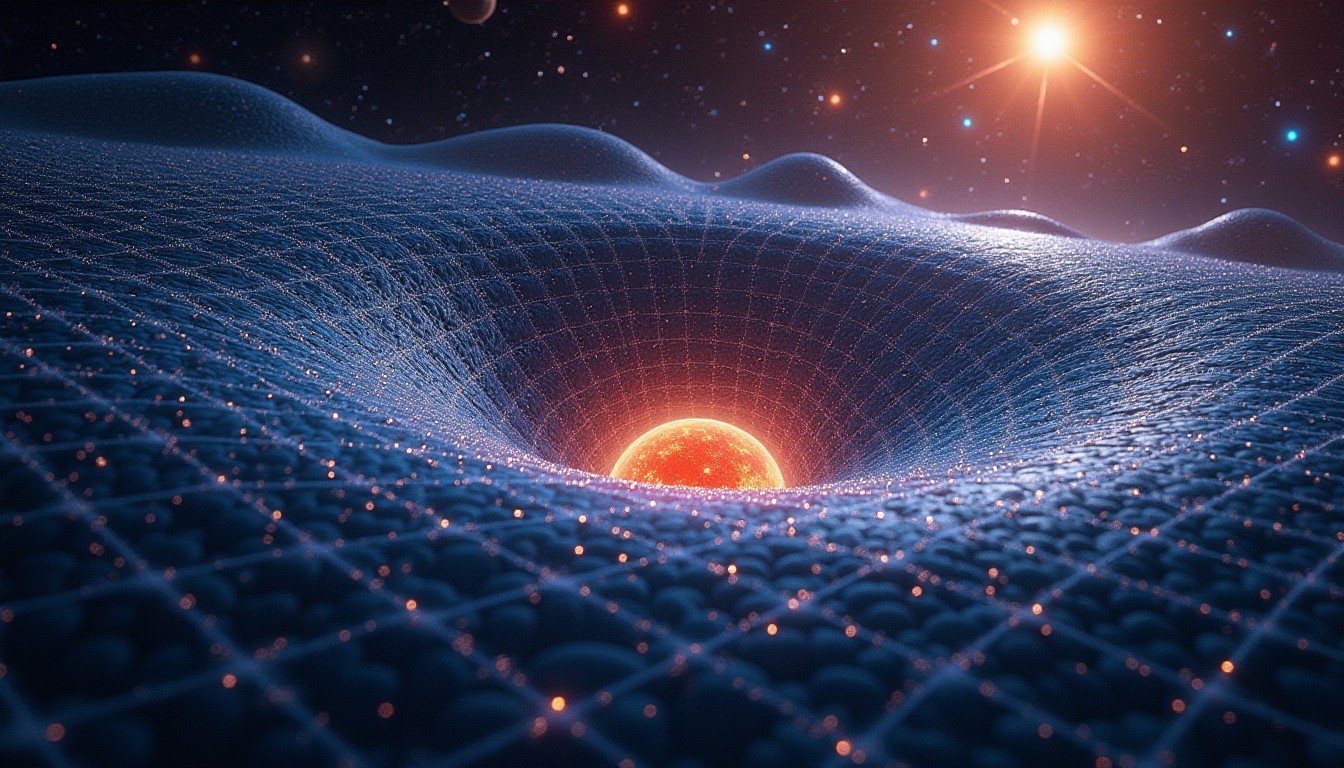
Einstein's Relativity: Why the Past Still Exists
When Albert Einstein folded space and time together into a single fabric, he did more than invent a new set of equations; he reshaped the grammar we use to describe existence. The striking consequence is a claim that can feel at once coldly physical and deeply intimate: in the geometry of relativity the past is not something that has vanished, but a permanent coordinate in spacetime. When Einstein wrote, after his friend Michele Besso died, "For us believing physicists the distinction between past, present, and future only has the meaning of an illusion, though a persistent one," he was summarizing an idea with consequences that touch science, philosophy, and how we understand memory and grief.

Albert Einstein portrait
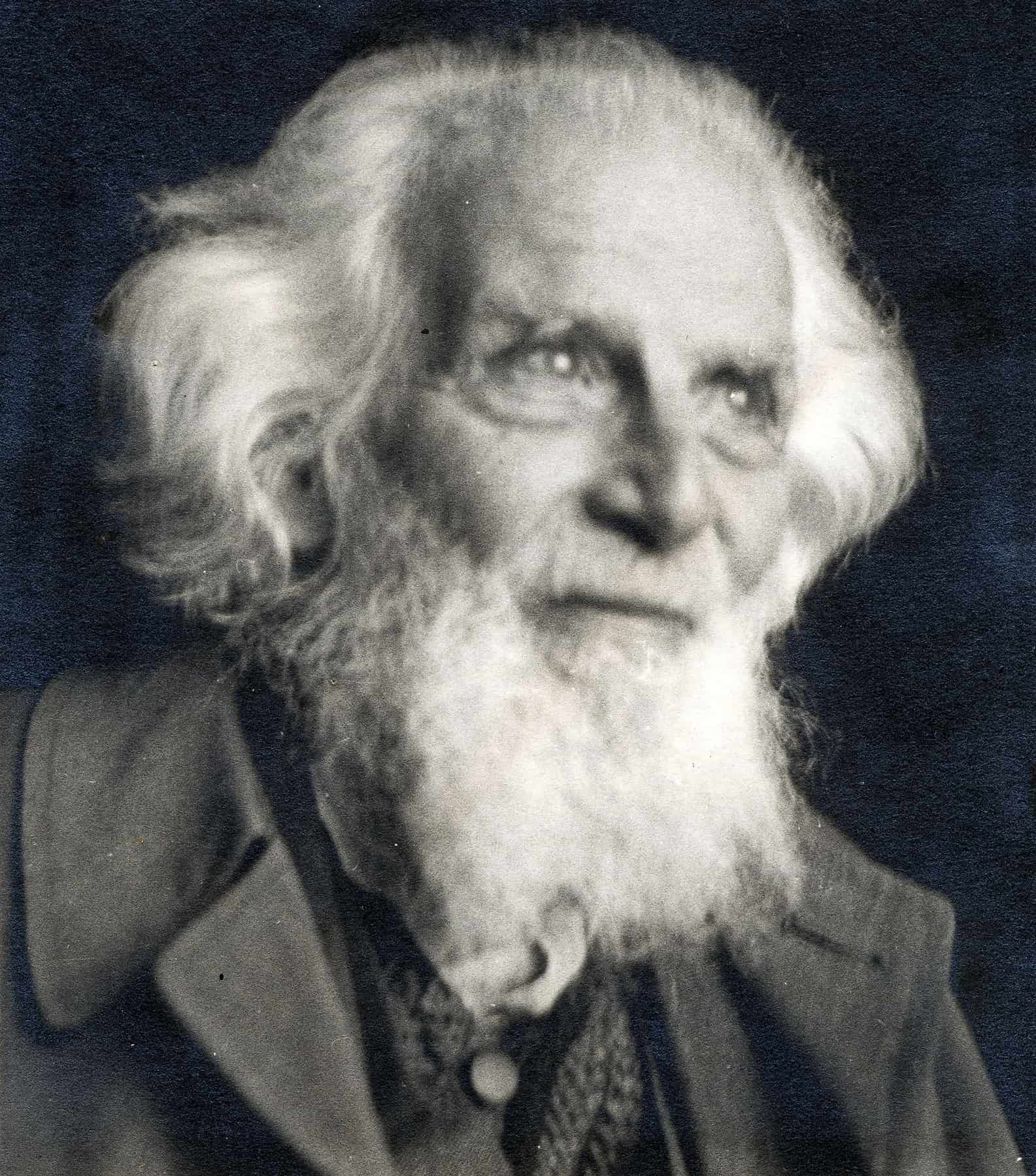
Michele Besso Einstein friend
HOW RELATIVITY REWRITES TIME
From ticking clocks to four-dimensional maps
Newtonian intuition treats time as a universal river: every observer shares the same 'now' and events either lie upstream (past) or downstream (future). Einstein's special relativity breaks that intuition. Two observers moving relative to one another can legitimately disagree on whether two widely separated events occurred simultaneously. That disagreement is not a quirk of measurement but a consequence of the finite speed of light and the geometry of spacetime.
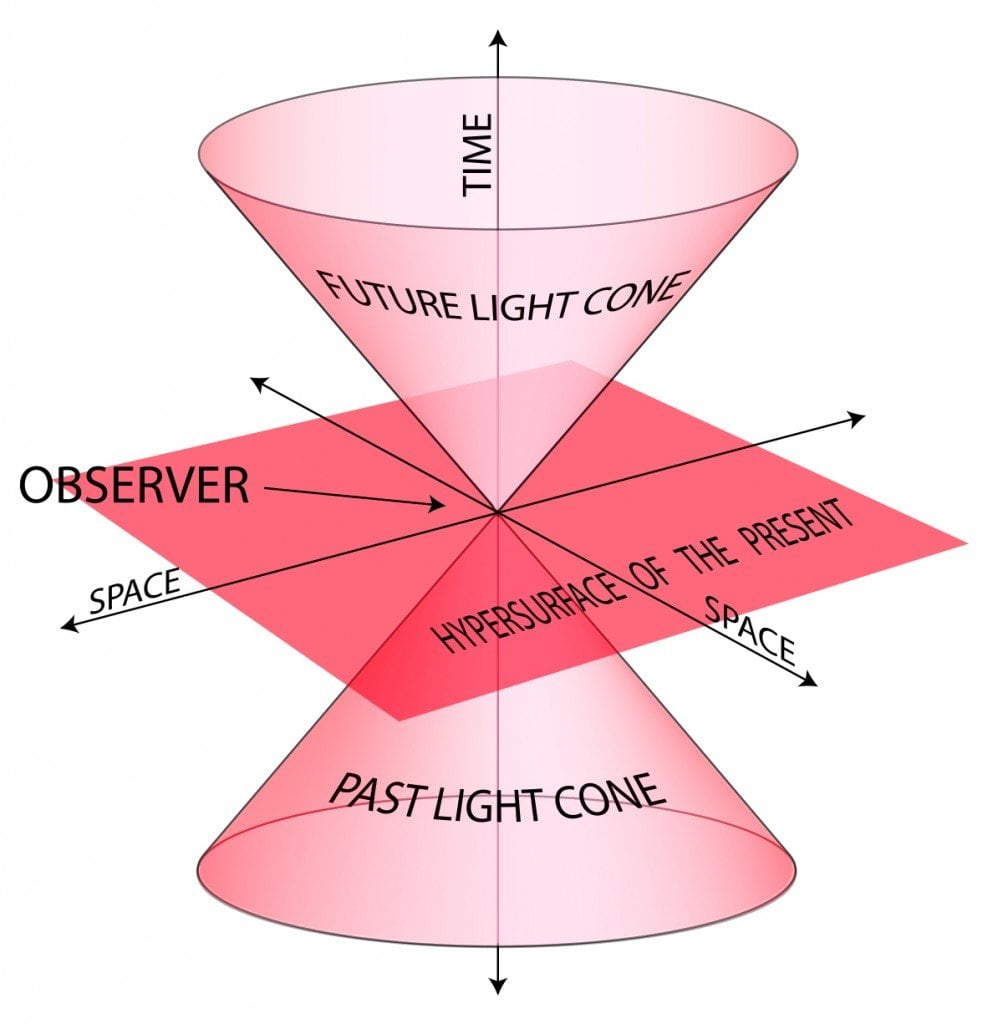
Hermann Minkowski, Einstein's former teacher, crystallized this into a mathematical picture: spacetime as a four-dimensional manifold where points—events—have coordinates (three for space, one for time). In that picture, the entire life of the universe is like a vast landscape in which each event is a locatable point. The 'present' becomes a slice through that landscape chosen by an observer's motion and frame of reference, not an absolute universal layer that everyone shares.
"For us believing physicists the distinction between past, present, and future only has the meaning of an illusion, though a persistent one."
Light cones and causality
The Minkowski diagram introduces a powerful concept: the light cone. Any event splits spacetime into regions that can causally affect it (its past light cone), regions it can affect (its future light cone), and regions that are spacelike separated—neither cause nor effect. This is where relativity preserves a strong sense of order: although simultaneity is relative, causality is not. If event A can cause event B, all observers will agree on that ordering. What changes is whether two events are clearly ordered or simply unrelated in time from a given standpoint.
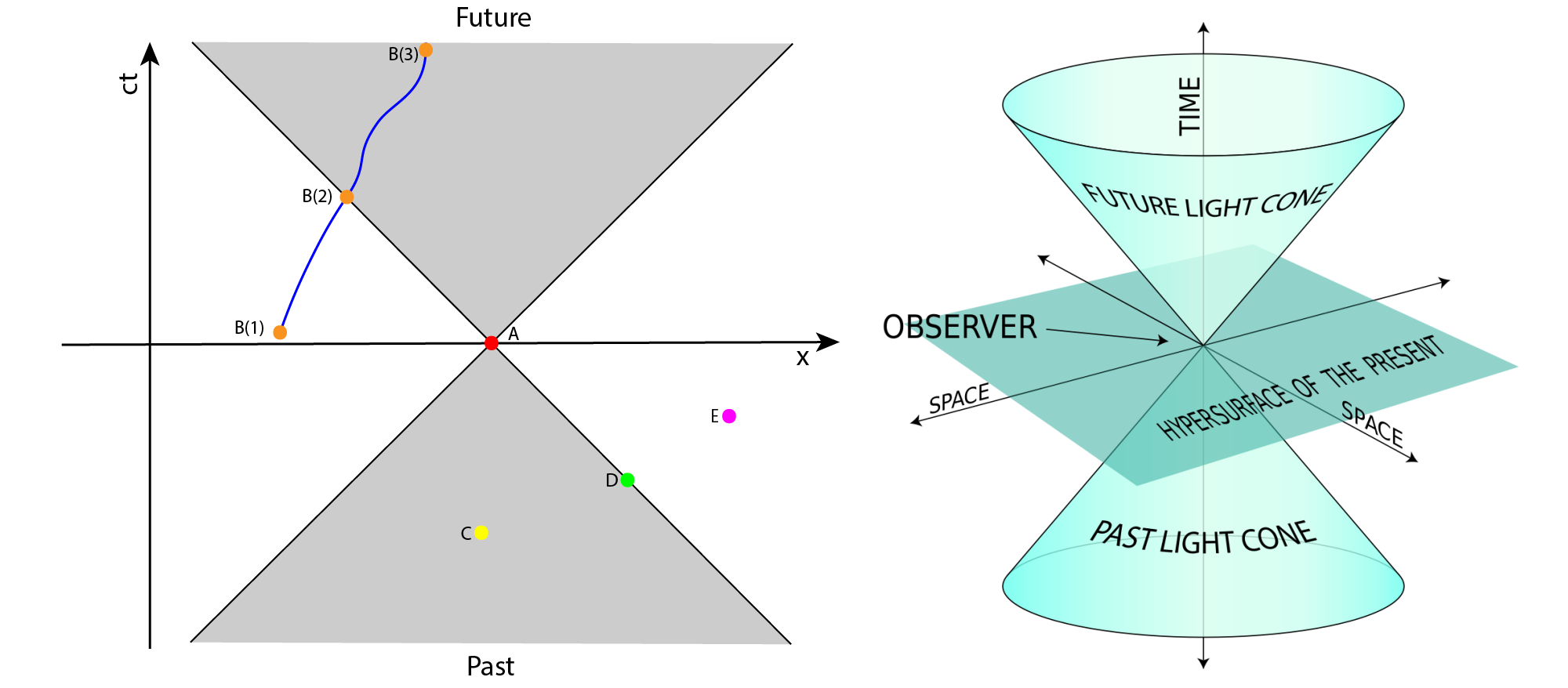
Hermann Minkowski spacetime diagram
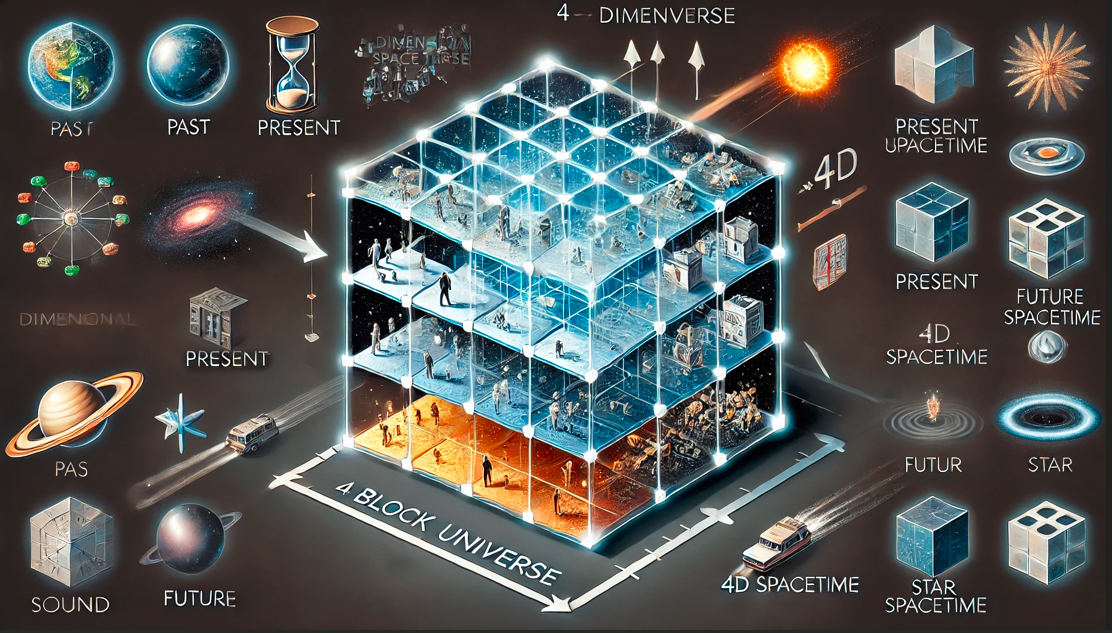
block universe illustration
THE BLOCK UNIVERSE AND THE PHILOSOPHY OF TIME
Eternalism versus presentism
Philosophers translate the spacetime picture into metaphysics. Eternalism, often called the block-universe view, holds that past, present, and future are equally real—like different addresses in a city map. Presentism insists that only the present moment is real; the past is gone and the future is not yet. Relativity gives the eternalist a comfortable home: if there is no single objective present, the idea that only 'now' exists becomes difficult to sustain.
It is important to be precise. Saying the past 'exists' in the block-universe sense is not implying that your past feelings are accessible for revision, or that you can stroll back to last Tuesday. It means the event 'you spoke to your friend' is a fixed coordinate in the spacetime manifold, just as real as the coordinates for the sun forming billions of years ago or an event that has yet to occur in some distant region of the cosmos.
Degrees of reality and metaphysical modesty
Even philosophers sympathetic to eternalism often adopt a nuanced stance. Reality might not be a flat catalogue of moments; it can be structured by relations—causal links, laws of nature, and modal connections. Relativity offers a framework, not the final metaphysical verdict. How we interpret that framework depends on larger commitments: to human experience, to the role of laws, and to what counts as 'real.'
EINSTEIN, BESSO, AND THE PERSONAL NOTE
Grief, physics, and the persistence of memory
Einstein's famous line about the illusion of time was written in a letter after Michele Besso, a longtime collaborator and friend, died. The line reads as both scientific reflection and elegy. For someone who found permanence in equations, consolation came from a conceptual landscape where every interaction, including Besso's life and death, occupies a permanent place in spacetime. That intellectual consolation becomes emotionally resonant: if past moments are coordinates, then loss is not absolute annihilation but a reorientation of our relationship to those coordinates.
That sentiment explains why many scientists and writers have invoked relativity in conversations about death and memory. The physics provides language that can soften the sting of disappearance: your conversation with someone is not erased from existence; it is still part of the universal ledger. That idea can be comforting without being metaphysically extravagant.
HOW THIS IDEA AFFECTS DAILY LIFE AND ETHICS
Free will, responsibility, and moral psychology
One immediate worry about a block universe is that it seems to threaten free will: if the future is as real as the past, are our choices predetermined? Philosophers distinguish between metaphysical determinism and practical responsibility. Even if the universe is a four-dimensional block in which our choices are fixed coordinates, the experience of deliberation, the social practices that hold people accountable, and the causal efficacy of decisions within spacetime remain intact.
Importantly, physics constrains metaphysics but does not by itself resolve normative questions. Ethical life is embedded in the causal structure of events: consequences follow from actions, persons are affected, and institutions respond. Whether those events are 'already there' in a tenseless ontology does not collapse the moral landscape in which praise, blame, and remorse operate.
THERMODYNAMICS, MEMORY, AND THE ARROW OF TIME
Why we sense a flow
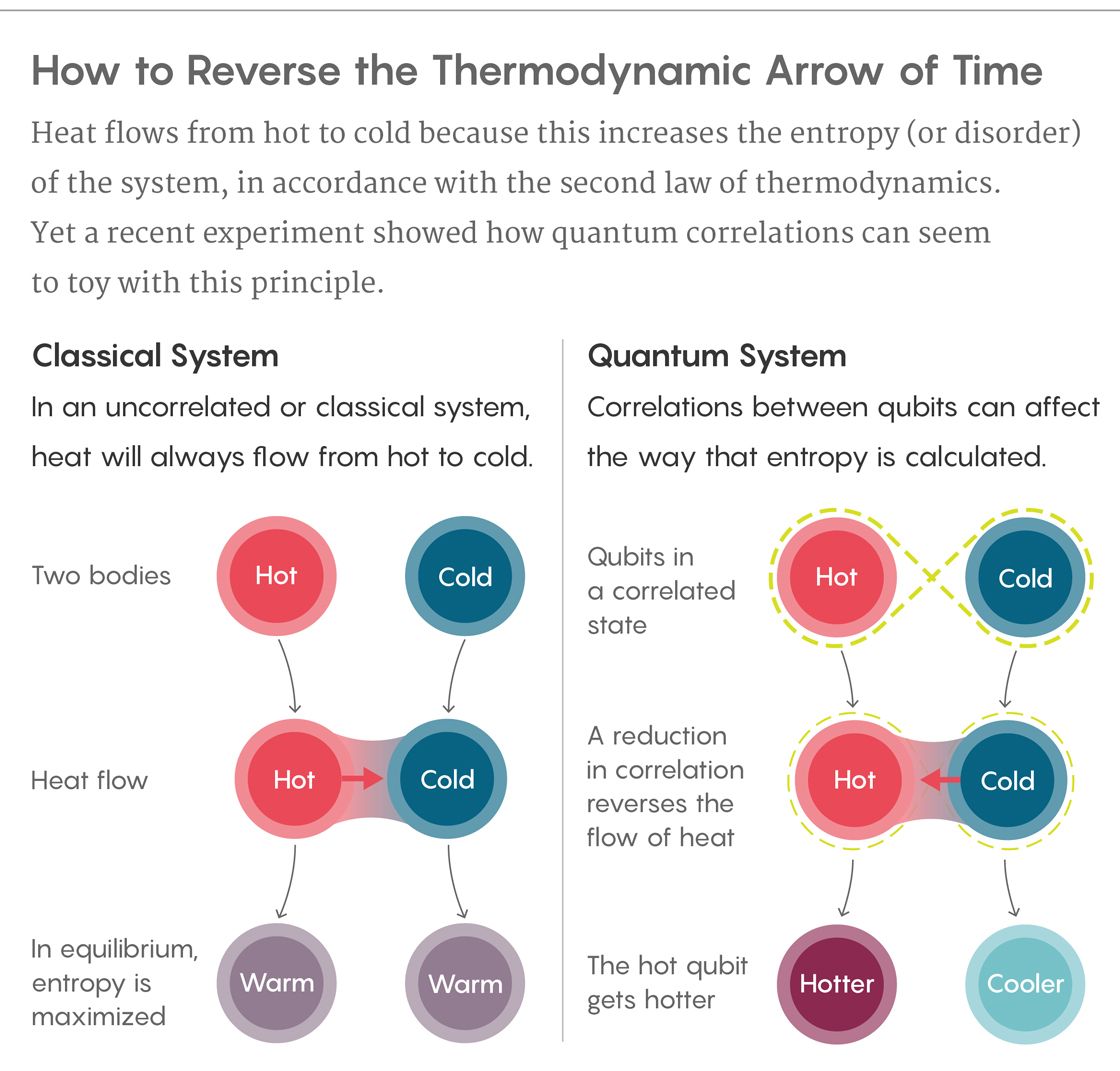
Physics also supplies a different source of the felt directionality of time: the second law of thermodynamics. Entropy tends to increase in closed systems, producing an arrow of time that aligns with our psychological sense of past-to-future. The block-universe picture does not deny entropy's role; instead it locates the arrow of time within the static geometry. The increase of entropy picks out a preferred direction along the timeline of any given worldline, carving an emergent 'before' and 'after' into the four-dimensional manifold.
Memory, perception, and causation are grounded in this thermodynamic asymmetry: we remember lower-entropy arrangements because the brain's physical processes are embedded in a larger entropic gradient. The 'persistence' of the present that Einstein mentions is, in part, the experience of physical processes marching through a low-to-high-entropy direction.
light cone diagram relativity
Entropy does not rescue presentism
Some thinkers have proposed that because entropy defines a direction, there could still be a privileged present. But this move faces conceptual hurdles: the thermodynamic arrow is contingent on boundary conditions of the universe, not a universal slicing of spacetime shared by all observers. Relativity still implies that simultaneity depends on motion and position; entropy makes time asymmetric but not absolute.
entropy thermodynamic arrow time
QUANTUM MECHANICS: A WILD CARD
Does quantum indeterminacy reopen the future?
Quantum mechanics introduces indeterminacy at a microscopic level. Some interpretive frameworks—particularly those that treat measurement as genuinely stochastic—seem to restore an open future. Others, like the many-worlds interpretation, expand the block in another direction: branching realities exist in a vast multiverse where all outcomes are real in different branches.
Relativistic physics and quantum theory have famously awkward relations. Attempts to meld them into a coherent theory of quantum gravity leave open questions about how to represent time in a fundamental ontology. Until those questions are answered, claims that relativity definitively proves eternalism should be tempered. Relativity strongly supports the block-universe framework at the classical level, but quantum gravity may yet complicate or enrich that conclusion.
COMMON MISUNDERSTANDINGS
No time machines guaranteed
Readers often leap from 'the past exists' to fantasies about time travel or changing history. The block-universe picture does not grant license to rewrite events. The spacetime manifold encodes causal relations; if an event is located at a coordinate, it sits within a web of causes and effects. Wormholes, closed timelike curves, and other exotic solutions to Einstein's equations are speculative and constrained by consistency conditions. Popular depictions of hopping back and altering history remain firmly in the realm of fiction.
Illusion, not disappearance
Einstein's phrase about the 'illusion' of past, present, and future deserves nuance. The illusion is metaphysical: the intuition of a universal present is not upheld by relativity. But the psychological reality of time is undeniable. We plan, remember, and feel the passage of time acutely; these facts are part of the human condition and are explained by physical processes, even if their metaphysical backdrop is timeless in a tenseless sense.
MEANING, MEMORY, AND GRIEF
How science shapes consolation
Relativity provides a vocabulary for consolation that has practical bite. When someone loses a loved one, the block-universe metaphor can frame memories as ontologically persistent rather than ephemeral. That reframing does not erase pain, but it can alter how people narrate loss: a conversation, a laugh, a life, all retain their coordinates. For some, that idea is healing; for others it may feel abstract or even cold. As with many scientific metaphors, its usefulness depends on temperament and context.
PRACTICAL REFLECTIONS
Living with a tenseless universe
You do not need to accept eternalism to reap insights from relativity. Whether you prefer to live as if only the present is real or as if all moments coexist, certain practical consequences remain the same: causality binds actions to consequences, empathy and responsibility matter across time, and the story of your life is embedded in a lawful universe. Scientific literacy about time sharpens conversation and deepens appreciation for the fragile persistence of memory.
CONCLUSION
Einstein's observation about the illusion of past, present, and future compresses decades of physics and philosophy into a compact, provocative assertion. Relativity upends absolute simultaneity and replaces it with a four-dimensional tapestry in which events stand as coordinates. That framework supports an eternalist reading of time without negating the reality of psychological flow or moral responsibility. Thermodynamics, quantum theory, and ongoing work in quantum gravity complicate and enrich the discussion, but they do not erase the powerful picture that spacetime offers: a universe where moments persist as part of a larger geometry.
The past, under relativity, is less a vanished country than a mapped neighborhood we can revisit in thought.
- Relativity reframes time: simultaneity is relative and spacetime treats events as coordinates.
- Block universe: past, present, and future can be understood as equally real positions in a four-dimensional manifold.
- Causality stands: relativistic structure preserves causal order even as it denies an absolute now.
- Thermodynamics: entropy explains the arrow of time and our psychological experience of flow.
- Human meaning: the physics offers metaphorical consolation but does not obviate mourning or moral responsibility.
A cosmic consolation and a philosophical challenge: what remains when time is a map.