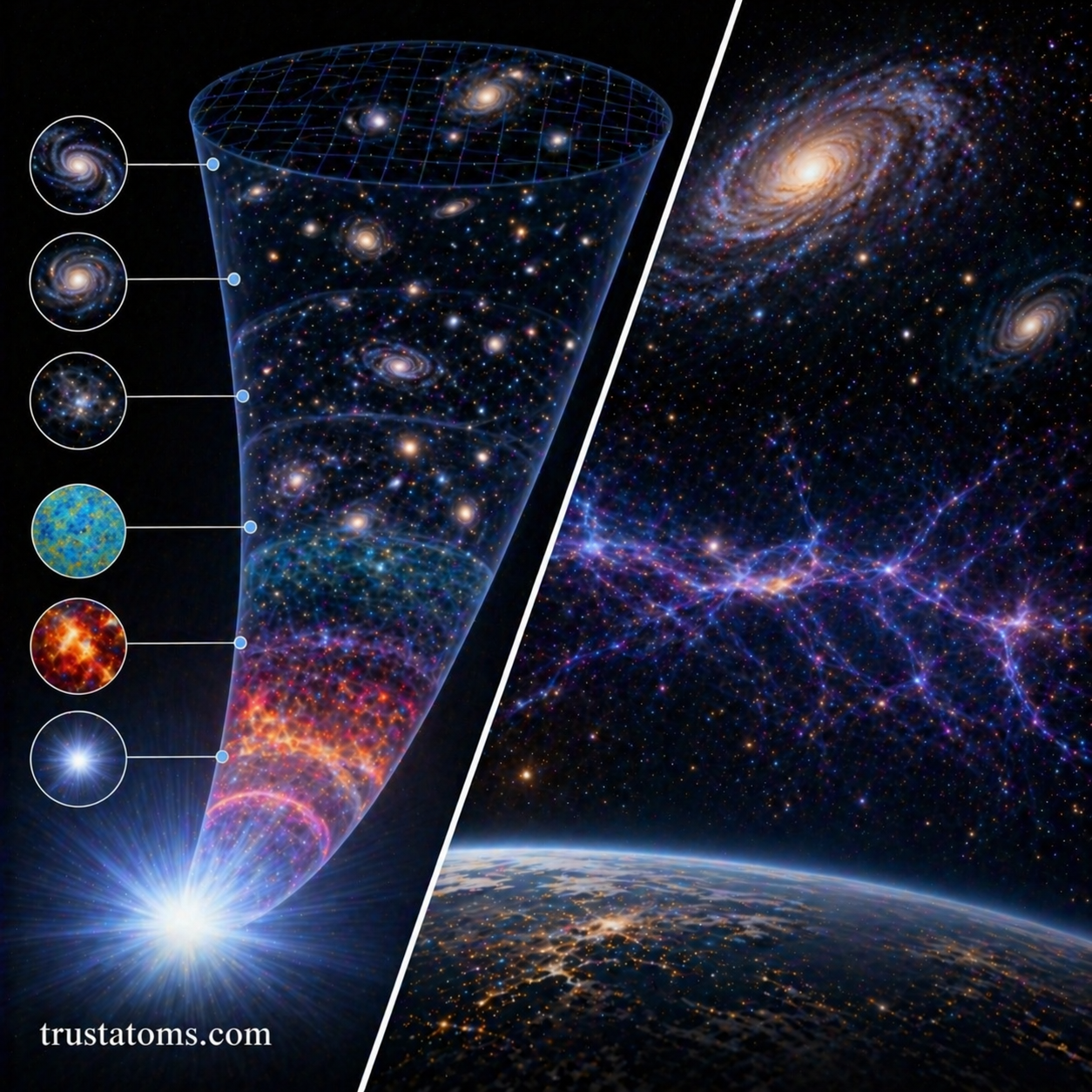
Einstein’s Equations Could Explain the Universe Without Dark Energy
The idea that an invisible substance — dark energy — is driving the accelerated expansion of the universe has become standard cosmological wisdom over the past quarter-century. Yet beneath the confident language of parameter fits and confidence intervals there is a quieter possibility: perhaps Einstein’s own field equations, when confronted with the universe’s true lumpy complexity, can produce acceleration without any exotic new component. This feature explores that provocative possibility, tracing the physics, the math, the observational stakes, and why the proposal remains controversial but worth watching.
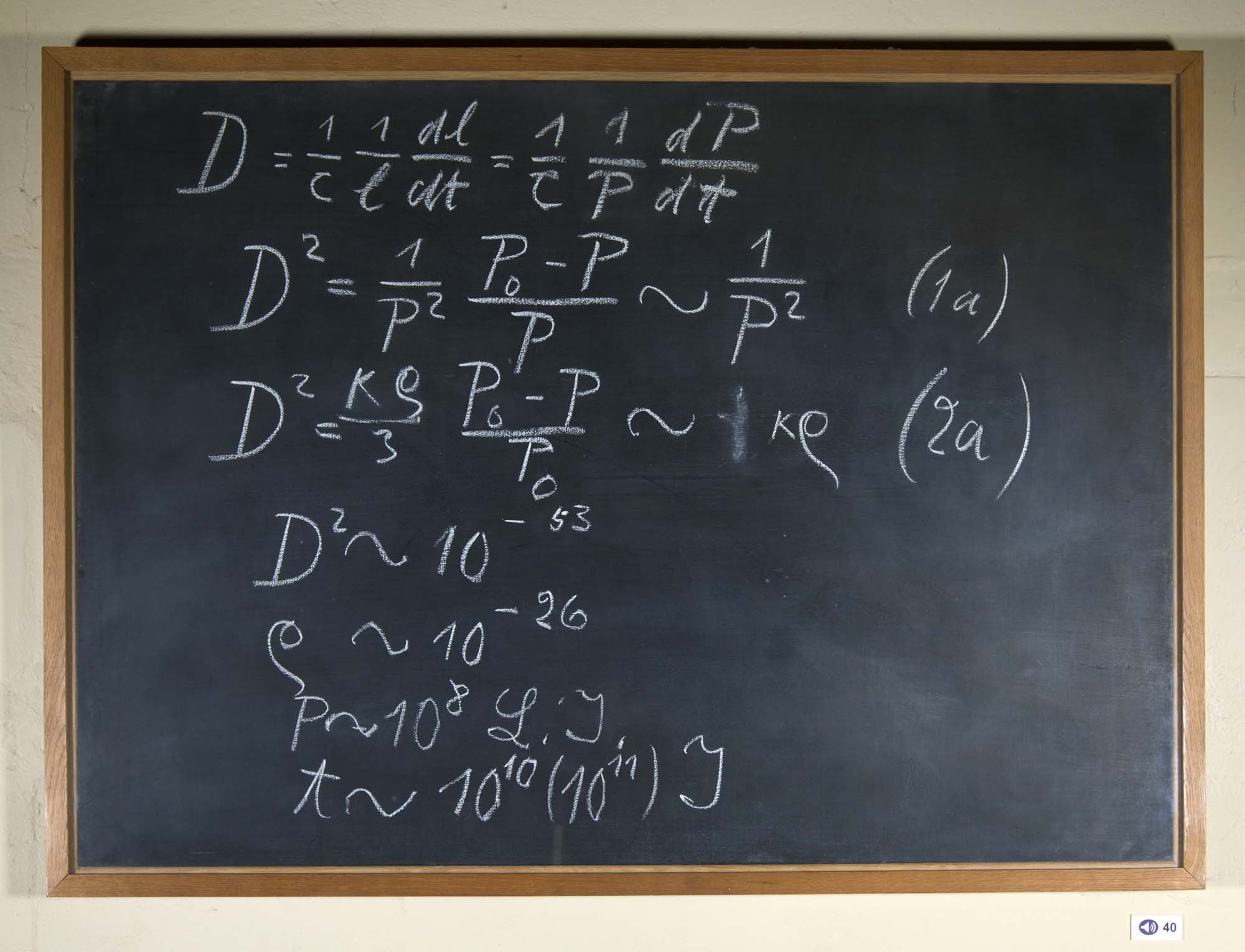
Einstein field equations chalkboard
Why Dark Energy Became the Default
The late 1990s brought a cosmological surprise. Observations of distant Type Ia supernovae indicated that the universe’s expansion, once thought to be slowing under gravity, was speeding up. Within the familiar framework of the Friedmann-Lemaître-Robertson-Walker (FLRW) cosmology, the simplest explanation is a smooth, uniform energy component with negative pressure — the cosmological constant, or more generally, dark energy.
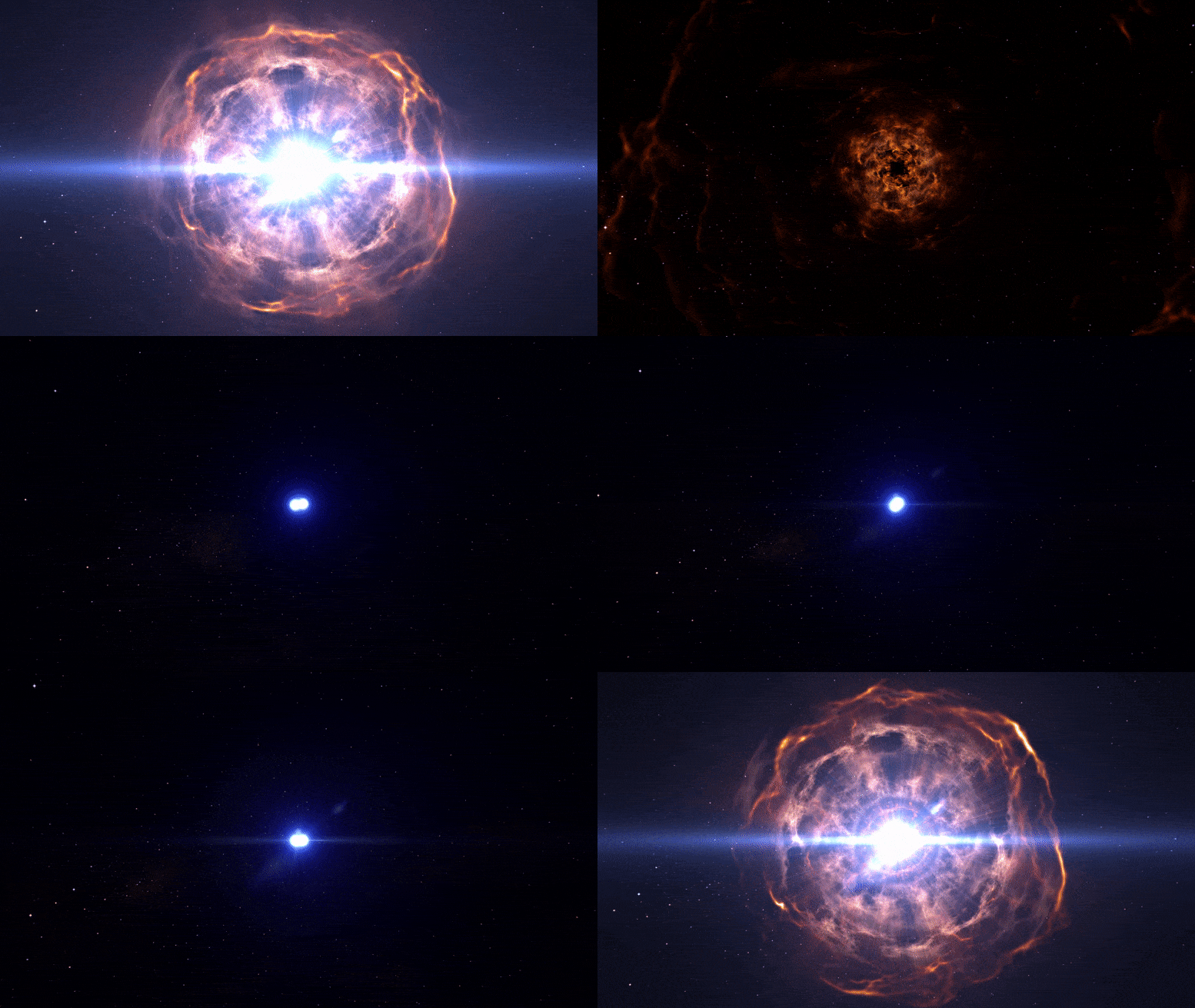
Type Ia supernova explosion
This tidy solution fit multiple datasets when combined with measurements of the cosmic microwave background and large-scale structure. The result was the concordance model: a spatially flat universe dominated by ~70% dark energy, ~25% dark matter, and ~5% ordinary matter. The cosmological constant, labeled Lambda, became shorthand for the puzzle: why the vacuum energy appears tiny but nonzero.
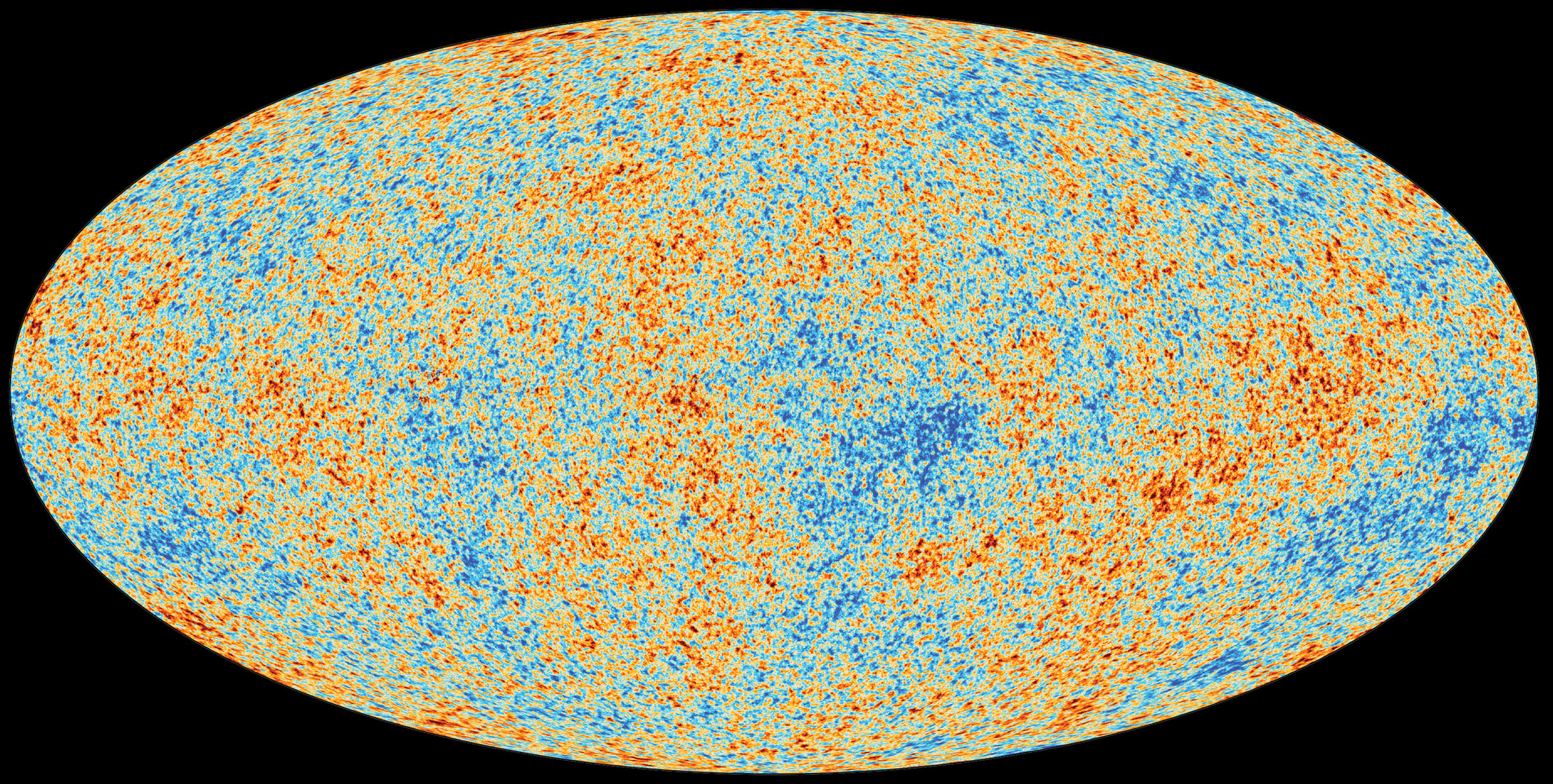
cosmic microwave background radiation map
A Different Angle: Geometry, Not Substance
General relativity is a set of non-linear equations tying spacetime curvature to energy and momentum. Most cosmological models simplify those equations by assuming perfect homogeneity and isotropy on large scales. In practice, however, the universe is very inhomogeneous on galaxy and cluster scales: stars, galaxies, filaments, and vast voids make the real cosmic web a textured place. When you average over those textures, general relativity’s non-linear nature means the average of a solution is not the same as the solution of the averaged matter distribution.
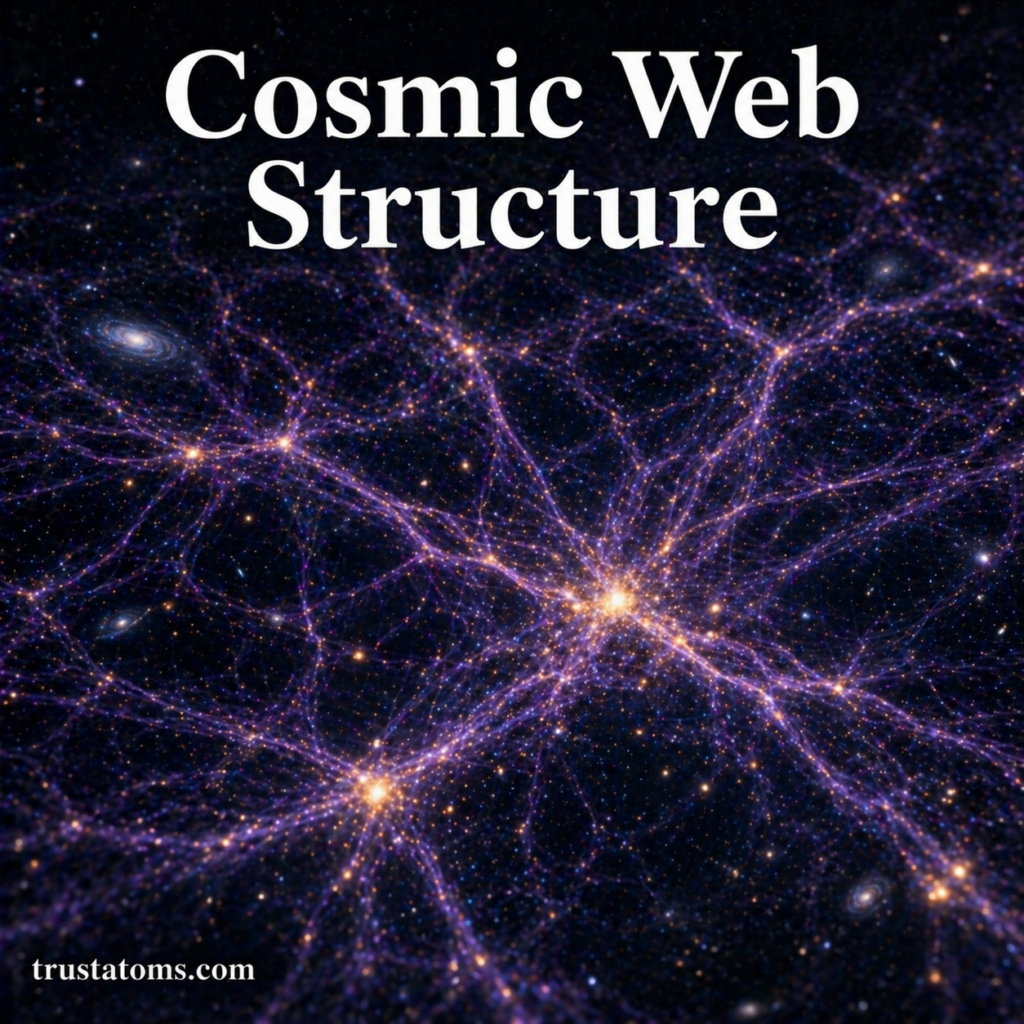
cosmic web filaments and voids
This mathematical caveat opens a conceptual door. Could the act of averaging inhomogeneities — gravitational clumps and empty voids — change the effective large-scale dynamics enough to mimic an accelerated expansion? If so, there’s no need to add a new energy component: the acceleration would be an emergent property of Einstein’s equations applied to a lumpy universe.
Key concept: Nonlinearity and averaging
The central technical idea is that Einstein’s equations are nonlinear: metric components multiply each other and interact with matter in ways that do not commute with averaging. If you smooth densities and curvatures first and then solve the equations, you can get a different answer than if you solve locally for each patch of the universe and then average the outcomes. This discrepancy is often called backreaction.
Backreaction can be thought of qualitatively in two complementary ways. One way focuses on volume-weighted expansion: underdense regions (voids) expand faster than overdense regions; since voids occupy an increasing fraction of the cosmic volume over time, the volume-average expansion rate can increase even while local physics obeys standard gravity. The other approach derives effective terms in the averaged equations that act like extra energy components, including ones with negative pressure.
How the Mathematics Works
Several formalisms try to capture averaging in a relativistic setting. One influential approach is Buchert averaging, which writes scalar evolution equations for spatially averaged quantities. The Buchert equations contain additional terms — the kinematical backreaction and averaged curvature — which are absent in the simple FLRW equations. Under particular conditions, these terms can produce an effective acceleration.
Other lines of work break the universe into regions (voids and structures), solve the Einstein equations in each region, and stitch the solutions together to compute an effective expansion history. Perturbation theory, used judiciously, can probe whether small deviations from homogeneity can accumulate to a large effect at late times. Each approach has strengths and limitations; none yet provides a universal, unambiguous demonstration that backreaction reproduces all the detailed successes of the dark energy paradigm.
Physical Intuition: Why Voids Matter
Intuitively, voids are the heroes of the backreaction story. These underdense regions expand faster than the average, so as structures grow and voids grow faster than overdense knots, the fraction of volume occupied by fast-expanding regions increases. An observer measuring the average expansion can therefore register a speeding up even though every local patch follows general relativity with normal matter and gravity.
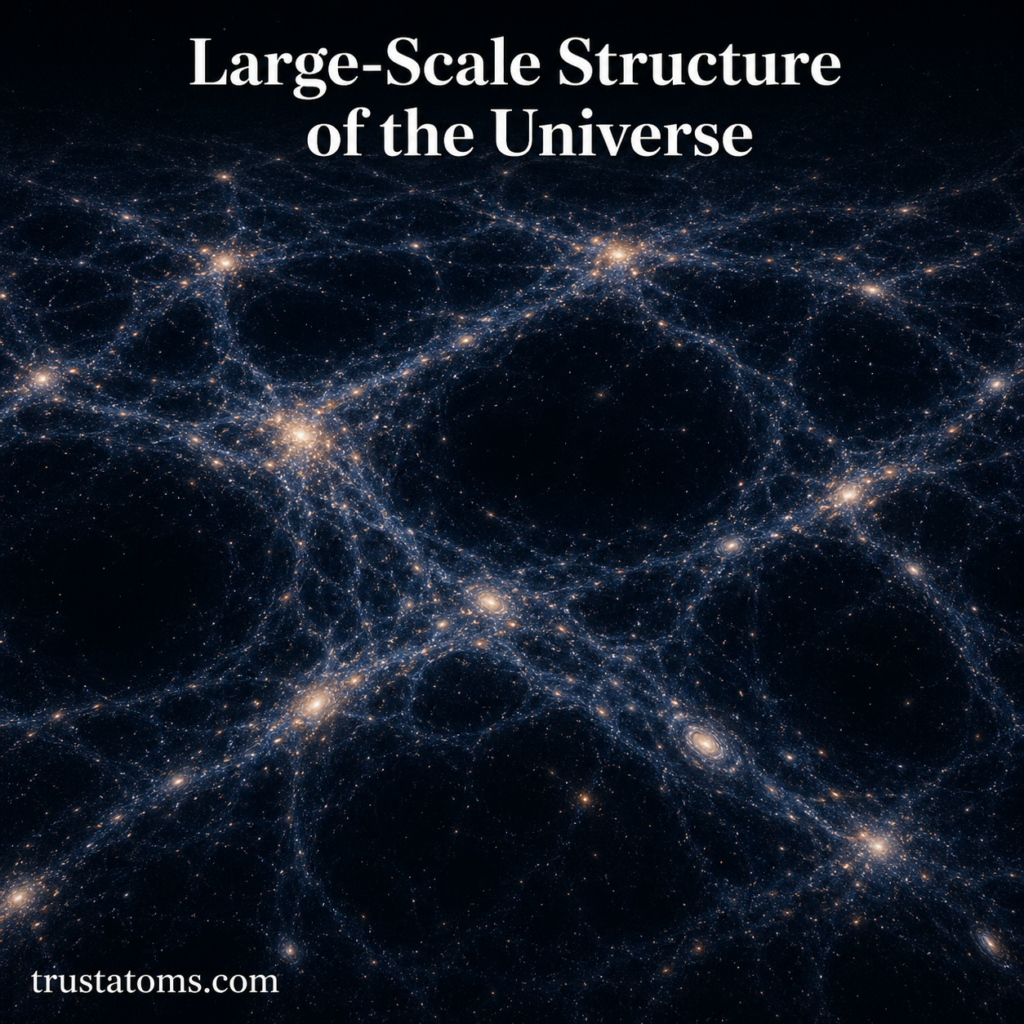
large scale structure of universe
This is not magic. It requires sufficient contrast between voids and structures and sufficiently large volumetric dominance of voids at late times. The challenge is quantitative: do real cosmic voids and filaments produce a backreaction effect large enough to match supernova, CMB, and baryon acoustic oscillation (BAO) data without spoiling other observables?
If the universe’s lumps can shift its average dynamics, acceleration might be geometry’s doing rather than a new form of energy.
Where the Idea Succeeds — and Where It Struggles
Proponents argue that backreaction reduces the need for a fine-tuned cosmological constant, reframes the cosmological constant problem as a question of mathematical order-of-operations, and aligns with the physical reality that the universe is not perfectly smooth. Some semi-analytic toy models and numerical proposals show that backreaction can produce acceleration-like behavior. They highlight how subtle relativistic effects — light propagation through clumpy space, relativistic corrections to Newtonian intuition, and evolving curvature — can change observational inferences.
But critics point to multiple hurdles. First, many backreaction estimates based on perturbation theory remain small: the corrections calculated under reasonable assumptions are orders of magnitude too tiny to replace dark energy. Second, any alternative must not only create acceleration but also preserve the highly successful fit of Lambda-CDM to detailed data: the shape of the angular power spectrum of the cosmic microwave background, the BAO scale, growth rates of structure, lensing statistics, and the redshift-distance relation. Matching that body of evidence without Lambda is a strict constraint.
Observational Tests and Signatures
Testing whether backreaction contributes significantly requires clever observational strategies. Potential signatures include subtle departures from the standard distance-redshift relation that do not fit a simple Lambda model, anisotropies or scale-dependent effects in the expansion history tied to the cosmic web, and differences in how light propagates through an inhomogeneous universe that affect luminosity and angular diameter distances differently.
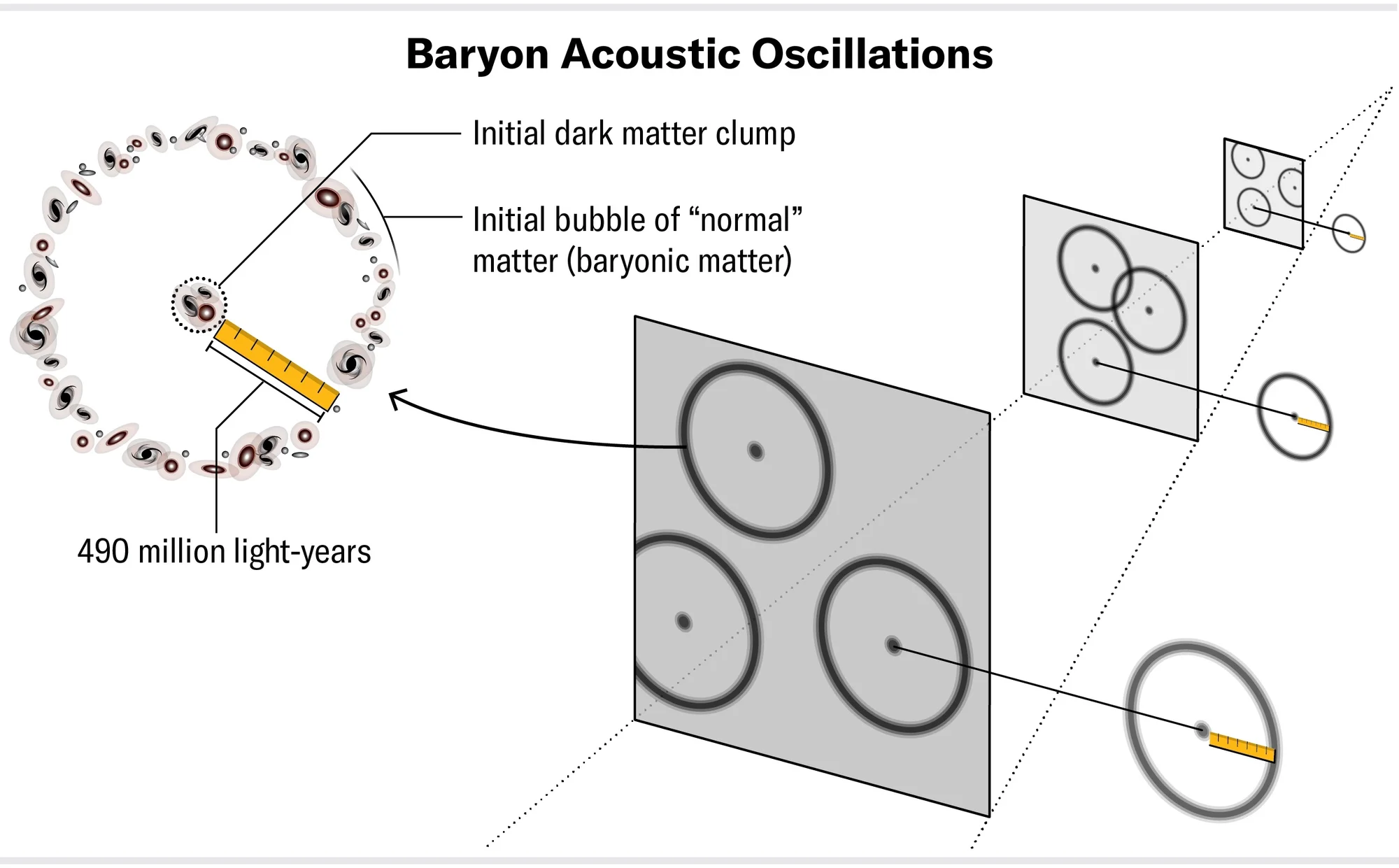
Baryon Acoustic Oscillations diagram
A practical route is forward modeling: construct realistic inhomogeneous models, simulate light propagation and structure growth, and compare the synthetic observables with survey data. Because many datasets constrain the same cosmological parameters in different ways, a successful backreaction model must simultaneously satisfy supernova distances, CMB constraints on the early universe, BAO standard rulers, and weak lensing measures of matter distribution.
Theoretical Alternatives and Complementary Ideas
Backreaction is one of several attempts to explain cosmic acceleration without a cosmological constant. Others include modified gravity theories that change Einstein’s equations at large scales, and models where vacuum energy cancels or evolves. Each path has different theoretical costs: new fields and parameters, violations of well-tested equvalence principles, or the need for protective symmetries to hide effects on smaller scales.
Backreaction stands out because it asks whether the existing theory — general relativity — has been fully and correctly applied. It does not introduce new species or change local gravity; it asks instead whether large-scale averaging and the observational interpretation have introduced a conceptual bias.
Practical Challenges for Modelers
Two practical problems confront researchers. One is modeling complexity: realistic inhomogeneous solutions of Einstein’s equations are hard. Numerical relativity has made strides in simulating strong-field systems like black hole mergers, but cosmological-scale inhomogeneity with correct statistical properties is computationally expensive and methodologically subtle. The second problem is inference: disentangling backreaction effects from ordinary parameter shifts in the standard model requires joint analyses across multiple datasets and robust statistical frameworks.
What a Backreaction Universe Would Mean
If backreaction explains a significant portion of apparent acceleration, cosmology’s conceptual map would shift. The cosmological constant problem would change from asking why vacuum energy is small to understanding why cosmic structure produces the observed effective dynamics. The search for a new dark-energy field would be less compelling, and emphasis would grow on precision mapping of inhomogeneity, redshift-space distortions, and light propagation effects.
At the same time, many familiar predictions of Lambda-CDM would need retesting in the new framework. Structure growth histories, the timing of reionization, and lensing power spectra could all receive revisions. The transition would be scientific and iterative: models that successfully explain all current data and make testable new predictions would win the day.
Where Research Stands Today
Debate remains lively. A minority of researchers argue backreaction is large enough to replace dark energy, others find it a subdominant correction, and many continue to investigate more precise calculations and observational diagnostics. The issue is technical and empirical: it can and should be settled by improved modeling combined with richer datasets — deep supernova surveys, finer weak-lensing maps, precise BAO measurements, and more complete maps of cosmic voids and filaments.
Solving whether acceleration is geometry or new physics will deepen our understanding of gravity, structure formation, and how cosmologists interpret observations.
Conclusion: A Modest Revolution or a Refinement?
Einstein’s field equations are flexible and subtle. The backreaction program invites us to ask whether that flexibility, together with the universe’s messy structure, can explain acceleration without inventing new energy. At present the most conservative reading is that backreaction may contribute but has not yet supplanted dark energy in explanatory power. The possibility, however, is important because it reframes the cosmological constant question and forces a deeper engagement with the interplay of geometry and observation.
Ultimately, the answer will be empirical. As we build larger and more precise cosmological surveys and sharpen relativistic modeling techniques, we will either tighten the case for a new cosmic component or witness a gratifying economy: Einstein’s equations, properly applied to a lumpy universe, explain the acceleration we observe.
- General relativity’s nonlinearity means averaging a lumpy universe can produce effective terms that mimic dark energy.
- Backreaction focuses on how voids and inhomogeneities influence the volume-averaged expansion.
- Quantitative results remain contested; some estimates find the effect too small, while others show promising avenues.
- Resolving the question requires realistic relativistic simulations and combined observational tests across supernovae, CMB, BAO, and lensing.
- Either outcome — a backreaction-dominated explanation or confirmation of dark energy — would deepen our understanding of gravity and cosmology.