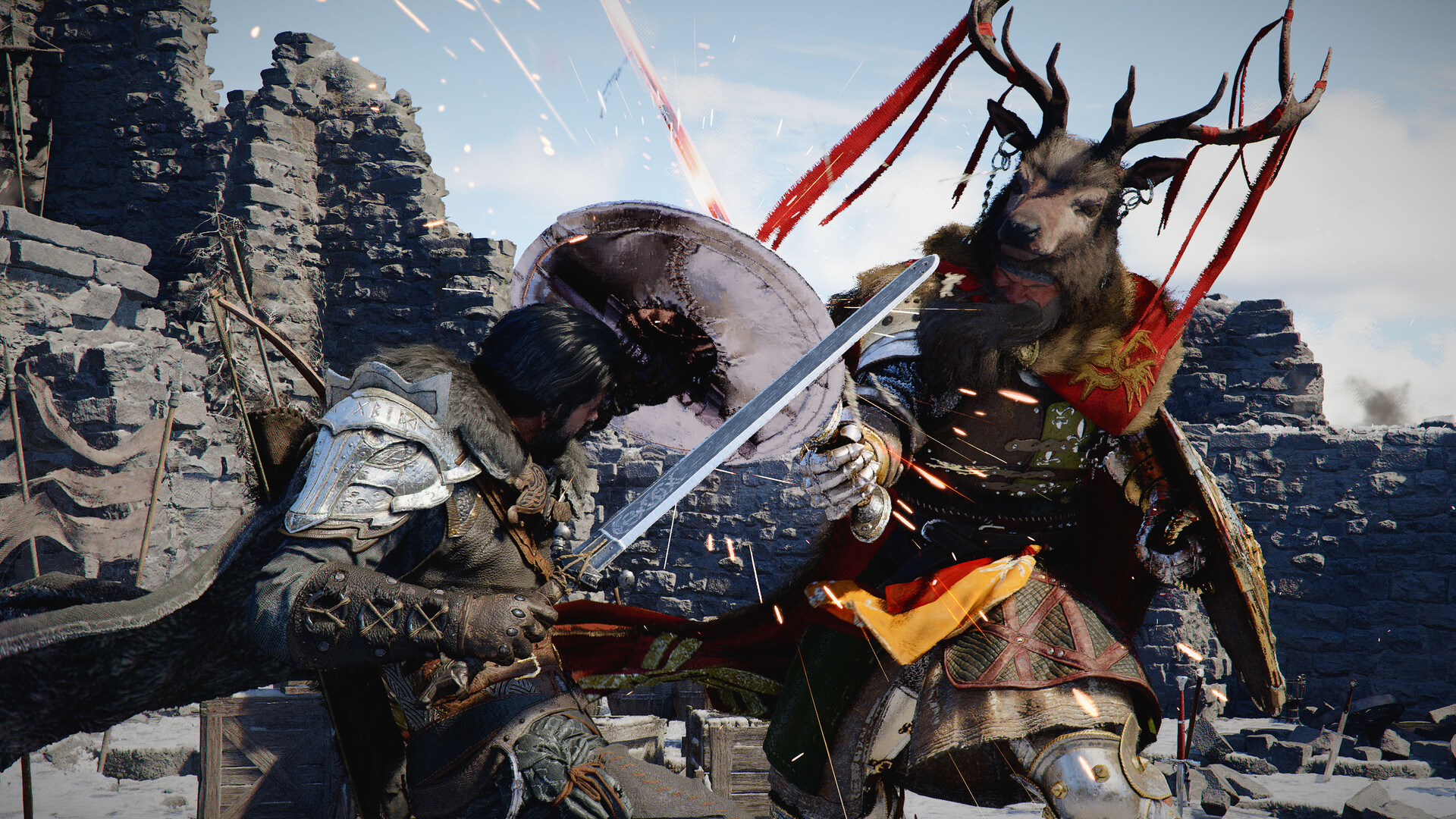
Denuvo Added to Crimson Desert One Week Before Release
The announcement that Denuvo's anti-tamper protection was added to Crimson Desert a week before launch has sent ripples through the gaming community. For some players, it's a pragmatic move to protect revenue and the multiplayer environment from cheats; for others, it raises familiar concerns: will performance suffer, will modding die, and what does this say about developer communication in the critical lead-up to release? This feature unpacks the technical, commercial, and cultural implications of that late-stage decision and offers clear guidance for players, modders, and developers on what to watch for and how to respond.
What happened — the timeline and context
The headline is simple: Denuvo, a widely used anti-tamper solution, was integrated into Crimson Desert shortly before its public launch. The timing—just a week before release—matters because it compresses the window for testing, public messaging, and community feedback. Developers often make last-minute changes for security or business reasons, but DRM additions near launch are always sensitive because they directly touch players' hardware and experience at the most visible moment.

Crimson Desert game release
A last-minute DRM addition raises technical, reputational, and consumer-rights questions simultaneously.
What is Denuvo and why it matters
Denuvo is an anti-tamper and anti-piracy technology applied to games to make unauthorized copying and modification more difficult. Over the last decade it has been adopted by many publishers as part of a defense-in-depth approach to protect pre-launch reviews, launch-week sales, and the multiplayer ecosystem from cheating. Its defenders point to reduced piracy windows and better revenue protection; its critics emphasize potential performance overhead, compatibility issues, and the negative optics when players feel their machines are being policed.
Denuvo anti-tamper protection game
Why adding it one week before release is significant
Timing amplifies risk. When a DRM solution is integrated so close to launch:
- Testing windows shrink. Compatibility testing across the hundreds of GPU, CPU, OS and driver combinations commonly found in the player base gets curtailed.
- Benchmarks and reviews may not capture real-world behavior. Reviewers who test press builds might not experience full consumer scenarios, and any regressions discovered at scale will appear after purchase.
- Community trust is put to the test. Players expect transparency on features that affect performance and privacy; last-minute moves can be interpreted as withholding information.
Those three pressures combine to make launch week fragile: performance regressions or compatibility breakages do not just annoy players, they can become a persistent reputation cost.
Technical implications for players
From a technical perspective, there are several areas players should pay attention to:
- Performance overhead: Anti-tamper systems run checks and protections that can impact CPU cycles, I/O, and occasionally GPU behavior. In most cases the overhead is modest, but edge-case systems—older CPUs, nonstandard storage setups, or niche drivers—can see disproportionate effects.
- Compatibility: Interactions with overlays, recording software, mods, and driver-level tools sometimes reveal conflicts. If you use custom tools (e.g., third‑party overlays, frame-capture utilities), test them early or keep a rollback plan.
- Updates and telemetry: Denuvo solutions can introduce update handlers and telemetry channels for integrity verification. Developers say these are focused on security; players should know what telemetry is collected and whether it's optional.
For most players on modern hardware, the experience will be indistinguishable from a non‑protected build. But the risk profile is not uniform—older PCs, heavily modded installs, or players who rely on niche accessibility tools should be cautious and read patch notes carefully.
Impact on modding, preservation, and creators
One of the strongest objections to invasive DRM is its potential to stifle modding. Mods extend a game's life, foster communities, and can be critical for accessibility. An anti-tamper layer that blocks code injection or file tampering makes some mod types—which rely on memory patches, script injection, or replacing binaries—harder or impossible.
That said, not all DRM kills modding by default. Many studios adopt coexisting workflows: protected binaries for release, with official modding tools or sanctioned APIs that let creators extend the game without compromising protection. The core question becomes one of design intent and communication: will the developer offer official mod support and tools, or will modders be forced into workaround territory?
Public relations and player trust
DRM is as much a PR issue as a technical one. Adding Denuvo right before release often triggers a negative reaction because players feel they weren't consulted or forewarned. Even if performance is unaffected, the perception of being surveilled or restricted can erode goodwill—especially for a high-profile title.
Developers can mitigate backlash by:
- Explaining the reasons openly: Why was DRM necessary? Is it temporary or permanent?
- Committing to transparency: Outline what telemetry is collected and how it is used.
- Offering trade-offs: Consider post-launch reevaluation, phased removal, or official mod support to reassure the community.
Transparent, proactive communication in the days before and after launch goes a long way toward maintaining trust.
Legal and consumer-rights considerations
Retailers and storefronts have refund policies that may be relevant if players experience degraded performance attributable to DRM. Additionally, jurisdictions have differing rules about consumer disclosure and privacy. From a practical consumer standpoint, if you feel performance or privacy expectations were misrepresented, review refund and complaint processes on your platform—many stores have clear windows for returns in the event of materially broken launches.
Developers and publishers should also be mindful of data protection laws: any telemetry must comply with applicable privacy regulations and should be documented in privacy notices.
Comparing approaches: DRM alternatives and trade-offs
There isn't a one-size-fits-all DRM answer. Studios typically choose among:
- Server-side anti-cheat only: Focuses on multiplayer integrity without heavy client-side anti‑tamper. Good for large live-service titles but less helpful for single-player piracy concerns.
- Lightweight client checks: Minimal intrusion with periodic validation. Lower overhead but potentially less robust against sophisticated attacks.
- Full anti-tamper solutions (like Denuvo): Stronger protection at potential cost of compatibility and player goodwill if not managed carefully.
Each approach has trade-offs tied to budget, audience expectations, and the mix of single-player versus multiplayer content.
- Stronger piracy protection during critical launch window.
- Reduced early cheating in multiplayer ecosystems.
- Potentially higher revenue retention at launch.
- Risk of performance regressions on edge systems.
- Negative community reaction if perceived as heavy-handed.
- Possible friction for modders and archivists.
What players should do now
If you plan to buy or play Crimson Desert around launch, here are practical steps:
- Wait for initial feedback: Allow a few days for community reports and patches to settle before assuming peak stability.
- Read patch notes carefully: Developers typically list mitigations and compatibility fixes in early updates.
- Test your setup early if you preordered: If you have early access or review codes, test overlays, stream tools, and mods you rely on.
- Keep a rollback plan: Know your refund window and how to restore previous drivers or OS settings if you encounter regressions.
What developers and publishers should do
For studios weighing a late DRM integration, consider these best practices:
- Communicate early and precisely: Explain why the DRM is necessary, what it does, and whether it's expected to be removed later.
- Prioritize compatibility testing: Extend QA on the widest possible hardware swath and use automated telemetry to detect regressions.
- Offer graceful degradation: Where possible, structure protections so that non-critical features fall back rather than crash or halt the game.
- Engage modders: Provide official mod APIs or sanctioned tools that preserve creative communities.

Pearl Abyss studio logo
These steps reduce the odds that a DRM decision becomes a lasting PR problem or an obstacle to the game's long-term success.
Likely scenarios after launch
When a major title ships with late-added DRM, a few common trajectories tend to play out:
- Rapid patch cycle: If issues surface, expect hotfixes and micro-patches in the first weeks.
- Community testing and reporting: Players with diverse systems will surface edge cases; prioritize triage of reproducible issues.
- Negotiated compromises: In some cases, publishers announce phased DRM removal or adjust checks to minimize conflicts once piracy risk decays.
How the publisher responds in those first days often determines whether the DRM decision is a short-term inconvenience or a longer-term stain on reputation.
Conclusion: balancing protection with experience
Denuvo's integration into Crimson Desert so close to launch is a reminder that technical decisions are also social and commercial ones. DRM can be a legitimate tool to protect revenue and keep multiplayer fair, but it must be applied with care, extensive testing, and transparent communication. Players deserve clarity about what protection does and how it affects them; modders deserve predictable pathways to create; and developers deserve practical options to protect their investment without alienating their audience.
- Late DRM integrations compress testing windows and increase launch risk.
- Most players will be unaffected, but edge systems and modded setups are vulnerable.
- Transparency, official mod support, and rapid post-launch patches are essential mitigation steps.
Final advice
If you're excited about Crimson Desert, give the launch a few days to breathe—watch community reports, read patch notes, and if you encounter problems, file clear support tickets. If you're a creator or modder, engage constructively with the developer to understand permitted extensions. And if you work in the industry, treat DRM decisions as public-facing product choices; the technical trade-offs are real, but they are navigable with the right testing, tooling, and communication strategy.
Players and developers both have a stake in how DRM decisions shape the future of games.