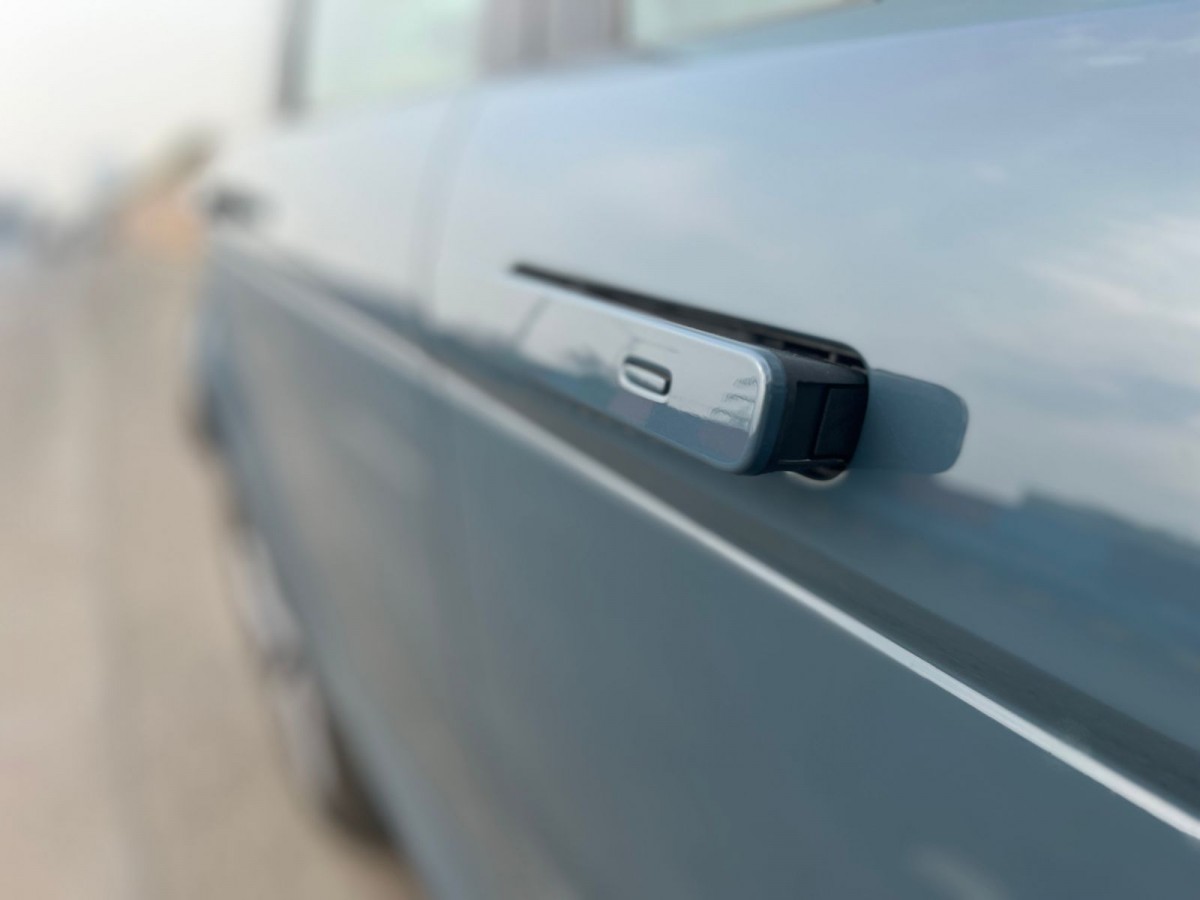
China Bans Hidden Car Door Handles: What Drivers and Automakers Need to Know
The Chinese government has issued a new mandatory automotive safety standard that outlaws fully hidden or electrically retractable door handles on passenger cars — a striking, first-of-its-kind regulatory step aimed squarely at emergency-access and rescue concerns. The rule, published by China’s Ministry of Industry and Information Technology, takes effect on January 1, 2027; car models already approved for sale are being given a two-year transition window until January 1, 2029 to meet the new requirements. citeturn0news12turn0news13

China hidden door handles ban
Lead: Why a design built for sleekness became a safety target
The flush-mounted, pop-out and press-to-release handles that have become an aesthetic and aerodynamic hallmark on many premium electric vehicles — popularised a decade ago by Tesla — were praised for improving range and giving cars a cleaner profile. But a string of accidents in which rescuers struggled to open doors, sometimes amid fires or power loss, has focused regulatory attention on whether entirely electronic or recessed handles can reliably permit exit and assist rescue in worst-case scenarios. The new Chinese standard couples an outright restriction with detailed requirements for visible, mechanical release mechanisms. citeturn0search0turn0search6

Tesla Model 3 door handles
What the regulation requires
The core elements of the standard are straightforward in principle but precise in execution: each passenger door (excluding the tailgate) must provide a hand-operable mechanical release that can be used from both the exterior and the interior of the vehicle, independent of electrical power. In addition, regulators require permanent graphic markings inside the cabin to instruct occupants how to open the door in an emergency. For vehicles with semi-recessed designs that remain, the rule specifies minimum accessible space measurements to ensure a human hand can reach and operate the mechanism. citeturn0search2turn0search5

China MIIT automotive safety standard
Technical specifics and human factors
Regulators have not only outlawed fully concealed electronic-only systems but also spelled out human-factors dimensions. For instance, one widely-cited version of the draft called for a minimum hand-access volume — commonly reported as about 6cm by 2cm by 2.5cm — at exterior handle locations to guarantee reachability under duress. That kind of specification is less about aesthetics and more about ensuring that an average rescuer or trapped occupant can grab, pry or depress a release even if the vehicle’s electrical system is compromised. citeturn0search0
Designs that help a car cut wind resistance are attractive on paper — but regulators are asking whether they help people in the moments that matter most.
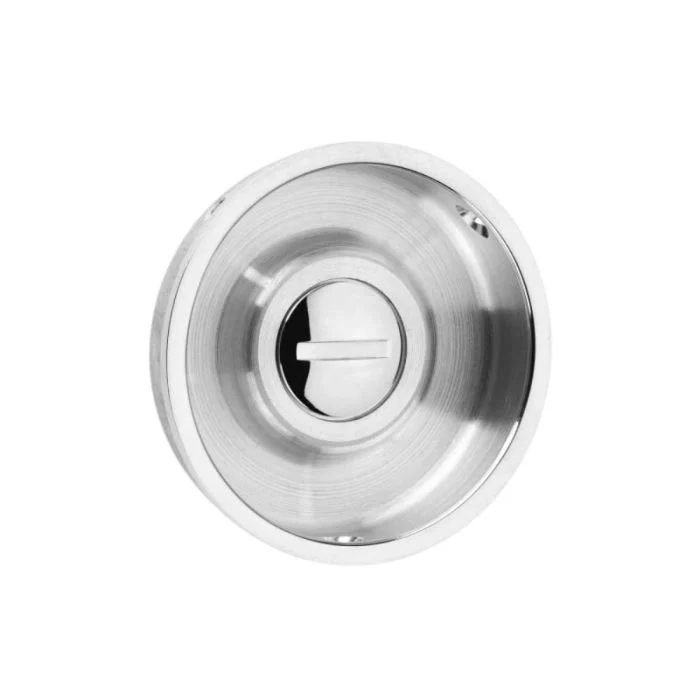
flush door handles emergency release
The incidents that pushed regulators to act
Chinese regulators point to several high-profile accidents in recent months that amplified public concern. Videos and witness accounts from a 2025 crash involving the Xiaomi SU7 in Chengdu — in which rescuers struggled to gain quick access to a burning cabin — circulated widely and helped crystallise political momentum for change. Authorities also referenced cases in which power loss or wiring damage appeared to hinder electronic handle operation, complicating rescue efforts and, in some tragedies, contributing to fatalities. While the factors in each crash are complex, the repeated image of sealed doors during emergencies created a policy imperative. citeturn1search3turn0search6

Xiaomi SU7 crash rescue
Is this truly a world first?
Yes. While other jurisdictions have probed electronic handle reliability and opened investigations into particular models, no major market had previously issued a nationwide ban on hidden or retractable door handles. China’s move is therefore notable not only for its content but for its symbolic weight: as the world’s largest new-car market, a formal safety standard from Beijing carries clout and may shape design choices well beyond its borders. Analysts say this could become a template for regulators elsewhere weighing similar risks. citeturn0news13turn0search2
Industry reaction: scramble, compliance and strategic trade-offs
Unsurprisingly, automakers and suppliers have responded with a mix of acceptance, concern and technical problem-solving. Domestic Chinese brands — many of which already use a mix of flush and conventional handles across their lineups — have signalled they will comply and redesign planned models where necessary. International players that sell into China will face retrofit costs, retooling and possible delay to launches unless they already have mechanically operable backup systems in place. Some luxury models that leaned heavily on flush aesthetics will need new approaches to combine brand character with the mandated mechanical interface. citeturn0news14turn0search5
Engineering and product implications
From an engineering standpoint, the change is manageable but not trivial. Adding a mechanically accessible release involves packaging challenges in thin door skins, sealing against noise and water, and maintaining crashworthiness while offering a new operator path. Suppliers who make latches, linkages and inner door modules will be in demand as automakers redesign to meet the standard. The good news for manufacturers is that mechanical redundancy is a mature area of automotive engineering — solutions exist — but their application must be scaled to tens of millions of vehicles and integrated with safety labeling and software changes for diags and user prompts.
“This is a retrofit and design exercise, not a research project,” said industry veterans in response to the announcement — meaning schedules and costs will be finite, not indefinite.
Safety trade-offs: aerodynamics versus emergency access
The design tension here is literal: hidden handles marginally reduce drag and thus improve range, a benefit prized in the highly competitive EV market. Opposing that is the asymmetric and catastrophic harm of being trapped in a disabled, burning car. Regulators have prioritised the latter. For consumers, the practical outcome will likely be a modest hit to the clean-lined exterior some buyers prize, in exchange for an increase in predictable, mechanical access for rescuers and occupants alike.
- Improved emergency access: Mechanical releases work without power.
- Clearer rescue procedure: Mandated signage and standard positions make rescues faster.
- Smaller aerodynamic penalty: Slight drop in efficiency for some models.
- Design compromise: Less seamless exterior styling on affected vehicles.
Regulatory ripple effects — will other countries follow?
Observers expect other safety agencies to watch closely. The United States National Highway Traffic Safety Administration and its counterparts in Europe have already investigated instances of electronic handle failures; China’s binding standard supplies a concrete regulatory answer that other markets could reference. Given global supply chains and the influence of the Chinese market, manufacturers may adopt dual-compliant designs globally to avoid diverging production lines. That could accelerate an industry-wide drift back toward visible mechanical redundancy as standard practice. citeturn0news12turn0news14
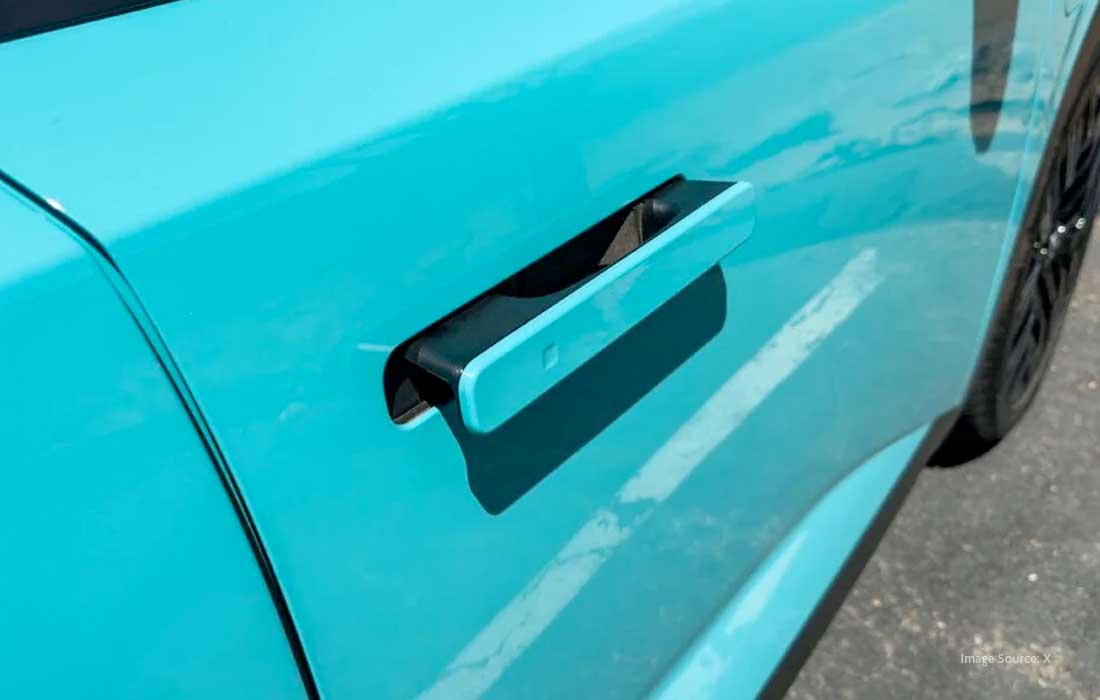
China EV door handle regulation 2027
What owners and prospective buyers should expect
If you own a vehicle with retractable or concealed handles, the direct impact depends on whether your car was type-approved before the new standard. Models already approved for sale in China have until January 1, 2029 to comply, so existing vehicles are not being recalled under this rule. New models submitted for approval after the cutoff will have to meet the mechanical-handle requirement. For owners, the more immediate changes will be in future designs — and the likelihood that new EVs will prioritise clear manual release points and interior signage for emergency use. citeturn0search2
Legal and liability considerations
Mandating mechanical access also reshapes liability calculations. If regulators require a feature and an automaker fails to provide it, that automaker faces regulatory sanctions and potentially sharper tort exposure. Conversely, firms that proactively adopt redundant mechanical releases may mitigate risk and public-relations fallout. This standard may alter the calculus in pending litigation where families or plaintiffs allege trapped occupants could not escape because of electronic locks or failed handles.
Design creativity isn’t dead
Designers retain pathways to reconcile style and safety. Expect to see more clever approaches: recessed visible handles with contrasting trim, stylistic shrouds that still permit mechanical access, or low-drag handle geometries that satisfy the new measurement envelope. Interior instruction graphics will become a standard part of vehicle manuals and cabin placards. In short, the aesthetics will evolve rather than vanish.
Conclusion: A trade-off that could reshape EV norms
China’s ban on hidden door handles is a decisive intervention — one that privileges predictable escape and rescue mechanics over marginal aerodynamic gains. By setting an enforceable, nationwide rule with concrete deadlines, Beijing has signalled that certain design features must yield when public safety is at stake. Given China’s market size and engineering influence, this policy will reverberate across product roadmaps, supplier pipelines and regulatory discussions worldwide. For drivers, designers and regulators, the immediate task will be to implement solutions that keep people safe without needlessly sacrificing the innovation that made EVs desirable in the first place. citeturn0news13turn0search5
China’s move may be the moment that the auto industry redefines what counts as a necessary redundancy — and what counts as optional style.
- Effective date: January 1, 2027 for new approvals; January 1, 2029 for already-approved models.
- What’s required: Mechanical, hand-operable release on all passenger doors (except tailgate) and interior signage.
- Why: Safety concerns after high-profile EV crashes where electronic handles complicated rescues.
- Impact: Automakers must redesign affected models; global regulatory ripple effects likely.