California Bans Child Marriage — Why 32 States Still Allow It
F
Francesco
Published on Oct 1, 2026
•18reads
California Bans Child Marriage — Why 32 States Still Allow It
California’s governor signed a bill on September 30, 2026 that closes a decades-old legal loophole allowing children to marry with parental or judicial permission. The move removes an exception that had permitted minors to enter marriages and domestic partnerships in the state, setting the legal age at 18 and joining a growing list of states that have moved to make adulthood the sole threshold for marriage. citeturn1view0
Why this matters
The headline sounds straightforward: making 18 the universal floor for marriage seems like common sense. But beneath that simplicity are layers of law, history, trauma and policy inertia. Child marriage is not just a niche legal quirk; it intersects with statutory rape laws, trafficking, education and public health. Ending the practice in a state as large and influential as California reverberates well beyond its borders, but it also spotlights how far the rest of the country has to go.
A brief legislative history
For decades, most U.S. states allowed minors to marry under set conditions: parental consent, judicial approval, pregnancy or emancipation. These exceptions were originally framed as pragmatic — to legitimize a pregnancy, to recognize a court-declared adult, or to accommodate special cases. Over time, however, advocates argued that the carve-outs created fertile ground for coercion and abuse.
Efforts to close the loopholes accelerated in the late 2010s as survivor testimony, data analyses and focused advocacy by groups like Unchained At Last and the Tahirih Justice Center brought the scale of the problem into public view. The legislative patchwork shifted state by state: some adopted full bans; others tightened requirements without eliminating exceptions.
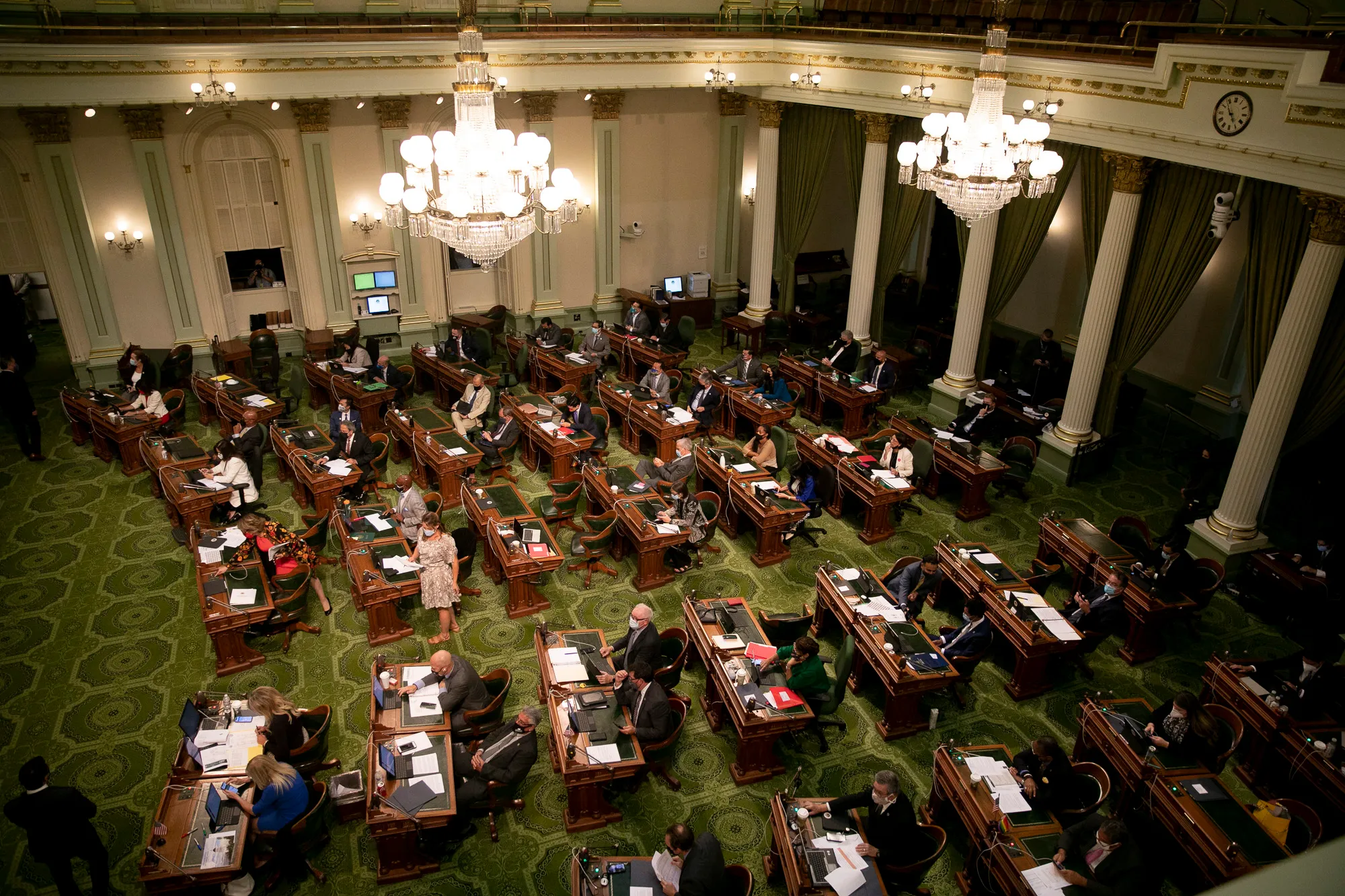
California State Capitol legislative session
Did You Know? Many laws that allowed child marriage were written decades ago and have never been updated to reflect changes in social services, child protection norms, or research on adolescent development.
California’s action: what changed and when
On September 30, 2026 Governor Gavin Newsom signed Assembly Bill 1267, authored by Assemblymember Gail Pellerin, which repeals provisions that allowed a minor to enter into marriage or a domestic partnership with parental consent or judicial approval. The bill sets the minimum age for marriage and domestic partnership at 18. citeturn1view0
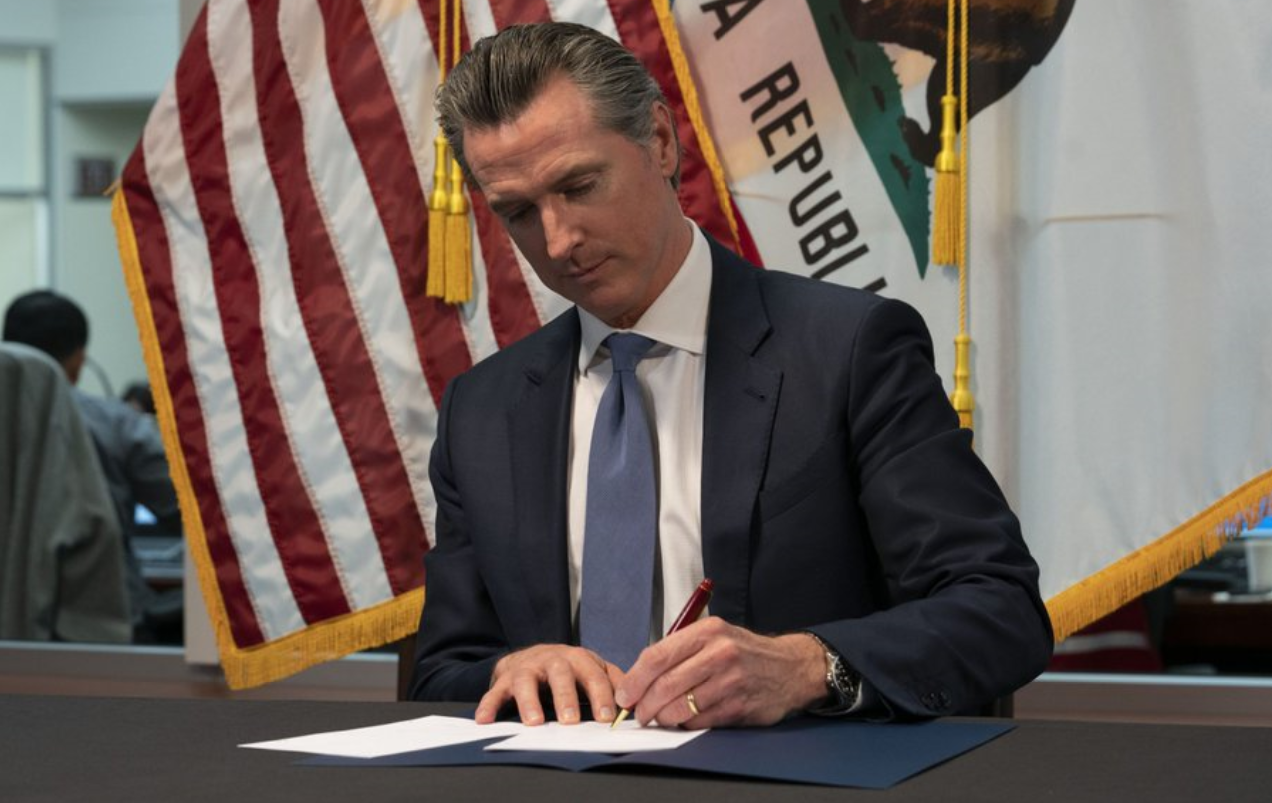
Governor Gavin Newsom signing AB 1267
Lawmakers and advocates say the statute will take practical effect at the start of the next calendar year — beginning January 1, 2027 — giving state agencies and clerks time to update forms, training and guidance to ensure implementation is consistent across counties. citeturn3search1
"This is a long overdue measure to protect young Californians and minors."
Where California fits in the national picture
California’s move is part of a national trend: since the mid-2010s, dozens of jurisdictions have either banned child marriage outright or significantly restricted the exceptions that once allowed it. But progress has been uneven and incremental. National trackers report different tallies depending on the date and the definitions used — for example whether territories and district-level reforms are included, or whether statutes that still allow exceptional cases are counted as bans.
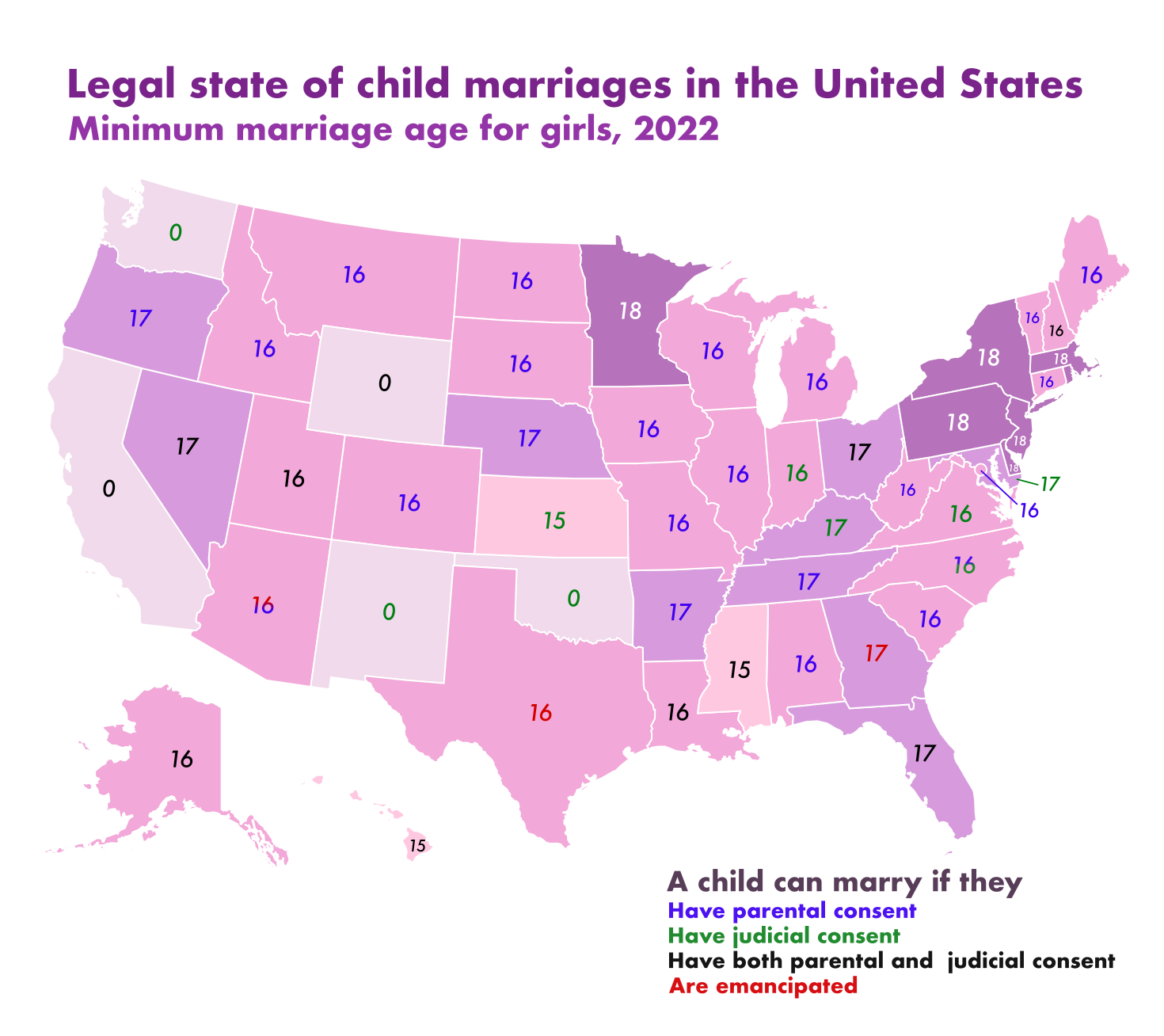
United States child marriage map
Advocates such as Unchained At Last note that, after recent state actions including Oklahoma and now California, child marriage still remains legal in 32 states — a stark reminder that a majority of state legal systems continue to allow marriage by minors under one set of conditions or another. citeturn4view0
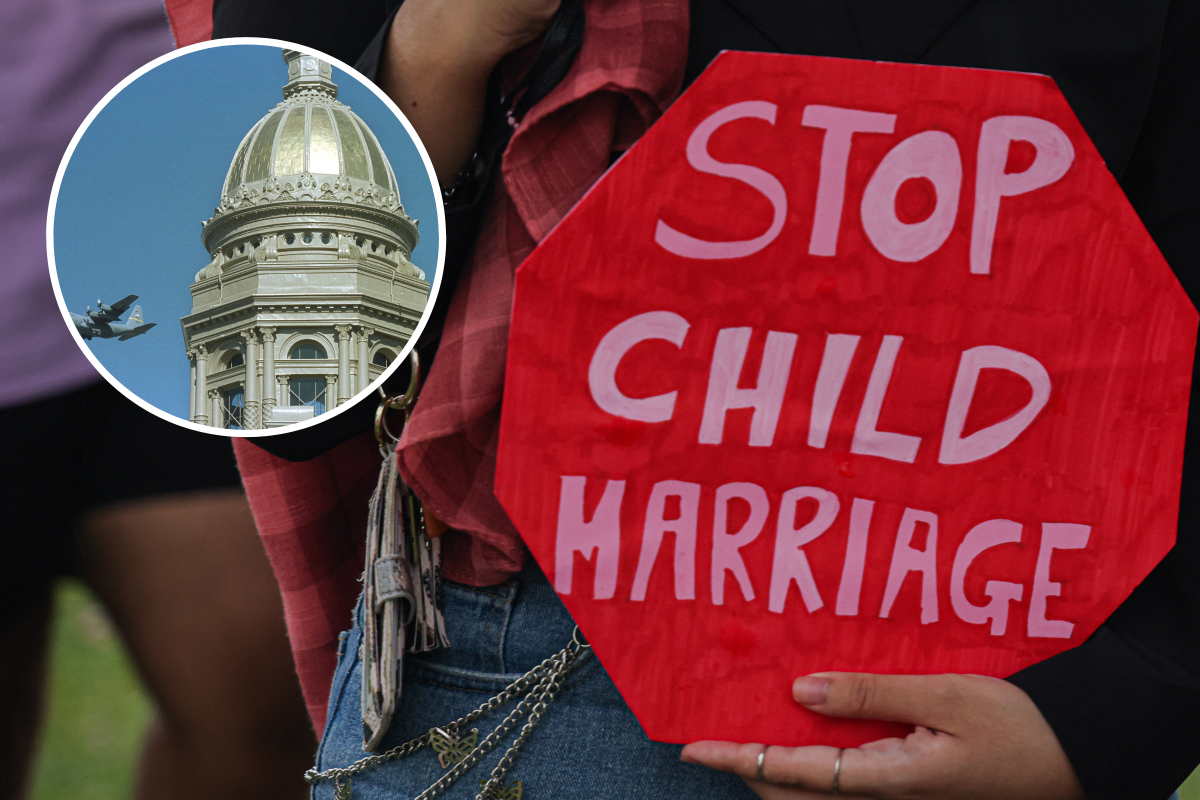
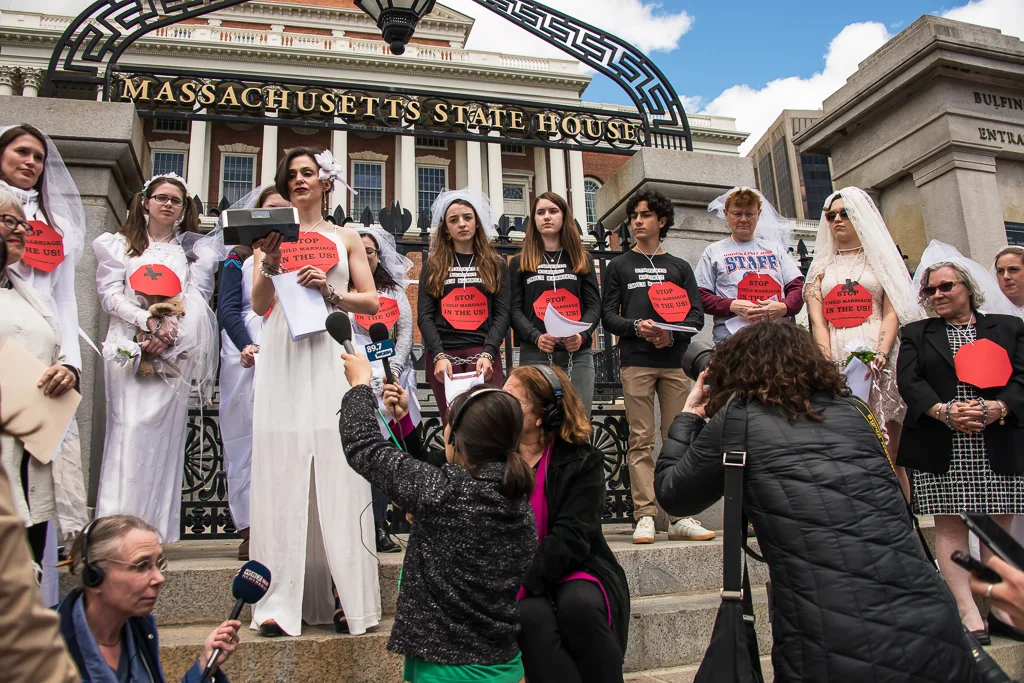
Unchained At Last advocacy group protest
Caution Numbers vary among organizations because some count only states that have removed all exceptions, while others include territories and Washington, D.C. in their tallies.
How the laws actually work — and why loopholes persist
State statutes typically set a default marriage age and then enumerate exceptions. Common mechanisms include:
Parental consent — one or both parents sign off so a minor can obtain a license.
Judicial approval — a judge can authorize a marriage after a hearing, often citing maturity, pregnancy or best interest.
Emancipation — a court-declared minor recognized as an adult can marry in some states.
Pregnancy exceptions — some laws historically allowed marriage if the minor was pregnant or already a parent.
Those exceptions were originally intended to address specific circumstances but can be exploited: parental pressure, religious community pressure, familial trafficking schemes or arrangements intended to circumvent criminal accountability for sexual conduct. Because each state’s statute reads differently, a marriage that could be rejected in one state might be permitted in another — or recognized if solemnized elsewhere — creating a complicated legal landscape.
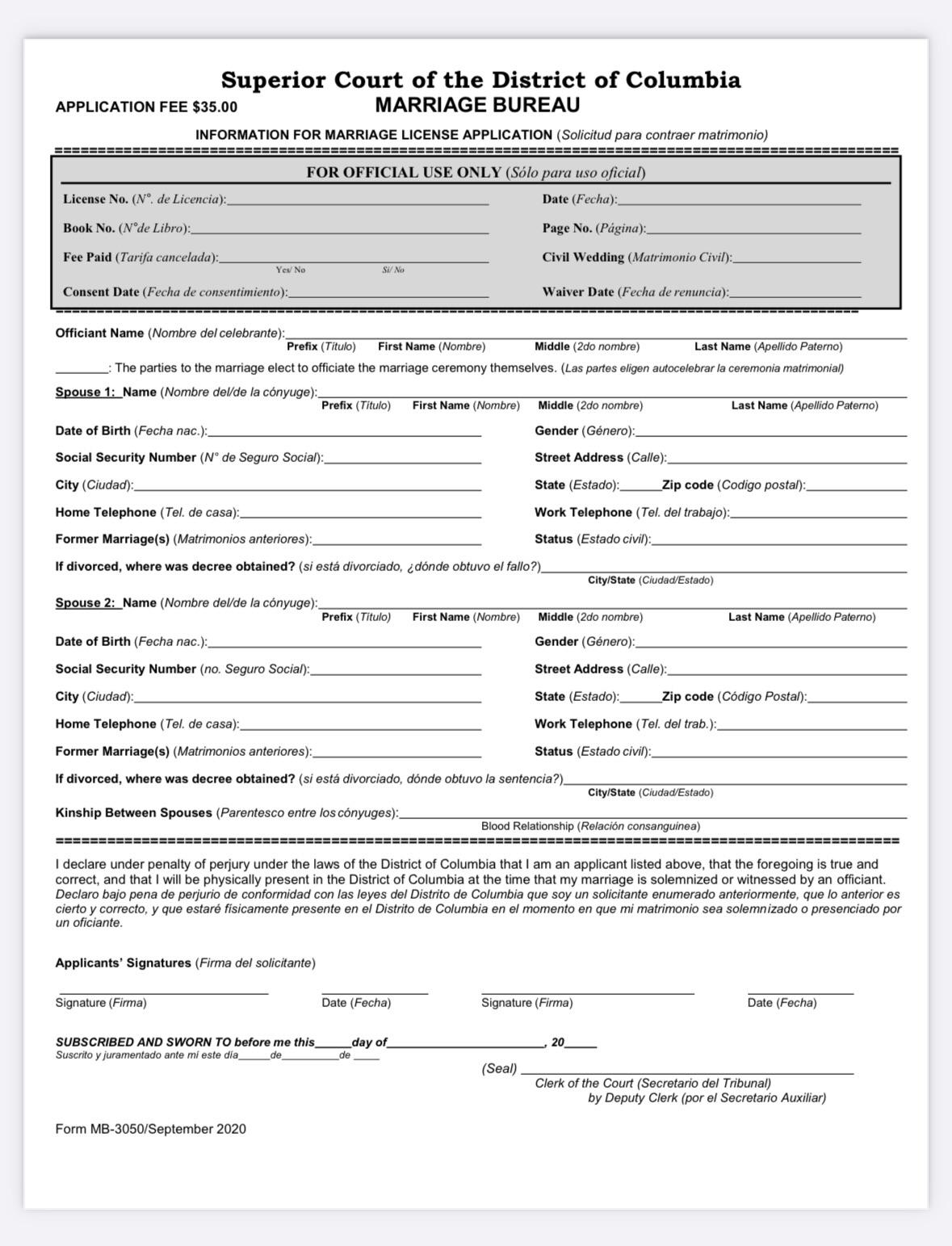
Marriage license application court
Human consequences: what the data and survivors show
Research and survivor accounts make clear that the legal permission to marry under 18 carries real harms. One nonprofit’s analysis found that nearly 315,000 children were married in the United States between 2000 and 2021, most of them girls wed to adult men — and the consequences include disrupted education, higher rates of intimate-partner violence, and increased economic vulnerability. citeturn4view0
Medical, psychological and sociological research links early marriage to higher rates of early pregnancy, diminished educational attainment, and poorer long-term health outcomes for both the young spouses and any children born into those unions. These consequences compound when the marriage is coercive or when a child lacks meaningful access to legal remedies. For many survivors the marriage license functioned as an institutional shield that made it harder to hold adults accountable for sexual exploitation.
Voices that shaped the debate
Survivors and activists were central to California’s process. Testimony from people who had been married as children — recounting abuse, control and the practical inability to access help — was repeated across committee hearings and in media interviews, reframing the issue from a technical family-law matter to one of child protection and human rights. The public visibility of high-profile survivor stories helped shift political calculations and public sentiment.
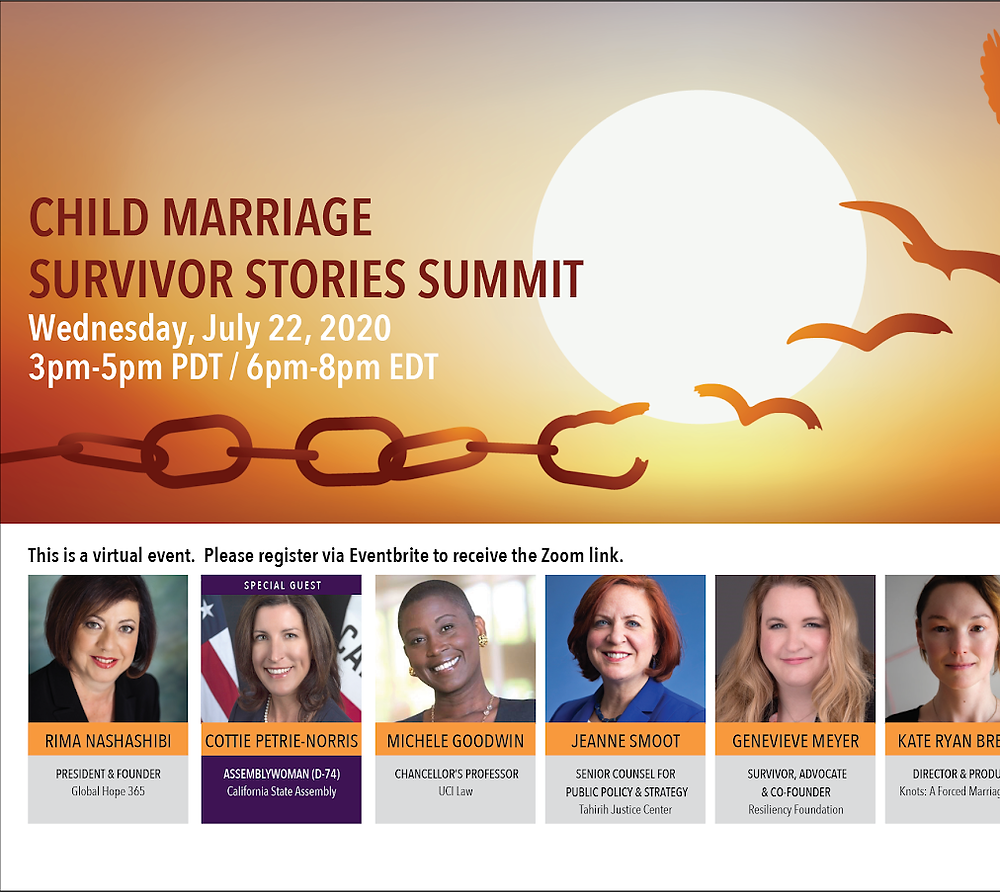
Child marriage survivor testimony hearing
Term: Child marriage — commonly defined as a marriage in which at least one party is under 18 years of age.
Political and cultural fault lines
Supporters of bans argue that marriage should be a choice made by adults with full legal capacity and that the state must not enact laws that enable exploitation. Opponents sometimes argue that eliminating exceptions can harm teens in unusual circumstances — for example, pregnant teenagers who say a marriage will secure social or financial support — or that reforms infringe on parental rights or religious freedom.
Legislators who oppose outright bans often advance compromise bills: tightening judicial review, adding waiting periods, reducing allowable age gaps, or requiring counseling before a judge may grant permission. Advocates counter that those measures still leave a path for abuse; for them, a clear age floor eliminates ambiguity and reduces the workload on courts and social services by preventing legally sanctioned early unions.
What policy change looks like in practice
When a state moves from permissive law to a strict age floor, the change ripples through many agencies: marriage license clerks must change intake forms and training; juvenile and family courts rework their dockets; public-health and school systems must adjust guidance for pregnant minors; and social-service providers must be prepared for new casework as people seek annulments, exit plans, or therapy. California’s law includes provisions aimed at aligning record-keeping and protecting survivors seeking remedies. citeturn3search8
Important Law change alone does not erase the harms that early marriage causes. Legal bans must be paired with services: access to safe housing, legal counsel, trauma-informed medical care, education supports and economic assistance for minors seeking to leave abusive arrangements.
What comes next — climbing the last legislative mile
California’s ban will likely accelerate advocacy in other states by changing the political frame: if the nation’s most populous state can adopt a clean floor at 18, it becomes harder for opponents elsewhere to argue that exceptions are necessary or harmless. But passage in one state doesn’t solve interstate recognition issues or immediately help children who remain married under older licenses.
Some advocates continue to press for federal legislation that would set a national standard or for federal agencies to take steps that reduce recognition of underage marriages performed abroad or in permissive states. Even without federal action, activist organizations are pursuing a dual strategy: passage of clean statutes in as many states as possible, and stronger services and legal remedies for survivors where marriage records remain in force.
How ordinary readers can engage
For people who want to act locally, options include:
Contact state legislators to ask them to support a clean floor at 18.
Support survivor services that provide legal aid and shelter to those exiting abusive marriages.
Ask local school boards to ensure pregnant and parenting students have educational supports and flexible options to stay in school.
Conclusion
California’s decision to ban child marriage is a significant victory for advocates and survivors, signaling a cultural and legal shift that recognizes marriage as an adult institution. Yet the uneven state-by-state map and the thousands of children previously married under permissive laws mean that the work is far from finished. Ending child marriage nationwide will require continued legislative momentum, attention to the services survivors need, and an honest reckoning with laws that have long enabled harm. citeturn4view0turn0search3
Key Takeaways
California signed AB 1267 on September 30, 2026, setting the minimum marriage age at 18 and closing prior exceptions. citeturn1view0
Despite recent wins, a majority of U.S. states still permit marriage by minors under certain conditions — advocates put that number at 32 states. citeturn4view0
Legal reform must be paired with survivor services: legal aid, housing, healthcare and education supports are crucial to remedy past harms. citeturn0search3
Did you enjoy this article?
Let us know with your feedback to help us publish better stories.