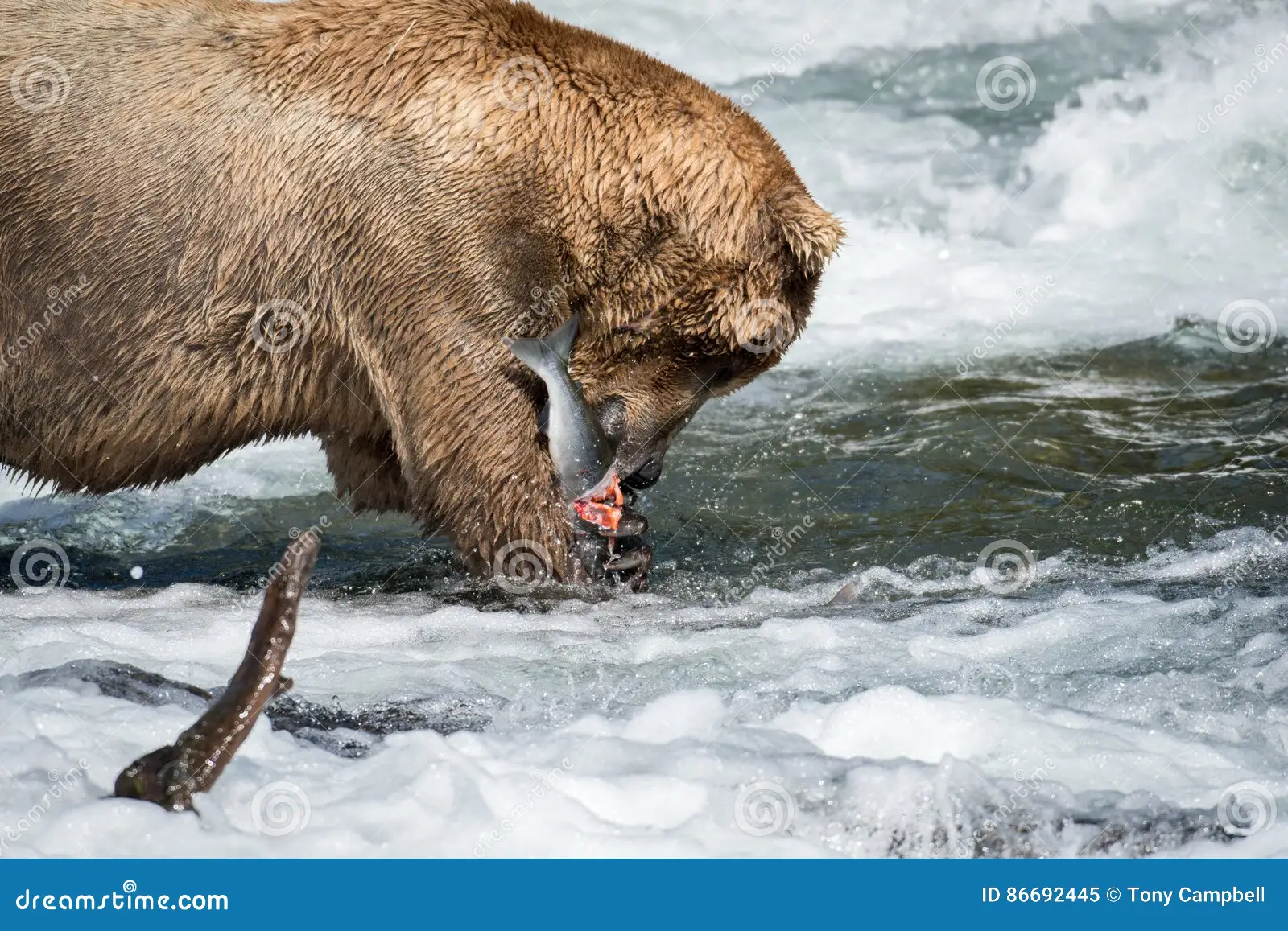
Bear Chunk Devours 45 Salmon — 135,000-Calorie Feast
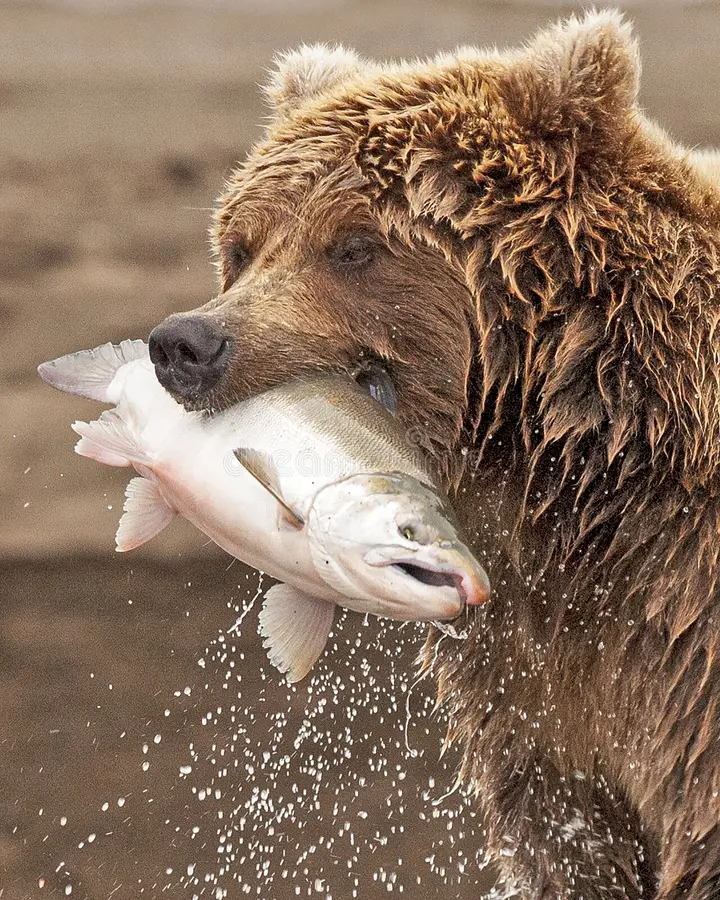
On a mist-silver morning along a braided coastal stream, a single bear turned a familiar seasonal event into a headline. Nicknamed "Chunk" by local researchers for his massive frame and easy charisma, the bear was observed catching and eating 45 adult salmon during a single daylight period — a consumption that conservative estimates put at roughly 135,000 calories. That raw number is the hook: it captures imagination and forces questions. How is such a gluttonous tally possible? What does it mean for the bear, the salmon run, and the ecosystem that connects them? This feature unpacks the scene, the biology behind the binge, and the broader consequences.
Salmon run river pool
“Watching Chunk work the pool felt like watching a machine tuned for one purpose: turn salmon into fat for winter.”
Coastal brown bear chunk salmon
THE DAY IT HAPPENED: A PLAY-BY-PLAY
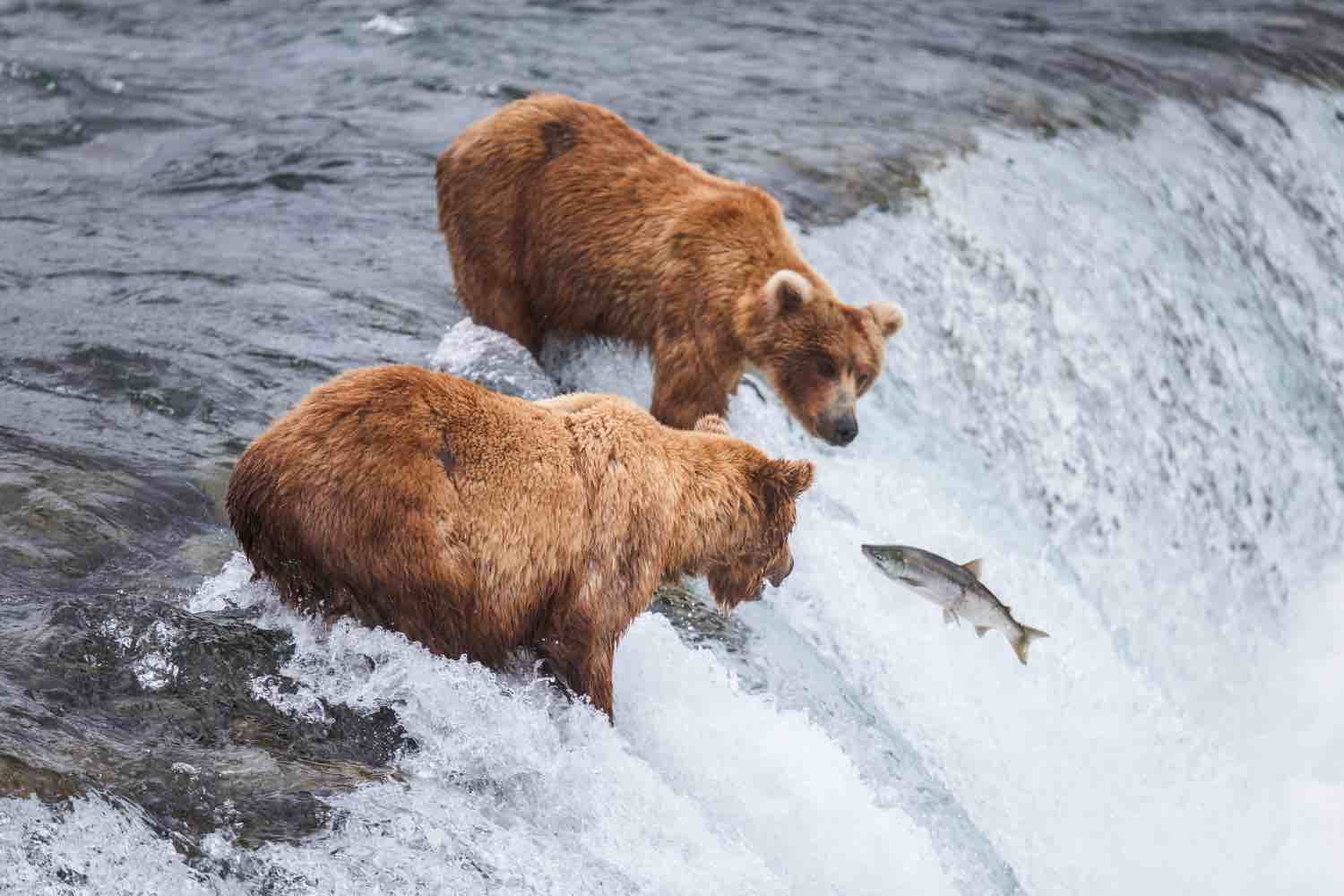
Early observers describe a compact tableau: a shallow, riffled pocket of river where salmon congregate on their upstream migration, a bench of gravel where the bear settled, and the hush of other wildlife giving way to the slap of fish and claws. Chunk took position at first light. Over roughly eight to ten hours — the period observers counted — he displayed a relentless, methodical rhythm: spot, strike, secure, consume, repeat.
Hyperphagia bear feeding salmon
Where the numbers come from
Researchers and volunteers recorded each capture visually and on video, tallying 45 successful catches. To estimate calories, they used typical caloric values for adult Pacific salmon: roughly 3,000 calories for a healthy, pre-spawn chum or pink is too high; a more realistic average for adult salmon in many coastal runs is around 2,500–3,000 calories depending on size and species. Using a conservative average of 3,000 calories per fish yields the headline figure of 135,000 calories. Because salmon vary, the true number could be somewhat lower or higher; the point is the scale — tens of thousands of calories converted into bear tissue and energy in a single day.
How a bear consumes so much
Bears are physiologically adapted to gorge. In late summer and fall, before hibernation, bears enter hyperphagia: a state of intense eating and fat accumulation. Hyperphagia is driven by hormonal cues and the imperative to build fat reserves that will be metabolized through months of torpor. Chunk’s binge is therefore not surprising: bears often concentrate food intake into intense, repetitive feeding sessions when resources are abundant.
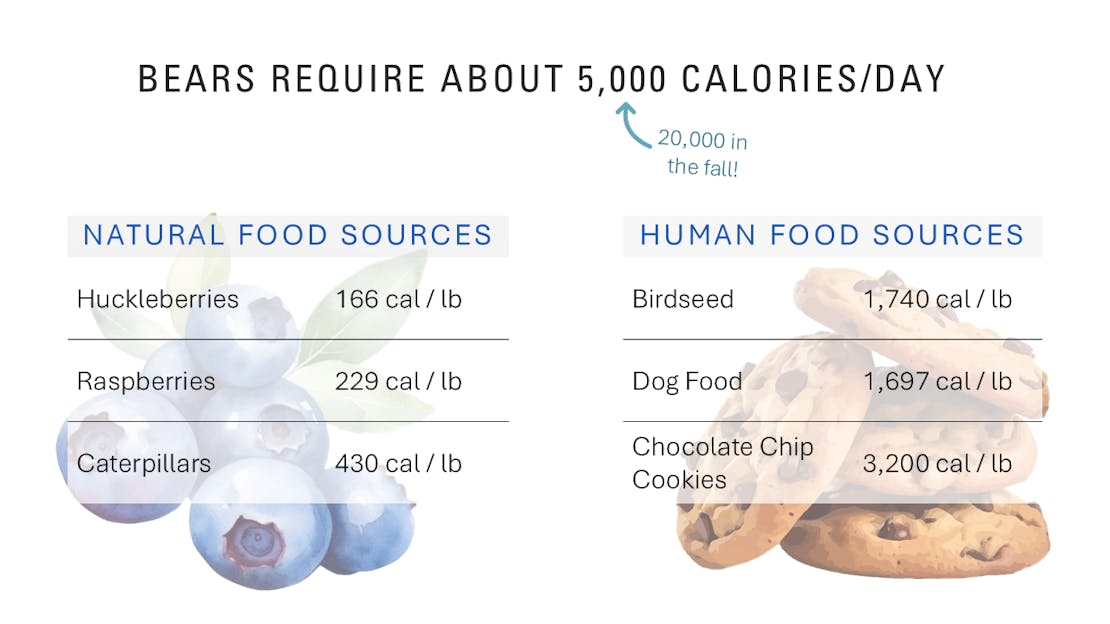
Bear energy budget calories
Did You Know? A brown bear can gain several hundred pounds in a single hyperphagic season, much of it from high-fat and high-calorie foods like salmon and nuts.
WHY SALMON?
Salmon are ecological keystones on which coastal bears and many other species depend. Adult salmon returning from the ocean are nutrient-dense and fatty — exactly the high-quality calories bears seek. They are also predictably available in time and space: runs follow seasonal schedules and concentrate fish in river pools as they spawn, making them efficient foraging targets.
Nutritional value and timing
Atlantic and Pacific salmon species accumulate lipids during their ocean phase. These fats give bears concentrated energy that supports rapid mass gain. When salmon runs peak, a bear can meet a large portion of its daily or multi-day caloric needs in a few hours. For a female preparing for pregnancy and denning, or a male building sheer body mass, the value is enormous.
PUTTING 135,000 CALORIES IN CONTEXT
A single day's 135,000 calories sounds astronomical when set against human standards. For perspective: an average adult human diet of 2,000 calories per day would require eating 67 days straight to match that intake. For bears, however, the math is different.
Bear energy budgets
Large adult coastal brown bears can require on the order of 10,000–20,000 calories per day during hyperphagia, depending on size, activity level, and whether they are nursing or pregnant. Chunk’s intake is therefore several times what a bear might immediately expend in a day. But that excess is the point: surplus calories are converted into fat and stored for the denning season when food is absent and metabolic demands rely entirely on those reserves.
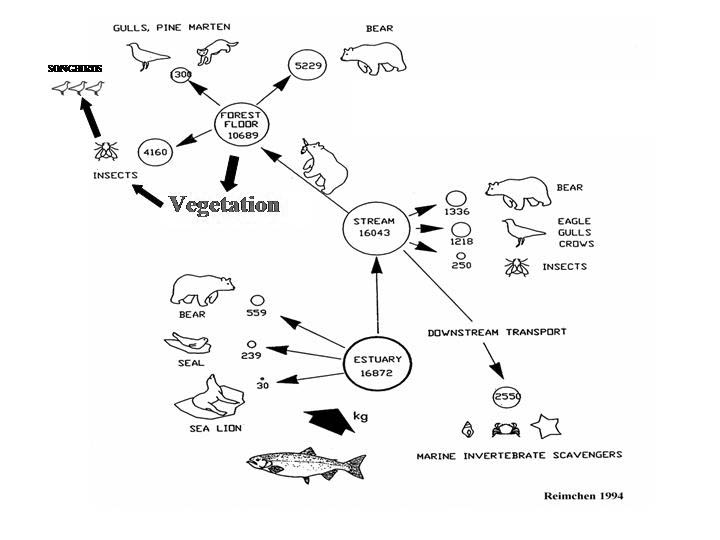
Nutrient transfer ecosystem salmon
Pro Tip Bears don’t store calories like a human stores money; fat deposition is an active, metabolically costly process that requires surplus calories and efficient digestion.
ECOLOGICAL RAMIFICATIONS
Chunk’s day is not just a bear story; it is a snapshot of nutrient transfer and ecosystem connectivity. When bears eat salmon, they do more than feed themselves: they move marine-derived nutrients into terrestrial environments through carcass remnants, scat, and urine. Trees and understory plants near salmon streams benefit from elevated nitrogen and phosphorus delivered by the remains of fish.
The ripple effect
Studies have shown that riparian flora near salmon-bearing streams exhibit higher growth rates and altered leaf chemistry compared with non-salmon streams. In short, an individual binge by a large bear contributes to a web of life that extends from the ocean to the forest. Chunk’s 45 fish likely left measurable traces in the streamside soil and vegetation.
BEHAVIORAL NOTES: SKILLS, STRATEGY, AND RISKS
Observing Chunk at work reveals learned technique. Bears must balance the energetic gain of each catch with the cost of pursuit, injury risk, and competition. Chunk’s pattern — positioning at shallow cross-pools and timing strikes to intercept struggling upstream fish — is classic. Yet each capture exposes the bear to potential injury and to fights with other bears or opportunistic scavengers such as eagles.
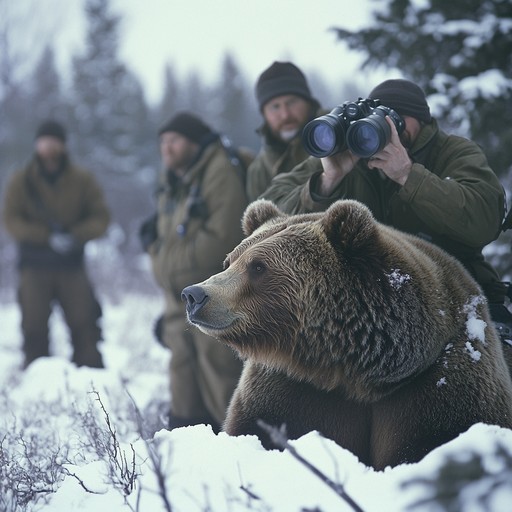
Wildlife researcher bear observation
Competition and dominance
Access to the best fishing spots is often mediated by dominance hierarchies. Dominant bears hold prime locations; subordinates may steal scraps or be forced to wait. Chunk’s capacity to monopolize the pool suggests a high social rank or simply a large, confident presence that discouraged challengers.
CONSERVATION AND MANAGEMENT IMPLICATIONS
While the spectacle is heartening, it also underscores why healthy salmon runs are essential to coastal ecosystems — and why their decline matters. Overfishing, habitat fragmentation, warming waters, and disease can reduce salmon abundance or shift run timing, which in turn affects the ability of bears to fatten before winter.
Human-bear conflict prevention
Caution Interrupting the timing or scale of salmon runs can create cascading effects: bears may suffer lower reproductive success, grow thinner, or seek alternative food near human settlements, increasing conflict.
Human-bear interactions
When natural food becomes scarce, bears explore human-associated foods — garbage, crops, and livestock — with predictable consequences. Protecting salmon habitat and maintaining adequate fishery management reduces pressure that pushes bears toward people. Chunk’s feast is a reminder of the natural abundance that keeps wildlife wild.
HOW RESEARCHERS ESTIMATE AND USE OBSERVATIONS
Counting and characterizing feeding events is a key tool for wildlife biologists. Observations like Chunk’s day feed into broader datasets: seasonal foraging rates, site fidelity studies, reproductive condition monitoring, and population health assessments. Cameras, direct counts, and noninvasive sampling (hair, scat) all contribute to understanding bear energetics.
Limitations and careful interpretation
Single-day tallies are snapshots, not totals. A bright, abundant day does not translate automatically into population-level patterns. Researchers contextualize such events with multi-year monitoring to discern trends, variability, and the drivers behind them.
Important A single extraordinary feeding day should be interpreted with caution; it can indicate healthy local abundance or an outlier influenced by transient conditions.
WHAT THIS MEANS FOR THE FUTURE
Chunk’s 45-salmon day is, in its way, a hopeful vignette: a functioning ecosystem with plentiful prey and a bear capable of capitalizing on it. But it also serves as an alarm bell about fragility. Salmon populations worldwide face pressures — climate-driven shifts in ocean productivity and river temperatures, habitat loss from development, and mismatches in timing caused by changing seasonal cues.
Resiliency strategies
Conservation approaches that help sustain salmon and bear populations include protecting and restoring riparian habitat, reconnecting rivers to floodplains, regulating harvests based on ecological needs, and creating fish passage around barriers. For bears specifically, reducing human attractants and preserving large, secure foraging areas are critical.
- High-quality energy from salmon supports reproduction and survival.
- Nutrient transfer enriches terrestrial ecosystems.
- Predictable forage during runs enables efficient fattening.
- Dependence on seasonal runs makes bears vulnerable to run declines.
- Competition can lead to injury or displacement of subordinates.
- Human conflict increases if natural foods decline.
PRACTICAL TAKEAWAYS FOR NATURE STEWARDS
For local communities, anglers, and policymakers, Chunk’s story translates into practical actions: enforce and support sustainable fisheries, fund habitat restoration, keep human food secured, and support long-term monitoring programs. Public education that connects salmon conservation to charismatic bears is often an effective galvanizer for political will.
Key Takeaways
- Chunk’s 45-salmon day (~135,000 calories) is an example of hyperphagia and ecological opportunity in coastal bears.
- Salmon runs are critical not only for bears but also for riparian nutrient cycles and overall ecosystem productivity.
- Protecting salmon habitat and reducing human-bear conflicts are complementary conservation goals.
CONCLUSION: MORE THAN A FEAST
Chunk’s day of consumption is more than an impressive tally; it is a narrative hinge that connects ocean to forest, individual survival to ecosystem function, and human choices to wildlife fortunes. When a single bear consumes 45 salmon, the event is dramatic, useful for science, and evocative for the public imagination. It asks us to notice the rhythms of wild places and to weigh our actions against the delicate clockwork that times migrations, breeding, and the accumulation of life-saving fat. In the end, the spectacle of Chunk’s feast should inspire both wonder and stewardship: wonder at what the natural world can produce in a single day, and stewardship to ensure such days can happen again for generations.
Observers recorded Chunk’s fishing session during a peak salmon run; caloric calculations are conservative estimates based on typical adult salmon energy content.