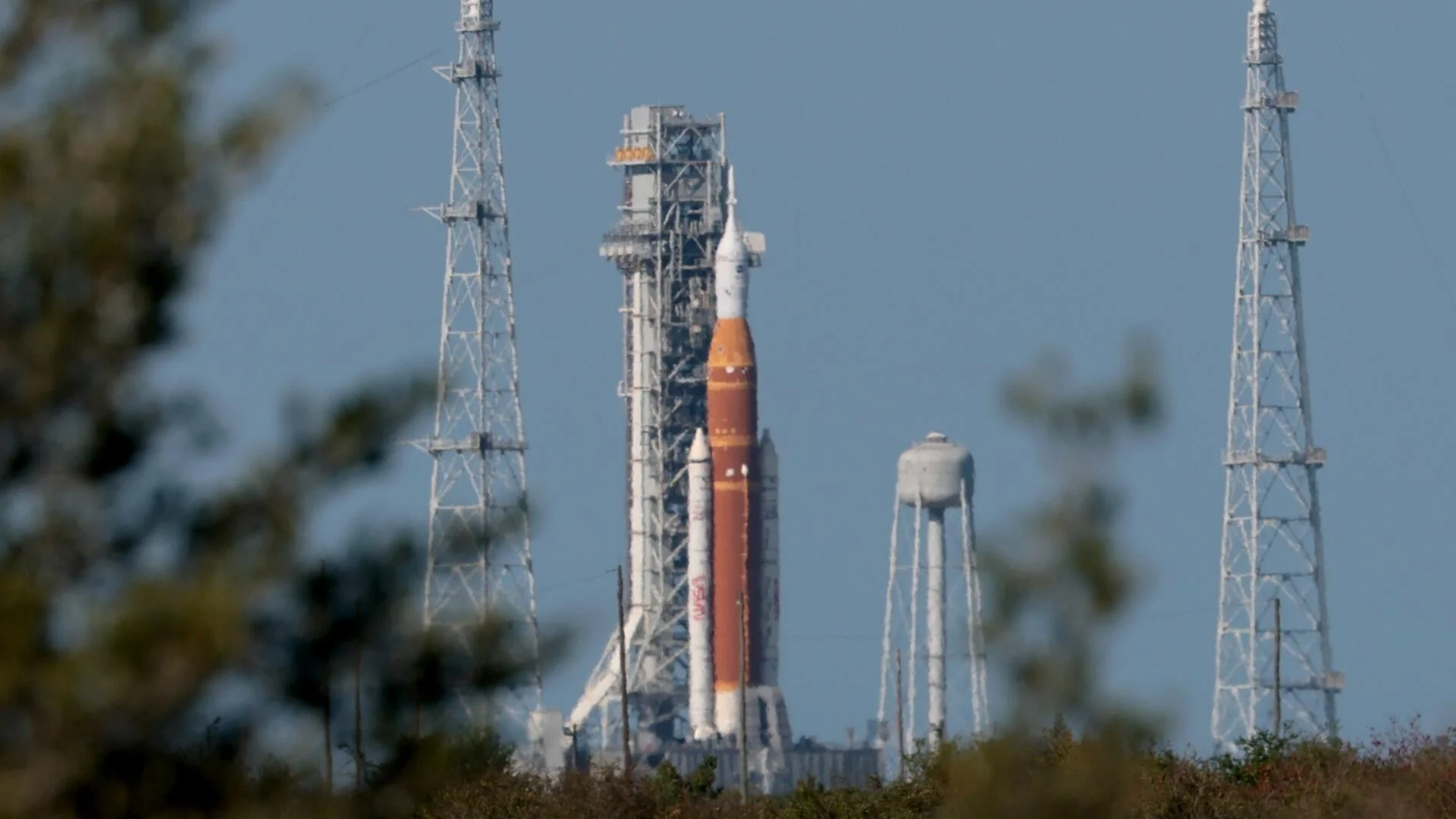
Artemis II: NASA’s First Crewed Moon Mission in Over 50 Years
The night sky shifted in the collective imagination the moment the towering launch vehicle cleared the pad and climbed into the thin veil of upper atmosphere. After decades of planning, engineering revisions and careful testing, Artemis II represents more than a single flight: it is the ceremonial and practical reawakening of human deep-space exploration. This mission—carrying a multinational crew aboard the Orion spacecraft and powered by the Space Launch System—returns people to the vicinity of the Moon for the first time since the early 1970s and proves key technologies that will underpin a sustained presence around and on the lunar surface.
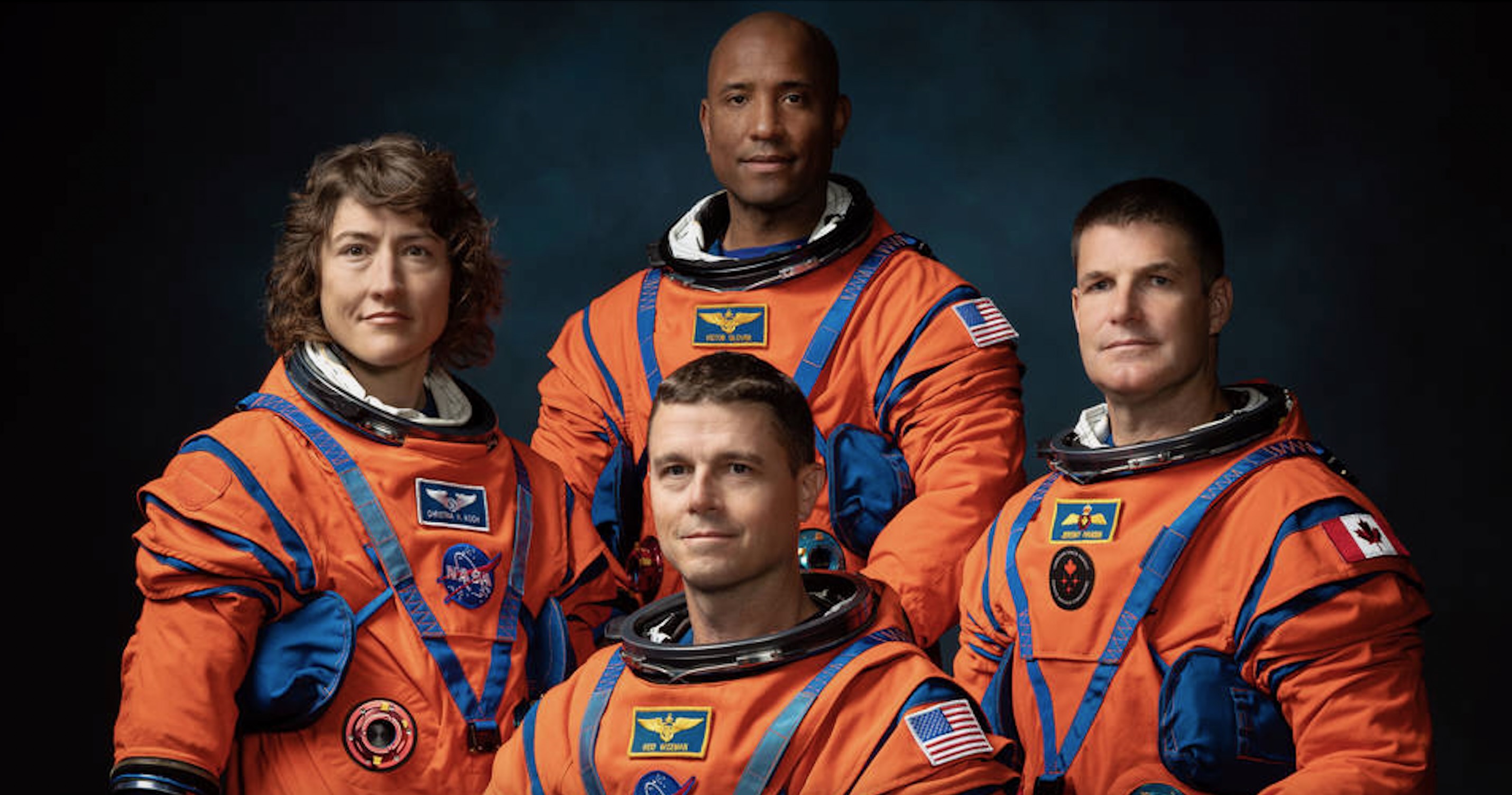
NASA Artemis program crew
Mission Overview
Artemis II is a crewed, orbital mission whose primary purpose is to validate life-support systems, communications, navigation, and human factors far beyond low Earth orbit. Rather than a landing, the flight profile emphasizes an extended translunar flyby or a distant retrograde or free-return trajectory that brings the crew to the Moon, places Orion through rigorous thermal and radiation conditions, and then brings the astronauts home to a controlled reentry and splashdown. The mission is the operational test between the uncrewed pathfinder flight and future surface missions that will establish logistics, habitats and resource use on the Moon.
'Artemis II is a dress rehearsal for humans learning to live and work beyond Earth—short, sharp, and essential.'
Why This Flight Matters
At first glance the flight might look like a reprise of Apollo-era transcendence—travel out, look back, return. But Artemis II is different in crucial ways. Technology has advanced: materials, avionics, solar arrays, and life-support systems are more capable; mission operations are networked across international partners and commercial providers; and the program's objectives are explicitly oriented toward sustainability: demonstrating systems and procedures that will let future missions last longer, carry more science, and build infrastructure.
The Rocket and the Capsule
Two primary pieces of hardware carry Artemis II to and from the Moon: the Space Launch System (SLS), NASA’s heavy-lift rocket, and the Orion crew capsule. SLS provides the raw lift capacity needed for the translunar injection burn, while Orion houses astronauts in a pressurized, radiation-mitigated environment with modern life-support, communication, and guidance systems. Compared with Apollo-era systems, these components include redundant avionics, improved materials to withstand micrometeoroid strikes, and more advanced environmental control systems designed for longer-duration missions.
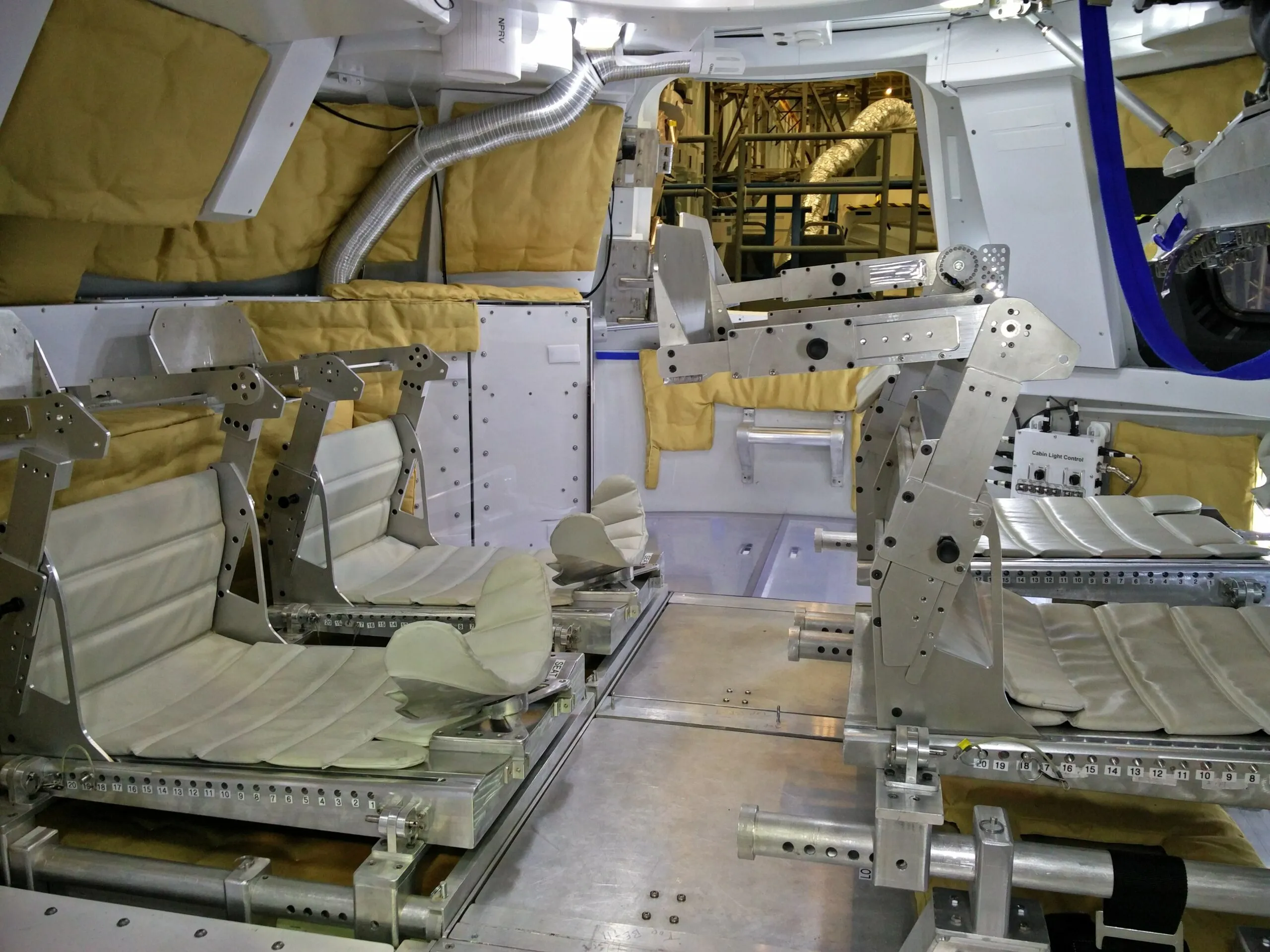
Orion spacecraft interior
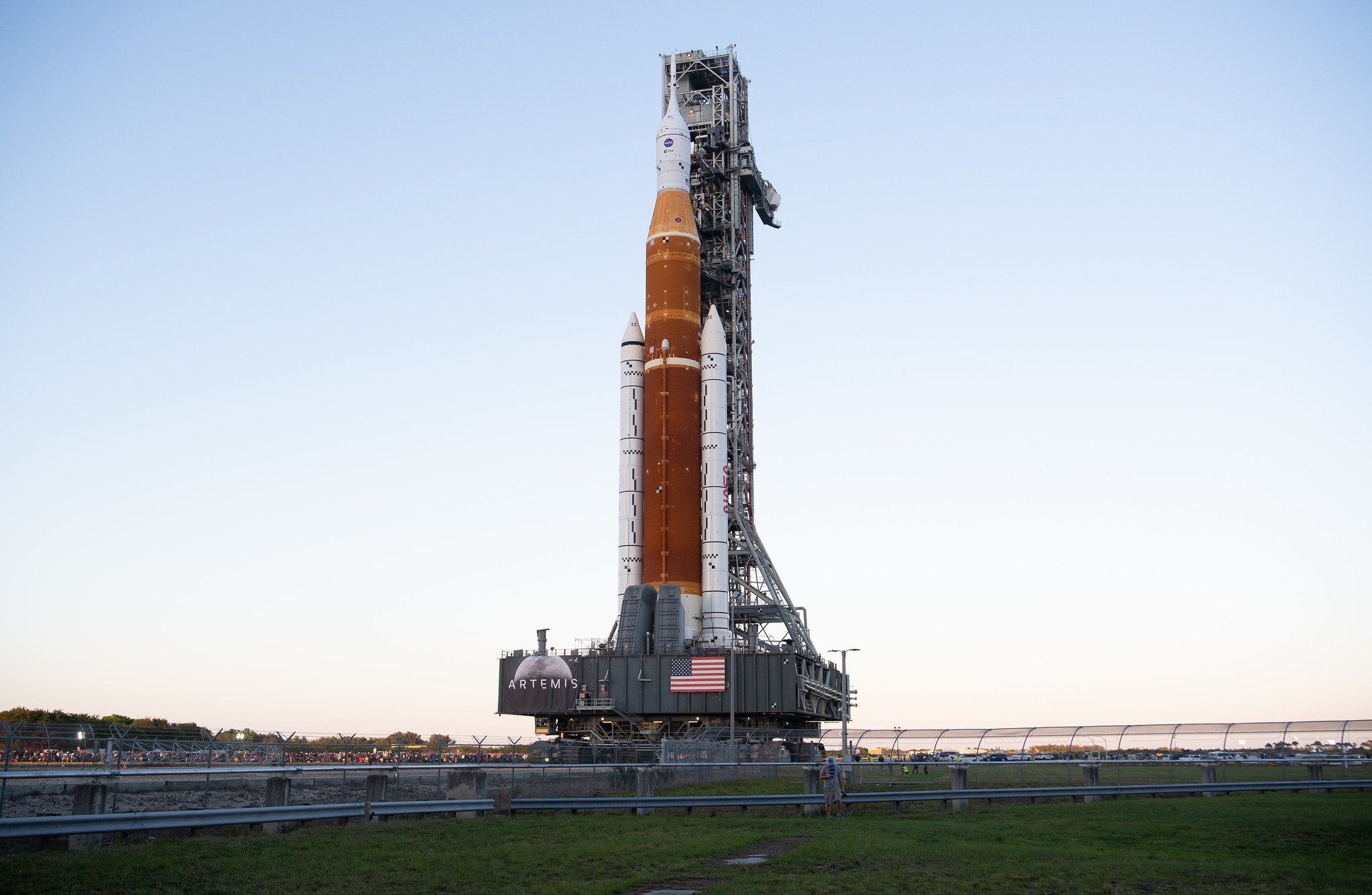
Space Launch System rocket
Inside Orion: Life Support and Crew Comfort
Orion's interior balances functionality and human factors. The cabin integrates medical monitoring, exercise countermeasures against microgravity effects, and supplies sized for the mission duration. Engineers paid particular attention to radiation protection—adding improved shielding and operational procedures—to manage the elevated exposure expected between Earth and the Moon. Habitability upgrades also reflect lessons learned from decades of low Earth orbit operations: stowage that minimizes loose items, restraint systems for sleep and work, and interfaces that simplify suit donning in emergency scenarios.
Crew Selection and Training
Artemis II's crew represents a careful selection of pilots, mission specialists, and scientists trained in complex procedures under constrained timelines. Training included simulations of translunar trajectories, EVA contingency drills, multi-vehicle communication checks, and extensive medical preparedness. Underwater neutral-buoyancy exercises and virtual reality simulations helped the team rehearse the unique sensory environment of deep-space operations. Because the flight tests systems that will support surface operations, the crew also worked closely with the science teams to prepare for instrument deployment and sample-handling concepts should future missions require crewed operations beyond the capsule.
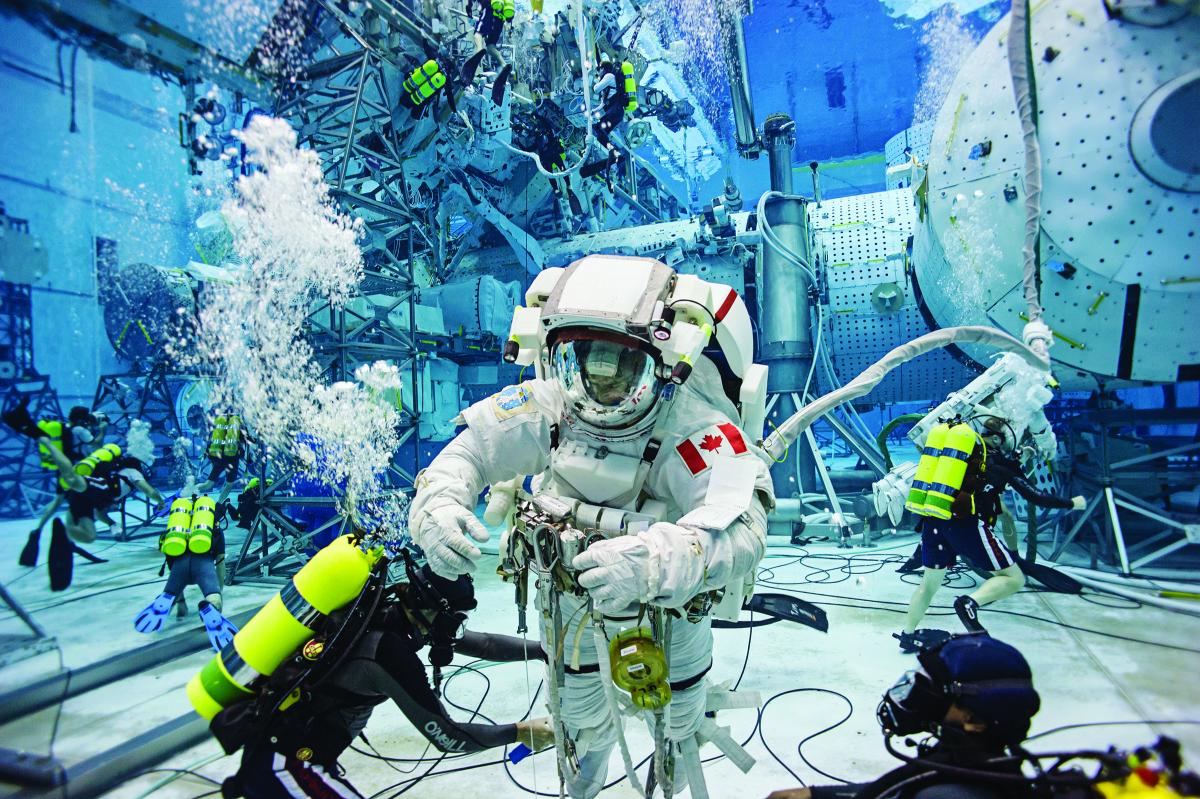
Astronaut training underwater
Science and Technology Objectives
While Artemis II is foremost an engineering and human systems test, science rides along. Key objectives include: validating radiation monitoring and mitigation strategies; demonstrating biological monitoring and countermeasures for crew health; testing new sensors and communication relays; and collecting high-resolution observations of lunar topography that will inform landing site selection. Technology demonstrations might include autonomous navigation algorithms, advanced thermal control, and new materials intended for long-lived surface hardware.
- Radiation & Human Health: Monitoring and real-time strategies for exposure management.
- Communications: Deep-space network performance and high-rate telemetry under operational stress.
- Navigation: Autonomous navigation and trajectory correction performance near the Moon.
- Science Payloads: Miniaturized instruments that provide geologic or environmental context for future landings.
International and Commercial Partnerships
The Artemis initiative deliberately binds international space agencies and commercial partners into a single architecture. International partners contribute scientific instruments, attitude and navigation support, and operational expertise. Commercial companies provide launch infrastructure, recovery services, and specialized components. This partnership model disperses risk and costs while fostering interoperable standards and shared scientific returns. The strategic aim is to shift from single-nation achievements to a broadly supported, reusable infrastructure that allows science to scale up over time.

International space partnership
Safety, Redundancy and Lessons from Artemis I
Artemis II stands on the shoulders of uncrewed test flights that validated vehicle performance and exposed system vulnerabilities. Engineers incorporated lessons into redundant architectures: multiple avionics lanes, cross-strapped life support, and recovery contingencies. Before crewed insertion, ground teams simulated failure modes and exercised abort options across the entire flight envelope—low-altitude aborts, in-orbit safe-haven procedures, and high-speed entry contingencies. Safety design now emphasizes not just hardware redundancy, but operational flexibility and robust real-time decision-making tools available to flight surgeons and mission control.
Public Engagement and Cultural Impact
Artemis II reignited public interest in human space exploration. Public outreach programs leveraged live telemetry, interactive educational content, and cultural collaborations to bring the mission into classrooms and community centers. The imagery of trained professionals circling the Moon drew comparisons to the Apollo era, yet inspired a new generation that sees lunar exploration as a steppingstone to Mars and beyond. For artists, writers, and educators, the mission served as a catalyst for renewed imagination about humanity's place in the cosmos.
Economic and Policy Considerations
Beyond science and prestige, Artemis II operates within a web of policy choices and budgets. Sustained lunar exploration demands long-term funding commitments, international treaty interpretations, and pragmatic partnerships with the private sector. Decisions made now—about procurement, data sharing, and commercialization—will shape who accesses lunar resources and how scientific returns are distributed. The mission underscores the importance of clear policy frameworks that protect scientific integrity while encouraging innovation.
What Comes Next: From Flyby to Footprints
Artemis II is the bridge between demonstration and deployment. If mission objectives are met, NASA and partners will transition to Artemis III and subsequent missions that place astronauts on the lunar surface, establish logistics hubs like the Gateway, and test in-situ resource utilization. Each flight will build lessons about sustainment: how to manufacture parts off-Earth, recycle air and water efficiently, and maintain power systems under lunar night conditions. The long arc moves from brief excursions to extended stays where science and commerce can coexist.
Challenges and Criticisms
No mission is without skeptics. Critics point to cost overruns, schedule slips, and the political nature of multi-year programs. Some argue that robotic missions can achieve much scientific return at a fraction of the cost. Advocates counter that human presence adds flexibility and serendipity to exploration—capabilities machines still cannot match. The balanced perspective recognizes both arguments: the ideal program integrates robotic and human missions, optimizing for scientific and societal return while keeping budgets and timelines realistic.
- Human adaptability: On-site decision-making and improvisation.
- Inspiration: Public engagement and educational impact.
- Cost: High development and operational expenses.
- Risk: Human safety in an unforgiving environment.
How Scientists Will Use Artemis II Data
Data returned by Artemis II will shape the next rounds of science planning: better orbital maps for landing sites, radiation environment characterization for design margins, and human health datasets that refine countermeasures. Even small technology demonstrations can lead to large leaps—improved communications protocols for deep space could enable higher-bandwidth instruments, and successful thermal control techniques could lengthen surface operations on future landers.
Inside Mission Control: The Quiet Architecture of Success
Behind every public moment is a choreography of specialists: trajectory analysts, life-support engineers, flight surgeons, and communications technicians working in concert. Artemis II tested not only hardware but organizational processes—cross-agency coordination, international handoffs, and commercial contractor interfaces. The mission highlighted how modern spaceflight succeeds when organizations are nimble, data flows quickly, and decision authority is clearly delineated.
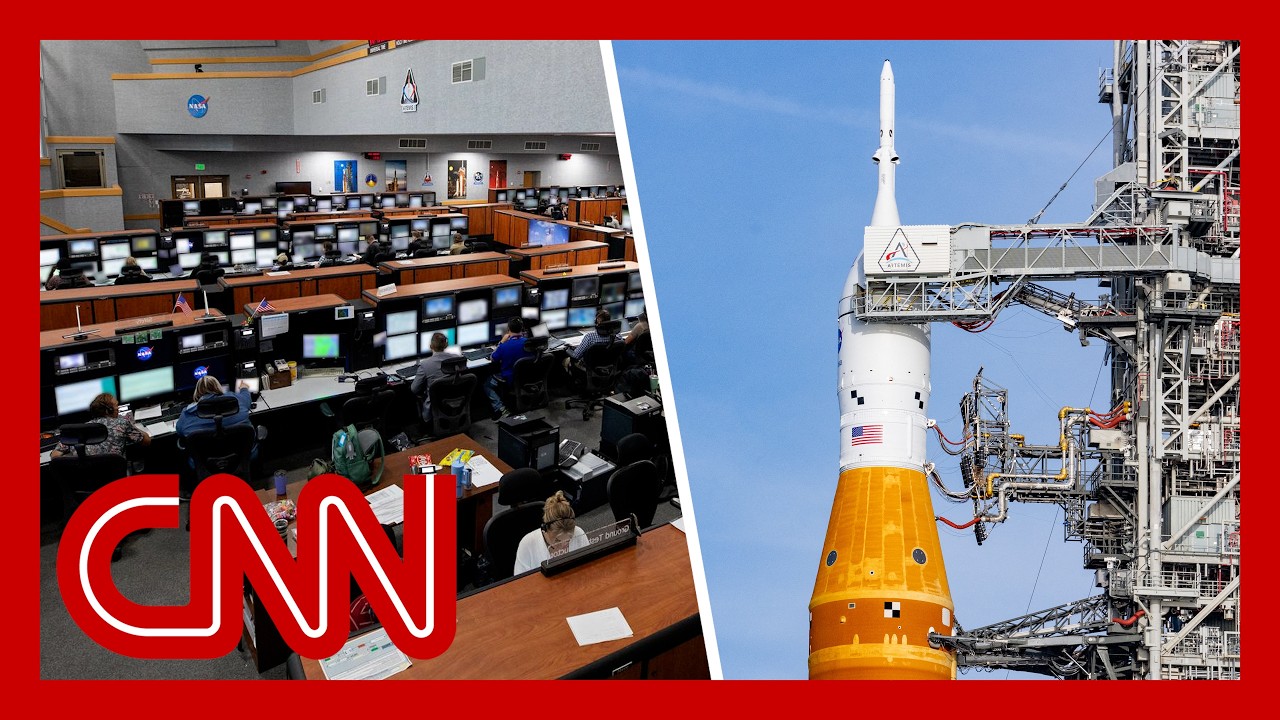
Artemis II mission control
Conclusion
Artemis II is simultaneously a technical milestone and a statement of intent. It says that human spaceflight beyond low Earth orbit is again a priority, that the international and commercial communities can work together at scale, and that the scientific ambitions of the next decades will be served by human presence as much as by robotic ingenuity. The mission does not answer every question, but it proves essential systems under operational conditions and sets the timetable for the next, more daring chapters of lunar exploration.
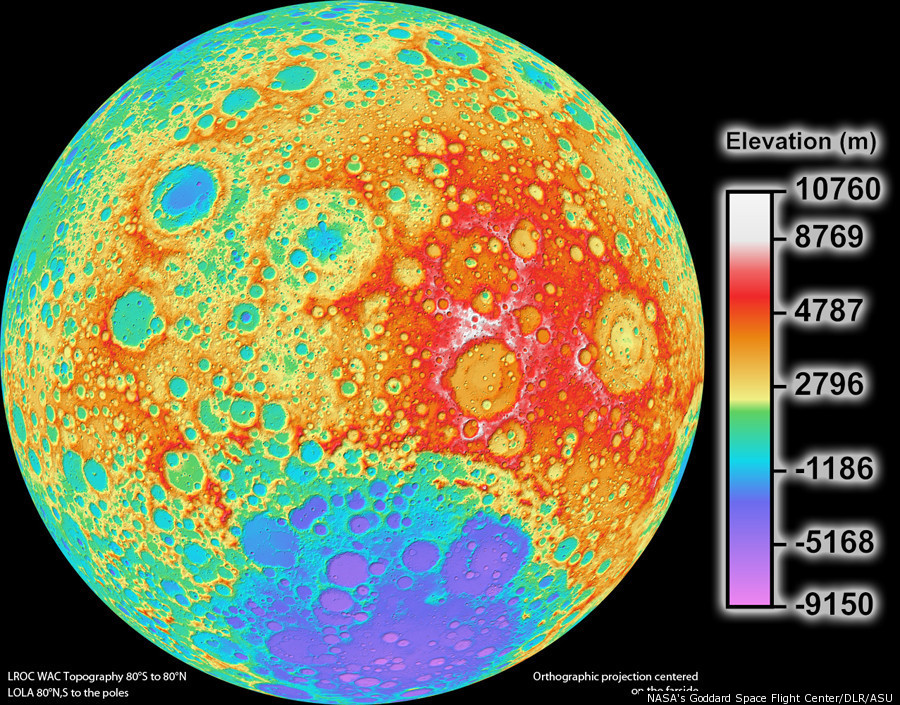
Lunar surface topography
- Artemis II validates human-rated systems for deep-space operations and prepares the path for surface missions.
- It demonstrates improved spacecraft design, radiation mitigation, and mission operations compared with earlier programs.
- International collaboration and commercial partnerships are central to long-term, sustainable lunar exploration.
This article synthesizes mission objectives, engineering design, and the broader implications of returning humans to the Moon’s vicinity.