AI-Powered Bionic Eye Could Restore Sight
The idea of a bionic eye—an implant that returns sight to people who are blind—has lived in science fiction and scientific ambition for decades. Today, a new generation of devices is converging: ultra-small implanted electronics that talk directly to neurons, and artificial intelligence that interprets and simplifies visual scenes into signals the brain can meaningfully use. The result is not a perfect recreation of natural vision, but for many people with severe vision loss it promises something profound: the ability to detect faces, read large letters, navigate a room, or recognize a cup on a table. This article explains what modern bionic eyes are, why AI matters, how the systems work end-to-end, where clinical research stands, and the ethical and social questions we must answer as the technology moves from labs into clinics and homes.
WHAT A BIONIC EYE IS—and what it isn’t
The basic idea
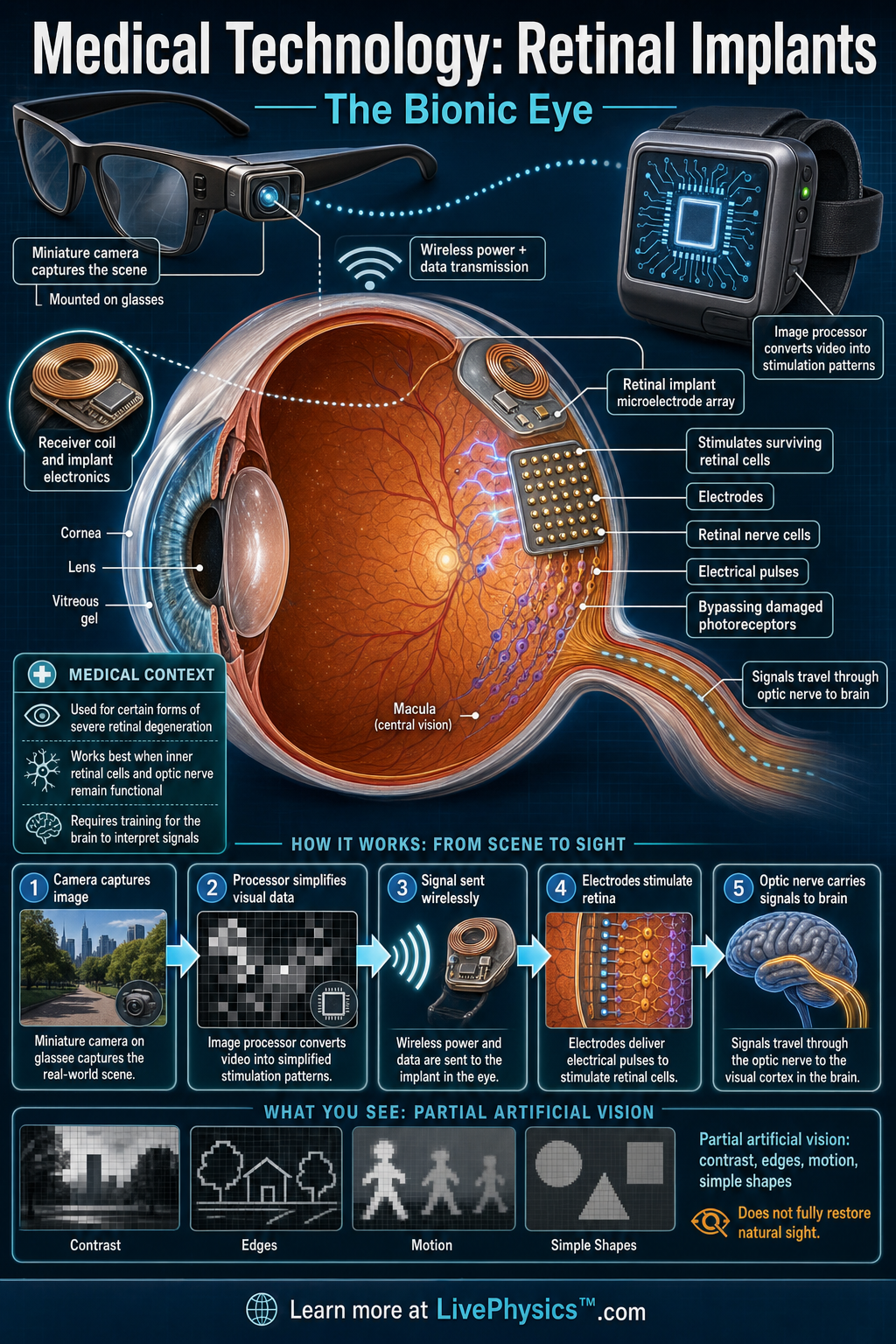
At its core a bionic eye is a neuroprosthetic system that converts light or camera images into electrical stimulation patterns that excite visual pathways—either the retina, the optic nerve, or directly the visual cortex. Unlike ocular devices such as glasses or cataract surgery, which work with intact biological optics, bionic eyes are designed for people whose photoreceptors or downstream pathways are damaged beyond repair.
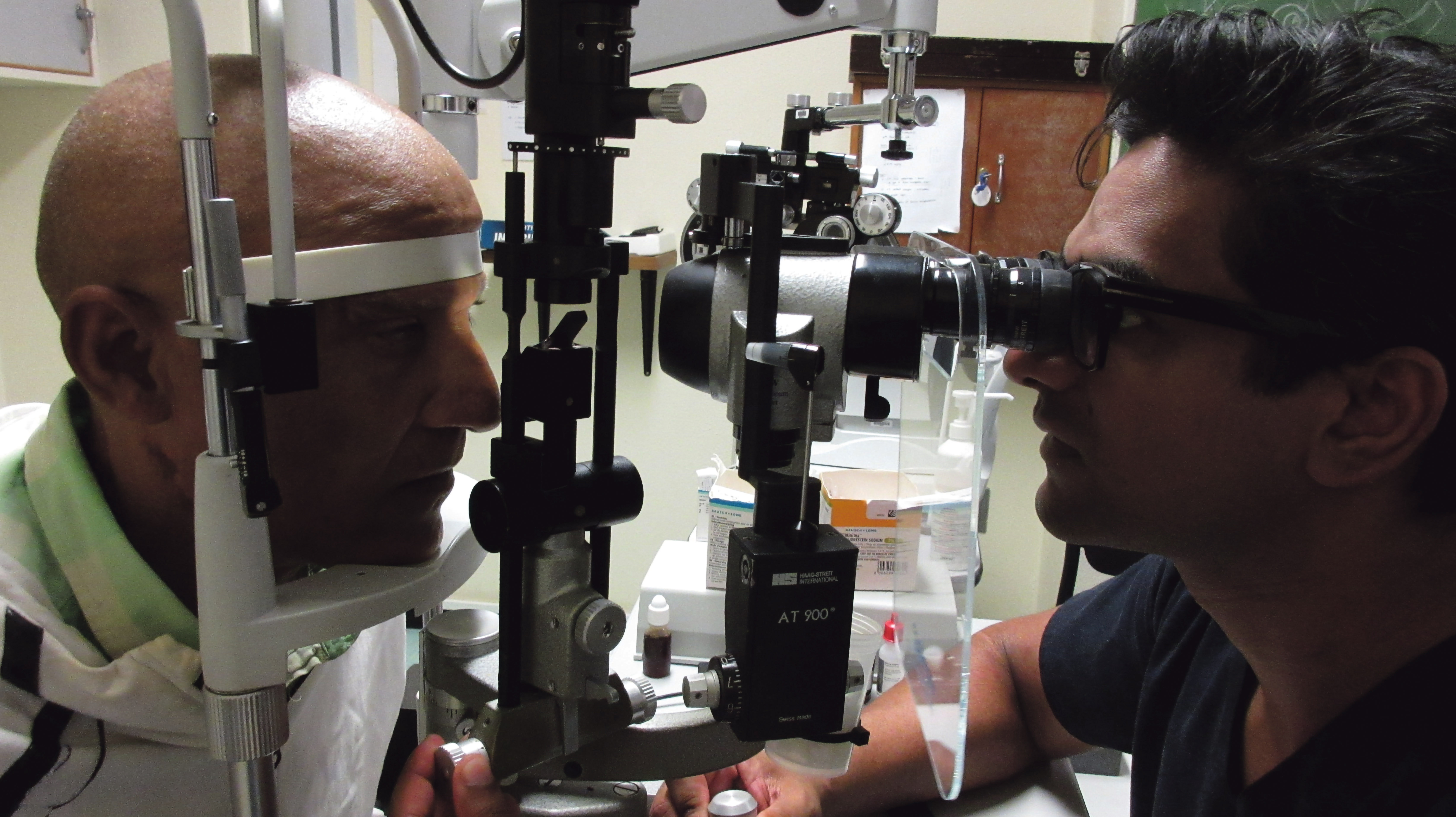
ophtalmology bionic eye surgery
Not a restoration of normal sight
Precision matters: current implants do not recreate the full dynamic range, color, or resolution of the healthy human eye. Instead they provide simplified, sometimes pixelated percepts—spots of light, motion cues, or contrast patterns—that the brain can learn to interpret. Think of early bionic vision as a new sensory language rather than a high-definition video stream.
"AI doesn't aim to mimic the eye pixel-for-pixel; it translates scenes into signals the brain can actually use."
WHY AI CHANGES THE EQUATION
From raw camera feed to meaningful perception
Raw camera output contains far more information than a low-channel implant can deliver. An implant with a few dozen or a few hundred electrodes cannot transmit the millions of pixels the retina normally encodes. AI acts as a translator and filter: machine learning models identify the most behaviorally relevant features—edges, text, faces, obstacles—and compress them into stimulation patterns optimized for the available electrode channels. This prioritization can transform confusing flicker into recognizable shapes and actions.

AI visual scene parsing diagram
Adaptive personalization
Individuals’ residual neural health, implant placement, and perceptual learning rates vary widely. AI introduces adaptivity: closed-loop systems can analyze neural and behavioral feedback to reshape stimulation in real time. Over weeks and months, algorithms can learn which stimulation patterns produce stable and interpretable percepts for a given user and emphasize those signals.
HOW IT WORKS—HARDWARE, SOFTWARE, AND HUMANS
Hardware components
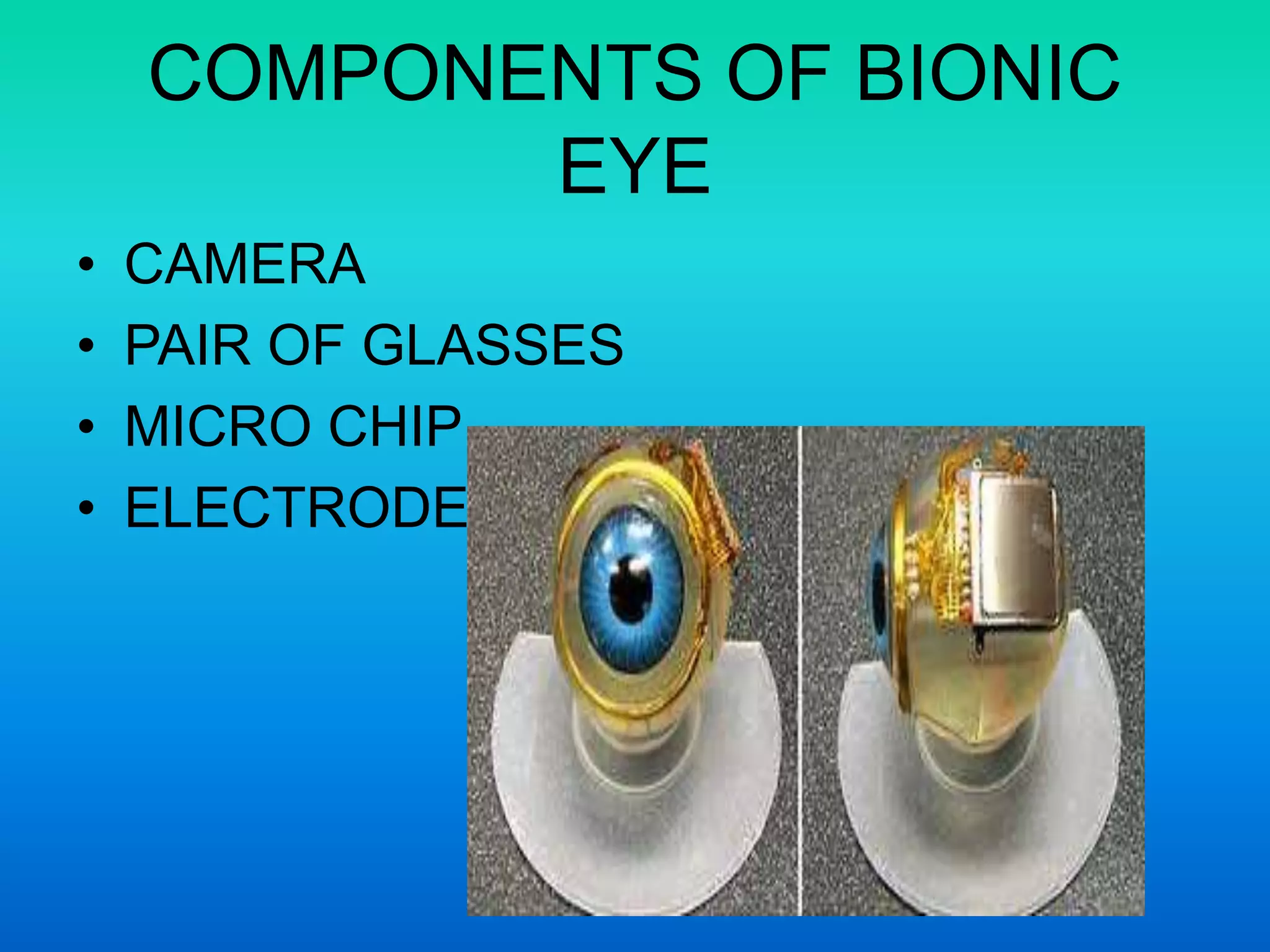
Typical systems have three broad hardware layers:
- External capture: A camera embedded in glasses or a head-mounted device captures the scene and streams it to a processing unit.
- Processing unit: A wearable computer runs AI models to extract features, compress information, and generate stimulation commands in real time.
- Implanted interface: A microelectrode array—on the retina, optic nerve, or cortex—delivers patterned electrical pulses to neurons.
bionic eye glasses camera
Software pipeline
Software converts images into stimulation using several processing stages: pre-processing (noise reduction, contrast enhancement), scene parsing (detecting edges, faces, text, and moving objects), prioritization (what to send when channels are limited), and encoding (mapping features to electrodes and pulse parameters). Increasingly, deep neural networks trained on large datasets perform the scene parsing and prioritization tasks, while reinforcement or supervised learning optimizes encoding strategies using human feedback.
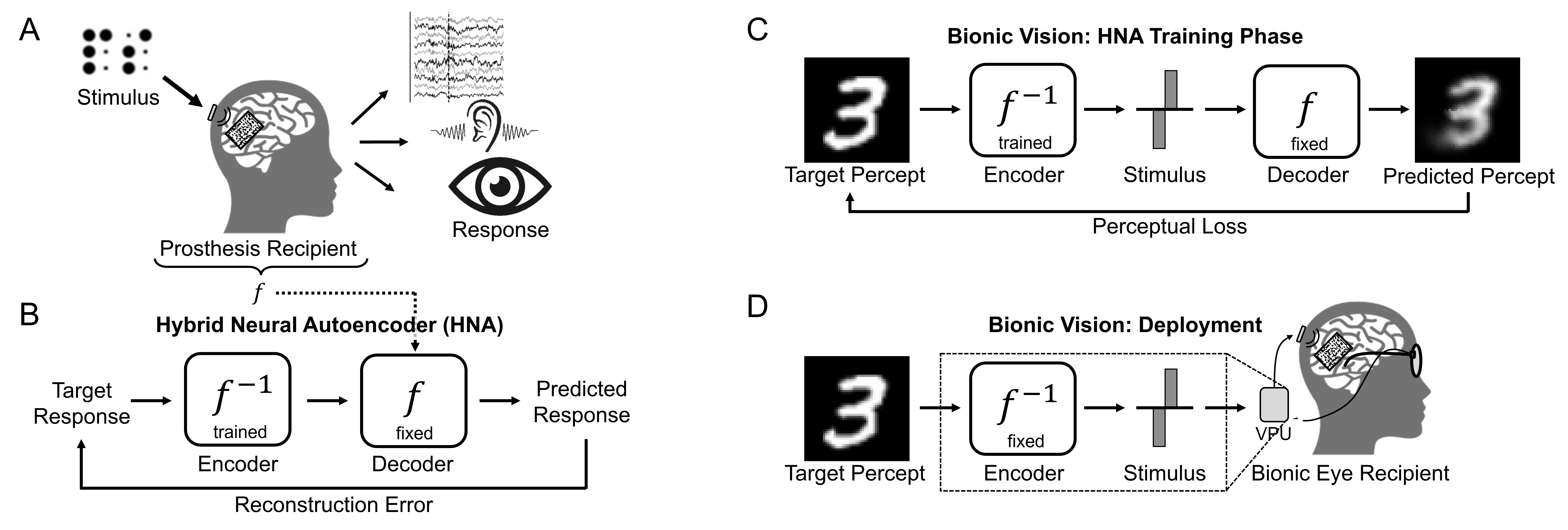
neuroprosthetic visual stimulation pattern
Human-in-the-loop and training
The end user is part of the system. Early training programs use virtual reality, tactile feedback, and guided exercises to help people interpret the implant’s percepts. Clinicians and occupational therapists translate everyday tasks—like holding a cup or reading a headline—into training regimens that accelerate learning. AI augments this process by logging performance, suggesting parameter tweaks, and recommending next exercises.
CLINICAL PROGRESS AND REAL-WORLD RESULTS
What early trials show
Clinical trials of visual prostheses have reported encouraging but cautious results. Some participants regain the ability to detect motion, identify high-contrast patterns, locate light sources, or read large letters. Importantly, real-world improvements—navigating a corridor, locating a doorway, recognizing a familiar face—are often more meaningful than laboratory measures of pixel acuity.
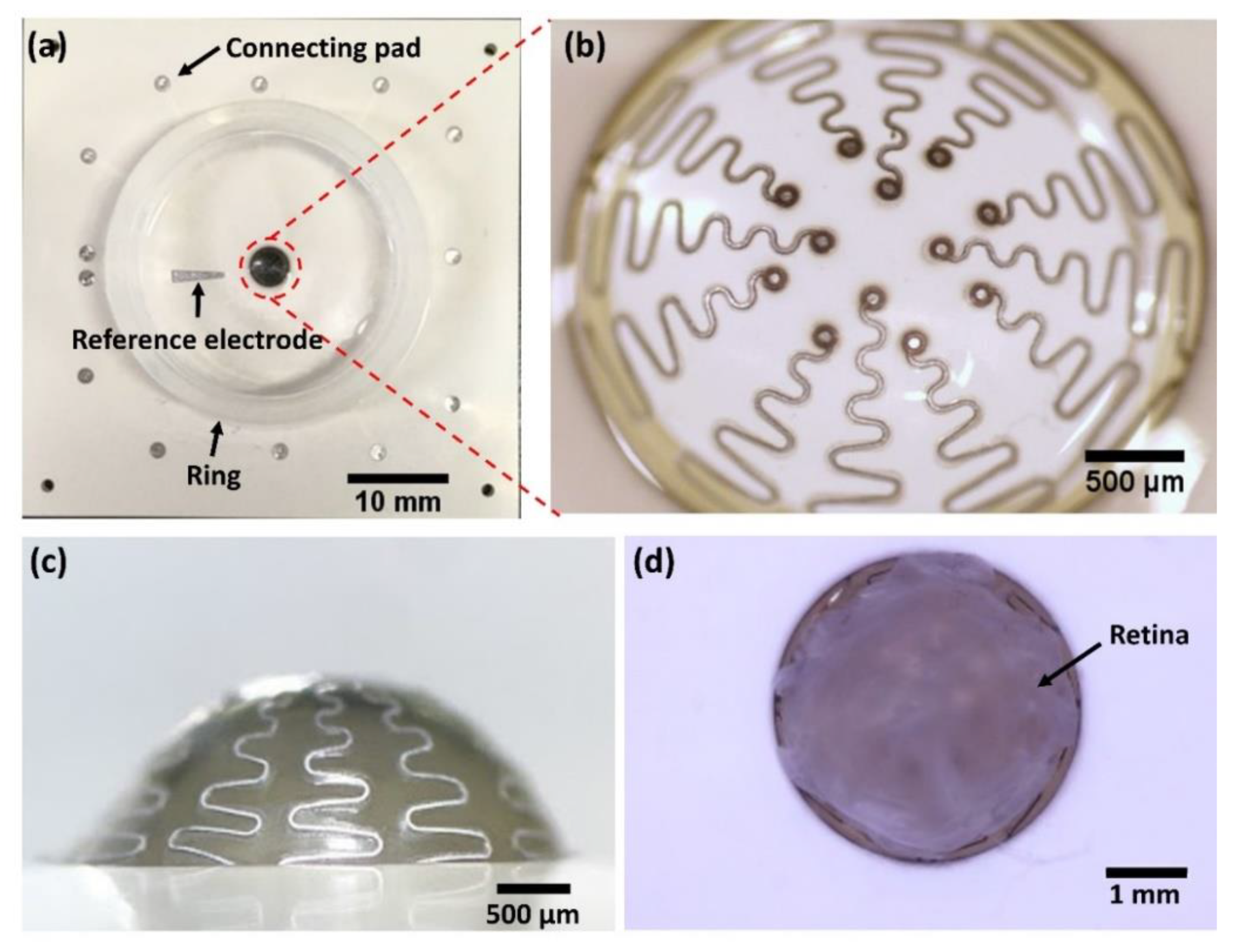
retinal implant microelectrode array
AI-specific demonstrations
Several research teams and startups have demonstrated AI-aided improvements: object detection that prioritizes obstacles for mobility, text recognition that converts signs into high-contrast pulses for reading, and face-detection modules that highlight a detected face’s outline. When AI focuses the limited channels of an implant on the most relevant features, users often report faster and more intuitive recognition.
Small groups Most clinical studies to date involve small cohorts and single-arm feasibility trials.
CHALLENGES—ENGINEERING, BIOLOGY, AND SAFETY
Biocompatibility and longevity
Implanted electronics must survive in a hostile biological environment. Long-term stability—avoiding scar tissue that isolates electrodes, maintaining consistent electrode impedance, and preventing infection—is critical. Engineers face trade-offs between miniaturization, electrode count, power consumption, and heat dissipation.
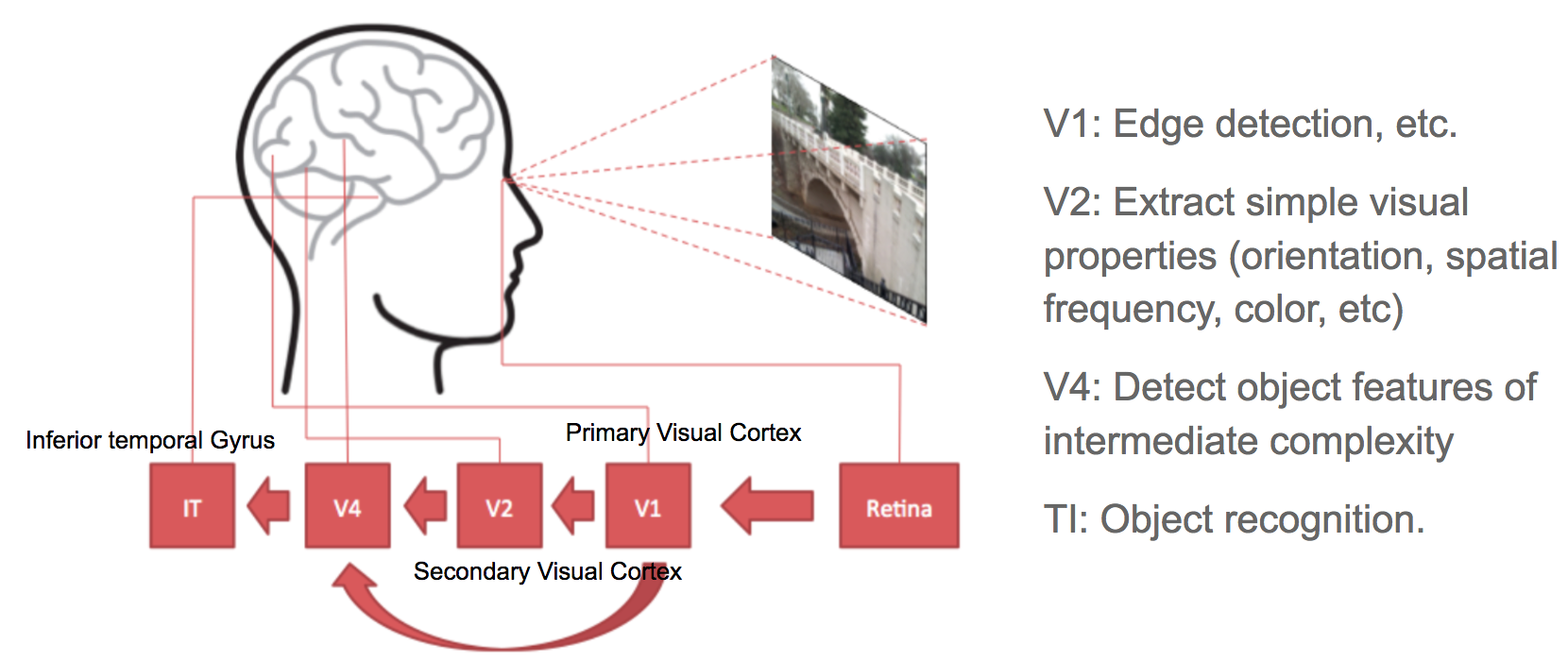
visual cortex neural interface
Information bottleneck
Even the most advanced electrode arrays provide vastly fewer channels than the natural retina. That bottleneck forces AI to make hard choices about what visual information to preserve. Different applications emphasize different features: mobility systems prioritize moving obstacles, while reading aids prioritize high-resolution central text. Designing flexible, context-aware AI that switches modes without overwhelming the user is a major product challenge.
Safety and regulatory hurdles
Because implants interact directly with neural tissue, safety standards are stringent. Devices must prove both short-term safety (no acute tissue damage, acceptable surgical risk) and long-term safety (no chronic inflammation, stable performance). Regulatory bodies require robust evidence from well-designed clinical trials before approving devices for broad use.
ETHICAL, SOCIAL, AND ACCESSIBILITY IMPLICATIONS
Who gets access?
Early devices are expensive and will initially be available only through specialized centers and clinical trials. Ensuring equitable access—across socioeconomic, geographic, and disability communities—will require policy attention, reimbursement pathways, and creative delivery models.
Identity and expectation management
Regaining partial sight can be emotionally complex. Expectations must be realistic: many users will obtain useful partial vision rather than full restoration. Mental-health support, peer communities, and counseling can help users and families navigate this transition.
Privacy and AI
Camera-based systems can capture sensitive scenes. Developers must design privacy-protecting architectures: on-device processing, minimal data logging, and user-controlled sharing. Transparent policies and default protections are essential to prevent misuse.
ADOPTION PATH, BUSINESS MODELS, AND THE ECOSYSTEM
From prototype to product
Translating research prototypes into approved products requires investment in manufacturing, clinical trials, regulatory strategy, and post-market surveillance. Partnerships among universities, startups, large medical-device firms, and clinical networks accelerate this path but also introduce differences in priorities—research curiosity versus scale and reimbursement.
Reimbursement and cost
Devices that show clear improvements in independence and reduced need for caregiving have stronger arguments for insurance coverage. Demonstrating cost-effectiveness—through clinical endpoints and quality-of-life improvements—will be crucial to reach more patients.
- Restores functional vision for some people with severe vision loss.
- AI enables personalization and improved interpretation of scenes.
- Potential to reduce dependency and improve quality of life.
- High cost and limited availability initially.
- Partial vision rather than full restoration.
- Long-term safety and durability challenges remain.
WHAT COMES NEXT—RESEARCH PRIORITIES
Increasing effective bandwidth
Researchers are pursuing multiple avenues to increase the usable information delivered to the brain: denser electrode arrays, optogenetic approaches that render neurons light-sensitive, and hybrid systems that combine electrical stimulation with chemical neuromodulation. Each approach has trade-offs in invasiveness, complexity, and regulatory pathway.
Better AI for perceptual encoding
Progress in generative models, reinforcement learning, and self-supervised learning can produce more efficient encodings—models that predict what a user will need to see next and proactively allocate channel capacity. Importantly, explainable AI methods can help clinicians and users understand why the system presents certain cues.
Standardized metrics and long-term studies
Developing standardized outcome measures—beyond letter charts—to capture real-world independence, social participation, and device satisfaction is critical. Large, longer-duration studies will reveal both benefits and rare long-term complications.
"The greatest success will be measured not by pixels restored but by lives regained."
CONCLUSION
The marriage of bionic hardware and intelligent software is reshaping what we consider possible for people with severe vision loss. AI does not pretend to reconstruct perfect natural sight; rather, it creates a language of stimulation that the human brain can learn to interpret, emphasizing safety, relevance, and adaptability. Early clinical work offers hope: tasks once impossible—reading bold headlines, recognizing a doorway, detecting a moving car—are becoming achievable for some users. But technology is only part of the story. Ethical distribution, realistic expectations, robust safety testing, and long-term support systems will determine whether these devices move from inspiring demonstrations to transformative tools in everyday life.
- AI helps translate complex visual scenes into the limited channel capacity of implants, improving meaningful perception.
- Current bionic eyes provide partial, behaviorally useful vision rather than full restoration.
- Major challenges include long-term biocompatibility, regulatory approval, privacy, cost, and equitable access.
- Research priorities include denser interfaces, improved perceptual encoding, and standardized long-term outcome measures.
A new era of sensory neuroprosthetics is beginning—one that asks both engineers and society to design not just devices, but pathways for people to regain independence and dignity.