
4 Minutes a Day to Dramatically Boost Strength After 65
When Margaret, 72, started doing a short set of standing squats and chair push-offs every morning, she expected a modest mood boost. What surprised her was how quickly everyday tasks felt easier: rising from low chairs, carrying groceries, and walking upstairs without thinking about a missed step. She did the work in a tiny window — four minutes — but she did it consistently. The result was not magic. It was a targeted approach that leverages well-understood principles of muscle physiology and habit formation to produce meaningful strength gains in older adults.
Why Strength Matters After 65
The stakes: independence, health and safety
Strength after 65 is about more than lifting heavier objects; it underpins independence. Muscle strength supports balance, protects bone health, helps control blood sugar, and reduces the chance of injuries from falls. Even modest increases in lower-body strength produce outsized improvements in mobility: standing up from a chair, climbing steps, and maintaining posture while walking. Those functional gains translate directly into longer independent living and better quality of life.
What happens when muscles decline
From midlife onward many people experience sarcopenia — an age-related decline in muscle mass and strength. It begins slowly but accelerates when people reduce activity. The good news: muscle is a responsive tissue at any age. Stimuli that stress the muscle — even brief, focused efforts — trigger growth, neural adaptation, and improved coordination when repeated regularly.
The Science Behind a 4-Minute Micro-Workout
Why short workouts work
Muscle adaptation depends on stimulus intensity, novelty, and frequency. Traditional prescriptions emphasize longer sessions, but recent practical approaches emphasize intensity and regularity. A concentrated four-minute routine that targets major muscle groups can provide a high-quality stimulus: it activates fast-twitch and slow-twitch fibers, challenges balance, and forces motor control. Over weeks, the nervous system becomes more efficient, muscle fibers recruit better, and you reclaim strength you might have lost.
Key physiological mechanisms
Three mechanisms explain rapid functional gains: (1) neural adaptation — improved coordination and muscle recruitment occur within days to weeks; (2) metabolic signaling — short, intense efforts trigger biochemical pathways that support muscle maintenance; and (3) mechanical tension — even brief resistance or bodyweight loading stresses the muscle enough to stimulate growth when repeated consistently. For older adults, safety and progressive overload are the guardrails that let these mechanisms work without unnecessary risk.
Consistency matters more than duration: four minutes a day beats an occasional long session.
The 4-Minute Routine: Practical, Safe, Effective
Overview and principles
This routine is designed to be done daily, anywhere, with minimal equipment. It targets legs, hips, core and upper body — the muscle groups most responsible for functional independence. Aim for slow, controlled movement and full range of motion. If any movement is painful, stop or modify. The set takes four minutes total, broken into four one-minute segments, each with a focused exercise or hold.
The sequence (4 minutes)
- Minute 1 — Sit-to-Stand x controlled reps: From a standard chair, stand up and sit down slowly for 40–60 seconds. Aim for 8–15 repetitions, controlled up and down. Use hands lightly if needed.
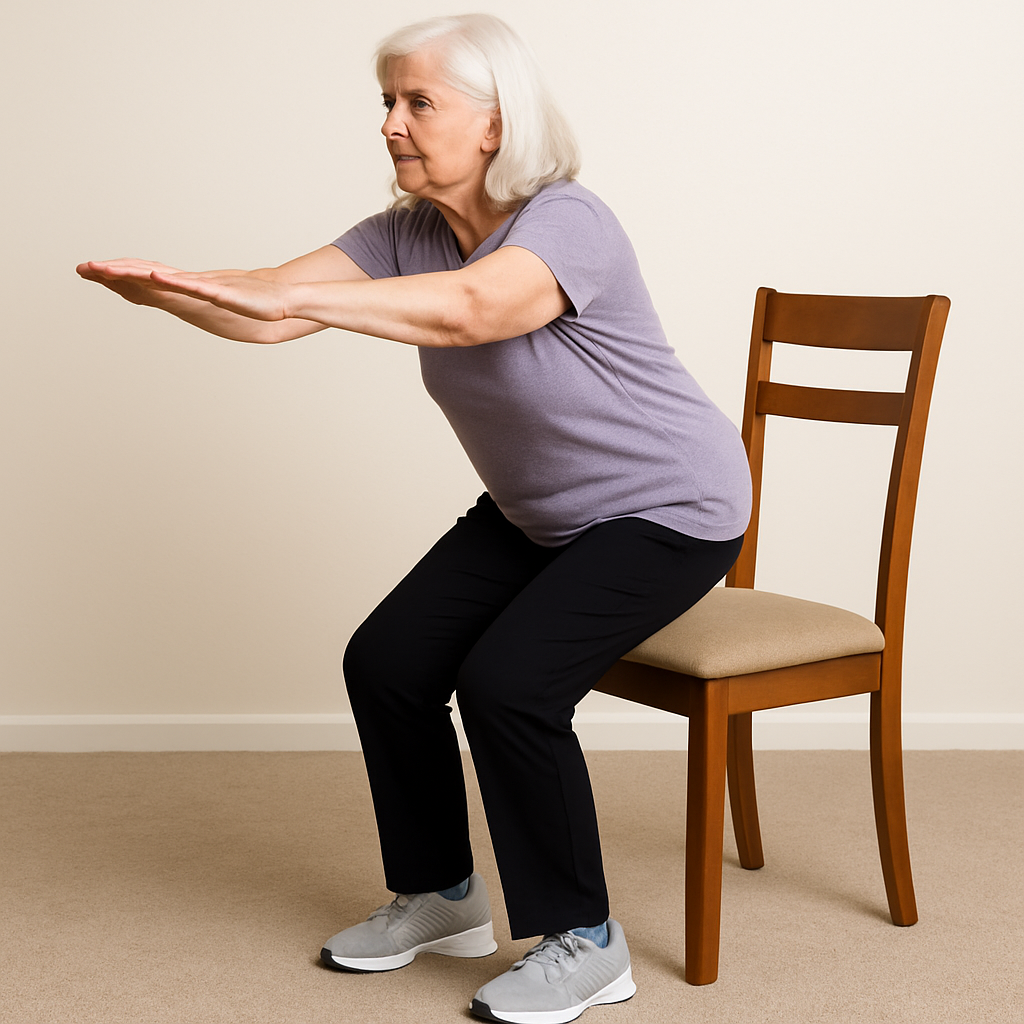
senior doing chair squats
- Minute 2 — Wall or Table Push-offs: Hands on a kitchen counter or wall, perform push-offs for 40–60 seconds to work chest, shoulders and triceps. Keep core engaged and spine neutral.
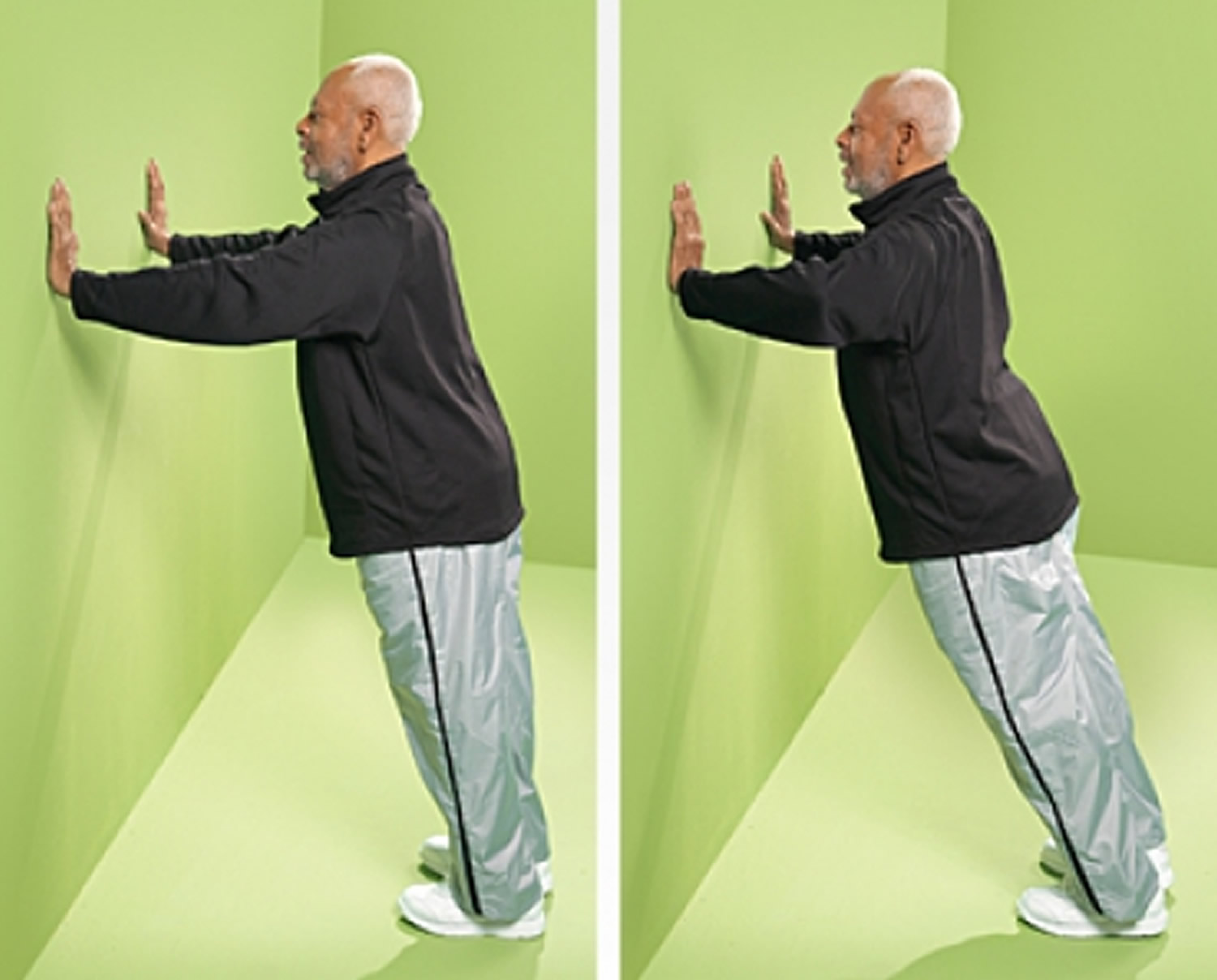
senior wall push-ups exercise
- Minute 3 — March-in-Place or Step-ups: March energetically, lifting knees to a comfortable height, or perform slow step-ups (onto a low step). Focus on balance and hip engagement.

elderly person marching in place
- Minute 4 — Dead-bug or Standing Heel Raises: For floor-capable participants, do dead-bug core work for 40–60 seconds. For standing-only, perform slow heel raises to strengthen calves and improve ankle stability.
senior doing heel raises
Progressions and variations
After 2–4 weeks of daily practice, increase challenge by: adding a resistance band, performing deeper chair stands, slowing the eccentric (lowering) phase, or swapping wall push-offs for counter push-ups to create more tension. Replace marching with higher knee drives or perform single-leg mini-squats for balance and unilateral strength.
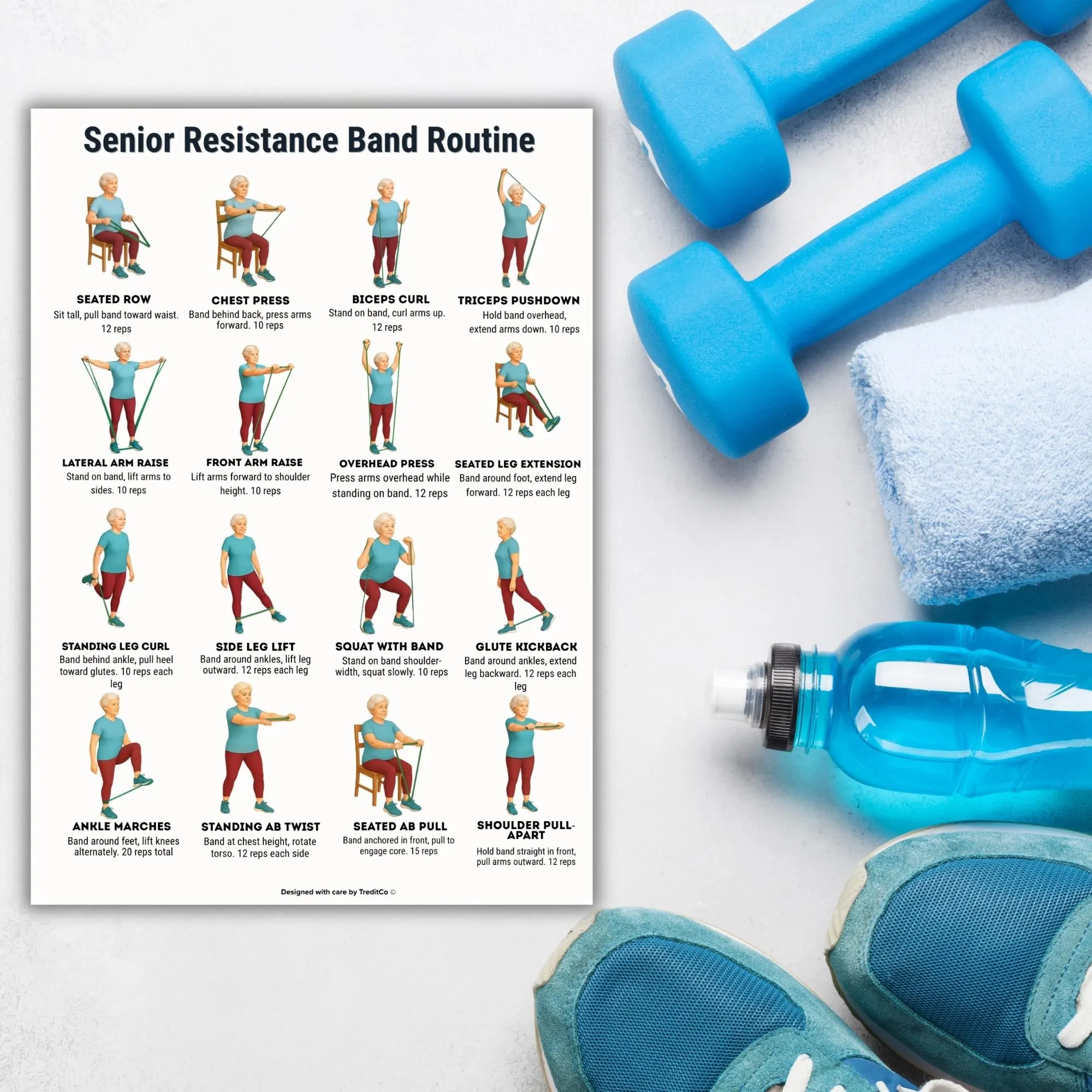
resistance bands for seniors
Minimal equipment: a stable chair, a counter, and optionally a light resistance band or two-pound hand weights.
Safety, Screening and Modifications
Pre-check and when to seek guidance
Before beginning any new exercise regimen, older adults with chronic conditions, uncontrolled blood pressure, recent surgery, or acute joint pain should check with their healthcare provider. A quick self-screen includes: can you stand up from a chair without using your hands? Can you walk 10 meters safely? If the answer is no, work with a physical therapist or trainer who specializes in older adults to adapt movements.
Modifications for common limitations
Joint pain: shorten range of motion and reduce speed. Balance concerns: keep a hand lightly on a stable surface. Low fitness: perform 30 seconds per station and rest between stations. Cardiovascular limits: monitor breath; exercises should increase effort but not cause breathlessness that prevents talking.
How to Measure Progress
Simple functional tests
Progress is best measured by real-life tasks. Try these tests at baseline and every 4–6 weeks:
- Sit-to-Stand Test: Count how many times you can stand from a chair in 30 seconds. Improvements indicate better lower-body strength.
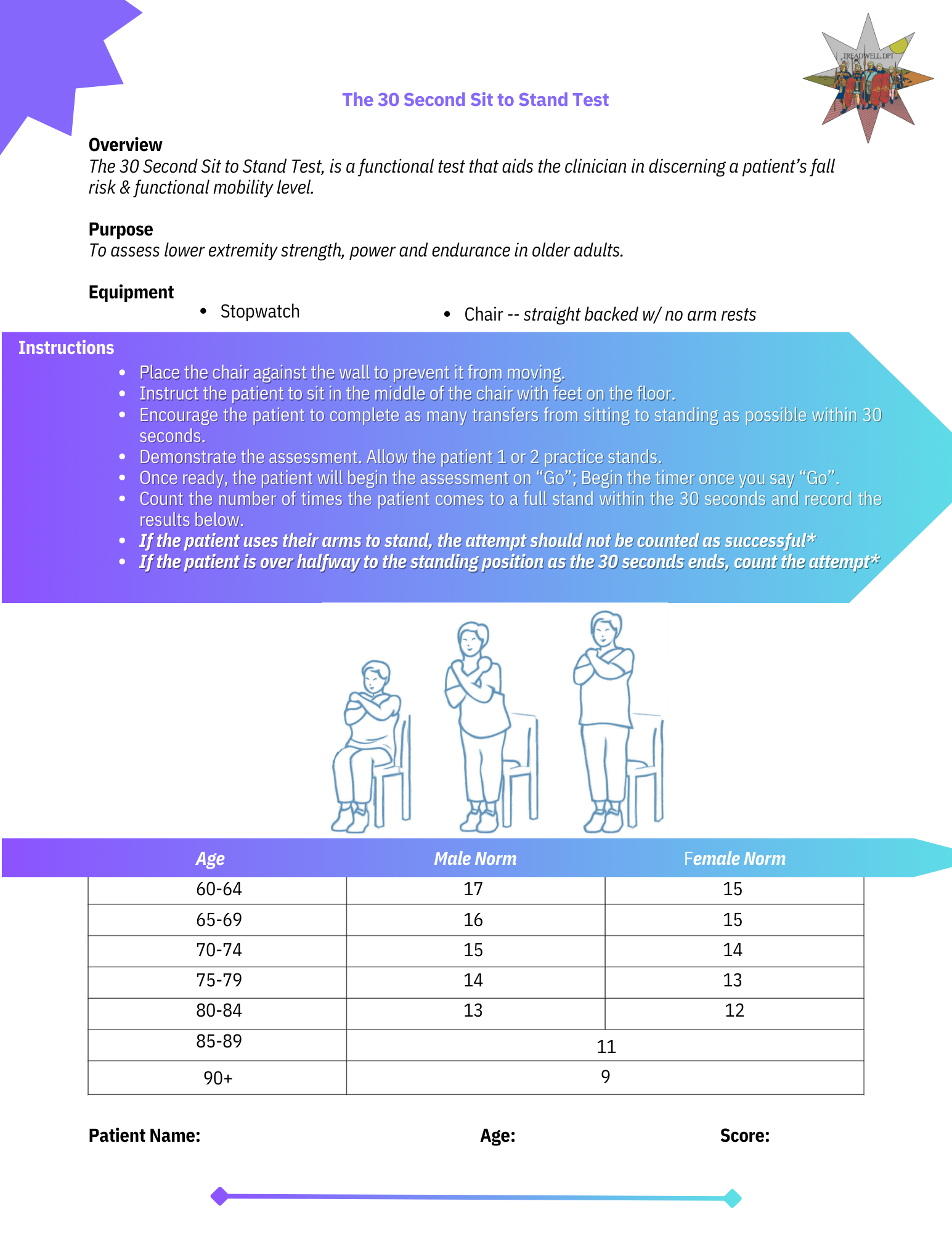
sit-to-stand functional test senior
- Grip Check: While a dynamometer is ideal, a practical proxy is how firmly you can hold a filled shopping bag without fatigue.
- Balance Time: Time how long you can stand on one leg (with support nearby). Longer times reflect better stability.
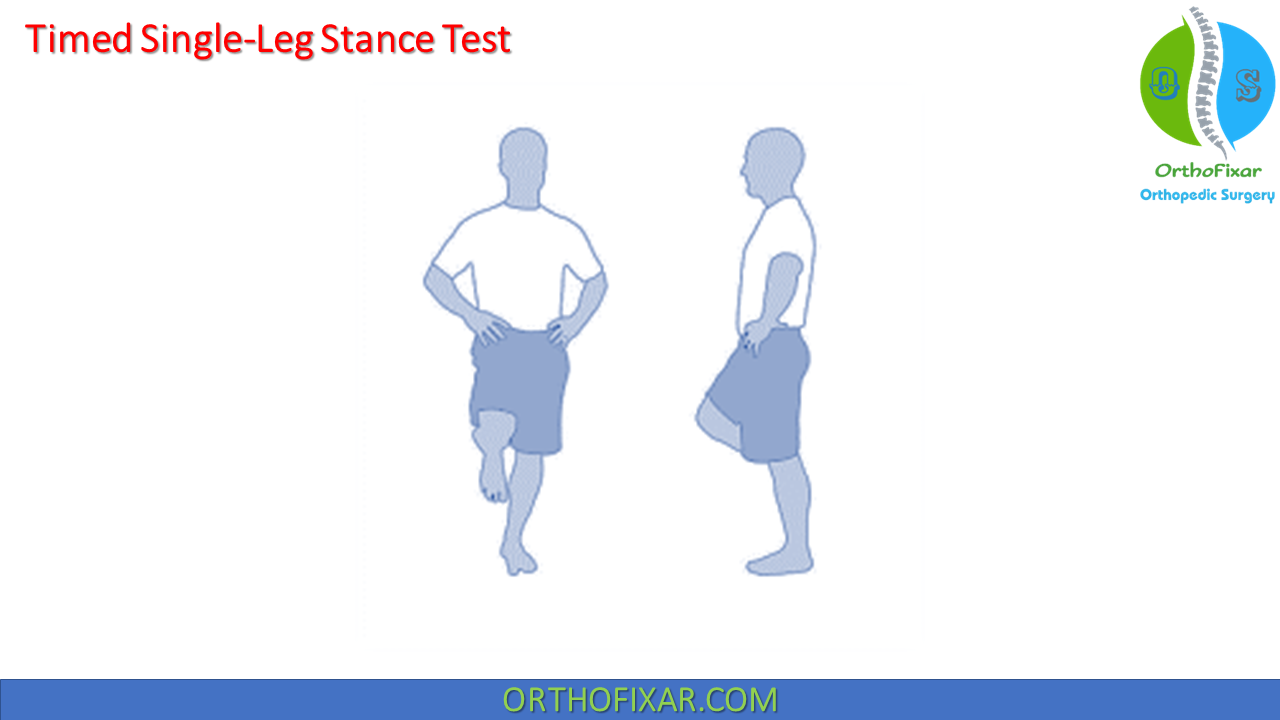
senior balance one leg test
A simple progression table
| Week | Daily Time | Goal |
|---|---|---|
| 1–2 | 4 minutes | Consistency: 5–7 days/week |
| 3–6 | 4 minutes | Increase reps/slow eccentrics |
| 7–12 | 4–8 minutes | Add band or single-leg work |
Common Myths and Misunderstandings
You need long workouts to see gains
Myth: Only hour-long gym sessions build strength. Reality: Short, focused, and regular strength efforts produce meaningful gains because muscle responds to stimulus intensity and frequency — not strictly duration.
Lifting heavy is dangerous for seniors
Myth: Heavy resistance is inherently risky. Reality: With proper progression and technique, older adults benefit from resistance training. The emphasis should be gradual overload, sensible loading, and technique. Bands, bodyweight, and lighter free weights are all valid and can be progressed safely.
Putting the Routine into Daily Life
Habit strategies that stick
Four minutes is intentionally small so it can be stacked onto daily anchors: after brushing teeth, before morning coffee, or following a bathroom trip. Habit stacking reduces friction: the cue is pre-existing and the effort feels manageable. Track progress with a simple calendar checkmark. Social accountability, even a weekly phone call with a friend to report progress, increases adherence.
Integrate with other activities
Complement the 4-minute routine with daily walking, light mobility stretches, and activities that challenge balance. If you enjoy group classes, use the short routine as your daily maintenance between classes. If weight loss is an aim, combine strength work with modest dietary changes and regular aerobic movement.
Realistic Expectations and Common Experiences
Expect neural improvements — coordination, confidence, and balance — within 2–4 weeks. Visible muscle changes and measurable strength increases typically appear after 6–12 weeks, depending on nutrition and baseline activity. Plateaus are normal. When progress stalls, change one variable: increase resistance, alter tempo, or add a new movement.
Conclusion: Small Daily Investments Yield Real Returns
Four minutes a day is not a gimmick. For many older adults, it is a practical, evidence-aligned approach that respects time, capacity, and safety. The combination of neural adaptation, consistent stimulus, and progressive challenge makes brief daily strength work a powerful tool for preserving independence. Like any habit, the secret is repetition: the days add up, and the small wins compound into meaningful life improvements.
- Do a focused 4-minute routine daily to target major muscle groups and improve function.
- Progress gradually: increase reps, slow the lowering phase, or add light resistance over weeks.
- Measure progress with sit-to-stand tests, balance checks, and daily task ease.
- Prioritize safety: modify movements, consult a provider if needed, and stop for pain.
This routine is intended for generally healthy older adults. Personalization and medical clearance are recommended when health issues exist.