1948 Photograph: Former Slaves Flanked by Klansmen with Radio
The photograph is small and grainy when you first see it, but the image lodges itself in the mind like a splinter: an elderly Black couple seated calmly, a heavy console radio between them, and a semicircle of men around them—hooded figures, some unmasked, one inexplicably dressed as Santa Claus. The caption that usually accompanies the print is stark and factual: in 1948, 106-year-old Jack Riddle and his wife, Rosie—both former slaves—were photographed seated before a group of Ku Klux Klan members who had reportedly given the couple a radio as a Christmas gift. The picture reads like a riddle; its surface civility collides with an undercurrent of menace, and it forces us to ask not only what happened that day, but how we remember moments that sit on the fault line between charity and coercion.

Jack Riddle Rosie Riddle
Photograph as Document: What We See and What We Must Ask
At first glance, the photograph appears to document a cordial, even festive, scene: a gift, smiles, a posed group. But photographs are never neutral mirrors. They are staged and edited, framed by the photographer and the audience, and saturated with the power relations of the moment. In this image, the radio is not just a gift; it is a prop, a symbol, a tool of meaning-making. The presence of Klansmen—organizations dedicated to racial terror—recasts the gift into a performance. Who arranged the seating? Who took the photo? Who benefited from circulating it? Each answer points to a different interpretation of generosity, humiliation, publicity, and propaganda.
Ku Klux Klan 1948
Jack and Rosie Riddle posed with a radio reportedly given to them by members of the Ku Klux Klan in 1948.
Historical Context: 1948, Jim Crow, and the Long Shadow of Slavery
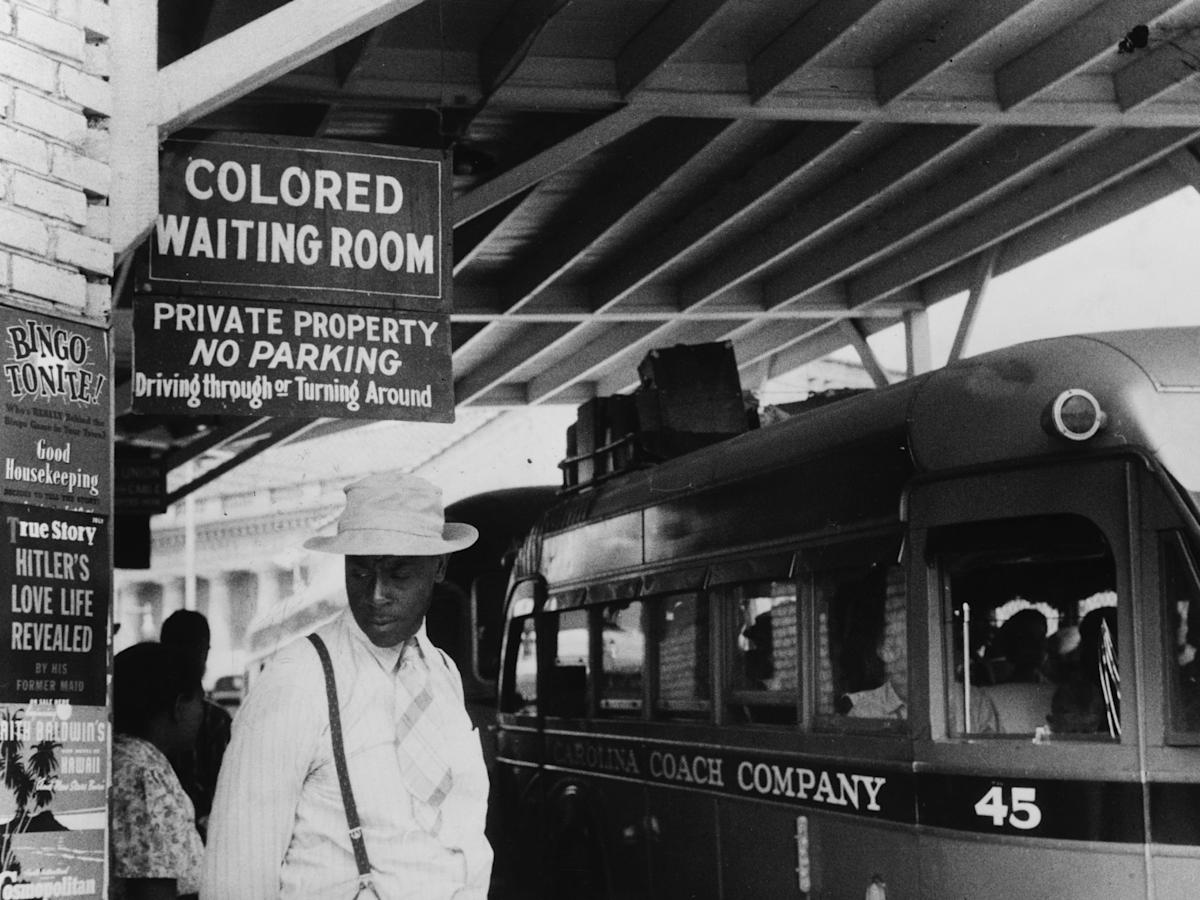
The year 1948 sits squarely in the era of legally enforced segregation in the United States. Although the Civil War ended in 1865 and emancipation formally freed enslaved people, the succeeding decades brought Reconstruction, retrenchment, and the institutionalization of Jim Crow laws that sought to control Black life. Being 106 in 1948 implies that Jack Riddle was born around 1842—into the legal condition of chattel slavery—and that he, like many formerly enslaved Americans, lived through emancipation, Reconstruction, disenfranchisement, the Great Migration, two world wars, and the slow build of the civil rights movement.
Jim Crow era photography
This photograph sits within a postwar cultural moment: returning Black veterans demanding rights, northern and western migration altering demographics, and new mass media—especially radio—reshaping community life. But those advances coexisted with continued racial violence, lynching, and everyday intimidation. A gift from the Klan, therefore, cannot be read simply as a neighborly gesture; it must be understood in the complicated grammar of power and public image that defined the mid-20th-century American South.
The radio sits between them like a contested object: a source of sound, information and, in this image, symbolic control.
The Radio: Technology, Symbolism, and Access
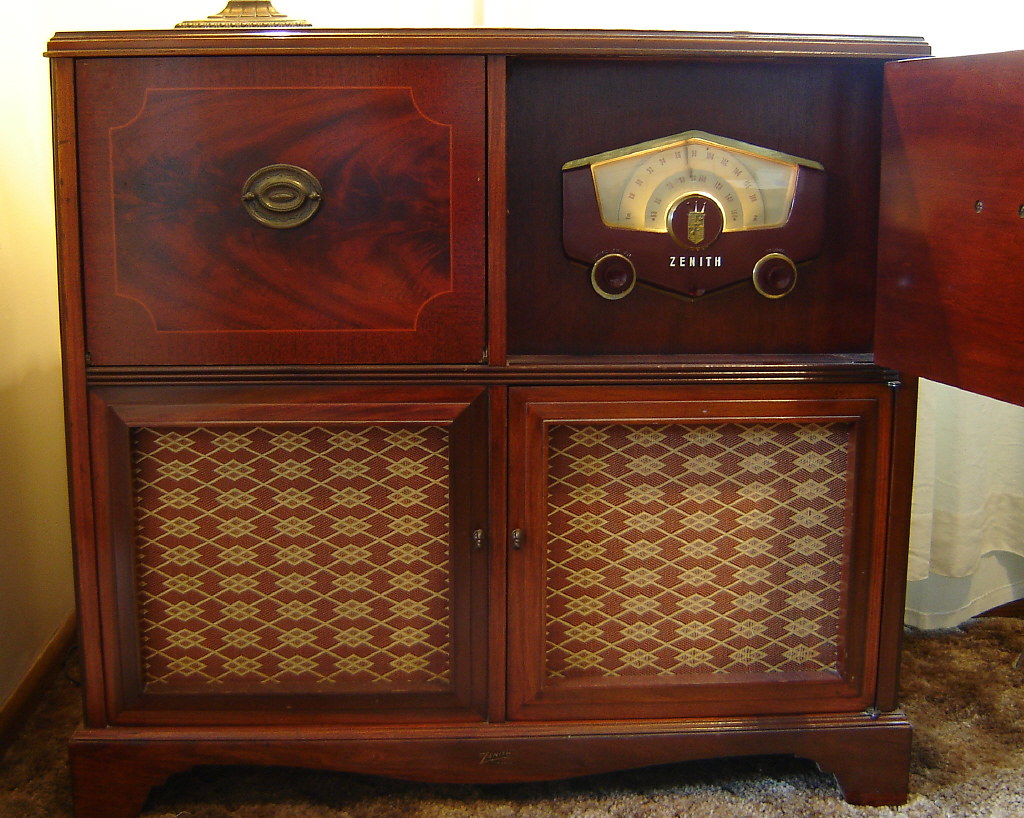
The late 1940s radio was the living-room technology that brought news, music, church services, and serialized entertainment into daily life. For many rural households, a radio was a window to the wider world and a tangible marker of modernity. For Black Americans—often excluded from mainstream print culture and marginalized in public life—radio could be both empowering and alienating. It broadcast Black musicians and the voices of Black preachers, but it also transmitted racist commentary and limited representation. In the case of Jack and Rosie, the radio's presence is layered: it is material comfort, technological entry point, and, in the photograph, a curated sign for the viewer.
console radio 1948
Seen in this light, the radio can be read in multiple ways. As a gift it might have been meant to curry favor or to craft a narrative of benevolence. As an object placed conspicuously between the couple and their donors, it may have been intended to suggest dependence or gratitude. For the recipients, however, the radio could also provide private solace—voices and music beyond what their immediate circumstances permitted, a means of connecting with news from far-off places and relatives who had migrated elsewhere.
Performance and Power: The Klan's Spectacle
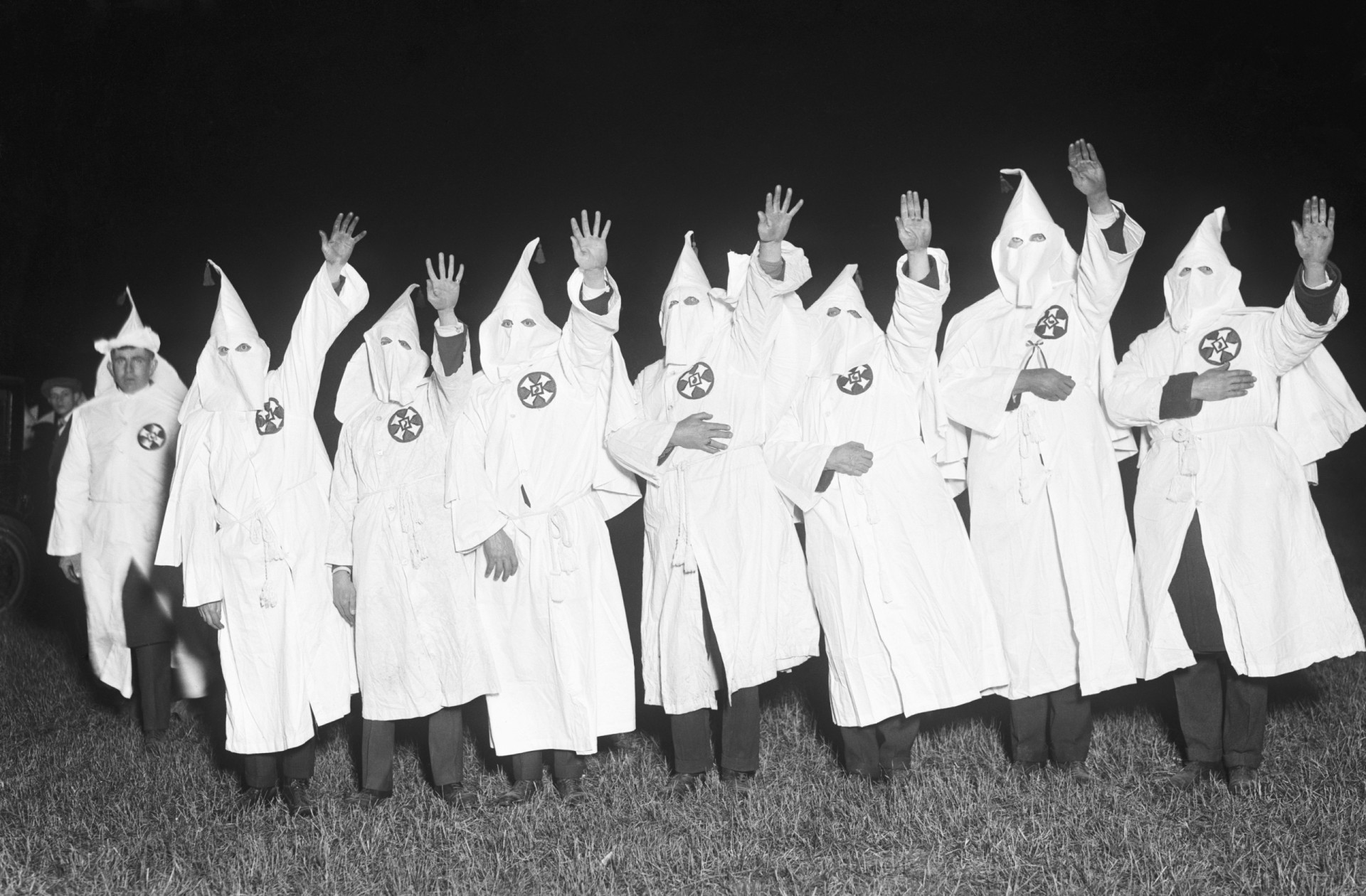
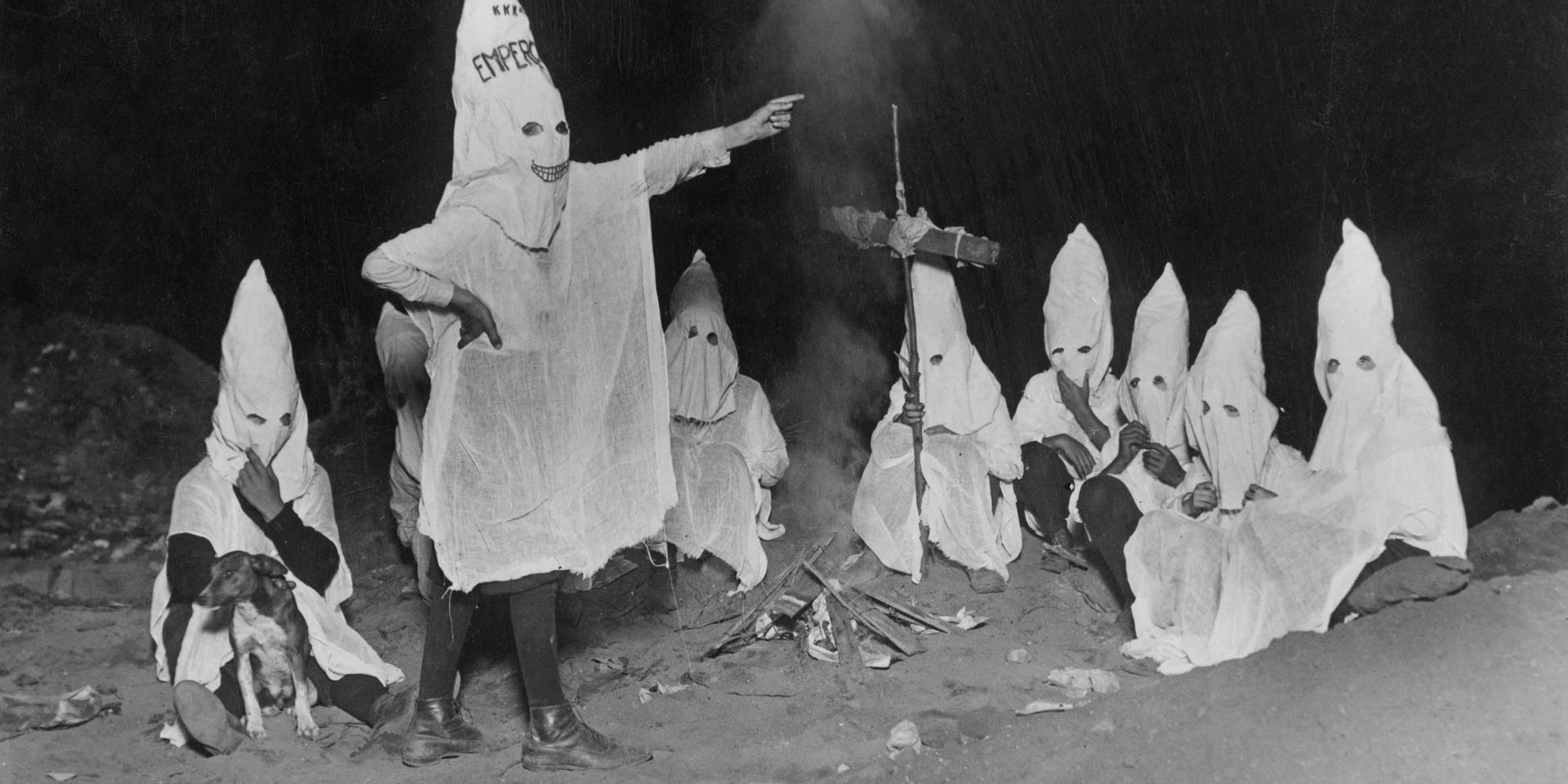
The Ku Klux Klan has a long history of using ritual, pageantry, and public spectacle to reinforce its ideology and intimidate communities. Members often staged events to assert dominance or to present themselves as guardians of a fabricated social order. The inclusion of a figure dressed as Santa Claus in this photograph greatly intensifies the performative mix: Santa is a figure associated with innocence and joy, and his presence here is a grotesque inversion that implicates cultural traditions in the machinery of racial control. It is a staged tableau that flattens the moral geometry of the scene for those viewing the photograph at the time—perhaps to signal a softened image of the Klan—or to exert psychological pressure on the couple and their community.

Santa Claus KKK costume
When you examine the faces of the men around Jack and Rosie, there is a tension between the casual posture of donors and the underlying threat inferred by their affiliation. Whether the Klan members were masked or unmasked, whether they knew the camera's eventual audience, and whether the couple consented willingly or under coercion are all part of the interpretive fissures we must acknowledge. The photograph does not come with a single, neat moral explanation. Instead it functions as evidence that requires ethical reading.
Reading the Agency of Jack and Rosie
It is easy to reduce the elderly couple to passive figures in a tableau engineered by others, but such a reading risks erasing their subjectivity. Living through slavery and a century of seismic change, individuals like Jack and Rosie carried complex strategies for survival that included accommodation, negotiation, and quiet resistance. Sitting for a photograph might have been a pragmatic choice—an attempt to secure a small favor, to protect family, or to assert dignity in the face of dehumanizing conditions. They may have accepted the radio with pleasure, fear, or a mixture of both. Their visible calm does not resolve the moral questions the image raises; it complicates them.
Oral histories from similar contexts reveal stories of elders who accepted gifts to maintain peace or to gain a resource that could benefit grandchildren. A single photograph rarely conveys such calculus, and historians must therefore be careful to read image and context together, not substitute one for the other.
Ethics of Display: How We Show Troubling Images
Contemporary curators and educators face difficult choices when displaying images that depict victims alongside their oppressors. Presenting this photograph to modern audiences demands contextual framing: dates, local histories, and attention to power imbalances. Without that work, viewers risk misreading the scene as mutual goodwill or, alternately, as voyeuristic proof of humiliation. Ethical display practices include foregrounding the voices of descendants when possible, explaining the broader socio-political landscape, and avoiding sensationalizing the suffering of individuals who cannot speak for themselves.
archival photograph 1948
Memory, Narrative, and the Archive
What survives in archives is rarely a neutral sample of the past; it is the outcome of choices—whose images were preserved, who funded collections, what newspapers printed, and which institutions collected prints. The circulation of a single image, especially one as striking as this, shapes public memory. It can be mobilized by white supremacist groups to craft narratives of benevolence or by civil rights advocates as evidence of intimidation. The archivist's job is not only to preserve but to annotate, to bring oral histories and local records into conversation with images, and to ensure that future readers see the photograph as part of a narrated past, not as an isolated spectacle.
How to Read This Photo—A Short Guide
- Look at framing: Who is in the center? What is foregrounded?
- Consider posture and gaze: Are subjects posed or candid? Who is looking at the camera?
- Question provenance: Where did the photo originate? Who published it?
- Contextualize historically: What else was happening locally and nationally in 1948?
- Interrogate intent: What might the photographers and the photographed have wanted to communicate?
Why This Picture Matters Today
Decades removed from 1948, the photograph still has urgency because it is about the language of power and image-making—how charity can be weaponized, how symbols can be inverted, and how the lives of elders can be placed on public display. In an era of renewed debate about monuments, media representation, and historical memory, images like this are pedagogical tools. They compel viewers to confront uncomfortable continuities in social behavior: the impulse to stage goodwill for public consumption; the use of spectacle to normalize exclusion; and the endurance of communities who, despite institutional violence, tended families, told stories, and preserved dignity.
Images do not simply show the past; they perform it, and sometimes they perform for those who hold the power to define reality.
Questions for Further Research and Reflection
The photograph invites many lines of inquiry that scholars, students, or community members might pursue:
- Who were Jack and Rosie Riddle beyond this image? Are there family records, oral histories, or local archives that tell their story?
- What local newspapers published the photo, and how did they frame it?
- How did the Klan present their activities to local communities in 1948, and what records survive?
- What was the role of radio in rural Black households at midcentury, and how did access to radio shape community knowledge?
Conclusion: Seeing the Past with Complexity
The photo of Jack and Rosie flanked by Klansmen and a console radio resists easy explanation. It is at once intimate and performative, a scene of apparent generosity and a tableau of threatened dignity. Our responsibility as readers, historians, and citizens is to hold both truths at once: to acknowledge the historical structures that made such an image possible, and to recover the humanity and possible agency of the people photographed. Doing so does not resolve the tension the picture creates; it honors the complicated, often painful, reality of lives lived under white supremacy.
- The photograph is a complex historical document that requires contextualization beyond face value.
- Objects like radios carried layered meanings—comfort, access, and symbolic control.
- Archival practice and ethical display matter in how we remember fraught historical moments.
- Honoring the subjects means seeking their fuller stories, not reducing them to spectacle.