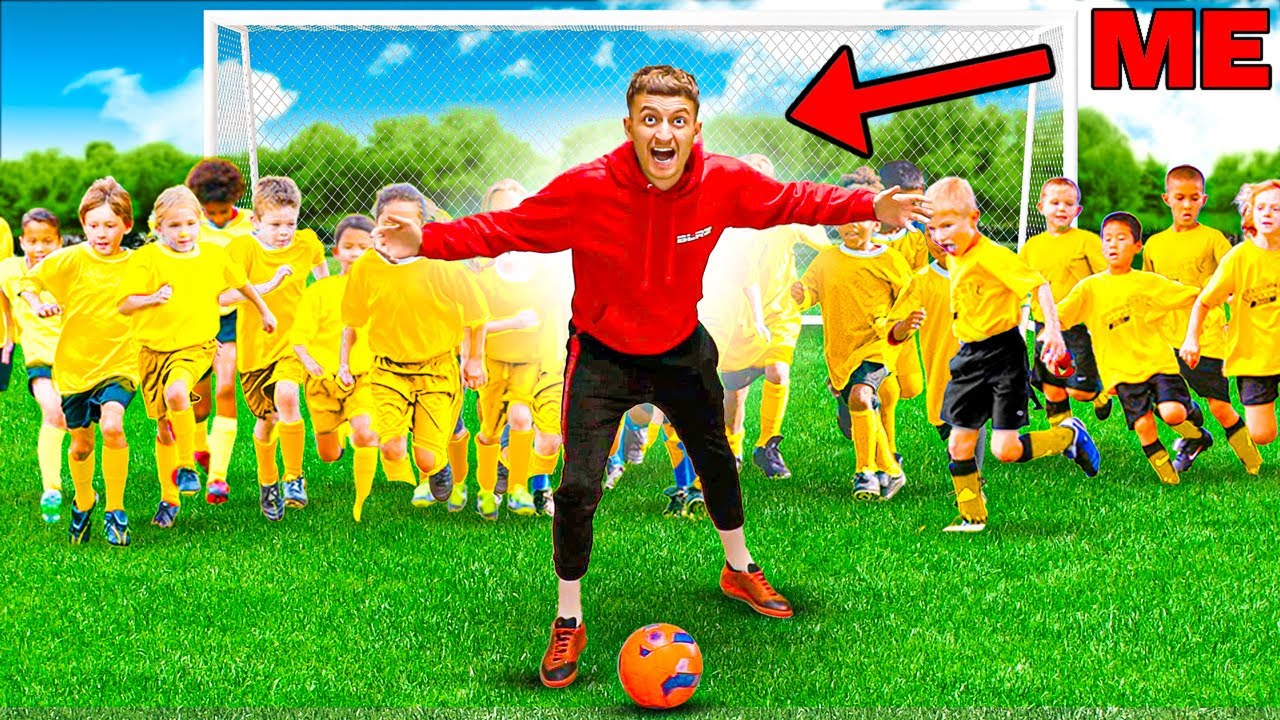
100 Kids vs. One Pro Footballer — The Unlikely Match
Imagine a sunny Saturday afternoon on a neighborhood pitch: one world-class professional footballer stands at the center circle, while 100 excited kids mill around the touchlines. It sounds like the setup to a viral video or a playground myth, but the question behind the spectacle is irresistible: who would win? Beyond the gag value, this thought experiment exposes real ideas about physiology, tactics, group dynamics, safety and how sport scales from individual brilliance to coordinated teams. This feature treats the premise seriously, laying out assumptions, running through scenarios, and extracting practical lessons for coaches, parents and curious fans.
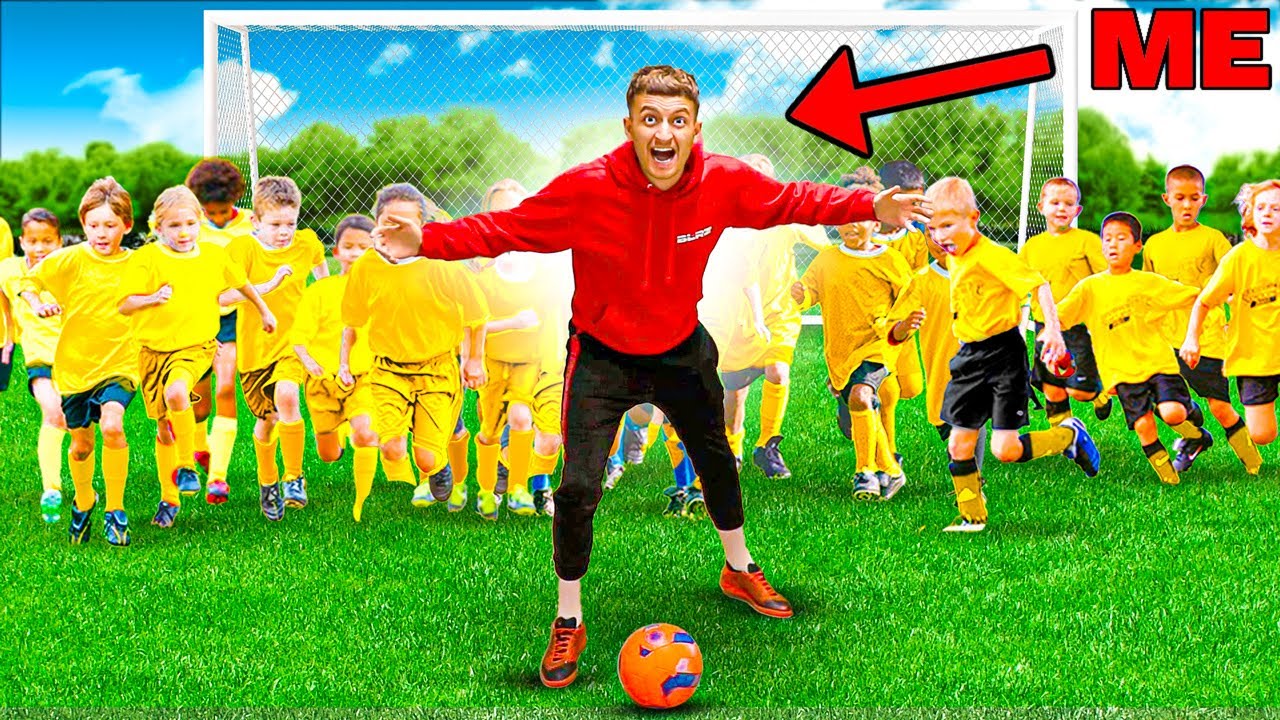
Professional footballer vs kids
Setting the Rules — Assumptions and Parameters
Any meaningful answer must start by defining the contest. In real life, such a match would be ill-advised—safety rules, ethics and common sense prohibit pitting one adult against a crowd of children. So we’ll treat this as a controlled, hypothetical sporting scenario with these standard assumptions:
- Age and ability: The 100 kids are a mixed group aged 8–14 with varying skill levels typical of school or recreational settings.
- The professional: An adult, fully fit professional footballer at peak club level, possessing world-class technique, speed and game intelligence.
- Objective: A simple scoring contest on a marked pitch: the side with most goals in a fixed time wins. No violent conduct allowed. Referees enforce safety.
- Substitutions and structure: The 100 kids rotate in waves, but at any one time the field follows standard 11v11 numbers (or we’ll simulate alternate formats to explore the question).
These assumptions let us compare apples to apples (or apples to apples-plus) across scenarios: one-on-one duels, small-sided games, or a rotating swarm. They also keep safety and common sense front and center.

Youth soccer team
The Athlete’s Edge — Why One Pro Is Dangerous
Physical superiority
A professional footballer is not merely “better” at soccer; they are a trained athlete. Muscle strength, sprint speed, acceleration, aerobic and anaerobic conditioning, and finely tuned motor patterns all favor the pro. Sprint times, for instance, are often the simplest way to illustrate separation: elite forwards regularly clock 20–30 meter sprints in well under 3 seconds—distances that create instant space against most youth players.
Technical skill and decision-making
Professional technique—ball control under pressure, first touch, feints, passing accuracy—multiplies the pro’s effectiveness. Equally important is game intelligence: selection of the right pass, timing of runs, and reading opponents. Against 100 kids lacking coordinated defense, a pro could exploit pockets of space repeatedly.
Situational stamina
Where the pro can struggle is in sustained, multi-directional contact and collisions if the rules allowed them. However, in a constrained, non-contact scoring environment, stamina favors the pro because their aerobic base allows repeated high-intensity efforts and quick recovery—especially in the first half of any brief contest.
One elite player can do in ten intelligent touches what dozens of amateurs struggle to do in a frantic scramble.
The Crowd Advantage — How Numbers Shift the Game
Space denial and swarming
Hundreds of studies in team sports show numbers advantage can overwhelm individual brilliance. If kids are distributed across the pitch and coached to maintain defensive shape, they can reduce the pro’s space and passing lanes. Swarming—many bodies converging on the ball—creates turnovers and reduces the effective time the professional has the ball.

Kids playing soccer
Rotation and fresh legs
A practical advantage for the 100 kids is rotation. If the contest allows substitution waves, kids can bring fresh legs, renewed enthusiasm and the occasional quick player into attack. The pro has pace and recovery but cannot be everywhere; persistent pressure in different zones can force mistakes.
Creativity and chaos
Children bring unpredictability. They make unorthodox decisions, take wild shots, and sometimes benefit from sheer luck. In chaotic environments, randomness becomes a weapon: ricochets, accidental through balls, and set-piece confusion can produce goals against a cautious pro.
Scenario Analysis — How Different Formats Change the Outcome

Football match scenarios
Scenario A — One-on-one, continuous play, center-court challenge
In a pure one-versus-one showdown where the professional must attack and defend against rotating single kids, the pro almost certainly dominates. Technical superiority and physicality grant consistent wins—except when the kid is unusually skilled or the pro restricts efforts to avoid contact. Outcome: pro heavily favored.
Scenario B — 11 kids at a time, standard pitch
This format levels the field. If the 100 kids form a coherent 11-player team with a few substitutes, a well-organized defense and quick transitions can neutralize the pro. But if kids lack structure, the pro will exploit individual errors. Outcome: toss-up, depending on coaching and discipline.
Scenario C — Rotating swarm with free substitution
With unlimited rotation, the kids’ biggest advantage—numbers—shows. They can keep fresh pressure and pester the pro relentlessly. But success depends on basic coaching: marking zones, not crowding the same space, and disciplined attempts to score. Outcome: kids favored if organized.
Tactics for the Pro — How One Player Could Win
Exploit transition and space
A solo professional’s best strategy is to play like a chess grandmaster: control tempo, use diagonals, and attack space rather than bodies. Quick one-two passing (if teammates or designated neutral players exist), angled runs behind slow defenders, and drawing multiple kids to create 1v1 opportunities near the box are key.
Set-piece dominance
Direct free kicks and penalties reduce randomness: one well-placed shot beats a chaotic scramble. A pro’s shooting accuracy and composure under pressure are huge multipliers.
Energy management
The professional should conserve energy, picking moments to sprint and using positional play to make the kids chase. Slow buildup and occasional explosive bursts are more effective than constant dribbling that invites congestion.
In many cases the contest is not about raw talent, it’s about system—numbers, discipline and the rules that shape play.
Coaching the Kids — How 100 Can Act Like One
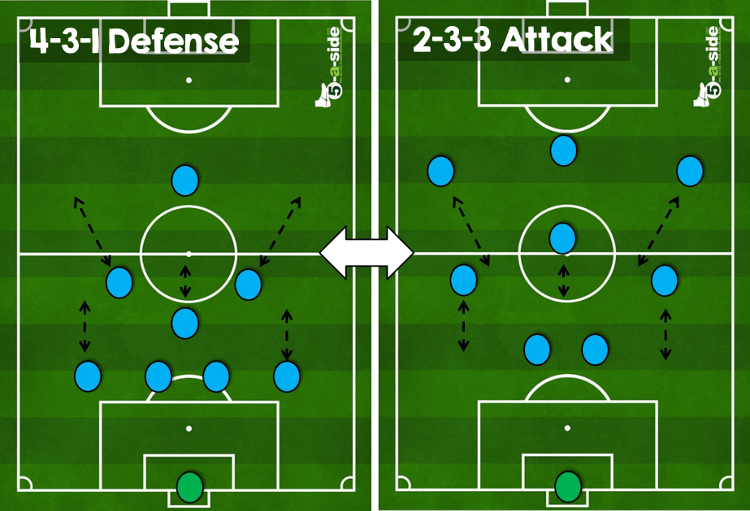
Football tactics for kids
Simplicity wins
Complex tactics lose groups of mixed-age players. Coaches should lean on simple, repeatable principles: stay in zones, pass to nearby teammates, and force the pro to run into crowded corridors. Assign basic roles—two anchors, four midfield disruptors, forwards who stay high—and rotate in waves.
Use the bench as a tactical tool
Planned substitutions ensure constant pressure. Waves of fresh attackers can pinch the pro’s recovery time and increase errors. If the kids can swap every few minutes with a pre-arranged signal, they maintain intensity more effectively than a single continuous unit.
Safety, Ethics and The Real-World Answer
It’s vital to state clearly: staging a contest where an adult elite athlete physically confronts children would be irresponsible and unsafe. The ethical framing matters—this thought exercise is best treated as a controlled simulation or a mental model rather than a live spectacle.
The Psychology Factor — Confidence, Fear and Momentum
Momentum in sports is as much psychological as physical. A single goal by the pro can demoralize scattered kids; conversely, a scrappy early goal by the children can electrify them and lead to overperformance. Confidence and a sense of fairness—the belief that adults are not using excessive force—shape how kids play. A coach who frames the contest as collaborative training rather than humiliation preserves morale and enjoyment.
A Numerical Thought Experiment — Probabilities and Expected Goals
We can use a simplified probabilistic model to make predictions. Suppose the pro converts 20% of 1v1 scoring opportunities while a child converts 5% of similar chances. If the pro receives 20 clear chances in a game, expected goals are 4.0. If the kids collectively generate 80 chances over rotations at 5% conversion, expected goals are 4.0 as well. The math shows the contest can be balanced by adjusting opportunity counts and conversion rates—numbers and chance frequency matter as much as raw skill.
Learning Points — What the Thought Experiment Teaches Us
Teamwork compounds value
The clearest lesson is that teamwork amplifies effectiveness. A hundred uncoordinated players are often less effective than a dozen well-drilled ones. Sport scales with organization.

Soccer teamwork and coaching
Design rules to match goals
Whether the goal is entertainment, skill development or fairness, rules and structure determine outcomes. Coaches and organizers can harness numbers advantages through rotation, simple tactical plans, and situational coaching cues.
Cultural and Historical Echoes
Stories of David-and-Goliath matchups abound in sport folklore: a lone star lifted by talent, or armies united by will. The 100-kids-versus-one-pro scenario joins a larger narrative about when individual brilliance outgirds group cohesion—and when the many overwhelm the few. Whether in local parks or pro arenas, the balance between individual skill and collective structure has always been central to how games are won.

David vs Goliath sports
Practical Variations Worth Trying (Safely)
If the goal is fun, education and testing limits rather than spectacle, organizers can run alternatives that preserve safety while keeping the theoretical vibe:
- Rotating 5v5 festival: Break the 100 kids into teams and rotate them in short, timed matches against a pro-led side. This preserves fairness and increases touches.
- Skill challenges: One pro attempts to beat certain time-based drills while kids compete in parallel. This highlights skill without physical contact.
- Shared-coaching match: The pro plays alongside or coaches a team of kids against another balanced youth team to transfer knowledge directly.
Conclusion — Who Would Win?
There is no single answer. In a controlled, one-on-one or free-attacker context the professional almost certainly wins. Against an organized, rotating group of 11, or a persistent swarm of 100 with simple tactics and fresh legs, the kids have a fighting chance and can even be favored. The decisive factors are rules, organization, rotation and safety. Above all, the exercise illuminates a broader truth: organized groups can offset individual excellence, and designing contests to emphasize development over spectacle yields the best outcomes.
- The pro’s advantages are technique, speed and decision-making; the kids’ advantages are numbers, rotation and unpredictability.
- Format and rules matter more than raw talent—matching opportunity frequency alters expected outcomes.
- Always prioritize safety; real-life matches mixing adults and children are inappropriate without safeguards.
Final Thought
Beyond the hypothetical scoreboard, the question invites us to value what sport teaches: cooperation, strategy and respect for differences in ability. Whether you root for the lone virtuoso or the jubilant crowd, the true winner is a game that inspires learning, joy and safe competition.